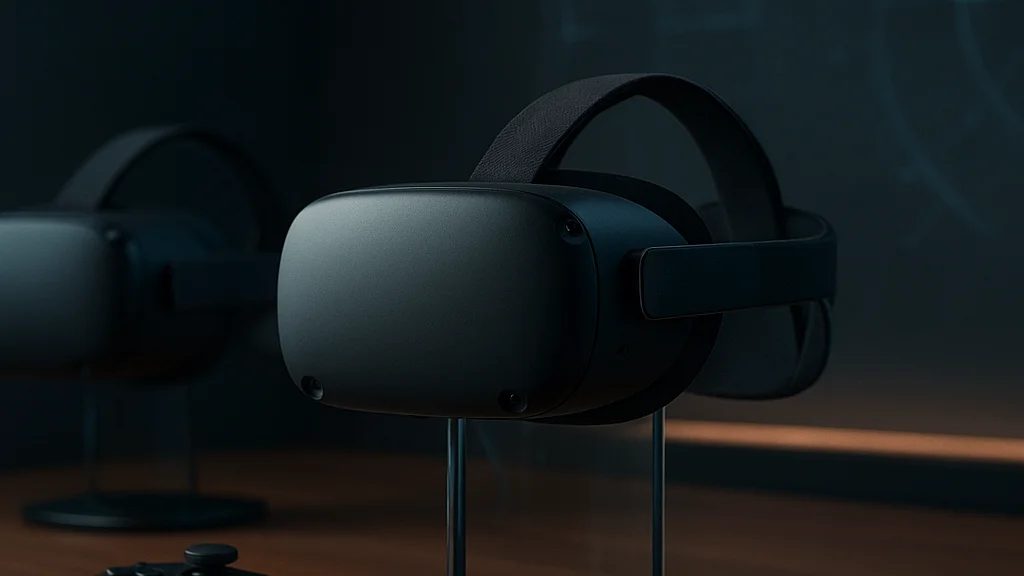

VR gaming is not early anymore, but it is still unfinished
Three things are wrong with virtual reality gaming before we say anything nice. First, the hardware story is still fragmented: standalone headsets, PC-tethered rigs, mixed-reality devices, and console-specific ecosystems all ask different things from players. Second, too much of the market still confuses buying a headset with joining a healthy software platform. Third, comfort remains the silent deal-breaker. A headset can benchmark beautifully and still end up in a drawer because the face gasket runs hot, the battery pulls the center of gravity forward, or the setup flow feels like bad enterprise software wearing neon.
That is the unpopular starting point. VR gaming’s future is not being held back by imagination. It is being held back by friction. Yet that makes 2026 more interesting, not less. The category has moved beyond the old argument about whether immersive gaming is “real” gaming. That debate is over. The live question is which devices, software models, and use cases can survive after the novelty spike fades.
Walk into any serious conversation about headsets now and you hear less chest-thumping about metaverse fantasies and more practical questions: How sharp are the panels? How good is passthrough? Does eye tracking improve rendering enough to matter? Can I play for two hours without wanting to throw this thing into Lake Michigan? Those are better questions because they are adult questions.
Coverage from TechTimes’ 2026 headset roundup and MSN’s guide to the best VR headsets in 2026 reflects that shift. The emphasis is no longer just on spectacle. It is on usability, software support, display quality, and the practical split between premium enthusiasts and mainstream buyers. That is exactly where the conversation should be.
VR does not need to become the only way people play. It only needs to become normal enough that putting on a headset feels like choosing a genre, not joining a cult.
If you want a baseline on where the mainstream conversation has been heading, WriteUpCafe has already tracked the broad arc in Virtual Reality Gaming: The Future and Best Headsets to Watch. What matters now is pushing that discussion past generic optimism and into the harder question: which headsets are actually worth buying, and what does their design tell us about the future of gaming itself?
How VR got here: from novelty machine to platform stress test
The modern VR cycle has already had at least three distinct eras. The first was the revival phase of the mid-2010s, when Oculus, HTC, and Sony convinced players that room-scale interaction and tracked controllers could support more than tech demos. The second was the content correction, when the market learned that a handful of brilliant experiences could not by themselves sustain mass adoption. The third, which defined the early 2020s, was the standalone boom led by Meta’s Quest line. That was the moment VR stopped requiring a high-end PC to feel viable.
Standalone hardware mattered because it reduced setup cost, not just sticker price. A lot of tech sectors forget this. Consumers do not merely buy devices; they buy hassle. Or they avoid it. The Quest 2 became influential not because it was perfect, but because it removed enough barriers to make repeated use plausible. That distinction matters more than any keynote promise.
Sony’s PlayStation VR2 then showed the opposite truth: premium VR can still be compelling when attached to a strong content ecosystem. Eye tracking, OLED displays, and deep haptics made PS VR2 one of the clearest examples of what happens when a platform holder treats immersion as more than a side quest. But it also exposed the limits of a closed ecosystem. Great hardware cannot force a constant release cadence.
Meanwhile, Apple’s entry into spatial computing changed the language around headsets, even for gamers who had zero interest in paying luxury-device prices. Suddenly the industry was talking more seriously about passthrough quality, hand tracking, app windows, and mixed reality as a default interface layer. Gaming companies noticed because user expectations changed overnight. A blurry passthrough camera that felt acceptable in 2022 looked rough once premium mixed-reality demos became the new benchmark.
That is why 2026 feels less like a beginning and more like a sorting phase. The field has enough history now to expose weak assumptions. Not every platform can win. Not every headset should exist. And not every player actually wants the same thing.
- 2016–2019: Enthusiast VR proves room-scale interaction works, but cost and complexity limit growth.
- 2020–2023: Standalone devices expand the audience by reducing setup friction and price barriers.
- 2024–2026: Mixed reality, better displays, and ecosystem strategy become the new battlegrounds.
For readers comparing broader guidance, Expert Tips for the Future of Virtual Reality Gaming and Best Headsets usefully frames the buyer side of this transition. The deeper story, though, is that headset design now reveals what each company thinks VR is for. That is where the future gets legible.
The best headsets are solving different problems, not chasing one crown
People keep asking for the single best VR headset as if this were a clean bracket. It is not. The better way to evaluate 2026’s leading devices is by understanding which trade-offs they optimize. The market has matured enough that “best” depends on your gaming habits, your budget ceiling, and your tolerance for ecosystem lock-in.
Meta’s Quest line remains central because it still defines the mainstream standalone category. Its value proposition has long been obvious: a relatively accessible all-in-one device with a huge install base, broad software support, and optional PC connectivity. For many players, that combination remains the least painful route into VR. The downside is equally familiar. Compression artifacts in wireless PC streaming, battery constraints, and a software library that still contains too much disposable content can make the platform feel like a great mall with too many kiosks.
Sony’s PlayStation VR2 continues to be one of the most convincing pure gaming headsets for players already inside the PlayStation ecosystem. The display quality, haptics, and first-party polish still matter. So does the straightforward setup compared with piecing together a full PCVR rig. Yet the device’s future depends heavily on software momentum and Sony’s willingness to treat VR as a strategic product rather than a prestige accessory.
PCVR enthusiasts, meanwhile, still gravitate toward premium options that prioritize fidelity, tracking precision, and mod-friendly flexibility. Depending on region and availability, buyers in 2026 continue to compare high-end choices from established enthusiast brands and newer mixed-reality entrants. The attraction is simple: simulation players, racing fans, and flight enthusiasts often care more about image clarity and latency than broad casual accessibility. For them, standalone convenience is nice; uncompromised performance is nicer.
According to reporting synthesized in the TechTimes and MSN roundups, the top devices in 2026 are generally being judged on a narrower set of metrics than they were a few years ago. That is healthy. The shopping criteria now look like this:
- Display quality: resolution, lens clarity, edge-to-edge sharpness, contrast, and screen-door reduction.
- Comfort: weight distribution, strap design, heat management, and face pressure over long sessions.
- Tracking and input: controller reliability, hand tracking quality, and spatial consistency.
- Software ecosystem: exclusive titles, update cadence, backward compatibility, and store quality.
- Mixed-reality utility: passthrough quality and whether MR features feel meaningful or cosmetic.
- Connection flexibility: standalone use, wired PC support, and wireless streaming performance.
The best headset for VR gaming is usually the one whose compromises line up with your habits. A headset built for everyone often ends up ideal for no one.
This is the part many buying guides still flatten. A racing simmer with a powerful PC and a wheel setup should not shop like a casual Beat Saber player. A PlayStation owner looking for curated exclusives should not shop like a developer testing mixed-reality interactions. Once you stop pretending there is one universal winner, the market starts making much more sense.
What changed in 2026: mixed reality grew up, and software pressure intensified
The biggest shift in 2026 is not that VR suddenly became mainstream. It is that the category’s weak points became harder to ignore because the hardware baseline improved. Better passthrough, sharper displays, and more competent spatial interfaces raised expectations. When the hardware gets less embarrassing, the software has nowhere to hide.
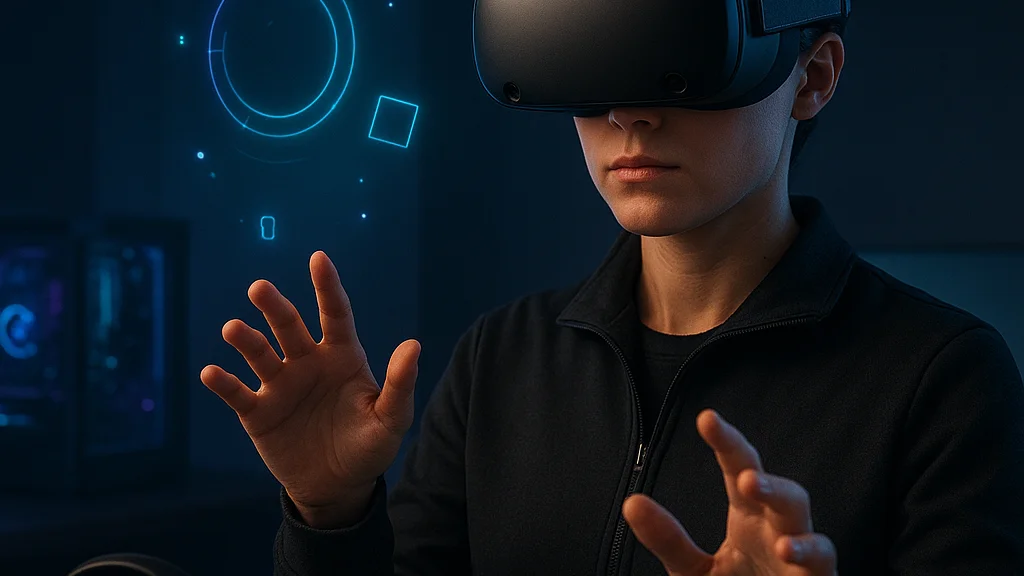
That is why mixed reality is no longer just a marketing garnish. Headsets increasingly treat high-quality passthrough as a standard feature rather than a futuristic extra. For gaming, that has two consequences. One is practical: users tolerate headsets more when they can quickly check their room, phone, keyboard, or drink without ripping the device off. The other is design-related: developers can build games and social spaces that blend physical and digital environments instead of forcing a total visual cutoff every time.
The remote-work angle may sound unrelated to games, but it is not. The ITWire analysis on VR headsets and remote working highlights a broader point: headsets become more defensible when they serve multiple functions. A device used for gaming, virtual collaboration, fitness, and media is easier to justify than one bought for a handful of weekend sessions. Multi-use value props help hardware survive software droughts.
At the same time, 2026 has sharpened the pressure on studios. Players are less forgiving of thin experiences sold at premium prices. The old VR excuse — “well, it’s immersive” — lands with the force of a contrarian Reddit post that forgot to include evidence. Consumers now expect stronger progression systems, better onboarding, cleaner locomotion options, and more polished performance. If a game is short, repetitive, or physically awkward, immersion no longer saves it.
There is also more scrutiny on platform support. Developers want stable install bases, sensible store policies, and tools that do not change direction every quarter. Players want confidence that the headset they buy will still receive meaningful updates and game releases two years later. Those are not glamorous demands. They are the demands of a market trying to become durable.
- Higher passthrough quality has made mixed-reality features more believable and daily use less annoying.
- Better optics and displays have increased expectations for text readability and long-session comfort.
- Software standards have risen because hardware novelty alone no longer carries weak content.
- Cross-use cases matter more as buyers justify expensive devices across work, media, and play.
That combination is why 2026 feels more serious than flashy. The category is finally being judged like a platform business instead of a science fair project.
How to choose a headset without falling for spec-sheet theater
Three things buyers get wrong all the time. They overvalue raw resolution, undervalue comfort, and assume their favorite platform will support VR forever because the launch trailer looked expensive. That last one is especially funny in a darkly comic, tech-founder-drama kind of way. Companies pivot. Roadmaps change. Your neck pain, however, is immediate.
If you are buying primarily for gaming, start with your ecosystem rather than with influencer rankings. A PlayStation 5 owner deciding between no VR and PS VR2 faces a different calculation from a PC enthusiast with a high-end GPU. Likewise, someone who wants quick standalone sessions should not talk themselves into a complicated tethered setup because a forum thread called it “the only real VR.” That is purity politics for hardware nerds.
Comfort should be treated as a first-order spec. Weight distribution, lens sweet spot, IPD adjustment, controller ergonomics, and thermal behavior all shape whether a headset becomes part of your routine. A technically superior device that causes fatigue after 40 minutes is worse than a slightly weaker one you actually use three times a week.
Then there is software. A healthy library is not just about headline exclusives. It includes fitness titles, social apps, cockpit sims, rhythm games, ports that are actually optimized, and enough variety that the headset does not become a single-game machine. Backward compatibility and PC link options can extend value dramatically, especially if native releases slow down.
Buyers should also be realistic about their room setup and tolerance for friction. Ask yourself these questions before spending serious money:
- Do I want instant standalone play, or am I happy to troubleshoot PC connectivity?
- Will I use mixed-reality features, or am I paying for them because they sound futuristic?
- Am I buying for active games, seated sims, social apps, or cinematic experiences?
- How long do I realistically play in one session, and can this headset stay comfortable that long?
- Does this ecosystem have enough software momentum to justify the price?
For a practical counterweight to buyer hype, WriteUpCafe’s Common Mistakes in Virtual Reality Gaming and Best Headsets in 2026 is especially useful. It addresses the kind of errors people make when they shop from fear of missing out rather than from actual use cases.
One more thing: audio still matters. VR buyers often obsess over displays and forget that spatial audio and microphone quality shape immersion, communication, and fatigue. If you are pairing a headset with external audio gear, broader headset coverage like Best PC Gaming Headsets for 2026 – Enhance Your Gaming Experience can help complete the setup. Because yes, the future is immersive, but it is also full of people wearing expensive gear with terrible sound.
Where VR gaming is actually heading next
The future of VR gaming is not total replacement. It is specialization, convergence, and selective breakout success. That may sound less sexy than old metaverse rhetoric, but it is far more plausible. Flat-screen gaming is not going away. Instead, VR is becoming the best format for specific kinds of play: embodied action, cockpit simulation, social presence, fitness-inflected gameplay, and mixed-reality experiences that use your room as part of the design.
Expect three major developments over the next phase. First, eye tracking and foveated rendering will continue to matter because they address the economics of performance. Better rendering efficiency can make higher fidelity possible without absurd hardware demands. Second, mixed reality will become less of a separate category and more of a default layer. The distinction between “VR headset” and “spatial computer” will keep blurring, even if gamers roll their eyes at the branding. Third, software design will become more conservative in the best sense: fewer shallow experiments, more polished systems built around comfort, accessibility, and replayability.
There is also a strong chance that the most durable VR hits will come from formats traditional publishers once underestimated. Social deduction, user-generated spaces, tactical co-op, horror, and sim-adjacent experiences all benefit from presence in ways that do not require blockbuster budgets. The niche Reddit subs were right about one thing: VR’s strength is often intensity, not scale.
That does not mean every company currently in the market will stay committed. Some will trim budgets, reposition products, or fold VR into broader mixed-reality strategies. But the category no longer needs universal corporate evangelism to survive. It needs enough profitable ecosystems, enough good games, and enough hardware that people do not dread wearing.
The next win for VR will not be a slogan. It will be a headset people keep on the coffee table because they expect to use it tomorrow.
So what should buyers and industry watchers take away right now? Do not ask whether VR is the future of gaming in some absolute sense. Ask where it is already the superior format, which companies understand that, and which headsets reduce friction instead of adding it. That framing cuts through the noise fast.
If you want the blunt version, here it is. VR gaming has already proved it can be extraordinary. The real challenge is becoming ordinary enough to last. The best headsets in 2026 are the ones that move the category closer to that goal: lighter, clearer, more comfortable, less annoying, and attached to software ecosystems that treat players like repeat customers rather than demo audiences. Anything less is just expensive cosplay for the future.


























Sign in to leave a comment.