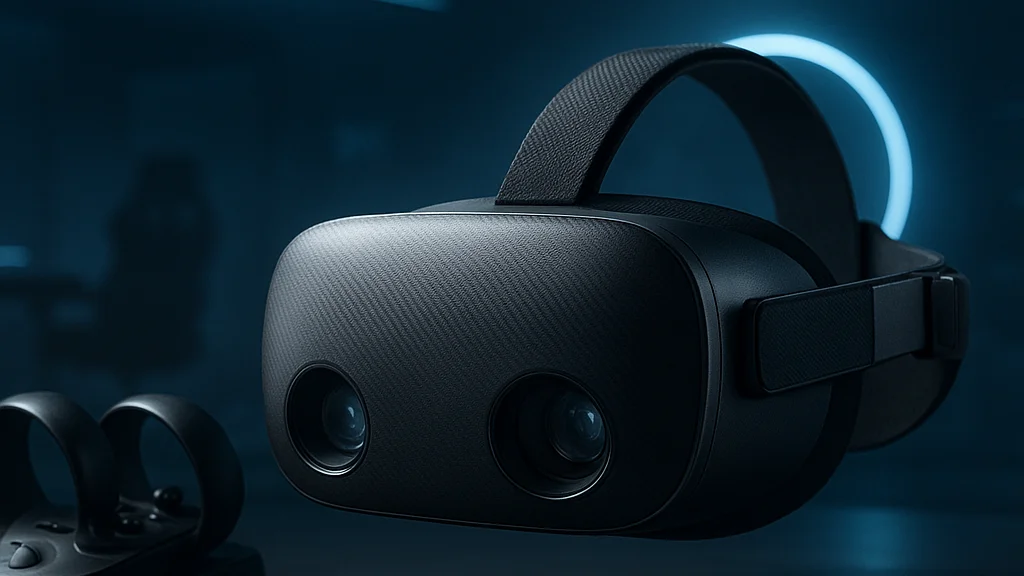

VR gaming stopped being a demo. Now it is a hardware test.
A few years ago, virtual reality gaming still felt like a promise wrapped in a tech showcase. You put on a headset, admired the immersion, then removed it after 20 minutes because the fit was bad, the cable annoyed you, or the game library felt thin. By mid-2026, that picture is different. The hard question is no longer whether VR can impress. It can. The real question is which systems can hold up over months of play, how much friction remains, and which companies are actually building for the next five years rather than the next holiday quarter.
The market now has clearer lanes. Sony has the premium console route with PlayStation VR2. Meta still dominates standalone volume with Quest devices. Valve remains the benchmark for high-end PC VR credibility even as players wait for stronger signals on new hardware. Apple, while not a gaming-first company, has forced the industry to take display quality, hand tracking, and mixed reality presentation more seriously. That pressure matters even for gaming hardware that costs much less.
Consumer guides have reflected the split. MSN’s 2026 roundup of VR headsets and Yahoo Style UK’s tested headset guide both frame the category less as one winner and more as a set of trade-offs: price, tracking, comfort, content, and ecosystem lock-in. That is actually healthy. Mature markets produce segmentation.
For readers who want a quick baseline before the deeper analysis, WriteUpCafe has also covered the category from a buyer angle in Virtual Reality Gaming: The Future and Best Headsets to Watch. Here, I want to go further: what changed, what matters in 2026, and how to judge the best headset for the kind of gaming you actually do.
VR’s future will not be decided by spectacle alone. It will be decided by comfort, software cadence, and whether setup time drops close to zero.
That sounds less romantic than talk about the metaverse. Good. Hardware categories survive on repeat use, not slogans.
How we got here: from tethered novelty to usable systems
The first consumer VR wave in the mid-2010s established the core playbook: head tracking, motion controllers, room-scale interaction, and a premium price. Oculus Rift, HTC Vive, and PlayStation VR proved demand existed, but they also exposed the barriers. External sensors complicated setup. PCs needed expensive graphics cards. Motion sickness remained a real issue for some users. Developers faced a chicken-and-egg problem: install base too small for big budgets, budgets too small for broad mainstream pull.
The second phase was more important than many people realized at the time. Standalone VR reduced friction. Meta’s Quest line, especially Quest 2, showed that consumers would accept weaker graphics if they gained convenience, lower cost, and wireless use. That shift changed the economics of the sector. Suddenly, VR did not need a gaming PC or console to reach millions of users. It needed a headset that turned on fast, tracked reliably, and had enough software to justify leaving it on the shelf instead of in a drawer.
Then came the quality reset. Sony launched PlayStation VR2 for PlayStation 5 with features that mattered to serious players: OLED HDR displays, eye tracking, headset haptics, and inside-out tracking that removed many setup headaches from the original PSVR era. It did not solve every issue. Price remained a hurdle, and software cadence has been debated since launch. But it proved there was still room for premium gaming VR built around higher visual fidelity rather than lowest-friction standalone use.
At the same time, mixed reality became the industry’s new lever. Headsets increasingly use passthrough cameras to blend virtual objects with a view of the real room. Even when buyers say they want VR for games, mixed reality features matter because they reduce isolation and improve usability. You can check your surroundings, interact with menus more naturally, and support game designs that do not require full visual separation from the room.
Coverage outside gaming has reinforced this broader shift. The BBC, in a feature on VR and conservation, described how immersive experiences can create emotional response that flat media often cannot. Read the piece here: A virtual reality pangolin made me cry and care more about the planet. That matters for gaming because the same hardware stack benefits from wider use cases. More use cases can mean more investment in optics, displays, sensors, and developer tools.
Actually, the strongest sign of progress is simple: buyers now ask practical questions first. Battery life. Lens clarity. Face pressure. PC compatibility. Store quality. That is what normalizing tech looks like.
Best headsets in 2026: not one winner, but three clear tiers
If you strip away marketing, the headset market in 2026 breaks into three tiers: standalone value, console premium, and PC enthusiast. The best choice depends on your platform and tolerance for setup. There is no universal champion because the category still asks buyers to prioritize differently.
1) Standalone value and flexibility
Meta’s Quest family remains the practical entry point for most users. The reason is not mystery. Standalone use lowers total cost, wireless freedom improves comfort, and the software ecosystem is broad enough to support fitness, rhythm games, shooters, social apps, and media. For many households, a headset that works without extra hardware still wins the spreadsheet. If you later want stronger graphics, PC streaming options can extend the value.
The compromise is familiar. Standalone chipsets cannot fully match what a strong gaming PC or PS5 can deliver in high-end scenes. Compression, battery limits, and mobile thermal constraints remain real. But for broad utility, Meta still sets the baseline many rivals chase.
2) Console premium
PlayStation VR2 remains the cleanest premium gaming proposition for players already inside Sony’s ecosystem. OLED HDR panels and eye tracking are not checklist fluff. They affect image quality, immersion, and rendering efficiency. The cable is still the biggest emotional objection, yet one cable to a console is far less painful than the old sensor-heavy PC setups many veterans remember.
PS VR2’s challenge is software momentum. Hardware alone does not carry a platform forever. Sony needs a steady stream of exclusives, updates, and visible first-party commitment. When that confidence weakens, buyers hesitate, even if the hardware itself is excellent.
3) PC enthusiast and simulation
For flight sim players, racing fans, modders, and image-quality purists, PC VR still matters. Valve Index no longer feels new, but the larger PC VR ecosystem remains relevant because no standalone device fully replaces high-end simulation with premium peripherals. Enthusiast buyers also pay closer attention to refresh rate, lens type, latency, tracking precision, and compatibility with existing libraries.
- Best for simplicity: standalone headsets with inside-out tracking and strong app stores
- Best for visual punch on console: PlayStation VR2 on PS5
- Best for sims and tinkering: PC VR setups with dedicated graphics hardware
WriteUpCafe’s Expert Tips for the Future of Virtual Reality Gaming and Best Headsets makes a useful point on this: buyers often overspend on theoretical performance while underestimating comfort and software habits. I agree. A headset you use four times a week beats a more powerful one you avoid.
The best VR headset is not the one with the longest spec sheet. It is the one that matches your platform, play session length, and tolerance for friction.
What actually matters when comparing headsets
Most buying guides still overemphasize raw resolution. Resolution matters, yes, but it is only one line in a larger framework. A better method is to score headsets across six categories: optics, tracking, comfort, ecosystem, latency, and upgrade path. If one category fails badly, the whole experience suffers.
Start with optics. Pancake lenses have shifted expectations because they can improve clarity and reduce bulk compared with older Fresnel designs. Sweet spot size matters almost as much as nominal resolution. If you have to keep adjusting the headset to find a clear image, immersion breaks. Eye tracking, where available, also matters beyond novelty. It supports foveated rendering, which can improve performance by concentrating detail where your eyes are focused.
Tracking comes next. Inside-out tracking has become strong enough for most users, but edge cases remain. Fast overhead motions, poor room lighting, and controller occlusion can still create issues. External tracking systems can deliver higher precision, yet they also increase setup burden and reduce mainstream appeal. For esports-style rhythm and shooter play, controller consistency matters more than spec-sheet drama.
Comfort is the category buyers ignore until they regret the purchase. Weight distribution, face gasket material, heat, and strap design decide whether a 25-minute session becomes a two-hour one. This is where many premium devices lose points despite superior displays. A front-heavy headset can feel worse than a lighter device with weaker visuals.
Then comes ecosystem. This is not just game count. It includes store pricing, backward compatibility, mod support, social features, firmware reliability, and whether major developers still treat the platform as a priority. A headset with a thin release calendar ages fast.
- Optics: lens clarity, glare control, sweet spot, display quality
- Tracking: controller precision, room tolerance, hand tracking quality
- Comfort: weight balance, strap, face pressure, ventilation
- Ecosystem: game library, store quality, updates, community support
- Latency: responsiveness, wireless compression, motion smoothness
- Upgrade path: PC link options, accessory support, long-term software backing
According to Yahoo Style UK’s testing-based roundup, comfort and ease of use remain decisive in real-world recommendations, not just benchmark-style comparisons. That aligns with what long-time VR users already know: friction compounds. If setup takes too long or the headset leaves marks and heat after short sessions, usage drops.
Actually, this is where many “best headset” debates go wrong. They assume everyone values the same bottleneck. Sim racers do not. Casual multiplayer users do not. PS5 owners do not. Build your checklist first, then shop.
What changed recently in 2026
The biggest shift in 2026 is not one surprise headset launch. It is that the market has become more disciplined. Companies are talking less about replacing reality and more about solving specific use cases. Gaming remains central, but headset design is increasingly shaped by broader demands: remote collaboration, education, media viewing, fitness, and mixed reality utility.
That broader demand has direct effects on gaming hardware. ITWire, in its piece on remote work and VR headsets, argues that immersive devices are gaining relevance beyond entertainment because they can support presence and collaboration in distributed settings. Read it here: Virtual Reality headsets propel future of remote working. Even if one is skeptical about virtual offices, the infrastructure investment is real. Better passthrough, better microphones, better hand tracking, better text legibility. Gamers benefit from all of it.
Another 2026 change is buyer caution. Consumers have become less patient with expensive hardware that lacks software follow-through. That has put pressure on platform holders to show roadmaps more clearly. Sony, Meta, and PC ecosystem players all face versions of the same question: what will I be playing six months from now, and will this headset still feel supported?
Media coverage has also widened. WDEF’s report on VR expanding beyond gaming underlines how healthcare, training, and education continue to absorb VR tools. You can see that here: Virtual Reality Expands Beyond Gaming. For gaming readers, the lesson is practical. Categories that survive on one use case alone stay fragile. Categories with multiple revenue streams tend to mature faster.
There is also more honesty now about physical limits. Battery life still constrains standalone headsets. Heat still affects comfort. Motion sickness has improved with better frame rates and design practices, but it has not vanished. Hardware is better, yet human factors still set the ceiling.
One more development deserves attention: mixed reality design is no longer a side mode. Developers increasingly treat room-aware play, passthrough overlays, and quick context switching as core features. That changes how future games will be built. The headset becomes less of a sealed helmet and more of a flexible display layer.
The software problem: hardware can win only if games keep pace
Every VR cycle runs into the same wall: excellent hardware cannot compensate for slow software output forever. The category has standout titles, but it still lacks the release density of mainstream console and PC gaming. That is not because developers lack ideas. It is because budgets, install base, and design complexity make VR development harder than flat-screen game production.
Building a good VR game requires more than porting controls into 3D space. Interaction models must feel natural. Locomotion systems must reduce discomfort. User interface design must work at varying distances and head angles. Animation, object scale, physics feedback, and audio all carry more weight because players inhabit the scene rather than observe it from outside. That increases production demands.
The result is a split market. On one side, there are polished premium experiences that showcase the medium. On the other, there is a long tail of smaller titles, experiments, and ports that vary widely in quality. For buyers, this means headset value depends heavily on genre preference. Rhythm, fitness, racing, flying, horror, and social games often perform well in VR because immersion directly improves the core loop. Traditional strategy, side-scrolling action, and many management games gain less from full VR conversion.
There are still reasons for optimism. Tools are better. Engines support XR workflows more cleanly than they did five years ago. Cross-platform development is improving. And mixed reality opens design space that may attract developers who were not interested in pure VR isolation. But platform holders need to fund software aggressively if they want momentum.
- Genres that consistently justify VR: sims, rhythm games, fitness, survival horror, cockpit experiences
- Genres that still struggle in native VR: complex RTS, long-form menu-heavy RPGs, precision platformers
- Most important software variable: cadence, not just one flagship title
If you want another practical angle on software expectations and buying errors, WriteUpCafe’s Common Mistakes in Virtual Reality Gaming and Best Headsets in 2026 is useful. The most common mistake, actually, is buying around specs and ignoring what you will play in the first 90 days.
Who should buy what: a simple decision table
Busy readers usually need the answer in one page, not ten. So here is the clean framework. Match the headset category to your current hardware, budget, and play style. If you do not own a PS5 or gaming PC, standalone is usually the rational start. If you already own a PS5 and want premium plug-and-play VR, PS VR2 makes sense. If your main hobby is sim racing, flight simulation, or mod-heavy PC gaming, the enthusiast route remains strongest.
Decision table
- You want lowest friction and decent library: choose a strong standalone headset
- You already own PS5 and care about visual quality: choose PlayStation VR2
- You own a high-end PC and premium peripherals: choose PC VR for sims and mods
- You are motion-sensitive: prioritize comfort, high refresh, and seated or stationary games first
- You share the headset with family: prioritize easy setup, durable controllers, and broad content mix
Price discipline matters more in VR than in many other gaming categories because accessories accumulate fast. Prescription lens inserts, replacement straps, charging docks, controller grips, audio upgrades, and link cables can turn a reasonable purchase into a costly stack. Put the full system in your spreadsheet before buying.
Another practical point: room conditions affect results. Small apartments, reflective surfaces, poor lighting, and unreliable Wi-Fi can shape the experience more than buyers expect. Wireless PC streaming sounds ideal until network instability adds stutter. A cable sounds annoying until it delivers stable performance every session. This is why “best headset” remains conditional.
If you are upgrading from older VR hardware, focus on the biggest pain point from your current setup. Was it blur? Weight? Battery? Tracking? Software? Solve the bottleneck first. Chasing every premium feature at once usually wastes money.
For most buyers, the right VR upgrade is the one that removes a daily annoyance, not the one that adds the most headline features.
The future of VR gaming: steady, mixed, and more practical than the hype cycle promised
So where does VR gaming go from here? Not toward a sudden takeover of all gaming. That was never likely. The more realistic future is a durable sub-sector that keeps growing through specialization, better ergonomics, and tighter integration with mixed reality. Think less replacement, more expansion.
Three trends look durable. First, optics and form factor will keep improving. Lighter headsets with better clarity are the category’s most obvious path to higher retention. Second, mixed reality will become normal rather than optional. Even pure gamers benefit from passthrough quality, room awareness, and easier transitions between virtual and physical space. Third, software design will move toward shorter setup, faster onboarding, and more socially legible play. Watching someone in a headset wave at invisible objects is still awkward. Future design will try to reduce that friction for both players and spectators.
There is also a strategic point many gaming readers miss. VR does not need to beat console or PC gaming on raw user numbers to matter. It needs to become a stable premium segment, like sim racing peripherals or high-end monitors. If enough players spend consistently on hardware, software, and accessories, the business can sustain itself and improve.
The BBC’s conservation feature and the broader non-gaming coverage from ITWire and WDEF suggest a final lesson: VR’s future is stronger when gaming is part of a larger ecosystem, not carrying the entire category alone. That gives hardware makers more reasons to refine displays, sensors, audio, and ergonomics. Gaming then inherits the gains.
My own read is simple. VR gaming in 2026 is no longer waiting for permission to exist. It has a real audience, clear hardware classes, and enough software depth to justify serious buying decisions. The weak points are still there: comfort, content cadence, and price discipline. But the category is more grounded now. Less fantasy, more product reality.
That is actually good news. Mature tech stops promising everything and starts doing specific things well. VR gaming is entering that phase. Buyers should welcome it.



























Sign in to leave a comment.