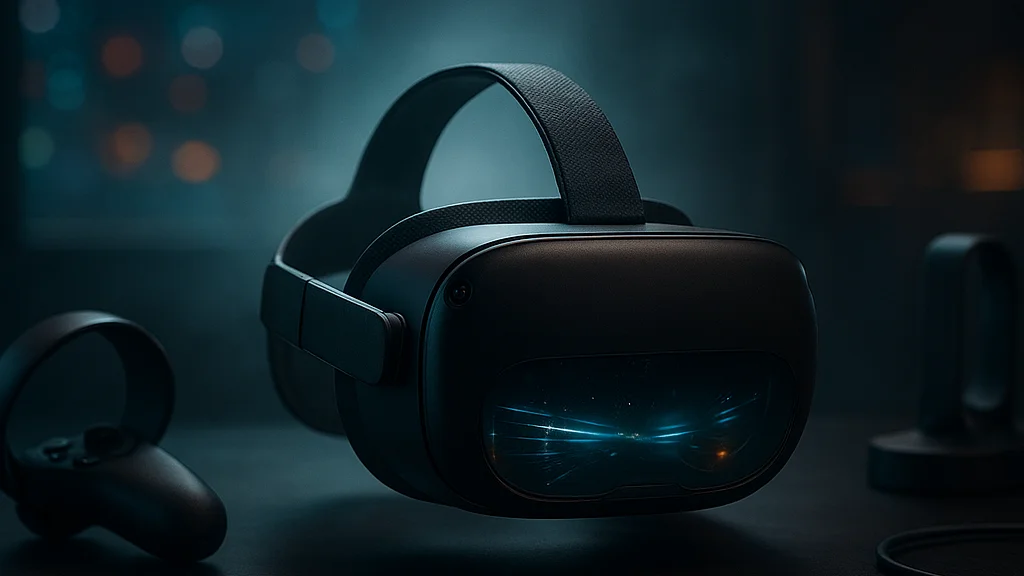

VR still loses players for reasons that have little to do with hype
A familiar scene: player buys a headset, sets it up fast, launches a visually intense shooter, feels discomfort in twenty minutes, then leaves device on a shelf for months. That pattern has hurt virtual reality more than any shortage of marketing. Hardware has improved. Displays are sharper, tracking is better, software libraries are broader. Yet retention still depends on small decisions users and buyers often get wrong at the start.
The mistake is usually not choosing VR itself. It is choosing badly for the actual use case. A person wants room-scale rhythm games but buys a headset mainly praised for cinema viewing. Another wants PCVR simulation racing but ignores cable management, GPU load, and lens clarity. A third expects console simplicity from a tinkerer-grade setup. These are not minor mismatches. They shape whether VR feels magical or annoying.
Coverage around headsets often reduces the market to a shopping list. That misses the bigger story. VR gaming now sits at an awkward but important stage: mature enough to deliver excellent experiences, not yet frictionless enough to forgive poor decisions. Reports from specialist buyers guides such as TechTimes' 2026 headset roundup and broad consumer rankings from MSN's best VR headsets list show that buyers now face a fragmented field rather than a single obvious winner.
That fragmentation actually tells us something about the future. VR is not becoming one product category. It is splitting into several: standalone gaming, premium mixed reality, PC tethered simulation, social spaces, and cloud-streamed experiences. If you want a durable buying framework, not just a recommendation, start with mistakes first. Product rankings make more sense after that.
Best headset is rarely the most expensive one. It is the headset that matches your motion tolerance, game library, and setup discipline.
For readers who want a broader baseline before the deeper analysis here, WriteUpCafe has already tracked adjacent trends in Virtual Reality Gaming Future and the Best Headsets and Expert Tips for the Future of Virtual Reality Gaming and Best Headsets. This piece pushes further into where buyers still fail, what changed in 2026, and how to choose with fewer regrets.
The common mistakes buyers keep making
Most VR buying errors fit a simple checklist failure. People overvalue headline specs and undervalue comfort, software fit, and session length. Resolution matters, yes. But lens quality, weight balance, passthrough quality, controller ergonomics, and heat management often matter more after week one. A headset can look excellent in a spec sheet and still become tiring in practice.
The first major mistake is ignoring content ecosystem. A headset is not just hardware. It is store access, PC compatibility, mod support, social features, and developer priority. Buying into a closed ecosystem without checking your must-play titles is still common. Rhythm players, flight sim users, VRChat regulars, and mixed-reality experimenters actually need different software strengths. This is why generalized “best headset” lists should be treated as starting points, not final answers.
Second comes motion tolerance. New users often jump into fast locomotion games instead of beginning with stationary or teleport-based experiences. That can create a false conclusion that VR itself causes sickness. Actually, bad onboarding causes much of it. Frame stability, interpupillary distance adjustment, and gradual exposure matter. A headset with weak comfort tuning can turn a manageable issue into a deal-breaker.
Third is setup denial. Buyers of PCVR systems frequently underestimate total cost. The headset price is only one line in the spreadsheet. Add GPU headroom, replacement face pads, battery straps, prescription inserts if needed, router upgrades for wireless streaming, and floor space. Suddenly value proposition changes.
- Mistake 1: Buying for specs instead of game library
- Mistake 2: Starting with intense movement-heavy games
- Mistake 3: Ignoring total system cost beyond headset
- Mistake 4: Underestimating comfort during 60 to 90 minute sessions
- Mistake 5: Assuming standalone and PCVR deliver same visual ceiling
Another repeated error is treating mixed reality and virtual reality as interchangeable. They overlap, but they do not solve the same problems. Strong passthrough can improve convenience, fitness, and casual play. It does not automatically make a headset better for dark, high-immersion story games. Buyers seduced by demos often forget that their real use may be seated racing, not kitchen tabletop gimmicks.
The last big mistake is waiting for a mythical perfect device. VR has always had a “next generation” problem. If you wait for no-compromise hardware, you may wait forever. Better approach: buy when a headset clearly fits your use case and budget, then optimize around habits and software.
How the headset market split into three practical tiers
To understand where VR gaming is going, it helps to stop thinking in brand slogans and start thinking in tiers. By mid-2026, the market looks less like a race toward one dominant standard and more like three parallel tracks. Each track serves a different type of player, and each creates its own mistakes.
Tier one is standalone-first. This is still the volume segment because convenience wins. Devices in this class reduce friction: no tower PC required, quick setup, lower barrier for fitness, social apps, and mainstream games. Meta remains central in this segment, though competition and mixed reality ambitions have expanded the conversation. Standalone hardware has become good enough for many users, but visual compromises remain obvious in demanding titles.
Tier two is premium mixed reality. This is where high-end displays, advanced passthrough, and broader productivity ambitions sit. Gaming exists here, but it competes with media, work, and ecosystem lock-in. The promise is not only immersion; it is spatial computing. ITWire, in its piece on headsets pushing remote work, frames this broader shift clearly: VR and MR devices are increasingly sold as all-day computing platforms, not gaming-only accessories. That affects design priorities such as comfort, app multitasking, and hand tracking.
Tier three is enthusiast PCVR. This remains the best route for top-end simulation and mod-rich experiences. It also remains the least forgiving. You get best graphics ceiling, deeper tinkering, and specialized accessories. You also get driver issues, wireless tuning headaches, and higher entry cost. Yet for sim racers, flight sim players, and users who care about latency and image clarity, this tier still defines the upper limit.
A practical comparison looks like this:
- Standalone-first: best for ease, travel, social play, fitness, and lower setup time
- Premium mixed reality: best for display quality, passthrough, broader media and productivity use
- Enthusiast PCVR: best for simulation, modding, visual fidelity, and upgrade flexibility
This split explains why recommendation articles can disagree without being wrong. Yahoo Style UK's tested picks focus on practical user experience, while other lists emphasize technical leadership or value. They are often answering different questions.
VR market did not settle into one lane. It became a toolkit market, where the right tool depends on whether you play Beat Saber, Microsoft Flight Simulator, or mixed-reality board games.
That is also why internal explainers like Common Mistakes in Virtual Reality Gaming and Best Headsets in 2026 remain useful: they frame selection around user behavior, not branding alone.
Best headset choices in 2026 depend on job, not hype
If a reader asks for the single best VR headset in 2026, the honest answer is still conditional. Consumer guides from TechTimes, MSN, and Yahoo Style UK broadly agree on one thing: there is no universal winner because the category has diversified too much. Still, patterns are clear enough to build a serious shortlist.
For mainstream gaming, Meta's newest standalone options remain hard to ignore because software access, price positioning, and wireless convenience keep them relevant. They are usually the safest recommendation for first-time users who want active games, social apps, and a large library without a gaming PC. Their main weakness is obvious to experienced players: standalone rendering still cannot consistently match strong PCVR visuals.
For premium buyers, Apple Vision Pro remains influential even if it is not a straightforward gaming-first purchase. Its display quality and mixed reality execution continue to shape expectations across the sector. But buyers should be realistic. It is a premium spatial device with gaming as part of the story, not the whole story. If your spreadsheet says “mostly SteamVR shooters and sim racing,” this is probably not your efficient choice.
For dedicated PCVR players, Valve's aging but still respected Index ecosystem and newer high-clarity entrants remain part of the conversation, though age shows in some legacy hardware. The enthusiast segment in 2026 is less about one famous headset and more about balancing optics, refresh rate, tracking method, comfort, and compatibility. Some buyers will prefer lighthouse tracking precision. Others will accept inside-out tradeoffs for simplicity.
A better way to shortlist is this:
- Choose standalone if you want low friction, fitness, social gaming, and lower total cost
- Choose premium MR if you value display quality, media, and productivity alongside games
- Choose PCVR-focused gear if you prioritize simulation, latency control, and graphics ceiling
Another 2026 factor is cloud support. According to Engadget's report on GeForce Now adding 90fps streaming in VR headsets, cloud gaming is becoming more relevant inside headsets, not just on flat screens. That does not replace local rendering for top-end VR yet, but it changes the economics for some users. A buyer with a modest PC may soon rely more on streaming for certain experiences, especially if network quality is strong.
So, best headset? Actually, best workflow. The hardware follows from that.
What changed recently: the 2026 shifts that matter
Several developments in 2026 changed the buying logic. None of them alone transformed VR overnight. Together, they reduced friction around access and expanded what a headset is expected to do.
The first shift is the rise of cloud-assisted VR access. Engadget's coverage of GeForce Now support for GOG syncing and 90fps streaming in VR headsets matters because it points to a future where headset owners are less constrained by local hardware. VR still demands low latency and stable frame pacing, so cloud is not a universal fix. But the fact that major platforms are experimenting seriously here suggests a wider funnel for premium experiences.
Second, mixed reality stopped being a side feature and became a purchase driver. Buyers now ask about passthrough quality almost as often as they ask about panel resolution. That changes game design too. Developers can create experiences that blend physical room awareness with virtual overlays, making onboarding easier for new users and reducing some discomfort. This is not only a technical change; it is a usability change.
Third, enterprise and remote work demand kept influencing consumer design. ITWire's analysis of headsets in remote work points to a broader trend: hardware makers want one device to cover meetings, media, productivity, and gaming. As a result, comfort, battery strategy, hand tracking, and app switching are improving for reasons that are not purely gamer-driven. Gamers benefit anyway.
Fourth, recommendation culture matured. Consumer roundups from TechTimes, MSN, and Yahoo Style UK are less likely now to chase raw novelty alone. They spend more time comparing fit, software ecosystem, and actual use cases. That is healthy. It reflects a market moving from curiosity toward practical segmentation.
One more recent change deserves attention: buyers are becoming more literate about accessories. Elite straps, face interfaces, external battery packs, prescription lens inserts, and dedicated routers are no longer niche add-ons. For many users, they are part of the real bill. This means value comparisons must include ecosystem support, not just headset MSRP.
If you are tracking future direction, another useful context piece is Virtual Reality Gaming: The Future and Best Headsets to Watch, which follows how hardware roadmaps and software expectations are converging.
Case studies: where buyers get it right and where they waste money
Consider three common buyer profiles. They show why generic advice fails.
Case one: the fitness and rhythm player
This user wants quick sessions, movement, low setup friction, and easy sharing with family. A standalone headset is usually the correct answer. Buying a premium PCVR setup here often wastes money and adds enough friction to reduce actual use. The biggest risk for this buyer is comfort. Front-heavy hardware and weak straps can turn thirty-minute sessions into neck fatigue. Better to spend less on the headset and more on fit upgrades if needed.
Case two: the sim racer or flight simmer
This user values clarity at distance, stable frame rates, seated comfort, and compatibility with wheels, HOTAS gear, and mods. A cheap standalone device may work as an entry point, but it will likely become a compromise fast. Here, the expensive mistake is buying below the use case. If your primary titles are simulation-heavy, PCVR investment often pays back in image quality and ecosystem depth. But total cost rises sharply once GPU upgrades enter the picture.
Case three: the curious premium buyer
This user wants the best screens, polished mixed reality, cinema, productivity, and occasional gaming. Premium MR hardware fits well. The trap is expecting a pure gaming value proposition. If the buyer measures every dollar only against game hours, disappointment is likely. If they measure against broader spatial computing use, the equation changes.
These examples reveal a simple framework:
- List your top five intended uses
- Rank them by weekly hours, not fantasy purchases
- Calculate full system cost, including accessories
- Check software access before hardware reviews
- Match comfort level to session length
Actually, most wasted VR spending comes from lying to yourself at step two. People buy for imagined identity. They should buy for repeated behavior.
The best predictor of VR satisfaction is not benchmark performance. It is whether the headset makes your preferred session easy enough to repeat three times a week.
That is why future-oriented explainers such as April 2026: Exploring the Future of Virtual Reality Gaming and Top Headsets matter most when paired with a use-case audit, not consumed as shopping entertainment.
Where VR gaming goes next from here
The future of VR gaming will probably not be defined by one dramatic leap. It will be defined by friction removal. Better optics, lighter designs, smarter passthrough, more cloud support, and stronger cross-platform access will matter more than flashy promises. The winner category may simply be the one that asks less from the player before fun begins.
Three forward signals stand out. First, cloud integration will expand. Engadget's reporting on GeForce Now inside VR headsets is an early marker of a larger idea: premium content delivered with less local hardware burden. Technical limits remain real, especially around latency-sensitive genres, but the direction is clear.
Second, mixed reality will keep reshaping onboarding. New users tolerate VR better when the device feels less isolating and more spatially aware. Passthrough and hand tracking are not gimmicks if they reduce setup anxiety and improve session flow. That matters for retention, which remains one of the industry's hardest problems.
Third, software ecosystems will become even more decisive. Hardware margins tighten over time. Libraries, subscriptions, social graphs, creator tools, and interoperability become stickier. Buyers should watch not only what a headset can do now, but what platform incentives suggest for the next two years.
There is also a cultural shift. VR gaming is no longer sold only as “the future of games.” It is sold as part of a broader spatial stack that includes work, media, communication, and wellness. Some gamers dislike that framing. They should not dismiss it too quickly. Multi-use devices often gain the scale that pure gaming devices struggle to reach.
My practical conclusion is simple. Avoid three traps: buying for specs alone, buying for imagined habits, and buying before checking software. If you do that, the current market is actually better than the cynical narrative suggests. There are strong headsets right now. There are also clear signals that the next phase of VR will be more accessible, more service-driven, and less dependent on enthusiast patience.
For a busy buyer, use this final checklist:
- Pick your main use: standalone fun, premium MR, or enthusiast PCVR
- Verify game library and platform support first
- Budget for accessories and network or PC upgrades
- Prioritize comfort if sessions exceed 45 minutes
- Use cloud features as bonus, not sole buying reason
VR gaming future is not abstract anymore. It is already visible in the mistakes people stop making and in the headsets that respect real routines. Buy for that reality, and the category starts to make sense.

























Sign in to leave a comment.