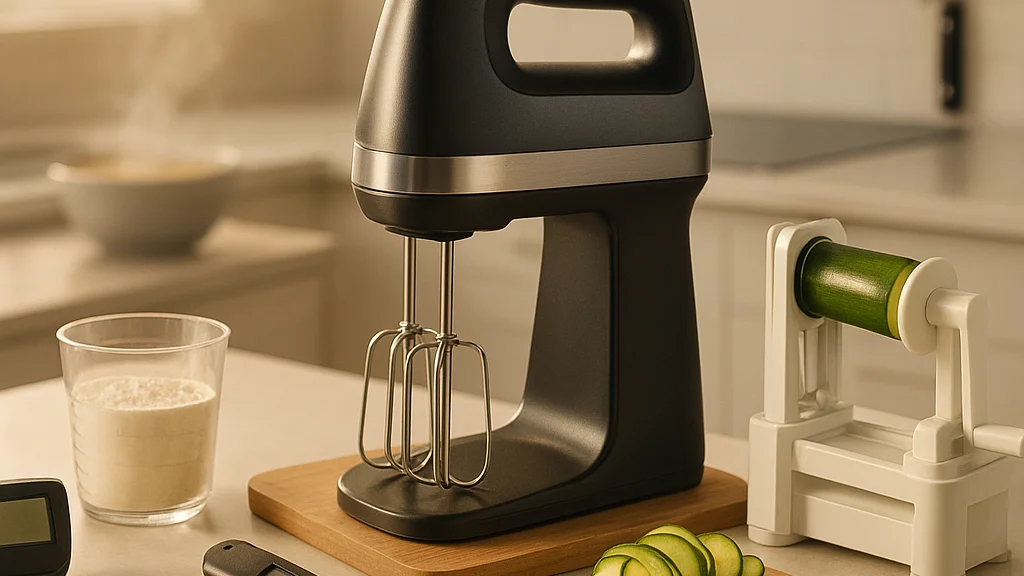

Time loss in a home kitchen rarely comes from one big mistake. It comes from micro-delays: reheating pan, chopping onion, washing blender jar, checking pasta, peeling garlic, grating cheese, cleaning board, then repeating same cycle next day. For busy households, that friction matters more than recipe difficulty. A 20-minute weeknight dinner can turn into 45 minutes fast, not because cooking is hard, but because setup, prep, and cleanup stack up. That is why the best kitchen gadgets that save time are not novelty tools. They are devices that remove repeat labor.
Retail coverage reflects that shift. Mainstream roundups from MSN and AOL have leaned into tools framed around energy and labor savings, not just fun features. Consumer interest also tracks with a wider pattern in food culture: more cooking at home, more batch prep, more small-space kitchens, and more demand for appliances that justify counter space. If a gadget cannot cut steps, cut monitoring, or cut cleanup, it usually ends up in cupboard graveyard.
My working rule is simple. A gadget earns its place if it improves at least two of these four metrics: prep speed, cooking speed, consistency, cleanup time. One metric alone is not enough. A strawberry huller may be quick, but it solves too narrow a task. A pressure cooker, by contrast, shortens active time, reduces pot count, and handles meal prep well. That is a tool with actual return.
The best time-saving kitchen gadget is not the one with most functions. It is the one you will use three times a week without needing the manual.
If you are building a practical setup, start with the frameworks already mapped in Top 8 Best Kitchen Gadgets That Save Time at Home and Beginner’s Guide to Best Kitchen Gadgets That Save Time. Then go deeper. Below is the field guide: which gadgets actually save time, where they work best, what changed in 2026, and how to avoid buying expensive clutter.
What “time-saving” actually means in a kitchen
People often measure kitchen speed the wrong way. They ask whether a gadget cooks faster than a pan or chops faster than a knife. That is too narrow. A better metric is total task time from ingredient storage to clean kitchen. Under that model, many winning gadgets are not the fastest at one single action. They are the best at collapsing several actions into one workflow.
Take a rice cooker. Stovetop rice is not difficult, but it demands measuring, timing, steam management, and often a pot to scrub. A decent rice cooker automates all of that while freeing burner space. The same logic applies to food processors, immersion blenders, electric pressure cookers, and countertop ovens with air-fry modes. They reduce supervision. That is a hidden time gain many buyers underestimate.
There are four categories worth separating:
- Prep accelerators: food processors, mandolines, garlic presses, salad spinners, electric choppers.
- Hands-off cookers: rice cookers, slow cookers, pressure cookers, multicookers.
- Fast-heat tools: air fryers, electric kettles, induction-compatible systems, toaster ovens.
- Cleanup reducers: immersion blenders, nonstick multicooker inserts, dishwasher-safe attachments.
Actually, the strongest products often sit across two or three categories. An immersion blender is prep and cleanup tool at same time. An air fryer is fast-heat device and cleanup reducer if it replaces sheet pan plus oven rack plus oil splatter. A multicooker can pressure-cook beans, steam vegetables, and sauté aromatics in one vessel.
Coverage from Wales Online on a low-cost kitchen tool that “actually earns its place in the cupboard” speaks to a bigger truth: cupboard space is a budget line, too. A gadget that saves five minutes but takes one full shelf may not be efficient in a small apartment kitchen. Time-saving has to be measured against storage, maintenance, and learning curve.
Efficiency in cooking is usually system efficiency, not blade speed. Fewer dishes, fewer checkpoints, fewer repeated motions — that is where the minutes disappear.
That is also why broad listicles can mislead. They group all gadgets together, but a family cooking six nights a week does not need same toolkit as a solo renter reheating leftovers. The right question is not “what is best?” It is “what removes my most common bottleneck?”
The small set of gadgets that usually deliver the highest return
If I had to build a shortlist for most households, I would put six tools at the top: food processor, immersion blender, electric pressure cooker or multicooker, air fryer or combi toaster oven, rice cooker, and electric kettle. These are not glamorous picks. That is exactly why they work. They solve repeated tasks.
Food processor remains one of the highest-yield prep tools because it compresses chopping, slicing, shredding, pureeing, and dough mixing into minutes. For coleslaw, pie dough, hummus, grated cheese, chopped onions, mirepoix, or large-batch sauces, it can replace a board session that would take 10 to 20 minutes by hand. The limit is cleanup, so it shines most in medium and large batches.
Immersion blender is the anti-cleanup hero. Soup can be blended in pot. Dressings, marinades, whipped cream, and quick sauces can be done in a cup or jar. Compared with a countertop blender, transfer time and washing time drop sharply. For weeknight cooks, that matters more than peak motor power.
Electric pressure cookers and multicookers save time in two different ways. First, they reduce cook times for beans, stews, braises, stocks, and grains. Second, they reduce active management. Dried chickpeas, for example, can go from pantry staple to usable ingredient much faster than with traditional simmering. Even when total clock time is not always dramatically lower after pressurization and release, active labor usually is.
Air fryers and modern toaster ovens win on preheat speed and small-batch efficiency. They are especially useful for frozen foods, vegetables, salmon fillets, chicken thighs, and leftovers that need crisping. Heating a full-size oven for one tray of food is often wasteful in time and energy. That is why these devices keep showing up in consumer roundups, including the MSN and AOL pieces.
Rice cookers are deceptively powerful. They produce repeatable grains while releasing attention. If your meals often include rice, quinoa, or porridge, the savings compound over months.
Electric kettles are not just for tea. They accelerate boiling water for pasta, couscous, instant noodles, blanching vegetables, and coffee. In many kitchens, they cut several minutes from the start of a meal.
- Best for batch prep: food processor, pressure cooker.
- Best for one-pot cleanup: immersion blender, multicooker.
- Best for fast reheating and crisping: air fryer, toaster oven.
- Best for daily repetition: rice cooker, electric kettle.
For readers comparing broader options, Top 6 Best Kitchen Gadgets That Save Time and Best Kitchen Gadgets That Save Time in 2026: Efficiency Meets Innovation are useful companion reads.
Where shoppers waste money: gadgets that look efficient but often are not
The market is full of single-use tools sold on the promise of speed. Some are fine. Many are not. The problem is not only price. It is workflow breakage. A gadget that needs assembly, special storage, hand washing, or awkward force can turn a 30-second task into a two-minute task plus cleanup.
Unitaskers are the obvious trap. Banana slicers, avocado tools, herb strippers, dedicated quesadilla makers, electric can openers for people who do not need them, and novelty breakfast stations usually photograph better than they perform. They save time only if the exact task is frequent and physically difficult. Otherwise, knife plus board wins.
Another weak category is oversized countertop appliances with too many overlapping modes. A machine that claims to air fry, dehydrate, roast, steam, grill, toast, bake, proof dough, and sous vide may sound efficient. Actually, if it is slow to heat, hard to clean, and poor at half those tasks, it creates friction. A narrower machine that does one or two jobs very well is often the smarter buy.
Mandolines deserve a more careful note. They can save major prep time for slicing potatoes, cucumbers, onions, cabbage, and gratins. But they also add safety concerns and require setup. For cooks who batch prep vegetables, they are excellent. For someone slicing one tomato, they are not.
The same goes for stand mixers. They are superb for frequent bakers, bread makers, and large-batch cooks. For average weeknight dinner prep, they may save little time relative to hand tools or a food processor. Return depends on frequency.
A practical screening checklist helps:
- Will I use it at least once a week?
- Does it replace at least two tools or steps?
- Can I clean it in under three minutes or put parts in dishwasher?
- Does it fit on counter or in one easy-access cabinet?
- Does it improve my common meals, not my fantasy meals?
That last point matters most. Many people buy for aspirational cooking. Time-saving purchases should be based on spreadsheet logic: count repetitions, estimate minutes saved, compare with storage cost. Boring method. Good method.
What changed in 2026: smarter appliances, tighter kitchens, harder choices
The kitchen gadget market in 2026 is shaped less by invention than by consolidation. Brands are trying to merge functions into fewer devices because consumers are more skeptical about clutter. That does not mean every “smart” appliance is useful. It means manufacturers know the sales pitch has changed. Buyers want efficiency per square centimeter.
One visible trend is the rise of better combi countertop ovens. These units increasingly combine air frying, roasting, baking, reheating, and toasting in a single appliance with stronger presets and more even airflow than early models. For households that use frozen foods, open-faced sandwiches, sheet-pan vegetables, and leftovers often, they can replace both a toaster and a standalone air fryer. The gain is not just speed. It is less appliance duplication.
Another shift is improved app support and guided cooking in multicookers, though this area remains mixed. Smart features are useful only when they shorten decisions or reduce failure. Remote notifications that tell you pressure cycle is done can help. Recipe ecosystems can help. But Wi-Fi by itself does not save time. Good presets do.
There is also stronger consumer attention to energy use. Media roundups such as the ones from MSN and AOL frame some gadgets around time and energy together, which makes sense. Smaller appliances that heat less air and require shorter preheat windows can be more efficient for small meals. Exact savings vary by use pattern and local electricity costs, so broad claims should be treated carefully, but the logic is sound.
Retail reporting from Wales Online also points to another 2026 reality: shoppers are looking harder at low-cost tools that justify cupboard space. Mid-price utility items, especially prep aids and compact electrics, are getting more attention than luxury gadgets. That is partly inflation logic, partly fatigue with overdesigned products.
Current demand also reflects smaller urban kitchens and hybrid work routines. More people cook lunch at home some days and need tools that can pivot from breakfast to dinner without a full reset. In that environment, the winners are compact, fast, and low-maintenance. Fancy matters less than repeatability.
Best gadget by cooking pattern, not by hype
Different kitchens have different bottlenecks. A family with two children, a meal-prepping gym user, a retiree cooking one portion, and a flat-share with limited counter space should not buy same kit. Matching the gadget to the cooking pattern is where actual savings show up.
If you batch cook on weekends, prioritize a pressure cooker, food processor, and freezer-safe system. The pressure cooker handles beans, soups, shredded meats, lentils, and grains. The food processor cuts prep time for onions, carrots, cabbage, sauces, and dips. Batch cooks benefit most from volume tools.
If you cook quick dinners after work, go for an air fryer or combi toaster oven, immersion blender, and electric kettle. Fast preheat plus one-vessel blending plus rapid boiling trims the most annoying dead time. This trio is very effective for soups, tray vegetables, fish, pasta starts, and leftovers.
If your kitchen is small, every item must multitask. A compact rice cooker can hold cooked grains warm while you finish proteins. A stick blender stores easier than a full blender. A toaster oven with air-fry mode may beat separate machines. Here, footprint is part of performance.
If you cook mostly plant-forward meals, a food processor becomes even more valuable. It speeds falafel mix, pesto, nut sauces, slaws, grated vegetables, bean spreads, and pie crusts. Pressure cookers also help with dried legumes, which remain cost-effective pantry staples.
If you mostly reheat and assemble, a microwave still deserves respect even if it is less fashionable. It is one of the biggest time savers ever sold. Pair it with a toaster oven or air fryer for texture recovery, and you cover most convenience needs.
- Batch prep kitchen: pressure cooker + food processor + digital scale.
- Weeknight kitchen: air fryer/combi oven + kettle + immersion blender.
- Small kitchen: rice cooker + stick blender + compact chopper.
- Plant-based kitchen: food processor + pressure cooker + mandoline.
If you want a broader trend snapshot, 2026’s Best Kitchen Gadgets That Save Time: Efficiency in Every Chop frames how current models are being positioned around speed and convenience.
Real-world examples: where the minutes are won
Abstract claims are cheap. Better to map a few common cooking scenarios. Imagine a weekday tomato soup and grilled cheese dinner for two. With a countertop blender, you sauté aromatics, simmer, transfer hot liquid carefully, blend, wash blender jar, then return soup if needed. With an immersion blender, you blend in pot. That can remove several minutes and one major cleanup item. Not dramatic on paper. Very real at sink.
Consider shredded chicken for tacos, salads, wraps, and rice bowls. Oven roasting or stovetop poaching works, but a pressure cooker can reduce active oversight and produce a base ingredient for several meals. Pair that with a hand mixer or two forks for shredding, and one session covers two or three dinners. Time saved is not just cooking time. It is decision time later in week.
Now look at roasted vegetables. A full-size oven may take significant time to preheat for one tray. An air fryer can crisp broccoli, cauliflower, potatoes, or carrots faster in small batches. For a family, you may need multiple runs, so the advantage narrows. For one or two people, the speed gap is often meaningful.
Rice is another clean example. On the stovetop, many cooks still hover, adjust heat, and occasionally get inconsistent texture. In a rice cooker, the process is mostly load-and-leave. If rice appears three times a week, the savings are cumulative and the reliability reduces meal failures.
Even low-tech tools can matter. A sharp Y-peeler, a box grater with stable base, kitchen shears, and a large salad spinner often outperform trendier gadgets on cost-per-use. Reports in mainstream retail media keep highlighting this point indirectly: consumers respond to tools that “earn” space because they solve repetitive labor, not because they look clever.
The strongest kitchen upgrade is often not a new recipe. It is removing one recurring friction point from five dinners a week.
That is why professionals and serious home cooks often converge on same answer. Buy fewer things. Use them harder.
How to choose well: a buyer framework that survives marketing
Kitchen gadget marketing usually sells possibility. Good buying decisions need evidence. I use a simple framework: frequency, compression, cleanup, footprint, and durability. If a product scores well on four of five, it is usually worth serious consideration.
Frequency asks how often the tool fits your real meals. Weekly use beats monthly brilliance. Compression asks how many steps it removes. A multicooker that sautés, pressure-cooks, and keeps warm scores high. Cleanup is obvious but often ignored at purchase stage. If the cleanup feels annoying, use frequency falls. Footprint matters more in apartments than reviews admit. Durability matters because a cheap tool that fails in one year is not efficient.
You should also think in payback period. If a gadget saves 10 minutes twice a week, that is roughly 17 hours a year. For a frequently used appliance, that is substantial. If it saves two minutes once a month, ignore it. Same math applies to energy use, though exact household savings depend on habits and rates.
A final caution: do not confuse automation with speed. Slow cookers automate well but do not cook fast. Pressure cookers can cook fast but still need pressurization time. Food processors are fast, but only if batch size justifies setup. The right tool depends on where your bottleneck sits.
- Buy first: immersion blender, kettle, rice cooker, food processor, air fryer or combi oven.
- Buy if your cooking pattern fits: pressure cooker, mandoline, stand mixer.
- Usually skip: novelty unitaskers, oversized all-in-one machines with weak core performance.
Best kitchen gadgets that save time are, actually, less about technology than about friction control. The winners shorten prep, reduce monitoring, or shrink cleanup. Often all three. If you choose with that lens, you will spend less, cook more, and keep your counters clear enough for the work that still matters: knife, pan, heat, dinner.































Sign in to leave a comment.