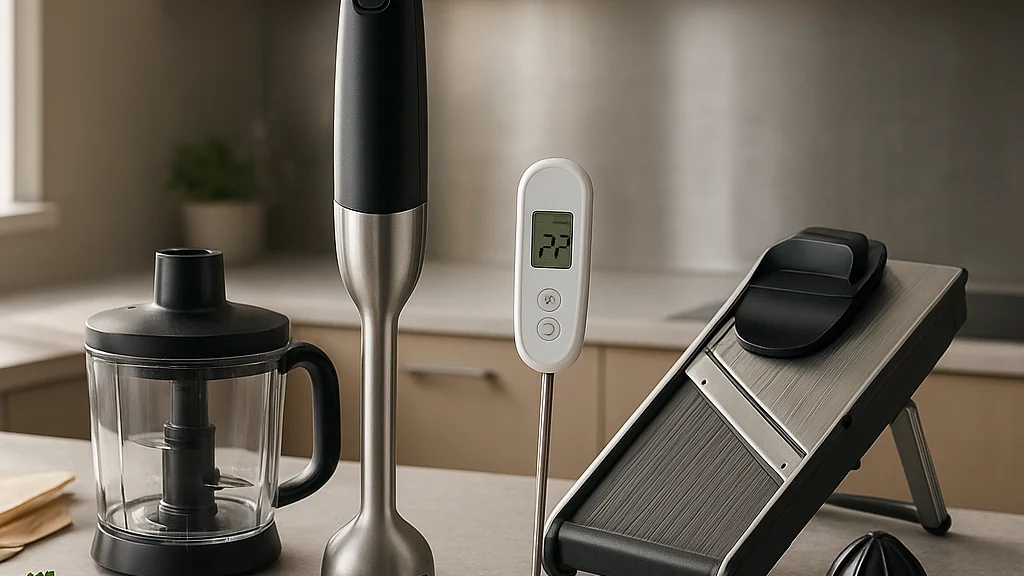

The best time-saving kitchen gadgets do one thing exceptionally well: they remove repeat friction from cooking. That sounds obvious, but it is the right test. A tool is not valuable because it is trendy, connected, or photogenic on a countertop. It is valuable because it cuts prep minutes, reduces cleanup, and lowers the odds that a weeknight dinner turns into a takeout order. Consumer roundups from MSN and AOL have captured the broad market appetite for these tools, but the more useful question is narrower: which gadgets consistently save meaningful time for real home cooks, not just shoppers browsing a list?
My thesis is straightforward. If you want the biggest time return for the average home kitchen, six categories stand above the rest: the multicooker, food processor, immersion blender, digital instant-read thermometer, high-capacity air fryer, and electric kettle. They solve different bottlenecks, but together they compress the full cooking cycle: heating, chopping, blending, monitoring, crisping, and boiling. That matters in 2026, when food prices remain a live household concern and more people are trying to cook at home without adding labor. The best gadget is rarely the one with the most features. It is the one that removes the most decisions and handwork from meals you already make.
There is also a pattern behind what wins. Strong gadgets replace low-value manual tasks, not high-value judgment. A food processor cannot season for you, but it can turn ten minutes of slicing into forty seconds. A thermometer cannot teach intuition overnight, but it can prevent overcooked chicken and the stop-start checking that drags dinner out. If you have read related WriteUpCafe coverage such as Top 8 Best Kitchen Gadgets That Save Time at Home or Time-Saving Kitchen Gadgets That Transform Cooking Efficiency, you will recognize the same principle: efficiency comes from reducing repetition, not adding complexity.
A time-saving gadget earns its space only if it shortens the path from raw ingredients to a finished meal more than once a week.
Why time-saving gadgets matter more now
Home cooking has changed materially over the past several years. Hybrid work gave many households more meals at home, but not necessarily more uninterrupted cooking time. At the same time, grocery budgets remain under pressure, so people are trying to stretch ingredients across multiple meals, batch-cook, and avoid waste. Those habits reward tools that improve throughput. The kitchen is increasingly managed like a small operations system: fewer steps, less waiting, more predictable outcomes.
Retailers and publishers have noticed. Roundups from mainstream outlets increasingly emphasize prep reduction, energy savings, and cleanup rather than novelty. The AOL piece on cool kitchen gadgets that save time and energy reflects that shift directly, while MSN's Amazon-focused list shows how broad the category has become. Yet broad lists can blur an important distinction. Some gadgets save seconds. Others save enough time to alter behavior. The latter are the ones worth buying.
When I evaluate a kitchen tool, I use three filters. First, does it cut active labor or merely relocate it? Second, does it work across several meals a week? Third, does it simplify cleanup? A mandoline, for example, can be fast, but many home cooks avoid it because setup and safety concerns offset the gain. By contrast, an electric kettle reliably saves time every single day if your household makes tea, coffee, oatmeal, instant noodles, or needs quick boiling water for pasta starts.
The strongest gadgets also support modern cooking patterns. Batch meal prep, freezer cooking, high-protein breakfasts, and weeknight sheet-pan meals all benefit from a few dependable machines. That is why this list leans toward categories with broad utility instead of niche single-use tools. If you want a wider survey of current options, WriteUpCafe's Best Kitchen Gadgets That Save Time in 2026: Efficiency Meets Innovation and 2026’s Best Kitchen Gadgets That Save Time: Efficiency in Every Chop are useful companions, but the six below are the most defensible core picks.
- Best for replacing multiple appliances: multicooker
- Best for prep compression: food processor
- Best for fast blending and cleanup: immersion blender
- Best for reducing guesswork: digital instant-read thermometer
- Best for fast crisping and reheating: high-capacity air fryer
- Best for near-daily speed gains: electric kettle
1. The multicooker: the highest total time return
If I had to rank one gadget first for pure time leverage, it would be the multicooker, especially pressure-cooking models that also saute, slow cook, steam, and keep warm. The reason is simple: it reduces both active cooking time and supervision. Beans that would otherwise require soaking and a long simmer can be cooked far faster. Tough cuts become weeknight-friendly. Rice, grains, soups, shredded chicken, stock, and one-pot pasta sauces become more predictable because the machine controls temperature and timing for you.
The multicooker is also one of the few gadgets that can replace several appliances in smaller kitchens. For apartment cooks or anyone with limited cabinet space, that matters as much as speed. A single vessel can brown onions, pressure-cook lentils, hold chili for serving, and then switch to warming mode. That shortens the total workflow because you are not moving food between a skillet, a pot, and a serving dish while dirtying each one along the way.
There is a cost to acknowledge. Pressure cookers are not always the fastest choice from lid-on to plate because preheating and depressurizing take time. But they often slash active effort. A braise that would demand occasional stovetop attention becomes largely hands-off. The machine is especially strong for batch cooking, where the time savings compound over several meals. Cook a large quantity of beans, shredded beef, or tomato sauce once, and the payoff stretches across lunches and dinners for days.
For households that cook proteins in bulk, the multicooker shines in practical ways:
- It turns inexpensive cuts into usable meal components with less babysitting.
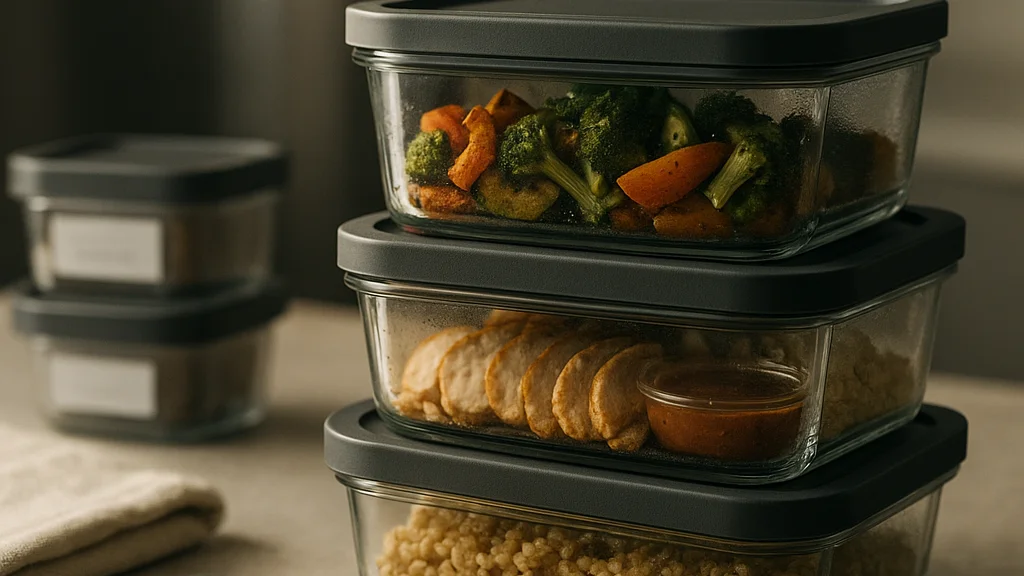
- It supports freezer prep, since soups, stews, and cooked grains portion cleanly.
- It reduces pan management on busy nights by combining browning and finishing.
- It keeps food warm without overcooking, which helps staggered family schedules.
In 2026, the category is mature rather than flashy, and that is a good thing. The best models are less about novelty presets and more about reliability, easier venting, and clearer interfaces. That maturity has made the multicooker less of a curiosity and more of a default workhorse.
When a gadget can save time at 6 p.m. and save money on groceries at the same time, it moves from convenience to strategy.
2. The food processor: the prep bottleneck killer
Most home cooking slows down at the cutting board. That is where ambition meets fatigue. You may be willing to make coleslaw, pie dough, hummus, pesto, grated cheese, mirepoix, sliced potatoes, or chopped onions in theory. In practice, the knife work, grating, and repeated setup can push the meal into tomorrow. That is why the food processor remains one of the most useful time-saving gadgets ever made.
A good processor does not merely chop. It standardizes prep. Slicing disks create uniform vegetables for roasting or gratins. Shredding disks can turn blocks of cheese, cabbage, carrots, and zucchini into meal-ready ingredients in minutes. The blade can make breadcrumbs, curry pastes, sauces, energy bites, and doughs with almost no manual effort. For anyone who meal-preps on weekends, this machine can compress an hour of repetitive labor into a far shorter session.
The strongest case for a food processor is not one recipe but throughput across a week. Consider a single prep block: shred cabbage for tacos, slice cucumbers for salads, grate carrots for lunch boxes, blitz pesto for pasta night, and make a bean dip for snacks. Suddenly the machine is not a specialty appliance. It is a production tool. That distinction is why it consistently appears in mainstream recommendation lists, including the MSN roundup.
There are limitations. Small kitchens may struggle with storage, and some cooks dislike washing the bowl and lid. But modern models with wider feed tubes and dishwasher-safe components have reduced that penalty. If you use the machine for several tasks in one session, the cleanup cost becomes minor compared with the time saved.
Here is where the food processor creates the clearest measurable gains:
- Vegetable prep: slicing and shredding several pounds in minutes
- Sauces and dips: hummus, pesto, romesco, salsa verde, curry bases
- Baking: pie dough, biscuit dough, crumb crusts
- Batch cooking: mirepoix, slaw mixes, grated cheese for freezer meals
For cooks who think they are “not the type” to use a processor often, the real test is not aspiration but friction. If prep is what makes you order delivery, this is one of the few purchases that can materially change your cooking frequency.
3. The immersion blender and thermometer: small tools, outsized impact
Some of the smartest kitchen buys are not the largest ones. The immersion blender and the digital instant-read thermometer are compact, relatively affordable, and consistently underappreciated. They save time in different ways, but both remove a category of delay that home cooks encounter repeatedly.
Start with the immersion blender. Its primary advantage is not blending power alone. It is the elimination of transfer. Moving hot soup into a countertop blender is slower, messier, and riskier than blending directly in the pot. The same applies to sauces, salad dressings, whipped cream, pancake batter, refried beans, and small-batch mayonnaise. Because the blending head detaches and rinses quickly, cleanup is usually faster than with a full-size blender. That matters on weeknights, when washing an extra pitcher can be the difference between cooking and postponing.
The instant-read thermometer solves another common drag on meal prep: uncertainty. Home cooks routinely overcook proteins because they rely on time estimates, visual cues, or repeated cutting and checking. A fast thermometer gives you an answer in seconds. That means no guesswork with chicken breasts, salmon, pork tenderloin, burgers, meatballs, casseroles, or reheated leftovers. It also supports better carryover cooking decisions, which helps prevent the “leave it in just a little longer” habit that dries food out and extends dinner.
These tools also improve consistency, which indirectly saves time. When food comes out right the first time, there is no rescue operation. No extra sauce to cover dryness. No emergency microwaving because the center is still cold. No second pan because the first batch went too far.
The best use cases are practical and frequent:
- Blend soup in the pot instead of cooling and transferring it.
- Puree tomato sauces or curry bases without dirtying a large blender jar.
- Check chicken, fish, and meat temperatures instantly rather than cutting them open.
- Reheat leftovers to safe, precise temperatures without overcooking edges.
In category terms, these are high-ROI purchases. They do not dominate a countertop, yet they remove enough friction to improve cooking speed several times a week. That is exactly the profile a time-saving gadget should have.
4. The high-capacity air fryer: speed, crispness, and better leftovers
The air fryer has moved beyond trend status. By 2026, it is a settled part of many kitchens because it addresses a very specific need: fast, dry-heat cooking without waiting for a full-size oven. That distinction is crucial. The appliance is not magic, and it does not replace every oven task. What it does do extremely well is preheat quickly, cook smaller portions efficiently, and restore crispness to foods that would turn limp in a microwave.
For weeknight cooking, that combination is powerful. Vegetables roast faster in many air fryers than in a conventional oven. Frozen foods become more usable when they can go from freezer to crisp finish without a long preheat. Proteins such as salmon, chicken thighs, tofu, and meatballs often cook quickly with good browning. Leftovers, meanwhile, are where the machine earns long-term loyalty. Pizza, roasted potatoes, fried foods, and breaded cutlets reheat dramatically better than they do in a microwave.
The strongest models now are larger basket or dual-zone designs that support real meal assembly rather than snack-only cooking. Capacity matters because the main performance failure in air frying is overcrowding. If food is piled too tightly, airflow drops and the time advantage disappears. A larger basket lets the machine do what it is meant to do: expose more surface area to hot circulating air.
Energy use is another reason the category has held up. For small meals, heating a compact appliance instead of a full oven can be more efficient, which aligns with the consumer framing seen in the AOL roundup. The savings will vary by model and local utility costs, but the workflow benefit is obvious even without a precise utility calculation.
Air fryers are strongest when used for these jobs:
- Roasting vegetables for one to four people
- Cooking quick proteins without heating the whole kitchen
- Reviving leftovers that need crisp texture
- Handling frozen convenience foods faster than an oven
There are caveats. Large casseroles, multiple sheet pans, and delicate baked goods may still belong in a conventional oven. But if your bottleneck is weeknight speed and leftover quality, the air fryer has earned its place.
5. The electric kettle: the quiet efficiency champion
The electric kettle is rarely the star of gadget lists, yet it may be the most consistently useful appliance in daily life. Its value is clearest when you stop thinking of it as a tea accessory and start treating it as a rapid-boil tool. It heats water faster than many stovetop methods, shuts off automatically, and frees a burner for something else. That makes it one of the least glamorous but most rational kitchen purchases available.
The time savings show up in small, repeated moments. Need water for coffee, tea, oatmeal, instant ramen, couscous, blanching vegetables, or a head start on pasta? The kettle handles it quickly. If you boil water in the kettle and then pour it into a pot, you shorten the time to a rolling boil on the stove. For households that cook multiple times a day, those minutes add up faster than people expect.
Variable-temperature models add another layer of utility. They help with green tea, pour-over coffee, and recipes that benefit from controlled hot water, but even a basic model earns its place. The real point is workflow. A kettle reduces waiting, and waiting is where kitchen momentum often dies. When one component can move immediately while another heats, the whole meal feels easier.
This category has also improved quietly in 2026. Better cordless bases, clearer water windows, hold-temperature functions, and safer spouts have made the appliance more convenient without turning it into a gimmick. That is an underappreciated sign of a mature product category: fewer flashy claims, more practical refinement.
Who benefits most from an electric kettle?
- People who make tea or coffee daily
- Households that cook quick grains, noodles, or oatmeal often
- Small kitchens where burner space is limited
- Anyone who wants a faster start on boiling tasks
If you measure value by frequency of use rather than spectacle, the electric kettle belongs near the top of any serious list of time-saving kitchen gadgets.
6. How to choose the right gadget for your kitchen, not someone else’s
The biggest buying mistake is choosing for an imaginary future self. People buy bread makers hoping to become bakers, spiralizers hoping to reinvent dinner, and single-use gadgets that promise speed but mostly add storage problems. A better approach is to audit your own bottlenecks. Where does dinner slow down now? Chopping? Reheating? Protein timing? Boiling water? Batch cooking? The right gadget is the one that attacks your most common delay.
Here is a practical framework I recommend.
- Buy for frequency: choose tools that fit meals you already cook at least weekly.
- Count cleanup: a gadget that saves ten minutes cooking but adds fifteen minutes washing is not a win.
- Check capacity: undersized appliances often create second batches, which erase the time savings.
- Value versatility: the best gadgets handle several jobs well, not one job occasionally.
- Ignore hype cycles: mature, proven categories usually outperform novelty products.
There is also a sequencing question. If you are starting from scratch, the smartest order for most households is multicooker or air fryer first, then food processor, then instant-read thermometer and immersion blender, then electric kettle if you do not already own one. But that order changes if your biggest pain point is prep rather than cooking. A vegetarian household that cooks from produce constantly may get more immediate value from a food processor than a pressure cooker.
Current 2026 buying behavior reflects this pragmatism. Shoppers are less impressed by app connectivity and more interested in reliability, dishwasher-safe parts, and compact storage. Conference talks and product demos in the home appliance sector increasingly emphasize workflow integration rather than novelty. That is a healthy correction. Kitchen tools should reduce cognitive load, not add another interface to manage.
The final takeaway is simple. The best kitchen gadgets that save time are not the ones with the loudest marketing. They are the ones that remove friction from meals you already want to make. For most cooks, that means investing in broad, proven categories: a multicooker for batch-friendly hands-off cooking, a food processor for prep compression, an immersion blender for fast blending, a digital thermometer for precision, an air fryer for quick crisping, and an electric kettle for daily speed. Choose based on your bottleneck, and the time savings become real enough to feel by the end of the week.




























Sign in to leave a comment.