

A faster kitchen is not a fantasy
Half the battle in cooking is not flavour, technique or even confidence. It is friction. The onion that needs dicing when you are already late. The potatoes that take an age to mash. The soup that demands stirring while the washing-up multiplies like a Bake Off technical gone rogue. Time-saving kitchen gadgets matter because home cooking now sits in a strange modern squeeze: people want fresher meals, tighter budgets and less waste, but they also want dinner on the table before the evening vanishes.
That tension has fuelled a remarkably practical corner of the food world. Retailers, publishers and product testers are all pushing gadgets that cut prep, automate repetitive tasks or reduce clean-up. Mainstream round-ups from MSN and AOL reflect the same pattern: consumers are not merely buying novelty tools, they are buying minutes back. That is a far more serious proposition.
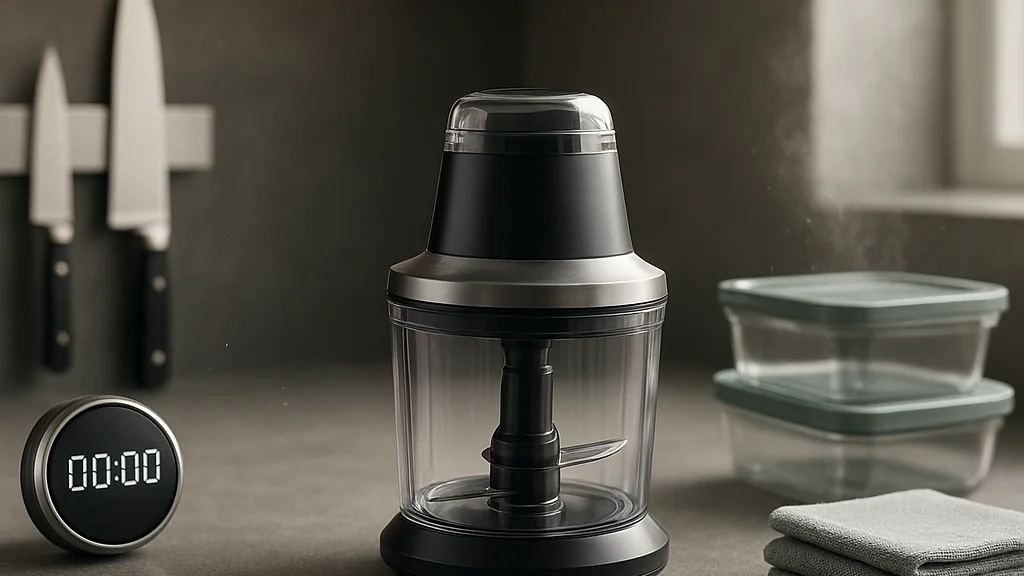
The trick, of course, is separating genuinely useful equipment from drawer-clogging nonsense. A banana slicer may raise a grin; a decent pressure multicooker can rescue a weeknight. A flimsy chopper may save thirty seconds once; a powerful stick blender can earn its keep three times a week. The best gadgets do one of three things exceptionally well: they compress cooking time, reduce manual labour, or simplify a process that usually puts people off cooking from scratch.
This list focuses on eight devices that consistently justify their space in a real kitchen. Not showroom kitchens. Real ones, where cupboards are crowded, counters are finite and somebody is asking when dinner will be ready. If you want a broader companion read, WriteUpCafe has also explored time-saving kitchen gadgets that transform cooking efficiency and the wider trend in best kitchen gadgets that save time in 2026.
The best kitchen gadget is not the cleverest one. It is the one you reach for on a Wednesday when you are hungry, distracted and short on patience.
What follows is not a parade of gimmicks. It is a working shortlist—ranked by utility, versatility and the amount of drudgery each tool removes from ordinary cooking.
How the modern kitchen became obsessed with efficiency
Kitchen gadget culture used to split into two camps. On one side sat serious kit: food processors, stand mixers, pressure cookers. On the other sat novelty items sold as stocking fillers and forgotten by February. That divide has narrowed. The rise of social video, direct-to-consumer cookware brands and online reviews has made shoppers more ruthless. They want proof that a product saves measurable time, not just a slick demo.
Several wider changes explain the shift. Energy prices in Europe pushed many households to think harder about cooking methods that use less hob and oven time. Batch cooking became more common. Air fryers exploded because they promised speed and lower running costs than a full-sized oven. Meanwhile, hybrid working altered meal patterns. More people now prepare lunch at home but still need quick breakfasts, efficient clean-up and flexible dinner tools. Convenience is no longer shorthand for processed food; it increasingly means smarter equipment for scratch cooking.
Retail media has tracked the trend in broad strokes. AOL highlighted gadgets aimed at saving both time and energy, while MSN focused on prep-time reductions and multi-use tools. Those editorial choices are telling. Consumers are not only asking, “What can this do?” They are asking, “What step can this remove?” Peel less, chop faster, stir less, wait less.
That is also why single-purpose gadgets survive only when they solve a maddening task better than any knife or spoon can. A garlic press still has a place because mincing garlic by hand every night is tedious. A salad spinner survives because wet leaves are a nuisance and paper towels are wasteful. But the bigger winners in 2026 remain hybrid machines—devices that combine functions and reduce both cognitive and physical load.
For British kitchens especially, where space can be tighter than in glossy American appliance adverts, every gadget must argue its case. A machine that braises, steams, slow-cooks and pressure-cooks has a stronger claim than something that only slices strawberries into hearts. Utility wins. Countertop democracy is brutal.
- Time compression: faster heating, shorter cook cycles, less waiting.
- Labour reduction: chopping, mixing, shredding or stirring done mechanically.
- Clean-up efficiency: fewer pans, fewer attachments, dishwasher-safe parts.
- Versatility: one tool replacing two or three others.
Those are the standards behind this top eight. If a gadget cannot clear at least two of those hurdles, it does not belong.
1 to 4: the heavy hitters that genuinely change weeknight cooking
1. The multicooker. If one gadget best captures the modern need for speed, it is the electric multicooker—especially pressure-cooking models from brands such as Instant Pot and Ninja. Their strength is not one magical feature but the stacking of several. Pressure cooking cuts braising and bean-cooking times dramatically; sauté mode means you can brown aromatics before sealing the lid; slow-cook and steam settings widen the menu. For households making stews, dhal, stock, pulled meats or grains, this machine saves both active time and attention. You are not tied to the hob, and you are not washing three separate pans afterwards.
2. The air fryer. The air fryer is no longer a trend piece. It is infrastructure. Since 2020 it has moved from curiosity to staple, particularly in the UK where compact kitchens and high energy costs made its pitch especially persuasive. It preheats quickly, crisps efficiently and handles everything from salmon fillets to roast veg to reheated leftovers. It will not replace every oven task, but for small-to-medium portions it can shave meaningful time off cooking. The best models now include dual drawers, sync functions and probe thermometers—features that make them more useful for full meals rather than just chips and beige freezer fare.
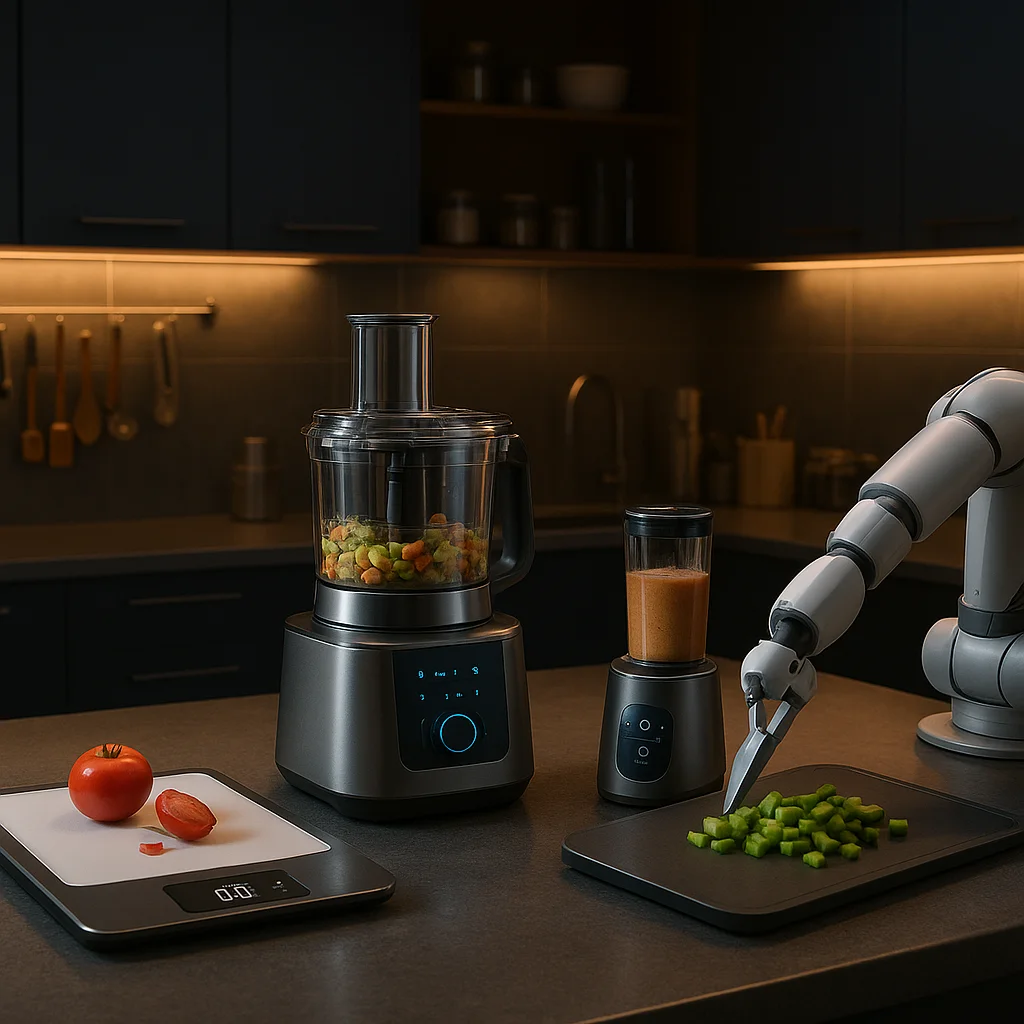
3. The food processor. This remains the prep king. Slicing, grating, chopping, mixing pastry, blitzing breadcrumbs—few devices remove more repetitive knife work. If you cook in volume, make slaws, grate cheese, prep mirepoix, or batch-produce sauces, the minutes saved accumulate quickly. The caveat is simple: buy one powerful enough to avoid constant stopping and scraping. A weak processor wastes time by pretending to save it.
4. The immersion blender. A proper stick blender is one of the best-value tools in the kitchen. It purées soup in the pot, emulsifies dressings, whips up mayonnaise, blends baby food, smooths sauces and can often chop small quantities with a mini attachment. Compared with hauling out a jug blender, it reduces setup and washing-up dramatically. For soup alone, it earns its keep during autumn and winter.
When a gadget replaces a pan transfer, a preheat cycle or ten minutes of knife work, it is no longer a luxury. It is workflow.
These first four matter because they tackle the largest time sinks: long cooking, repetitive prep and multi-step transfers. If you only buy one or two gadgets, start here. They are the kitchen equivalent of hiring reliable staff.
5 to 8: smaller tools, sharper gains
5. The electric kettle with variable temperature. This may sound painfully British, but hear me out. A fast kettle is not merely for tea. It speeds up pasta water, stock preparation, couscous, ramen, blanching and any recipe that starts with boiling liquid. Variable temperature models also help with coffee and delicate infusions. In practical terms, they reduce the lag between deciding to cook and actually cooking. It is a modest gain each time—yet repeated daily.
6. The salad spinner. Dull? Yes. Brilliant? Also yes. Anyone who regularly cooks greens knows this. Washed lettuce that remains wet dilutes dressings and discourages meal prep. A spinner makes greens usable immediately, which means salads become easier to assemble on a weeknight. It also works for herbs and even some berries. This is a classic example of a low-glamour tool that quietly changes behaviour: when prep is easier, you eat more fresh produce.
7. The mandoline slicer. Used carefully—and with the guard, always—the mandoline produces fast, even slices that would take far longer by hand. Potatoes for dauphinoise, cucumbers for pickling, onions for tarts, cabbage for slaw: consistency improves cooking and presentation while cutting prep time. It is not for every cook, but for anyone who makes gratins, salads or bulk vegetable dishes, it is a serious accelerator.
8. The digital probe thermometer. Some readers may balk at calling this a time-saver, but it absolutely is. Guesswork prolongs cooking. A quick-read thermometer tells you when chicken, fish, bread or roast meat is actually done, preventing both undercooking and the all-too-common overcooked “just five more minutes” syndrome. Better still, newer leave-in probes connect to apps and reduce the need to keep opening the oven or air fryer. Less checking, more certainty.
Together, these four gadgets prove that time-saving is not only about speed. It is about removing hesitation, inconsistency and avoidable faff. A mandoline does not cook for you, but it turns a pile of potatoes into uniform slices in moments. A thermometer does not season a roast, but it stops you hovering anxiously like a contestant awaiting Paul Hollywood’s handshake.
- Multicooker: best for one-pot meals, beans, braises and batch cooking.
- Air fryer: best for quick roasting, reheating and smaller portions.
- Food processor: best for bulk prep, slicing, grating and dough tasks.
- Immersion blender: best for soups, sauces and small-batch blending.
- Variable-temperature kettle: best for speeding up boiling-water tasks.
- Salad spinner: best for making washed greens instantly usable.
- Mandoline slicer: best for rapid, uniform vegetable slicing.
- Digital probe thermometer: best for reducing guesswork and overcooking.
What changed recently: the 2026 gadget market is smarter, not just shinier
The kitchen gadget market in 2026 looks different from the boom years when every new release tried to feel futuristic. The emphasis now is refinement. Brands have learned that consumers care less about novelty than about reliability, easier cleaning and compact design. That sounds mundane, but it is where real progress lives.
Air fryers offer the clearest example. Early models were often cramped, noisy and limited to one basket. Current premium designs increasingly feature dual-zone cooking, sync-and-match programmes, improved non-stick coatings and clearer presets. Those changes matter because they solve genuine household problems—cooking protein and vegetables at the same time, for instance, rather than in awkward stages.
Multicookers have also matured. Newer devices place more emphasis on guided programmes, quieter steam release, better searing performance and app-supported recipes. Not every connected feature is essential, but some are genuinely useful for busy cooks who want dependable results with minimal babysitting. The market has moved from “look what this machine can do” to “how little effort can this machine demand?”
On the smaller-tool side, materials have improved. Better blade steels hold edges longer on mandolines and processors. Thermometers read faster. Salad spinners are sturdier and less prone to the wobble that once made them feel like cheap plastic toys. Even kettles have become more precise, with hold-temperature functions that appeal to coffee drinkers and efficient home cooks alike.
Editorial coverage reflects this maturing market. The gadget round-ups from MSN and AOL lean heavily toward practical utility rather than novelty. WriteUpCafe’s own recent coverage in 2026’s best kitchen gadgets that save time similarly points to a market where efficiency, not spectacle, drives purchasing decisions.
There is another 2026 wrinkle worth noting: consumers are more sceptical. They read reviews, compare wattage, check dishwasher safety and scrutinise replacement-part availability. A gadget is no longer judged only on first use. It is judged on whether it still saves time six months later, when the blade has dulled, the basket coating has worn, or the fiddly lid has become a nuisance. That is healthy. It is also why the best gadgets on this list are established workhorses rather than viral curios.
How to choose the right gadget for your cooking style
The wrong kitchen gadget wastes more than money. It wastes space, attention and goodwill. Choosing well starts with honesty about how you cook. Not aspirationally—actually. If you rarely bake, a stand mixer may be overkill. If you cook soups, curries and stews twice a week, an immersion blender or multicooker makes far more sense.
Begin with friction mapping. Which kitchen task do you dread most? Chopping vegetables? Waiting for the oven? Washing endless bowls? Your answer should dictate the purchase. Gadget buying often goes wrong when people shop by trend rather than by bottleneck. A compact food processor may transform one household and gather dust in another.
Space is the next filter. In many British homes, especially flats, a gadget that cannot live on the counter effectively becomes harder to use. Retrieval friction is real. If you must excavate a machine from the back of a cupboard, you will use it less. That is why smaller, lighter devices such as stick blenders and thermometers often outperform bulkier appliances in real life.
Then there is clean-up. A machine with six awkward parts may save five minutes in prep and lose seven in washing-up. Dishwasher-safe components, intuitive assembly and durable finishes matter more than marketing gloss. Read user reviews for complaints about lids, seals and blade maintenance; those details determine whether a gadget remains helpful after the honeymoon period.
- Cook mostly one-pot meals? Prioritise a multicooker.
- Reheat leftovers and roast small portions often? Choose an air fryer.
- Prep lots of vegetables? Pick a food processor or mandoline.
- Make soups and sauces weekly? Buy an immersion blender.
- Want low-cost, high-impact upgrades? Start with a kettle or thermometer.
Budget should be assessed over use, not sticker shock. A £25 tool used three times a week can be better value than a £200 appliance used monthly. The best gadget is the one that earns repetition. If you want a useful benchmark, compare your shortlist against the broader categories discussed in WriteUpCafe’s guide to time-saving kitchen gadgets that transform cooking efficiency. The overlap is revealing: durable, versatile tools almost always win.
The bigger picture: why these gadgets shape how we eat
Time-saving gadgets do more than speed up dinner. They influence diet, confidence and household habits. A salad spinner encourages more fresh greens. A multicooker makes pulses and cheaper cuts of meat less daunting. An air fryer nudges people toward cooking at home instead of ordering in. These are not trivial shifts. They affect cost, waste and nutrition over time.
There is also a cultural angle. Home cooking has become oddly bifurcated: on one side, highly aesthetic social-media recipes; on the other, exhausted realism. The most useful gadgets belong firmly to the second camp. They are not there to perform. They are there to make Tuesday manageable. That may sound unromantic, but it is how culinary habits are actually sustained.
For families, the pay-off is obvious. Faster cooking means less dependence on expensive convenience meals. For solo cooks, it means fewer barriers to preparing proper food instead of assembling snacks. For enthusiastic home cooks, it means preserving energy for the interesting parts—seasoning, tasting, plating—rather than expending it on repetitive mechanics.
There is an environmental dimension too, although claims should be made carefully. Smaller appliances can reduce energy use in some scenarios, particularly when replacing a full oven for modest portions. More efficient prep can also support cooking from scratch, which may reduce packaging waste compared with heavily processed convenience foods. The exact savings vary by appliance, tariff and cooking habits, but the direction of travel is clear: efficiency now includes resource use as well as time.
A useful gadget does not replace cooking skill. It protects it from fatigue.
That is why the top eight here are not merely trendy purchases. They are behaviour-shaping tools. They lower the threshold for making soup, roasting vegetables, cooking grains, preparing salads and handling proteins properly. In other words, they make the better choice easier—which is often the only kind of kitchen revolution that sticks.
Final verdict: the best time-saving gadget depends on your bottleneck
If I had to name the single most transformative kitchen gadget for the average household, I would give the nod to the multicooker for sheer range and labour reduction. It is the strongest all-rounder. Close behind comes the air fryer, whose speed and convenience have earned its place fair and square. Yet the smartest buy is not always the biggest machine. A £15 thermometer or a dependable stick blender can improve cooking more than a flashy appliance that does not suit your habits.
So here is the practical takeaway. Audit your week. Count the meals you actually cook. Notice where time leaks away. Are you chopping mountains of vegetables? Waiting endlessly for things to roast? Ruining meat by overcooking it? Buying bagged salad because washing leaves feels like a chore? Your answers point directly to the right gadget.
For most kitchens, the ideal setup is layered rather than singular: one major appliance, one prep tool and one precision tool. That might mean a multicooker, a food processor and a thermometer. Or an air fryer, an immersion blender and a kettle. The combination matters more than any single cult favourite.
And yes, there is still room for pleasure. Efficient cooking need not feel joyless. Quite the opposite. When the dull bits shrink, the good bits expand—the seasoning, the improvisation, the little flourish at the end. That is the sort of kitchen help worth paying for.
If you are building a more efficient home setup, start with the gadget that removes your most annoying recurring task. Buy quality once, use it often, and ignore the shiny nonsense that promises the moon while barely slicing a mushroom. The best kitchen gadgets that save time are not miracles. They are better systems in disguise.






























Sign in to leave a comment.