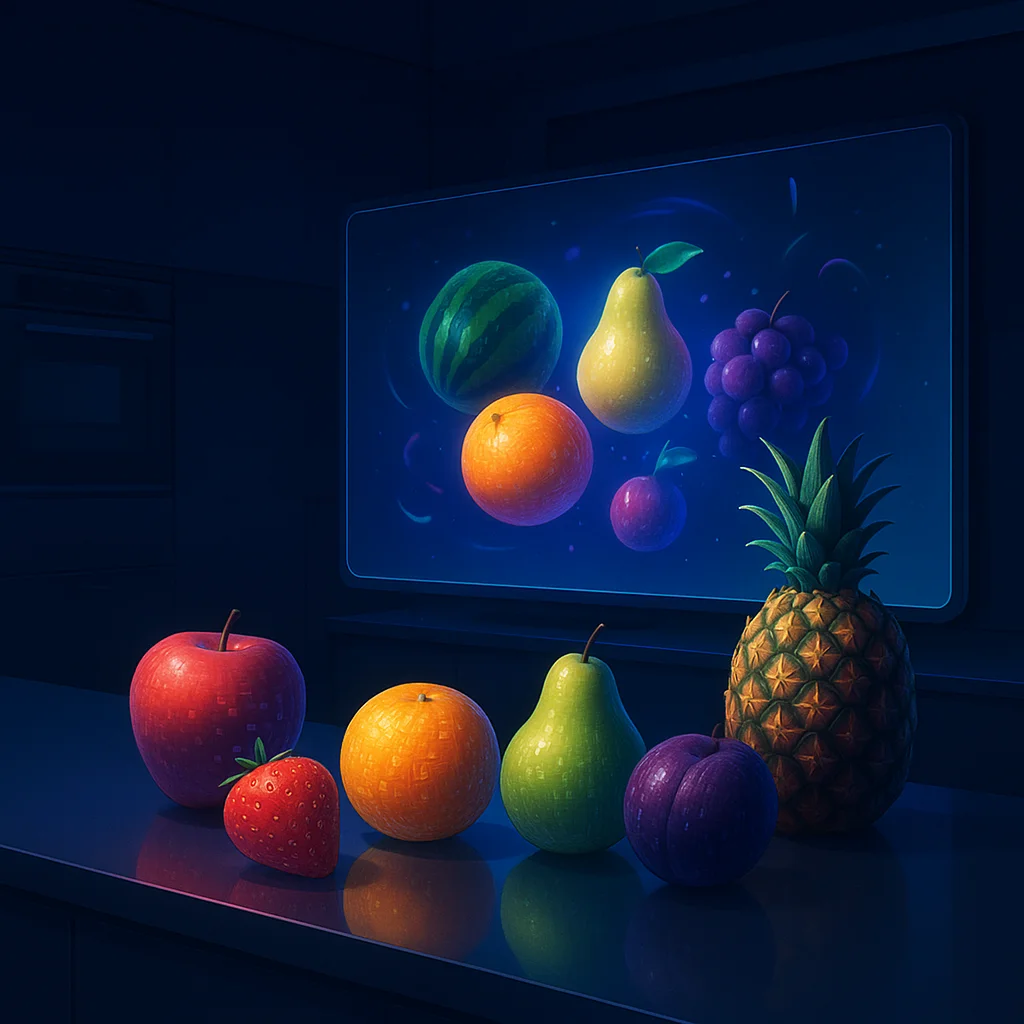

When Fruit Goes Viral: A Strange New Phenomenon in AI Content
Imagine scrolling through your social feed on a quiet London evening in April 2026 and stumbling upon a video of a perfectly ripened mango pulsing with surreal colours, or a bunch of bananas that appear to melt into liquid gold. These are no ordinary fruit videos; they are AI-generated viral sensations sweeping across platforms with millions of views. But beyond the mesmerizing aesthetics lies something unsettling. The latest wave of AI fruit videos — seemingly innocent at first glance — has taken on a darker, more complex character that’s sparking debates among digital creators, foodies, and ethicists alike.
The peculiarity of these videos is not just in their uncanny visuals but in their algorithmic underpinnings and the psychological responses they provoke. According to Wired, many of these viral clips subtly manipulate viewers’ perceptions of food and authenticity, creating a digital fruitscape that’s as seductive as it is disquieting. What exactly is going on behind this viral wave? And why does it matter to the broader food and cooking trends of 2026?
The Roots of Viral AI Fruit Videos: A Brief History
The trajectory of AI-generated food content has accelerated rapidly over the past five years. Initially, AI was harnessed to enhance food photography, improve recipe recommendations, and personalise meal planning — as explored in WriteUpCafe’s piece on AI-driven nutrition apps in meal planning. However, by 2024, the technology began to generate fully synthetic food images and videos with astonishing photorealism.
Early adopters in the marketing and advertising sectors quickly realised these AI creations could captivate audiences more effectively than traditional content, thanks to their ability to present idealised, hyperreal food items that often transcended natural appearances. This led to an explosion of AI-generated fruit videos—short clips showing fruit transforming, melting, or glowing in visually arresting ways.
Yet, the shift from enhancement to fabrication introduced new tensions. The viral appeal of these videos goes beyond aesthetics; it taps into the human psyche’s complex relationship with food, pleasure, and trust. The viral AI fruit videos of 2026 are thus the culmination of years of technological evolution and cultural shifts in digital consumption habits.
Core Analysis: What Makes These AI Fruit Videos So Dark?
To understand the darker undertones, we must look beyond the surface. These AI fruit videos employ advanced generative models—often based on the latest diffusion and transformer architectures—that manipulate visual stimuli to evoke heightened emotional responses. Unlike straightforward food photography, these videos intentionally distort reality to blur the lines between natural and artificial.
Consider the following facets that contribute to their unsettling nature:
- Psychological Manipulation: The videos use uncanny valley effects—making fruit appear almost real but subtly 'off'—triggering cognitive dissonance. Viewers experience a strange mix of attraction and unease.
- Algorithmic Bias: These clips are optimised to maximise engagement metrics, often favouring bizarre or exaggerated transformations that amplify user addiction to novelty.
- Ethical Ambiguity: The videos propagate unrealistic food expectations, potentially impacting eating behaviours and perceptions of natural produce quality.
- Data Privacy Concerns: Some AI models behind these videos harvest and repurpose user interaction data without explicit consent, raising privacy flags.
According to Wired, this combination creates a viral content cycle that’s both mesmerizing and potentially manipulative, raising questions about the implications for food culture and digital media ethics.
“These AI fruit videos don’t just entertain — they subtly reprogram how we perceive food authenticity and desirability,” notes digital culture analyst Dr. Emily Tran.
“The algorithms behind these clips are designed to exploit our sensory and emotional vulnerabilities, creating a dark feedback loop of craving and consumption,” Wired reports.
2026 Developments: The New Face of AI Fruit in Food Media
In 2026, the landscape has shifted further. With generative AI now integrated into mainstream social media platforms, viral AI fruit videos have become a staple of digital food culture. Platforms like TikTok and Instagram have witnessed a surge in these synthetic clips, often created by anonymous AI artists or corporates experimenting with brand engagement.
One notable development is the rise of AI fruit videos as tools for subtle marketing. Several brands have begun commissioning AI-generated fruit content that appears surreal yet aesthetically pleasing, hoping to embed their products in the subconscious of consumers. This strategy leverages what behavioural economists call the ‘mere exposure effect’—the more we see something, the more we tend to like it.
Moreover, there is growing industry concern over the environmental impact of AI content creation. The computational power required for generating these high-fidelity videos is substantial, contributing to the carbon footprint of digital media production. This raises questions about sustainability in food-related AI content, especially as global food systems face mounting ecological pressures.
The intersection of AI-generated fruit videos and food sustainability trends is explored further in WriteUpCafe’s analysis of 2026’s best kitchen gadgets, which also touch on how technology shapes modern cooking practices.
Expert Perspectives: Food Industry and Ethical Implications
Experts in food science, digital ethics, and marketing have weighed in on this viral trend. Dr. Simon Hargreaves, a food anthropologist based in Oxford, warns that these videos risk distorting consumer relationships with real food:
“The hyperreal presentation of fruit in AI videos can create unrealistic standards, potentially undermining appreciation for the natural variability and imperfections inherent in real produce.”
Meanwhile, digital ethicists highlight the opaque nature of AI content generation. Transparency around the AI tools used and their data sources remains limited, complicating efforts to establish accountability.
Marketing professionals, on the other hand, acknowledge the undeniable engagement power of these videos but caution against overreliance on synthetic content. Jane Morgan, a food brand strategist, explains:
“AI fruit videos are incredibly effective at grabbing attention, but brands must balance this with authenticity and ethical storytelling to maintain consumer trust.”
This dialogue underscores a broader tension in food media: the allure of cutting-edge digital creativity versus the necessity of genuine, trustworthy content.
What to Watch: The Future of AI Fruit Videos and Food Culture
Looking ahead, several trends are poised to shape the trajectory of viral AI fruit videos and their place in food culture:
- Regulatory Oversight: Governments and digital platforms may introduce stricter guidelines on AI-generated content disclosure to enhance transparency.
- Hybrid Content Models: Combining AI-generated visuals with authentic culinary storytelling could become the norm, blending creativity with credibility.
- Consumer Awareness: Growing media literacy efforts may help audiences critically evaluate AI food content, reducing susceptibility to manipulation.
- Technological Innovation: Advances in AI ethics and sustainable computing could mitigate environmental impacts and ethical concerns.
- Cultural Shifts: The food community might push back against hyperreal digital food, embracing imperfection and seasonality as antidotes.
For food creators and enthusiasts, these developments highlight the importance of engaging with AI as a tool rather than a substitute for human taste and tradition. As discussed in WriteUpCafe’s exploration of the dark undercurrents behind viral AI fruit videos, awareness and critical engagement will be key to navigating this complex terrain.
Case Studies: Viral AI Fruit Videos That Sparked Debate
Several high-profile AI fruit videos have ignited controversy and discussion in 2026. One viral clip featured a hyperrealistic apple that appeared to pulse with veins of light, trending across European social media and sparking fascination and discomfort simultaneously. Nutritionists expressed concern that such imagery might encourage unrealistic expectations about the appearance and healthiness of fruit.
Another example is an AI-generated video depicting a lemon melting into a neon-hued liquid, which was widely shared but later revealed to have been used in a covert marketing campaign by a major beverage company. The lack of disclosure led to backlash and calls for clearer regulations on AI content transparency.
These cases illustrate how AI fruit videos can serve as both artistic expression and commercial instrument, often blurring ethical boundaries.
Ultimately, these viral phenomena underscore the need for a nuanced understanding of how AI shapes food culture and consumer perceptions in 2026 and beyond.
































Sign in to leave a comment.