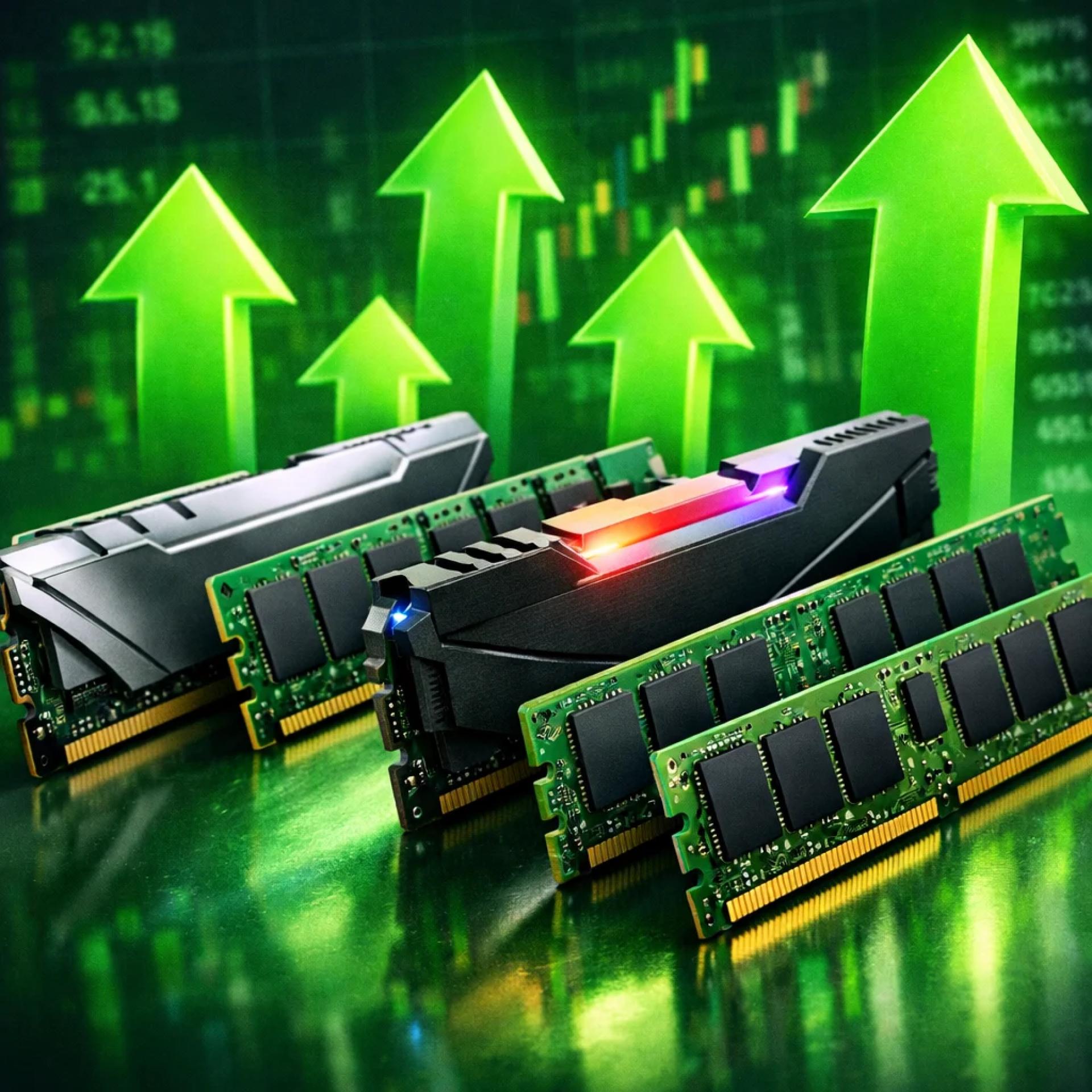

The rapid rise of artificial intelligence is causing major disruptions in the global technology components market. In 2026, memory prices have surged sharply, raising concerns that many electronic devices such as laptops, PCs, and smartphones may become more expensive.
Global RAM prices surge in 2026
The RAM (Random Access Memory) market is experiencing a rare price spike. According to market research firms like TrendForce and Counterpoint Research, global DRAM prices in Q1 2026 increased by approximately 80–90% compared to the previous quarter.
This is considered one of the strongest increases in the memory market in recent years. Many high-capacity DDR5 modules for personal computers and servers have seen dramatic price jumps in just a few months.
On online marketplaces, some RAM kits that were priced under $100 in 2025 have risen to over $150–200. For higher-capacity RAM products, the increase is even more significant due to growing demand from large-scale data processing systems.
The AI boom reshapes the memory market
The main driver behind this price surge is the explosion of artificial intelligence in large-scale data centers.
Modern AI systems require enormous amounts of memory to train and run large computational models. This has significantly boosted demand for memory chips while manufacturing capacity struggles to keep up.
In addition, major semiconductor companies such as Samsung Electronics, SK Hynix, and Micron Technology are shifting their focus toward high-performance memory products that support AI, such as HBM (High Bandwidth Memory). This production shift is making conventional RAM for PCs and smartphones increasingly scarce.
According to a TrendForce analyst, “the wave of AI investment is consuming an unprecedented amount of memory, putting strong pressure on global DRAM supply.”
Risk of rising electronic device prices
RAM is a critical component in laptops, desktops, and smartphones. As memory prices increase, production costs for these devices also rise.
According to IDC researchers, if the upward trend continues, many manufacturers may need to adjust retail prices in upcoming product cycles.
Moreover, smart devices will require larger RAM capacities to support on-device AI features. This further increases component costs compared to previous generations.
As a result, consumers may have to pay more for new laptops, PCs, and smartphones in the coming years.
5 key figures highlighting the global RAM surge in 2026
- Global DRAM prices increased by about 80–90% in Q1 2026 — a rare surge in the memory market: 90%
- Some DDR5 products recorded price increases of 200–300% during shortages
- RAM prices are expected to rise another 15–20% in subsequent quarters of 2026 if AI demand continues to grow
- Samsung, SK Hynix, and Micron together account for over 90% of the global DRAM market: three dominant players
- Global AI and data center projects are consuming record levels of memory, driven by hundreds of billions of dollars in AI investment
A new semiconductor price cycle
Experts believe the memory market is entering a new price upcycle, following previous boom periods in the semiconductor industry. However, this time the driving force is not only consumer electronics demand but also the global race to develop AI.
If investment in artificial intelligence continues to accelerate, computer memory could become one of the most critical components in the tech industry over the next decade. This also means consumers may face a new reality: more powerful devices—but at higher costs.
To find reasonably priced and reliable RAM, you can check out kimhai.com.vn, a supplier known for offering fairly stable pricing that closely aligns with the broader market.


























Sign in to leave a comment.