
Introduction
Real estate businesses are shifting toward digital platforms. They want to meet modern buyer expectations.
Real Estate App Development helps connect buyers, sellers, and agents in one mobile platform. It improves property d
iscovery and communication.
It also improves transaction transparency for users. This guide explains how to build a real estate app step by step.
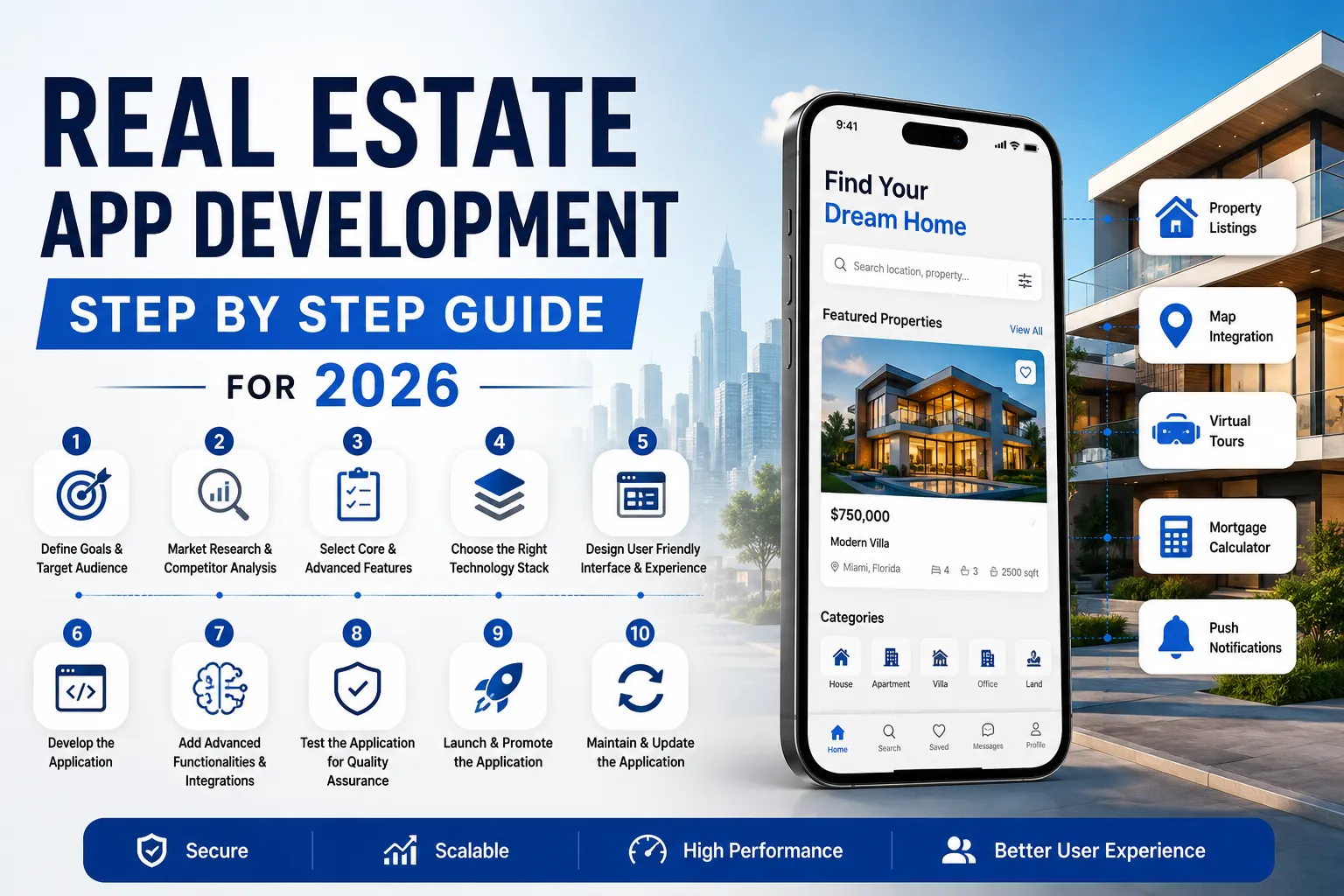
Step 1: Define Business Goals and Target Audience
Every Real Estate App Development project starts with clear goals. These goals guide feature planning and success tracking.
Clear goals help decide features and monetization models. They also support long term product strategy.
Target audience research is also important. It includes buyers, renters, investors, and agents.
User behavior analysis helps understand real needs. It helps design useful and simple app features.
Step 2: Conduct Market Research and Competitor Analysis
Market research shows current real estate trends. It also shows user expectations and pricing models. This data helps improve planning.
Competitor analysis studies existing real estate apps. It highlights strengths and weaknesses of those apps.
Apps like Zillow and Realtor provide useful benchmarks. This step helps find gaps in the market.
Step 3: Select Core and Advanced Features
Feature selection is a key part of Real Estate App Development. It affects app success and growth.
Core features include property listings and search filters. User login and secure authentication are also important.
Advanced features include virtual tours and map integration. Mortgage calculators also help buyers make decisions. Push notifications keep users updated about new listings.
Step 4: Choose the Right Technology Stack
Technology stack impacts app speed and scalability. It also affects future updates and maintenance.
Frontend development can use Flutter or React Native. These tools support cross platform mobile apps.
Backend development can use Node.js, Python, or PHP. These handle APIs and business logic.
Databases like MongoDB and MySQL store structured data. Cloud platforms like AWS or Google Cloud support hosting.
Step 5: Design User Friendly Interface and Experience
UI design focuses on simple and clean layouts. It improves visual clarity for users.
UX design focuses on smooth user journeys. It reduces friction during property search.
Wireframes and prototypes help plan the app structure. They are created before development starts.
Simple navigation improves user engagement. Clear buttons improve user actions.
Step 6: Develop the Real Estate Application
Development starts after final design approval. It also follows selected technology stack.
Frontend developers build interactive screens. These screens connect with backend systems.
Backend developers create APIs and manage data. They also handle authentication systems.
Third-party tools add extra features. Examples include maps and payment systems.
Testing during development helps find bugs early. It improves overall app quality.
Step 7: Add Advanced Functionalities and Integrations
Advanced features improve app usability. They also improve user engagement.
Artificial intelligence recommends properties based on user behavior. It improves search accuracy.
Augmented reality supports virtual property tours. It helps users explore spaces remotely.
Chatbots answer common user questions. They also guide users in the app.
Analytics tools track user activity. They support better business decisions.
Step 8: Test the Application for Quality Assurance
Testing ensures app stability and reliability. It is a key development step.
Functional testing checks all app features. It ensures correct working behavior.
Performance testing checks speed and scalability. It tests the app under load.
Security testing protects user data. It prevents unauthorized access.
Bug fixing improves app stability. It builds user trust.
Step 9: Launch and Promote the Application
App launch needs planning and marketing. It improves visibility and reach.
Publishing on app stores increases downloads. It makes the app publicly available.
Social media marketing promotes listings. It also attracts buyers and investors.
Content marketing builds brand awareness. It supports long term growth.
Step 10: Maintain and Update the Application
Maintenance keeps the app working smoothly. It also improves long term performance.
Regular updates add new features. They also fix existing issues.
Performance monitoring finds system problems. It improves efficiency.
Security updates protect the platform. They reduce risks from threats.
User feedback helps improve the app. It increases user satisfaction.
Cost Factors in Real Estate App Development
Cost depends on app features and complexity. It also depends on developer location.
Basic apps cost less than advanced apps. AI and AR features increase cost.
Design, development, testing, and maintenance add to total cost. Each phase impacts budget.
Outsourcing can reduce development cost. It can also maintain good quality.
Conclusion
Real Estate App Development needs proper planning. It also needs continuous improvement.
A structured approach helps build scalable apps. It also improves user experience.
Modern technology improves business performance. It also supports better customer experience.
Mobikul can be considered for custom real estate app development solutions.






























Sign in to leave a comment.