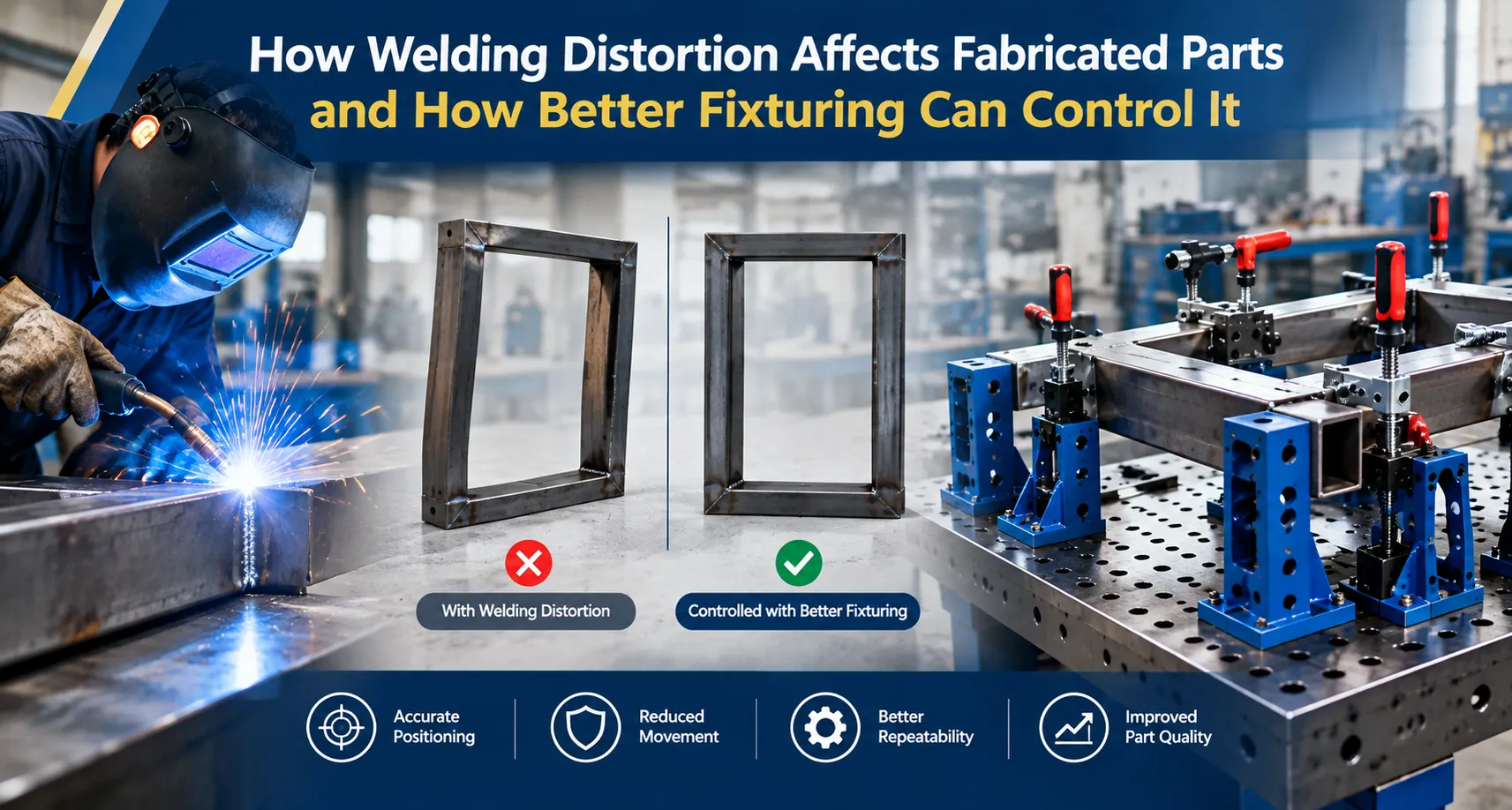

Rework can consume valuable production time, especially when fabricated components fail to meet required dimensions or do not align correctly during assembly. Welding distortion is one factor that can contribute to these problems.
The welding process involves significant heat. As the metal expands and contracts, the workpiece can experience dimensional changes. When these changes are uneven, the finished part may become distorted.
Understanding the Source of Movement
The amount of distortion depends on factors such as weld size, heat input, material thickness, joint design, welding process, and restraint.
Fabricators should consider these factors before welding rather than waiting until the component has already changed shape.
How Distortion Affects Manufacturing
Distortion can affect both quality and productivity. A component may need additional straightening, machining, or repositioning before it can be assembled.
Some common consequences are:
- Misaligned components
- Inaccurate dimensions
- Increased rework
- Longer assembly times
- Material waste
- Variation between production batches
Using Fixtures for Better Positioning
Fixturing can provide reference points and controlled restraint during welding. A stable fixture setup allows operators to position components consistently.
Stops, locators, squares, and clamps can work together to maintain the required position.
FIXTO Welding Solution provides modular workholding solutions that can be configured for different welding applications.
Why Clamps Matter
Welding table clamps can help keep components seated against reference points. This can reduce unwanted movement while welding is taking place.
However, clamping should not be excessive. The objective is to control movement while considering the stresses created during the welding process.
A Complete Distortion-Control Strategy
Manufacturers should combine fixturing with appropriate welding practices. Heat input should be managed, weld sequence should be planned, and joint fit-up should be accurate.
Material thickness and weld size should also be considered. Tack welding and balanced welding can form part of the overall strategy where appropriate.
Conclusion
Better fixturing can help fabricators improve positioning and repeatability, potentially reducing alignment problems and corrective work. However, successful distortion control requires the fixture and welding process to work together.
For the complete guide, read more: How Welding Distortion Affects Fabricated Parts and How Better Fixturing Can Control It.


















Sign in to leave a comment.