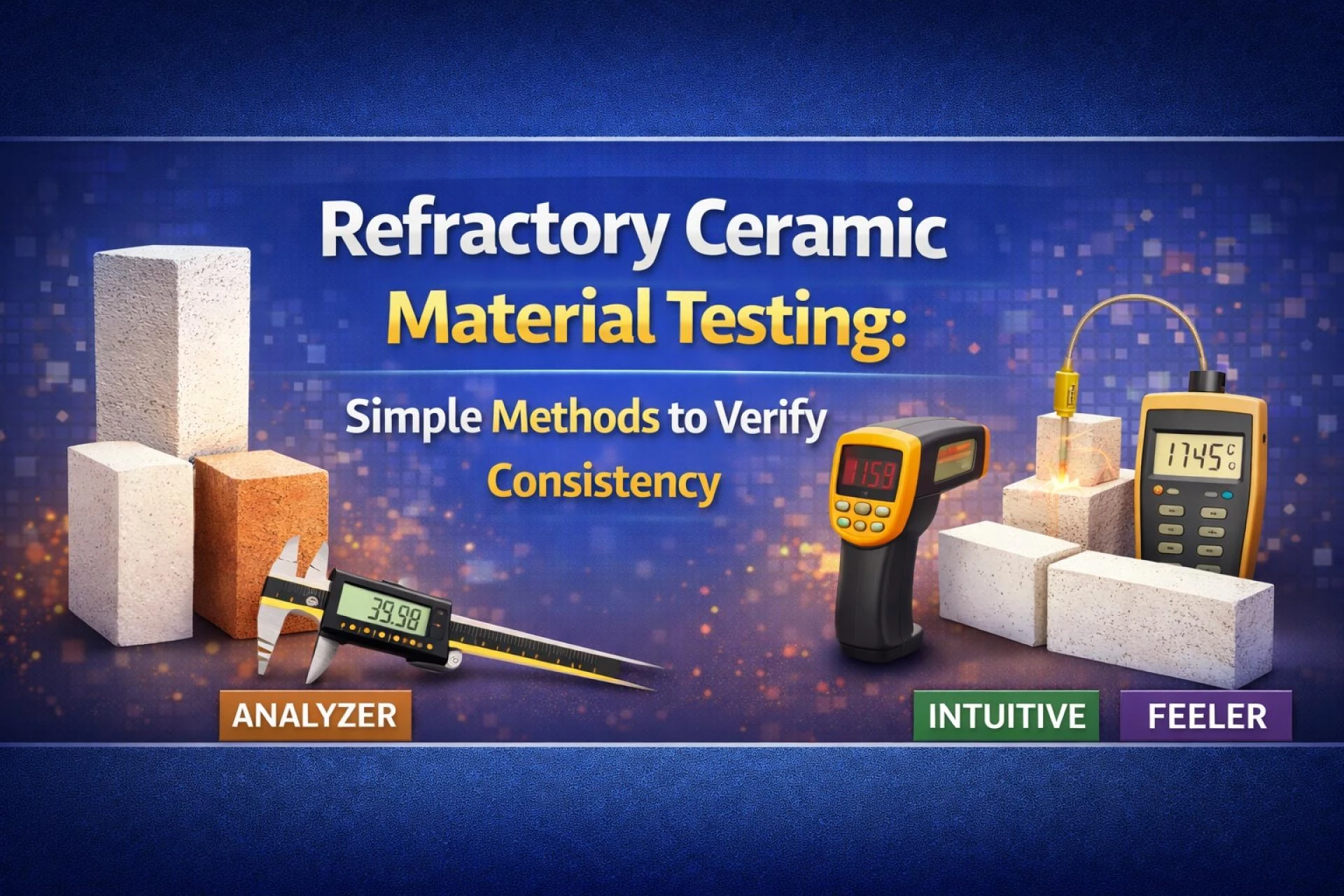

When it comes to high-temperature industrial applications, consistency in refractory ceramic material is not just a quality issue—it’s a necessity. From shell building in investment casting to kiln linings and foundry molds, even the slightest inconsistency in material properties can lead to serious consequences: cracks, deformations, failed castings, or unexpected breakdowns. That’s why regular and simple testing methods are crucial to ensure material reliability across batches, shifts, and production sites.
Let’s face it—ceramics are complex. They’re influenced by everything from particle size to moisture content, slurry viscosity, temperature, and drying conditions. But here’s the good news: verifying their consistency doesn’t always require expensive lab equipment or complex testing rigs. With a solid understanding of what to look for and a few straightforward methods, manufacturers and foundry operators can ensure quality, minimize waste, and reduce costly production delays.
In this article, we’ll walk through several simple and practical tests that can be performed on-site or with minimal setup to ensure your refractory ceramic materials remain consistent. We’ll also explore why these small checks can have a big impact on casting performance and material longevity.
Refractory Ceramic Material quality is especially important in precision applications where uniformity in shell properties determines final product integrity. SHENZHEN LONNMETER GROUP has been a leader in helping industries maintain tight control over ceramic processes, offering innovative measurement tools and solutions to monitor slurry viscosity, solid content, and material behavior in real-time. These kinds of systems bridge the gap between lab-grade testing and shop-floor practicality, making it easier to catch problems before they spiral out of control.
Why Testing Consistency in Refractory Ceramics Matters
It only takes one weak shell or defective batch of refractory to ruin an entire production run. Imagine pouring thousands of dollars worth of molten alloy into a mold, only for it to crack, leak, or collapse because the shell didn’t meet the expected mechanical or thermal standards. This happens more often than you’d think—and the root cause usually ties back to inconsistent ceramic material.
Here’s what consistency influences:
- Thermal shock resistance: Even distribution of grains and binders prevents localized stress.
- Permeability and gas escape: Helps reduce porosity, bubbles, and casting defects.
- Drying behavior: Inconsistent materials dry unevenly, leading to shell cracking.
- Shell strength and finish: Uniform material ensures clean surface finish and dimensional accuracy.
Without testing, there’s no way to ensure that each batch performs as expected. Relying on supplier specs or visual inspection alone just isn’t enough.
Simple Physical Tests to Verify Ceramic Consistency
You don’t need a full-blown lab to run meaningful tests. Many foundries and ceramic shops use practical, quick-to-perform checks that give valuable insight into material behavior. Here are the most common ones:
1. Slurry Viscosity Test (Dip Stick or Zahn Cup Method)
What it checks: Flowability and consistency of ceramic slurry
How to perform:
- Use a dip stick or a Zahn cup to measure how quickly the slurry flows.
- Time how long it takes for the liquid to empty or reach a certain level.
- Compare it to a reference time (e.g., 25 seconds through a specific cup).
Why it matters: Too thick? The shell will build unevenly. Too thin? Coats may be weak or patchy. Monitoring viscosity regularly ensures consistent slurry performance.
2. Ball in Cup or Wet Density Test
What it checks: Slurry density and solid content
How to perform:
- Drop a standard ceramic ball into a filled cup of slurry.
- Observe how quickly it sinks or floats.
- Compare the result with previous batches.
Why it matters: Changes in density indicate shifts in solid-to-liquid ratio, possibly due to water evaporation or improper mixing.
3. Dry Scratch or Finger Nail Test
What it checks: Drying behavior and initial shell hardness
How to perform:
- Let a coated wax pattern dry for a set time.
- Use a fingernail or tool to lightly scratch the surface.
- Check for chalkiness or softness.
Why it matters: If the shell is too soft after standard drying time, the slurry may have too much binder or moisture.
4. Weight Consistency Check
What it checks: Coating thickness and material pickup
How to perform:
- Weigh the wax pattern before and after each ceramic dip.
- Track the weight gain for each layer.
Why it matters: Deviations from the expected weight gain can indicate inconsistent slurry pickup or shell thickness.
5. Shell Strength Break Test
What it checks: Final shell mechanical strength
How to perform:
- After drying, take a small portion of the shell and apply pressure until it breaks.
- Record the pressure or resistance (this can be subjective or done with a basic press).
Why it matters: Weak shells crack during dewaxing or pouring, leading to casting failure.
6. Visual Inspection of Surface Finish and Cracking
What it checks: Shell uniformity and drying integrity
How to perform:
- Visually inspect the shell surface under good lighting.
- Look for pinholes, cracks, flaking, or inconsistent texture.
Why it matters: Surface flaws in the shell translate to defects in the final cast part. It’s a quick but often overlooked step that can catch major problems early.
Monitoring Slurry Life: Don't Let Your Mix Go Bad
Slurry isn't immortal—it ages. Over time, ceramic particles settle, binders degrade, and viscosity changes. This is especially true if the slurry isn’t stirred regularly or is exposed to air or temperature fluctuations.
Simple daily checks like:
- pH measurements
- Temperature control
- Observation of odor, color, or separation
…can help catch signs that your slurry is breaking down. Refreshing or replacing the slurry at the right time avoids defects and maintains consistency.
For operations seeking tighter control, automated systems can now measure and log slurry properties over time. Solutions from SHENZHEN LONNMETER GROUP make this kind of data collection straightforward, helping teams spot deviations before they become defects.
Environmental Factors: The Silent Consistency Killer
Even if your raw materials and mixing process are perfect, external conditions can sabotage your consistency.
Key variables to control:
- Humidity: High moisture in the air slows drying and affects binder setting.
- Temperature: Affects drying rate and slurry behavior.
- Airflow: Uneven airflow can lead to uneven shell drying and cracking.
Simple steps like climate-controlled drying rooms, consistent airflow, and shielding materials from direct sunlight can greatly improve ceramic consistency.
Consistency Starts with People and Process
Training your team to understand what “normal” looks like—and when to raise a flag—is one of the most effective ways to maintain consistency. Documented procedures, checklists, and comparison samples (like a "gold standard" test shell) are invaluable.
Here are a few low-cost consistency best practices:
- Maintain logs of daily tests and material behavior.
- Calibrate dip times, drying times, and testing tools weekly.
- Create a simple quality control chart visible to all team members.
- Rotate slurry containers to prevent sedimentation issues.
These practices don’t just ensure quality—they also create a culture of accountability and pride in craftsmanship.
To see how consistent materials directly affect the investment casting process, visit https://www.lonnmeter.com/ceramic-slurry-viscosity-in-investment-casting/.
The ROI of Simple Ceramic Testing
Some shops still see testing as a time-consuming hassle. But the reality? Testing saves time and money. Here's how:
- Reduces defects and scrap
- Speeds up production by catching issues early
- Extends the life of slurry and equipment
- Improves customer satisfaction and product quality
Plus, when tests are built into the process, they become second nature—taking just minutes a day but delivering lasting benefits.
Consistency isn’t just about following specs—it’s about understanding your materials at every stage and being proactive. Whether you’re using high-end monitoring systems or simple dip tests, what matters most is using them regularly and interpreting the results correctly.
Final Thoughts: Small Tests, Big Results
Testing refractory ceramic material doesn’t have to be complicated to be effective. By incorporating simple daily checks, visual inspections, and basic physical tests into your workflow, you can dramatically reduce inconsistencies, improve shell reliability, and boost overall process confidence.
The best operations don’t wait for problems—they anticipate and prevent them. With the right testing habits, even small teams can achieve high-performance results, job after job.




























Sign in to leave a comment.