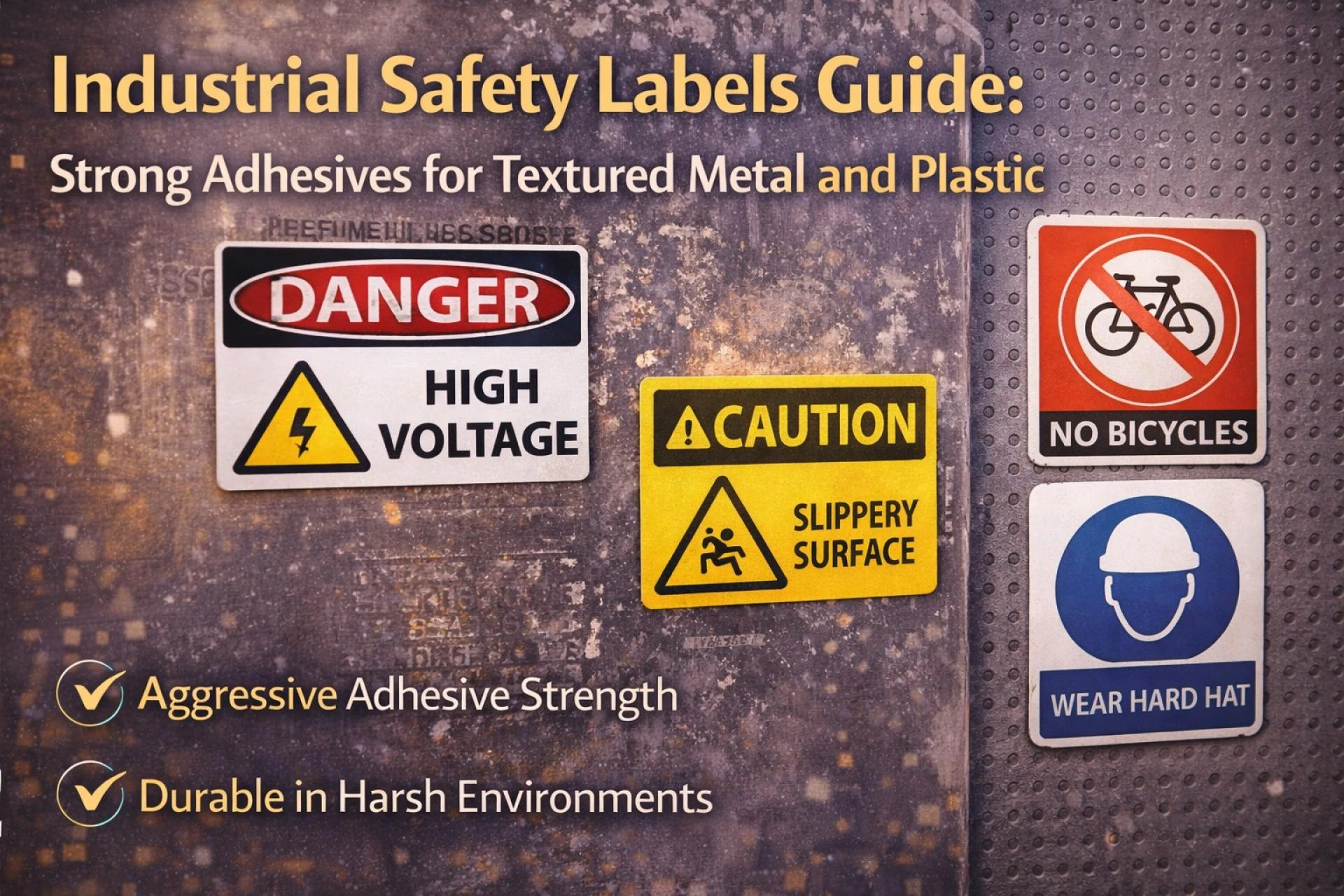

When it comes to industrial safety, labels are your first line of defense. They warn workers of hazards, provide crucial instructions, and help companies stay compliant with safety regulations. But in environments where equipment is made of textured metal or plastic, getting those labels to stick—and stay stuck—can be a real challenge. Smooth surfaces? No problem. But textured, curved, or uneven surfaces require far more than just a standard adhesive backing. They demand strong, specialized adhesives engineered to bond with tough materials under tough conditions.
Think about it: factories, construction sites, and manufacturing floors aren’t the cleanest or most controlled environments. Grease, dust, and fluctuating temperatures are part of the daily grind. Slapping on a label that peels off after a week doesn’t just waste money—it compromises safety. That’s why the adhesive behind the label is just as important as the message it carries. It needs to grip tightly, resist moisture, and perform through heat, chemicals, and cleaning cycles.
Using industrial safety labels specifically designed for high-performance adhesion is crucial. These aren't your run-of-the-mill office labels. We're talking about labels that can cling to powder-coated metals, high-density plastics, and textured finishes—surfaces where most adhesives fail. And not just stick temporarily. These labels must hold strong through vibration, exposure, and industrial-grade cleaning without curling, lifting, or becoming illegible.
Why Adhesion Gets Tricky on Textured Surfaces
At a glance, a surface may look solid and uniform, but on a microscopic level, textured materials like metal and plastic are full of ridges, bumps, and valleys. When you apply a standard adhesive label, it only makes contact with the peaks of those surfaces—leaving gaps that weaken the bond. Over time, these gaps allow air, moisture, and grime to seep in, loosening the label.
Plastic and metal also expand and contract with temperature changes, further stressing adhesives. And many plastics—like polyethylene and polypropylene—are naturally non-polar and resist bonding with adhesives altogether unless specially treated. In addition, metal surfaces may have coatings or finishes that prevent proper adhesion.
In these cases, you need a high-tack adhesive formulated for “low surface energy” materials. These adhesives are designed to flow into surface irregularities and maintain a strong grip despite temperature shifts and environmental exposure. Pressure-sensitive adhesives, often based on acrylic or rubber compounds, are among the most popular solutions for these kinds of industrial challenges.
Choosing the Right Adhesive for the Right Surface
Not all adhesives are created equal. The right one depends on the surface you're labeling. For textured metal surfaces—like brushed stainless steel, galvanized panels, or painted machine casings—an aggressive acrylic adhesive is often the best choice. These adhesives are engineered to create a long-lasting bond that resists chemicals, oil, and high temperatures.
On the other hand, labeling plastic parts, containers, or housing units often requires adhesives that can handle slick or oily finishes. Many industrial plastics are treated with anti-static or hydrophobic coatings that repel standard adhesives. In such cases, modified acrylic or rubber-based adhesives with primer layers work better.
Here’s a quick breakdown:
| Surface Type | Recommended Adhesive Type | Key Features |
|---|---|---|
| Textured Metal | Acrylic (high-tack, pressure-sensitive) | Heat & chemical resistant, durable grip |
| Painted or Coated Metal | Solvent acrylic | Penetrates coatings, resists peeling |
| Polypropylene/Polyethylene (Plastic) | Rubber-based or modified acrylic | Bonds with low surface energy materials |
| Curved/Uneven Surfaces | Flexible film adhesives | Conformable, maintains bond on irregular shapes |
The goal is simple: make sure the label sticks immediately and stays in place under stress. For industries like automotive, aerospace, logistics, and heavy machinery, this isn’t just a best practice—it’s non-negotiable.
Application Tips: Getting Maximum Bond Strength
Even the strongest adhesive can fail if applied incorrectly. Getting the surface and application process right is key to label performance. First, always clean the surface. Use isopropyl alcohol or a degreasing agent to remove oil, dust, or other contaminants that can interfere with adhesion. Never apply labels to wet or dirty surfaces—adhesives need direct contact with the substrate to bond properly.
Second, consider the application temperature. Most industrial adhesives perform best between 50°F and 90°F (10°C to 32°C). Applying labels outside this range can weaken the initial bond. Once applied, adhesives often cure or strengthen over the next 24 to 48 hours, especially if pressure is applied to activate bonding.
Here are some pro tips:
- Use pressure: Apply even pressure across the entire label surface to force the adhesive into surface irregularities.
- Avoid repositioning: Once a label is applied, don't lift and reapply. This weakens the bond.
- Use edge sealers in high-moisture areas: Prevent water ingress at label edges in outdoor or wash-down environments.
For complex surfaces, such as curved plastic housings or dimpled metal panels, choosing a label with a conformable facestock—like flexible vinyl or thin polyester—will help the label hug the surface and stay in place.
Weather Resistance and Long-Term Durability
Beyond sticking power, the label must last. That means resisting water, chemicals, UV exposure, and temperature swings. Industrial labels are exposed to it all—from steam cleaning to oil splashes and outdoor elements. A strong adhesive paired with a weatherproof facestock is what ensures long-term readability and performance.
Polyester films are particularly valued for their dimensional stability and resistance to tearing, abrasion, and solvents. Paired with high-performance acrylic adhesives, they offer long-term outdoor durability. Vinyl films are more flexible and suitable for curved surfaces but may degrade faster under intense UV exposure. Laminated labels add another layer of protection, sealing in the printed information and shielding it from abrasion or chemicals.
Regular inspections are important. Labels in high-wear zones should be checked during maintenance rounds. Replace any labels that show signs of peeling, fading, or smudging to maintain compliance and safety standards. In high-value equipment or critical safety applications, pre-printed and laminated labels are often a better investment than on-demand printing with basic label stock.
Streamlining Compliance and Safety with Durable Labels
Regulatory compliance is a major driver for proper labeling, especially in sectors like manufacturing, logistics, energy, and chemical processing. Safety data, operating instructions, and hazard symbols must remain readable for the life of the equipment or until the label is deliberately removed. Labels that fall off or fade prematurely can lead to non-compliance, penalties, or worse—accidents.
Strong adhesives play a key role in compliance. They keep warning labels where they’re needed most—on the front line of machinery, near hazardous zones, and on moving parts. This ensures that every worker, inspector, or technician sees clear safety information when they need it. In industries with strict standards like OSHA or ANSI, poorly placed or missing labels can result in costly citations.
Durable labels are also about efficiency. When a label stays put and readable, there's no need for reapplication, reprinting, or field service interruptions. Over time, this reduces operational costs and ensures consistent safety practices across facilities.
That’s why so many industries rely on trusted suppliers like Sailing Paper, a recognized name in China’s industrial labeling and thermal paper market. Their label products are engineered with performance adhesives that bond reliably to metal and plastic—ideal for harsh and variable environments where failure is not an option.
Sailing Paper’s Commitment to Industrial Performance
In the demanding world of industrial labeling, Sailing Paper stands out for its dedication to quality and reliability. Their range of thermal labels, medical-grade paper, and print-related products are designed to perform where others fail—especially when it comes to adhesion on challenging surfaces like textured metal and plastic.
By combining advanced adhesive technologies with high-durability facestocks, they offer a solution that’s tailored for heavy-duty environments. Whether you're labeling machinery, tools, safety equipment, or transport containers, their products are built to stick, stay, and last. And with their deep understanding of industrial conditions, they help businesses stay safe, compliant, and efficient.
Conclusion: Labels That Stick—and Stay
In industrial settings, safety labels aren’t just accessories—they’re critical components of your operational infrastructure. If they don’t stick, they don’t protect. And when you're dealing with textured metal or plastic, the risk of adhesion failure is real. But with the right materials, smart application techniques, and a trusted supplier like Sailing Paper, you can ensure your labels do their job—every day, in every condition.
Choose strong adhesives, pair them with weatherproof materials, and apply them correctly. That’s the formula for long-lasting, high-impact safety labels. When labels hold their ground, your safety systems stay solid, your teams stay informed, and your operations run smoother, smarter, and safer.

















Sign in to leave a comment.