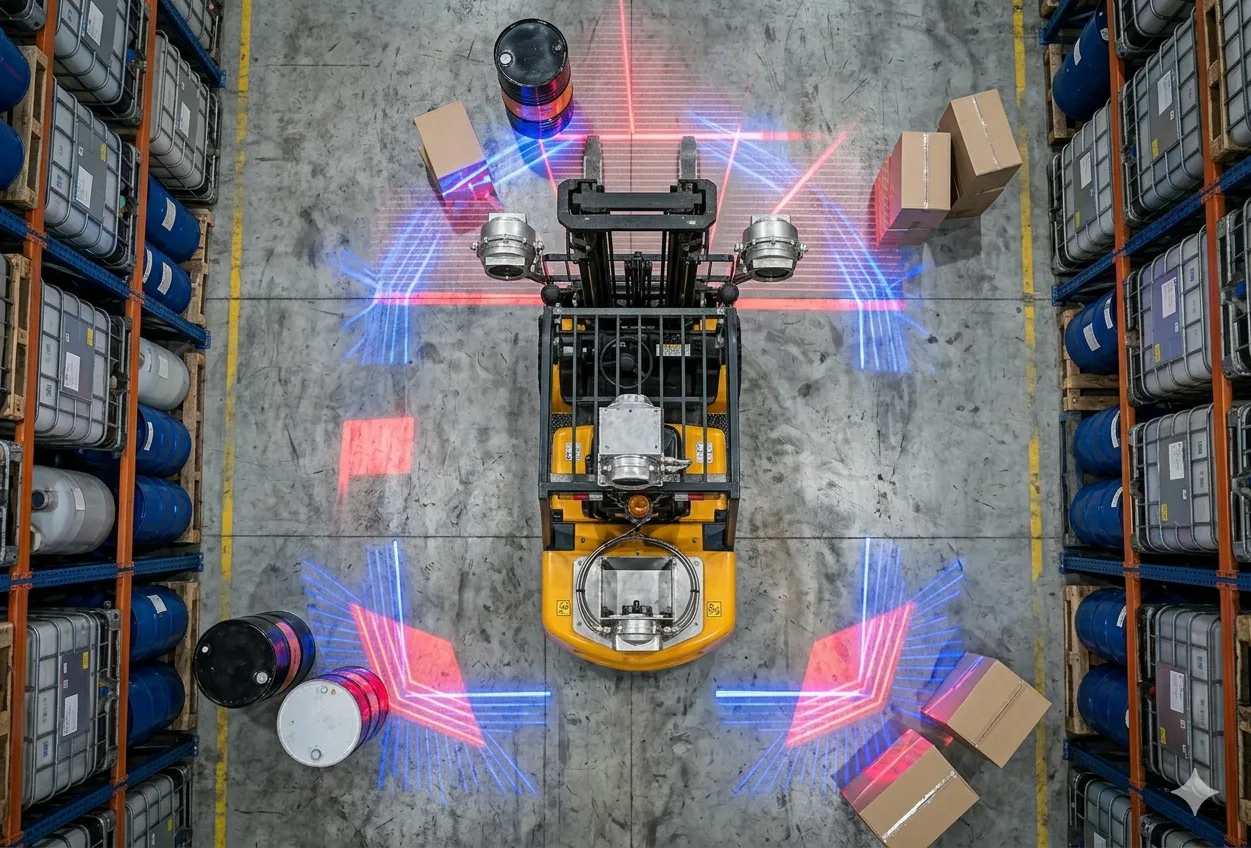
On a North Sea supply base, visibility is never guaranteed. Forklift operators work through driving rain, sea mist, and long winter darkness while handling high-risk cargo under constant time pressure. These yards—across Aberdeen, Peterhead, Montrose, and Great Yarmouth—form the final link before offshore deployment. What happens here directly impacts offshore safety. Yet the environment is unpredictable, exposed, and congested. If your operators cannot see clearly across open yard operations, risk escalates fast. In this setting, visibility is not a convenience; it is a primary safety control that underpins every lift, movement, and handover.
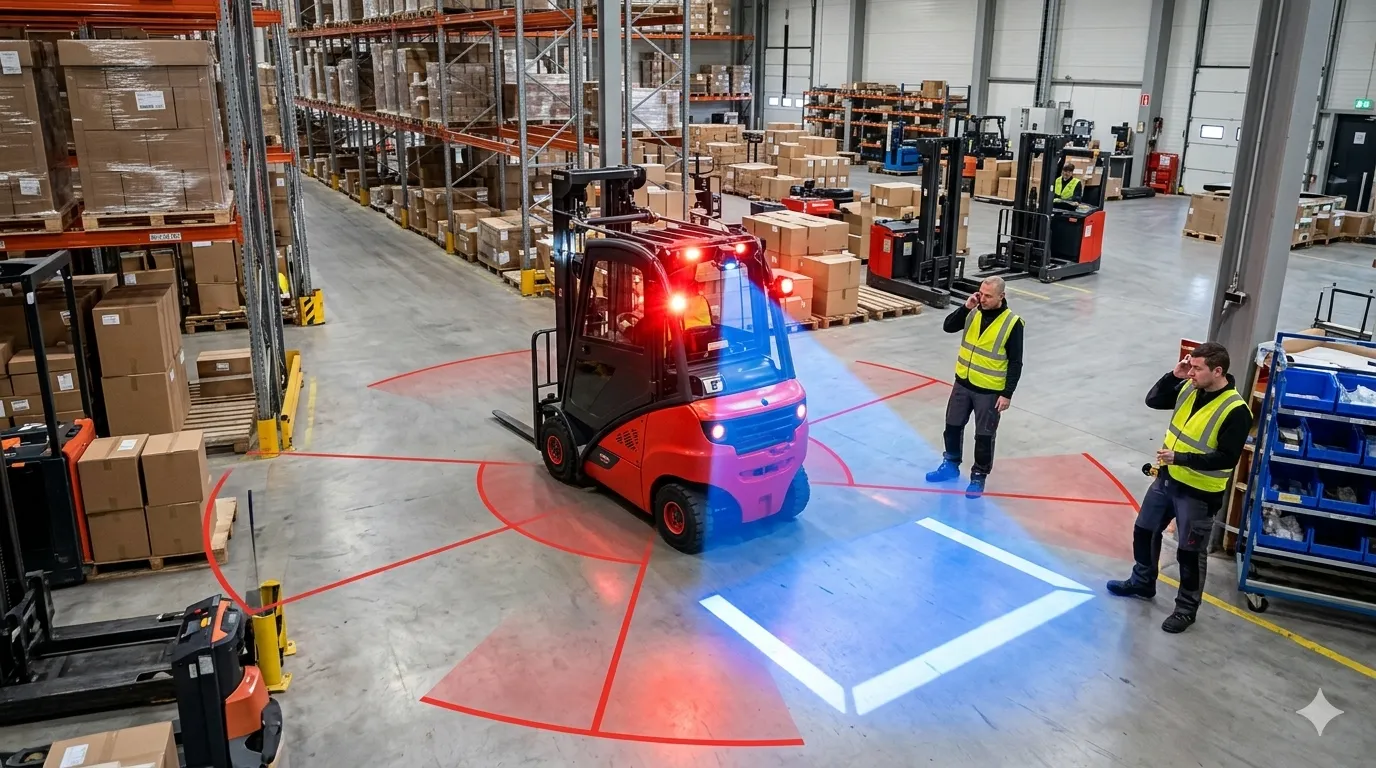
Why Offshore Supply Bases Present Unique Forklift Hazards
Your operating environment is unlike a controlled warehouse. Offshore logistics yards are open, dynamic, and constantly changing. Cargo arrives irregularly, layouts shift daily, and multiple stakeholders share the same space.
Key hazards include:
- Severe weather conditions: rain, fog, and low visibility during winter months
- High traffic density from HGV deliveries and vessel loading schedules
- Mixed personnel: permanent staff alongside visiting contractors unfamiliar with site layout
- Hazardous cargo such as chemicals, fuels, and pressurised equipment
Under these conditions, the margin for error is minimal. A momentary loss of visibility can result in collision, spillage, or worse—particularly where dangerous goods are involved.
HSE offshore guidance and workplace safety regulations place clear responsibility on you to manage these risks. Standard visibility measures are rarely sufficient in such an exposed and variable environment.
Open Yard Operations vs Warehouse Control
Inland facilities benefit from structure—fixed racking, marked walkways, and predictable traffic flows. Offshore supply bases offer none of that consistency.
You are managing:
- Unstructured ground layouts with constantly shifting cargo
- No permanent pedestrian segregation in many zones
- Frequent reconfiguration of loading and staging areas
This lack of physical control increases reliance on operator awareness. But awareness alone is not enough when visibility is compromised by weather, lighting, or obstructions.
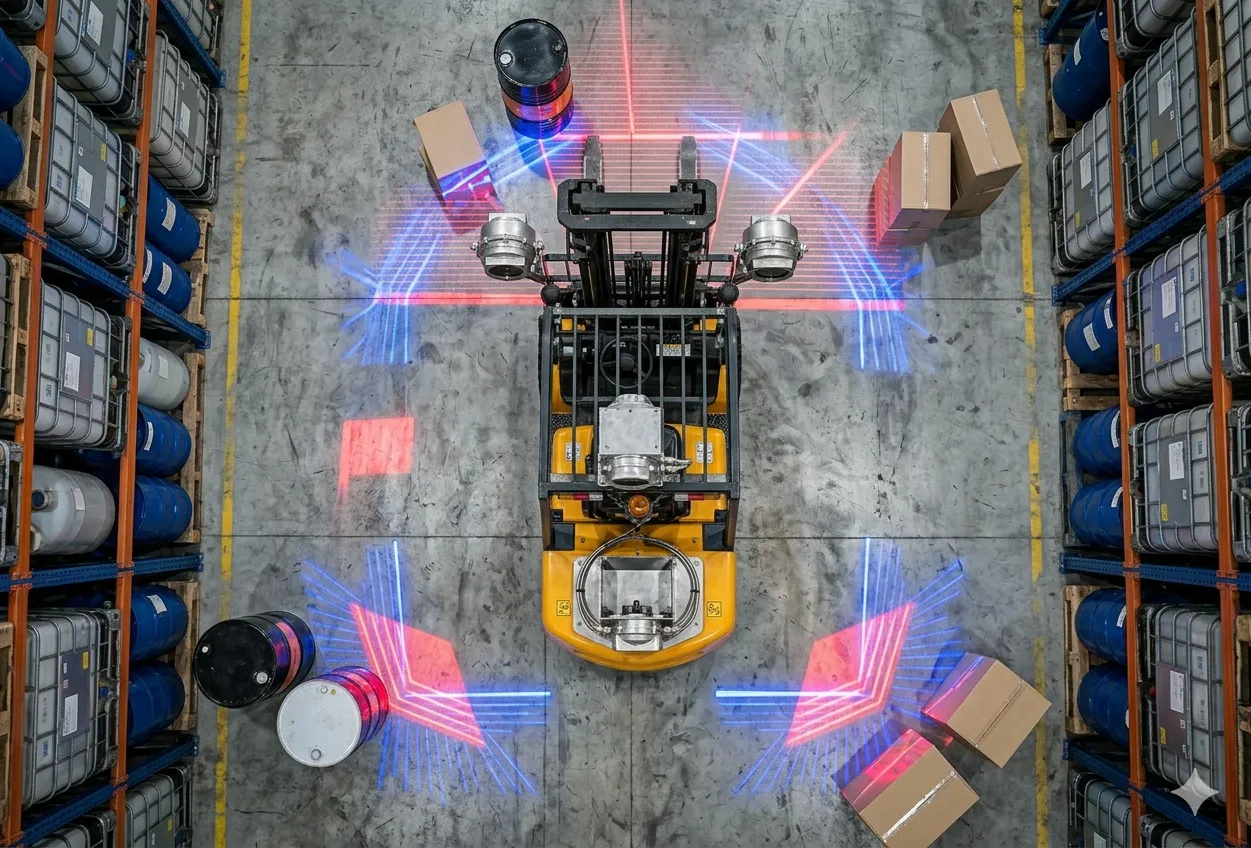
A 360 degree camera for forklift becomes critical in bridging that gap. It allows operators to maintain a consistent view of their surroundings, even when the environment itself is unpredictable.
Without this level of support, your safety controls depend heavily on human judgement under pressure—something HSE inspectors are increasingly scrutinising.
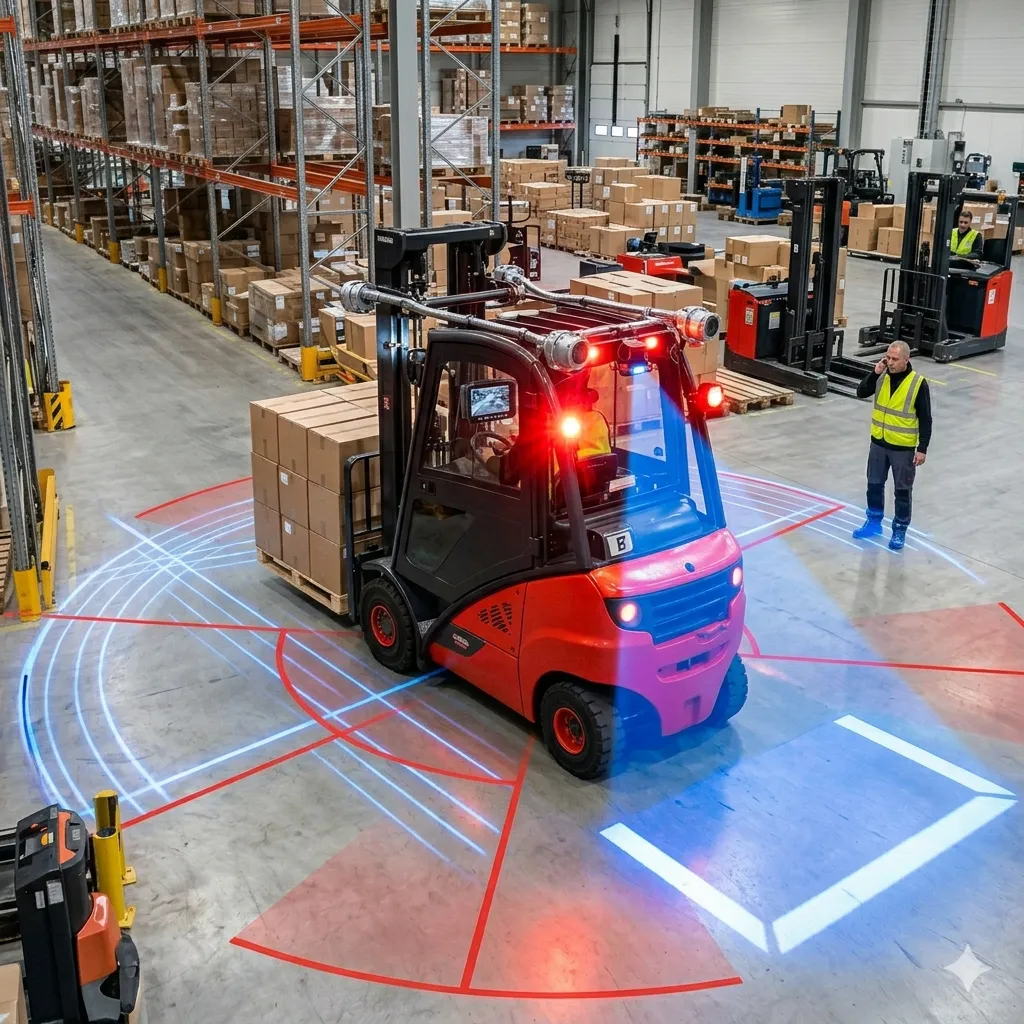
Engineering Visibility in Harsh Outdoor Conditions
To operate safely in offshore yards, visibility systems must be designed for more than basic functionality. They must perform reliably in extreme conditions.
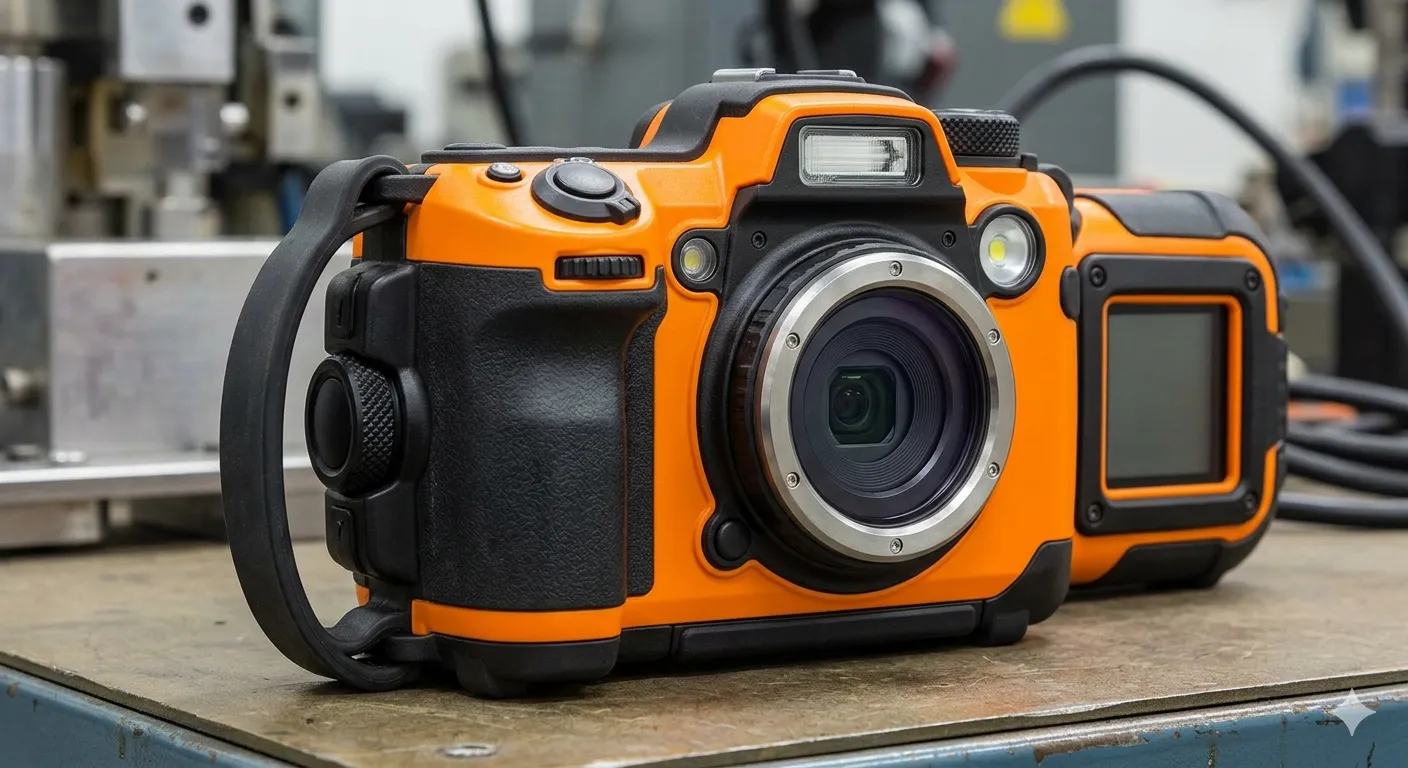
A Forklift Safety Camera System configured for outdoor use includes:
- Weather-resistant housings with high IP ratings
- Wide dynamic range imaging to handle low light and glare
- Stable performance in rain, fog, and temperature fluctuations
More advanced solutions, such as a forklift bird-eye view 360 degree camera system, provide a stitched panoramic view of the forklift’s surroundings. This is particularly valuable in open yards where there are no fixed visual reference points.
Operators gain:
- Full situational awareness across all directions
- Improved detection of moving vehicles and personnel
- Greater confidence when manoeuvring in poorly lit or congested areas
The ability to switch between bird’s-eye and individual camera feeds is also essential. It allows precise control during loading, especially when positioning cargo near vessels or confined docking areas.
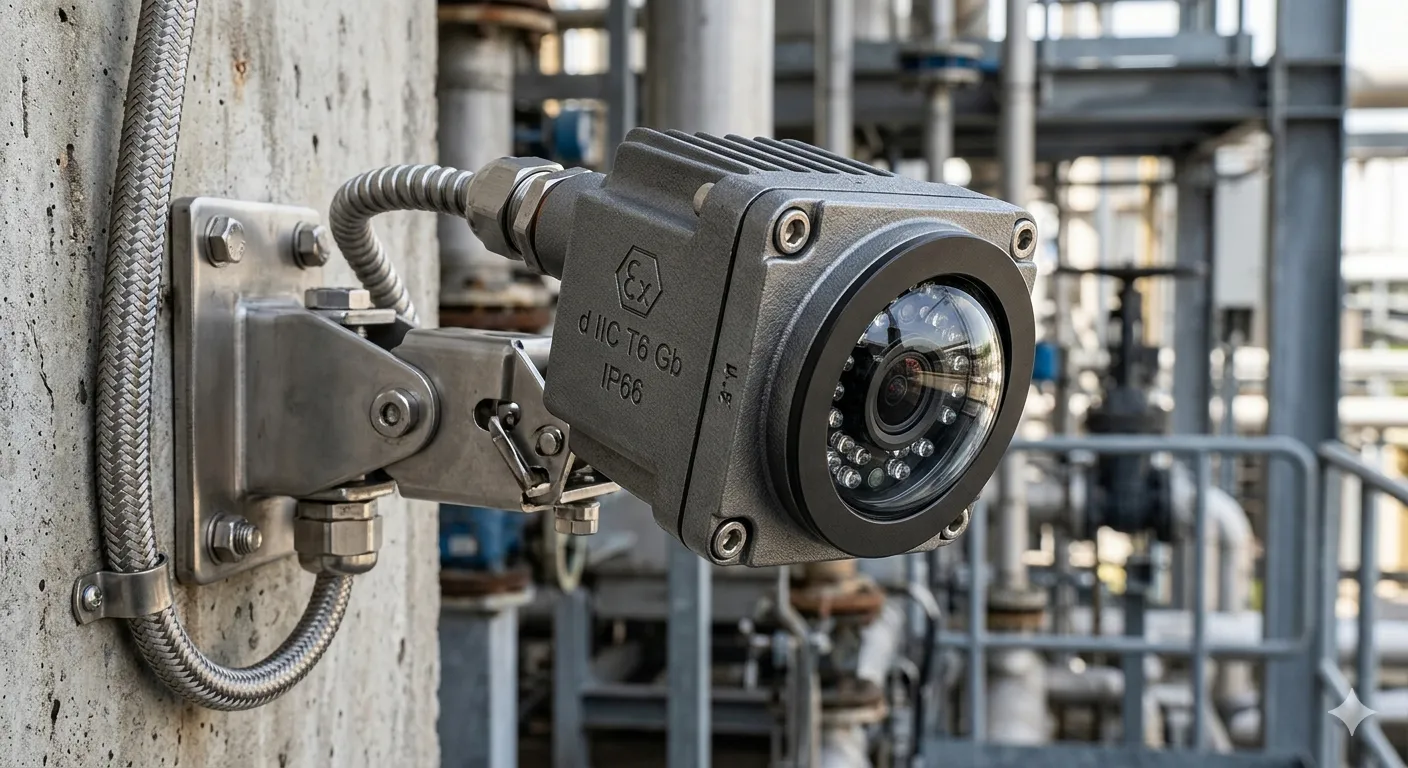
ATEX Compliance and Hazardous Area Considerations
Many offshore supply bases handle materials that fall under hazardous area classifications. This introduces an additional layer of regulatory complexity.
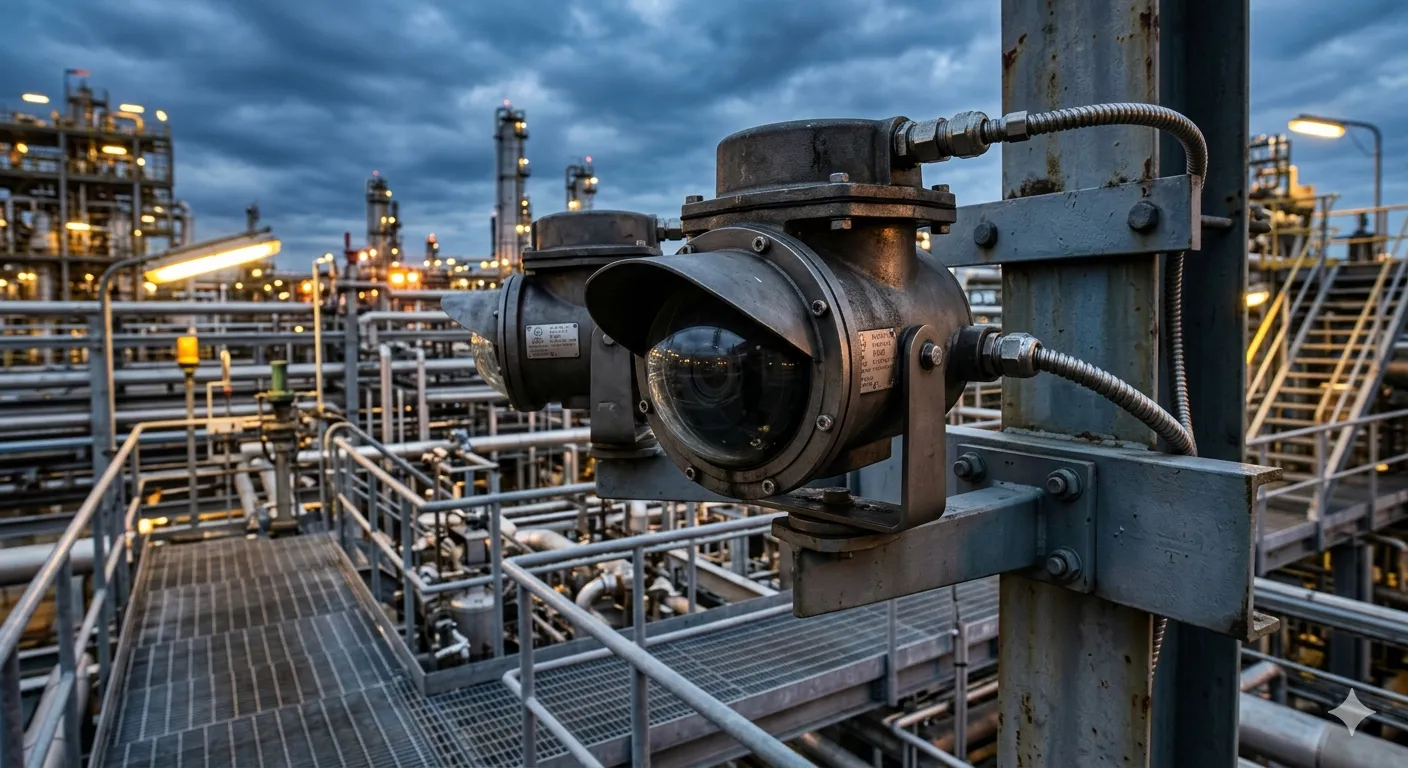
Under the ATEX Directive and DSEAR regulations, any equipment used in explosive atmospheres must be appropriately certified. Standard camera systems do not meet this requirement.
If your forklifts operate in or near classified zones—such as areas handling flammable chemicals or fuels—you must use ATEX-rated visibility systems.
Failure to comply can result in:
- Regulatory enforcement action
- Increased risk of ignition from non-compliant equipment
- Invalidated insurance coverage in the event of an incident
This is not optional. It is a legal obligation tied directly to workplace safety law. Ensuring your camera systems meet ATEX requirements is as critical as the visibility they provide.
Regulatory Oversight and Incident Accountability
Offshore operations are subject to stringent regulatory frameworks. HSE offshore guidelines, COSHH obligations for chemical handling, and the Offshore Installations (Safety Case) Regulations all demand robust risk management.
Visibility systems play a growing role in meeting these expectations. A forklift 360° bird eye view camera system with recording capability provides a verifiable record of operations.
This supports:
- Detailed incident investigations with accurate visual evidence
- Demonstration of proactive safety measures during audits
- Compliance with reporting requirements under offshore safety regulations
In high-risk environments, documentation is as important as prevention. You need to show not only that controls are in place, but that they are effective and consistently applied.
Specifying the Right System for Offshore Logistics
Selecting a camera system for offshore use requires careful evaluation. Generic solutions will not withstand the demands of your environment.
Focus on these criteria:
- Ingress protection (IP rating) — minimum IP67 for resistance to water and dust
- Operating temperature range — suitable for cold, wet, and variable conditions
- Low-light performance — essential for night operations and winter months
- Rugged construction — capable of withstanding vibration and impact
- Remote monitoring capability — via SIM or Wi-Fi for real-time oversight
Integration with existing telematics and fleet management systems is also valuable. It allows you to centralise data, monitor performance, and respond quickly to emerging risks.
Your objective is not just compliance—it is operational resilience in one of the most demanding logistics environments in the UK.
Conclusion
North Sea supply bases operate at the intersection of logistics complexity and environmental exposure. Forklift safety in these yards cannot rely on standard approaches designed for controlled indoor settings. Visibility must be engineered to withstand weather, congestion, and hazardous conditions.
By adopting advanced camera systems tailored for offshore use, you strengthen both safety performance and regulatory compliance. More importantly, you give your operators the clarity they need to work confidently in an unpredictable environment.
For a deeper technical perspective on system capabilities and implementation, see the recommended read: Forklift 360-degree Bird Eye View Camera system- All you need to know












Sign in to leave a comment.