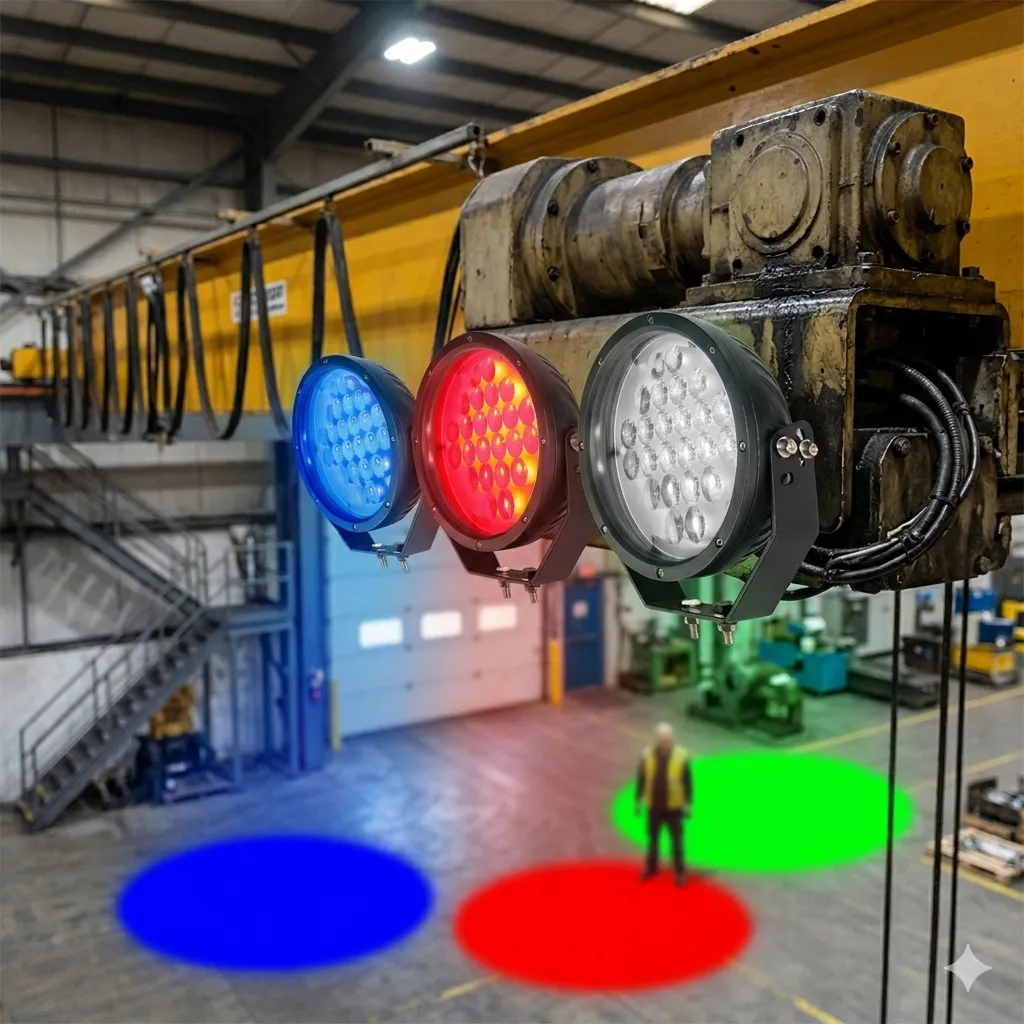
Cold storage facilities and food manufacturing plants are some of the harshest environments for industrial equipment—yet crane lighting is often specified as if it were operating in a dry warehouse. Sub-zero temperatures, high-pressure washdowns, and constant condensation cycles create failure conditions that standard systems simply cannot withstand.
If you’ve experienced unexplained lighting failures or reduced visibility around lifting operations, the cause is rarely random. It’s usually a mismatch between specification and environment. This is why overhead crane warning lights in food-grade and cold chain facilities must be selected with far greater precision. You are not just addressing visibility—you are managing hygiene compliance, equipment longevity, and operational safety in a highly regulated setting.
Environmental Stress Factors in Food and Cold Chain Facilities
Crane lighting in these environments is exposed to a unique combination of stressors that significantly accelerate wear and failure. Unlike general industrial settings, your equipment must perform reliably under continuous environmental cycling.
Key challenges include:
- Rapid temperature fluctuations causing thermal expansion and contraction
- Persistent condensation forming inside enclosures
- High-pressure washdowns using hot water and cleaning agents
- Exposure to corrosive substances such as salt and sanitising chemicals
These factors directly impact the performance of any overhead crane light installed above processing or storage zones. Even minor ingress or material degradation can lead to failure, often without immediate warning.
From a compliance standpoint, both the UK Food Safety Act and BRC Global Standards require that equipment in food zones does not introduce contamination risks. A failing lighting unit is not just a maintenance issue—it can become a hygiene breach.
IP Ratings Explained: What Do You Really Need?
Ingress Protection (IP) ratings are often misunderstood or oversimplified during procurement. In food manufacturing environments, selecting the correct rating is critical.
Here’s how the most relevant ratings compare:
- IP65: Dust-tight and protected against low-pressure water jets. Suitable for dry or lightly damp environments, but not for washdown zones.
- IP67: Dust-tight and protected against temporary immersion. Offers better sealing but may still struggle under repeated high-pressure cleaning.
- IP69K: Designed for high-pressure, high-temperature washdowns. Resistant to close-range water jets from multiple angles.
For most food processing facilities, particularly those with daily washdowns, IP69K is the only rating that provides reliable long-term protection.
When specifying overhead crane lighting, relying on IP65 or IP67 can lead to premature failure. Water ingress may not be immediate, but repeated exposure will eventually compromise seals and internal components.
Your goal is not just compliance—it is durability under real operating conditions.
Condensation Failures: The Hidden Risk in Crane Lighting
Condensation is one of the most common—and least visible—failure modes in cold storage environments. When warm air enters a cold enclosure, moisture condenses on internal surfaces, including electronic components.
Over time, this leads to:
- Corrosion of circuit boards
- Short circuits and intermittent faults
- Reduced light output or complete failure
Standard overhead crane lights are rarely designed to manage internal moisture effectively. Without proper sealing, pressure equalisation, or moisture-resistant components, failure is inevitable.
To mitigate this risk, you should look for:
- Fully sealed housings with high-quality gaskets
- Breather valves to manage internal pressure changes
- Conformal coating on electronic components
These features are not optional in cold chain environments. They are essential for maintaining consistent performance and avoiding unplanned downtime.
Material Selection: Polycarbonate vs Stainless Steel
The choice of housing material plays a critical role in both durability and compliance. In food manufacturing, materials must withstand aggressive cleaning processes while maintaining hygienic integrity.
Polycarbonate housings:
- Lightweight and impact-resistant
- Resistant to certain chemicals
- May degrade over time under repeated washdowns
Stainless steel housings:
- Highly resistant to corrosion and cleaning agents
- Easier to clean and maintain hygienic surfaces
- More durable in long-term washdown environments
For crane safety lights used in food-grade zones, stainless steel is often the preferred option. It aligns better with BRC standards and provides greater resistance to environmental stress.
However, cost and weight considerations may influence your decision. The key is to match material selection with the intensity of your cleaning regime and exposure conditions.
LED Performance in Sub-Zero Conditions
Unlike traditional lighting technologies, LEDs generally perform well in cold environments. In fact, lower temperatures can improve efficiency and lifespan. However, this benefit only applies if the overall system is properly designed.
LED-based crane warning lights in sub-zero environments must account for:
- Driver performance at low temperatures
- Seal integrity during thermal cycling
- Consistent light output despite environmental stress
Poorly designed systems may still fail due to condensation or material fatigue, even if the LED itself remains functional.
From a performance perspective, you should expect high-quality LED systems to maintain consistent brightness and operational life in cold storage applications—provided they are correctly specified.
Procurement Checklist for Cold Chain Crane Lighting
Selecting the right solution requires a structured approach. You need to evaluate suppliers based on their ability to meet both environmental and regulatory requirements.
Use this checklist during procurement:
- Does the product meet IP69K standards for washdown environments?
- Are materials compliant with food safety and hygiene regulations?
- What measures are in place to prevent internal condensation?
- Is the system tested for sub-zero operation?
- Can the supplier provide documentation for compliance with UK Food Safety Act and BRC standards?
When assessing overhead crane lighting, involve both your engineering and quality assurance teams. This ensures that safety, durability, and hygiene requirements are all addressed.
A well-specified system reduces maintenance costs, improves safety, and supports compliance during audits.
Conclusion
Cold storage and food manufacturing environments demand a higher level of precision in equipment specification. Crane lighting is no exception. When systems fail due to condensation, washdowns, or material degradation, the impact extends beyond maintenance—it affects safety and compliance.
By selecting lighting solutions designed for these conditions, you ensure consistent performance and reduce operational risk. The focus should always be on long-term reliability, not short-term cost savings.
As industry standards continue to tighten, robust and compliant lighting systems will become a baseline requirement rather than a competitive advantage. For broader insight into crane lighting applications, Recommended read: OSHA-Approved Crane Safety Lights: Boost Visibility & Reduce Risks in Ports








Sign in to leave a comment.