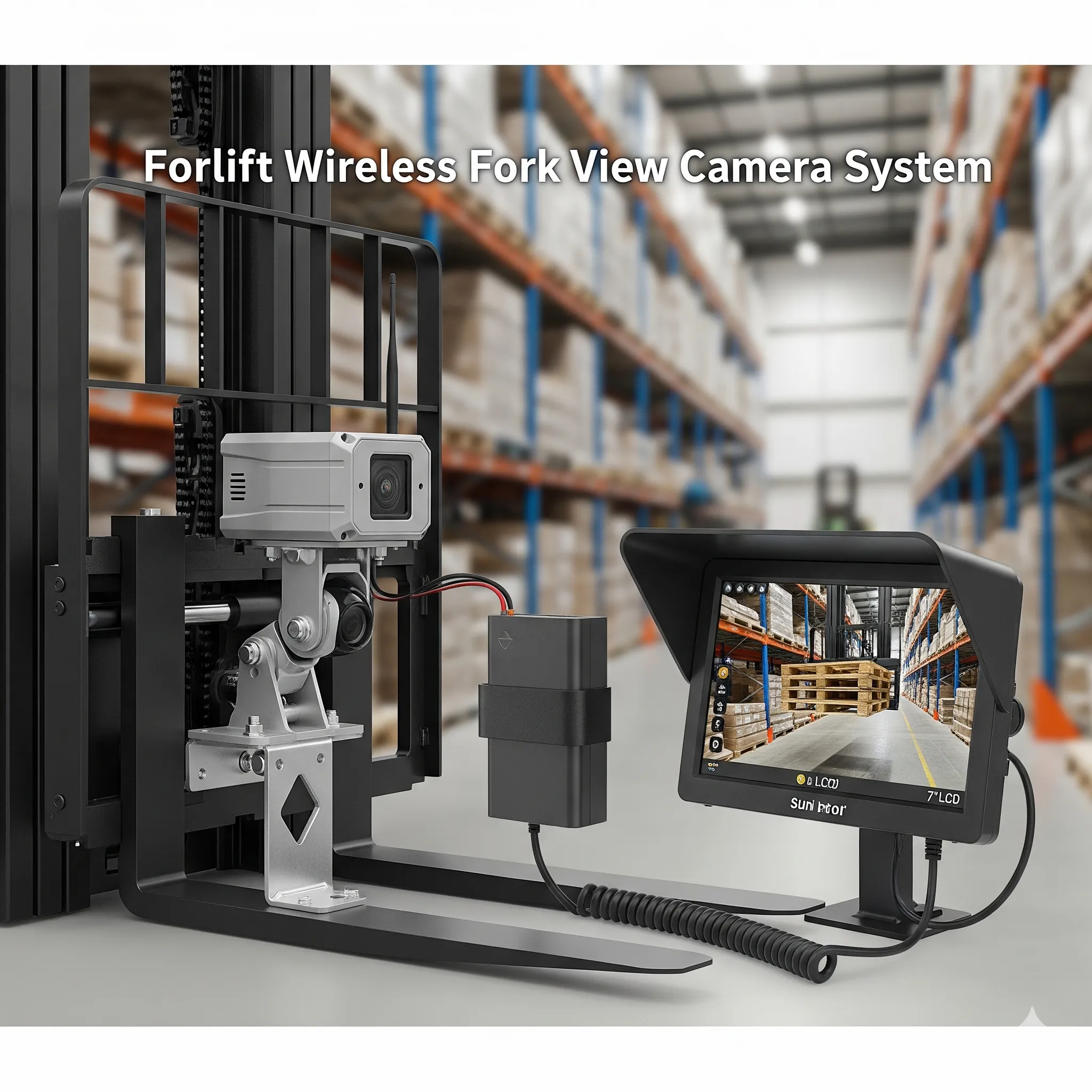

Ask any experienced forklift operator about the moments that make them most uncomfortable on the job, and the answers share a common thread. It is rarely the routine — the straight runs, the open-floor manoeuvres, the lifts they have performed hundreds of times in clear conditions. The discomfort comes from the moments of partial information. Reversing when something might be in the path. Placing a load at height when the fork tips have disappeared from view. Entering a racking bay when the mast has blocked every useful sightline.
These are not failures of skill or attention. They are structural limitations of the equipment itself. And for years, the industry's response has been largely procedural — spotters, mirrors, horn protocols, and marked pedestrian zones. Those measures reduce risk, but they do not eliminate the underlying problem, which is that operators are regularly asked to make precise decisions without the visual information those decisions require.
Technology has changed what is possible. But not all camera solutions are built with the specific demands of material handling in mind. Understanding what makes a purpose-built solution different from an adapted generic system is where the conversation becomes genuinely useful.
Why Generic Camera Solutions Fall Short
Reversing cameras from the automotive world, repurposed CCTV units, and off-the-shelf action cameras all get pressed into forklift applications. Some provide marginal improvement. Most fall short in predictable ways.
The operating environment of a working forklift is hostile to consumer and light commercial electronics. Constant vibration, temperature extremes, dust ingress, hydraulic fluid exposure, and the mechanical stress of mounting on moving components combine to degrade equipment that was not designed for these conditions. Beyond durability, the viewing angles that matter most for forklift operation — particularly at fork level — are not the angles that rear-facing cameras were designed to capture.
A Forklift Safety Camera System built specifically for industrial material handling solves these problems by design rather than by adaptation. The camera geometry, enclosure ratings, mounting provisions, and display integration are all specified around the actual demands of warehouse and industrial site operation.
What the ForkView Vision Solution Actually Delivers
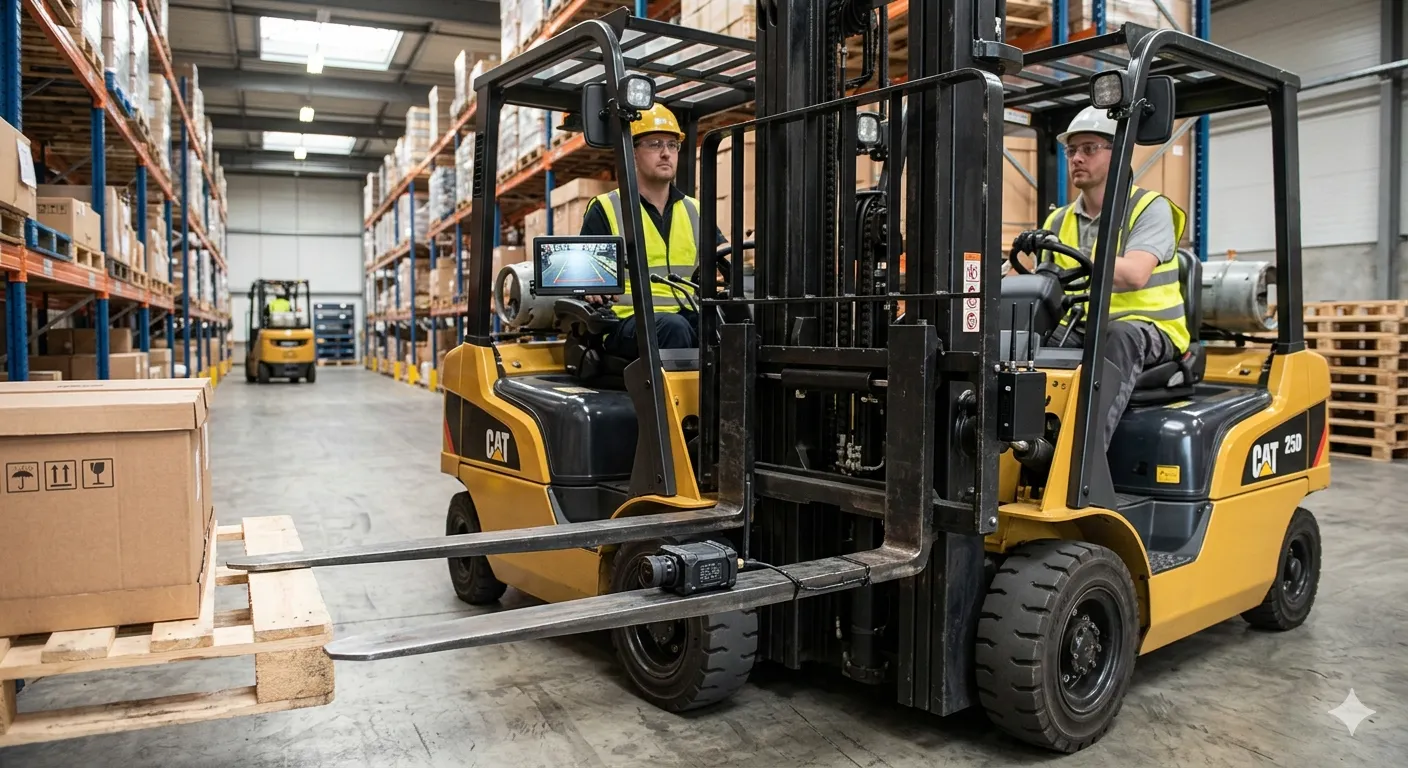
The ForkView vision solution is built around a straightforward premise: put a camera where the operator cannot see, and give them a clear, reliable, real-time view of that space. In practice, this means a compact industrial camera positioned at fork level, transmitting live footage to a monitor in the operator's cab.
The immediate operational benefit is precision. When an operator approaches a pallet at height, they can see the fork tips in relation to the pallet openings. When they set a load down on a conveyor or a staging area, they can confirm placement without estimating from a compromised angle. Tasks that previously required multiple positioning attempts — and frequently resulted in product damage, rack strikes, or unstable load placement — become single, confident movements.
This is not a marginal improvement. In high-rack warehousing environments, where racking levels extend six metres and above, fork-level visibility transforms precision handling from a skill-dependent achievement into a consistently repeatable outcome.
The Engineering Behind the Wireless Design
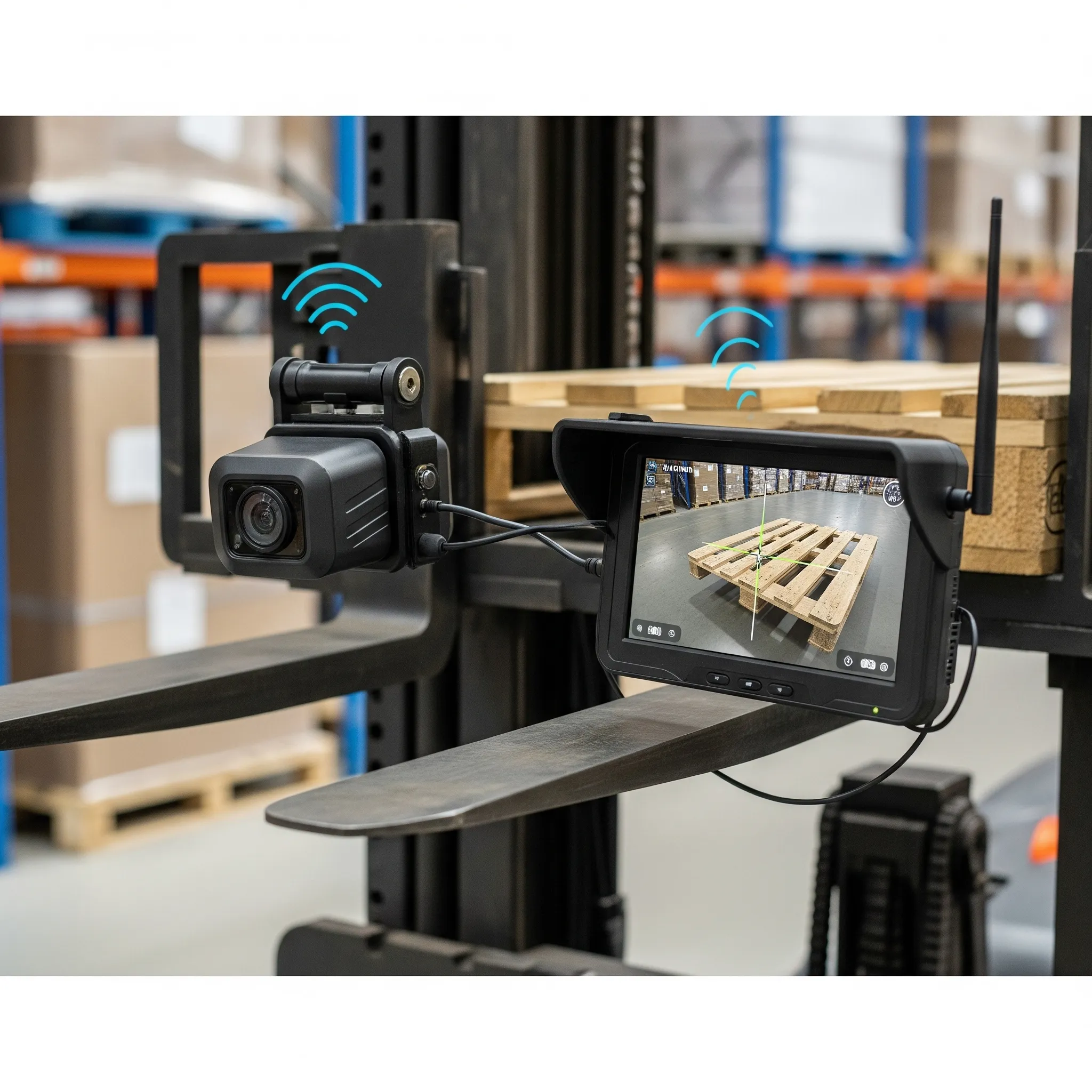
The Forklift Wireless Fork View Camera System takes this a step further by eliminating the cable connection between the fork-mounted camera and the cab display. This matters more than it might initially appear.
Fork assemblies move constantly. They extend, tilt, shift laterally, and carry dynamic loads that create vibration throughout the carriage. Running a physical cable to a camera mounted on this assembly creates an ongoing maintenance problem — cables flex, chafe against metal surfaces, and eventually fail. The repair requirement means downtime and a recurring cost that accumulates across a fleet.
Wireless forklift camera systems remove that failure point entirely. The camera transmits its feed digitally to the cab monitor without a physical connection, making installation faster, maintenance simpler, and the system genuinely practical for deployment across mixed fleets where different forklift types would otherwise require different cable routing approaches.
For facilities in the UAE and Kuwait — where ambient temperatures, fine sand particulates, and coastal humidity create an already demanding environment for electronic equipment — reducing the number of mechanical failure points in any system is sound engineering practice.
Where This Technology Fits in the Wider Safety Picture
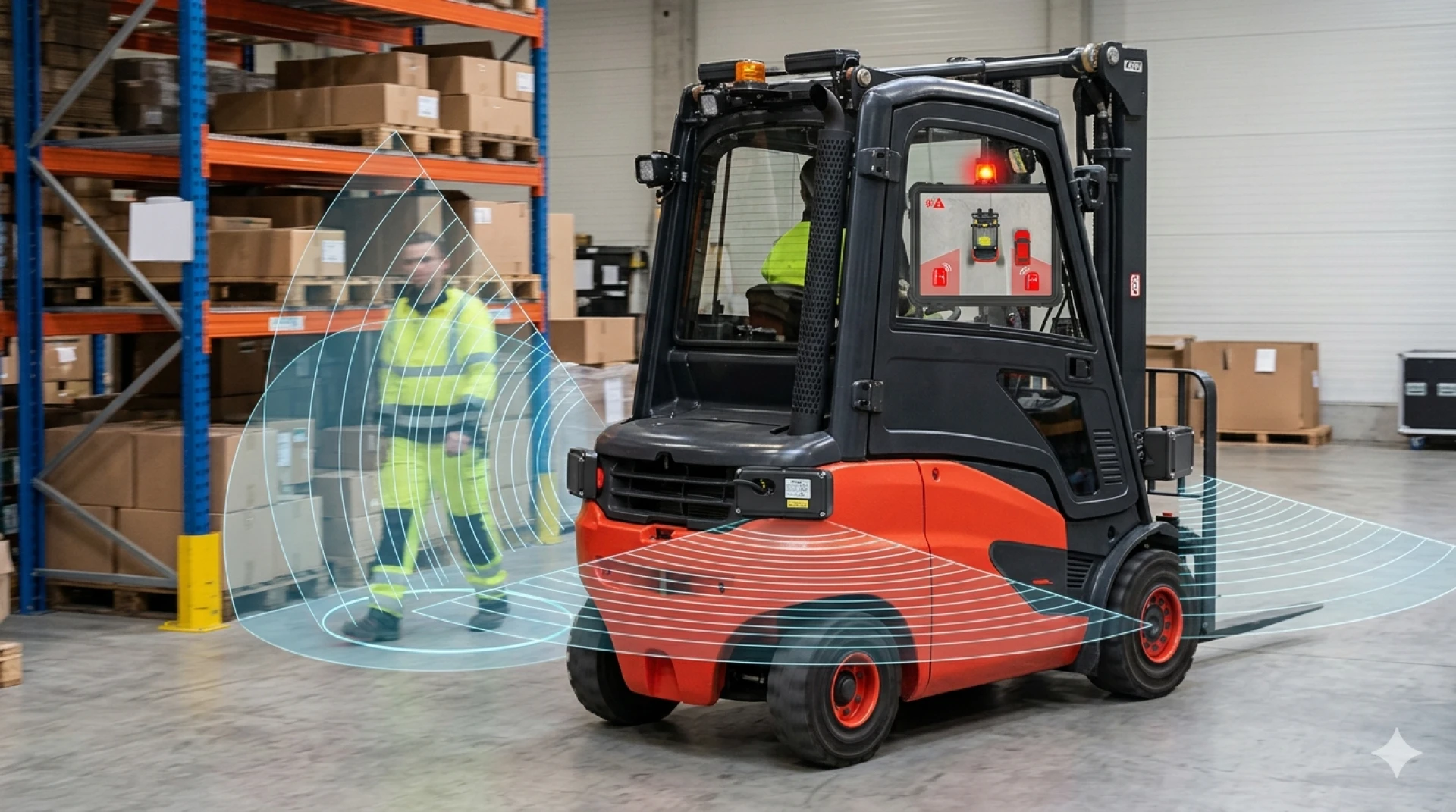
Fork-level camera technology addresses one specific and high-impact blind spot. It does not replace the broader safety infrastructure that responsible material handling operations require. Site layout design, operator training, pedestrian segregation, and load management procedures all remain important.
What a properly implemented camera system does is close the gap between procedural safety and actual operational visibility. Key areas where the ForkView approach delivers measurable improvement include:
- Pallet retrieval and placement at racking heights above the operator's natural sightline
- Load handling in confined bays where mast-forward positioning is unavoidable
- Precision placement of high-value, fragile, or irregular loads where a single misalignment causes significant damage
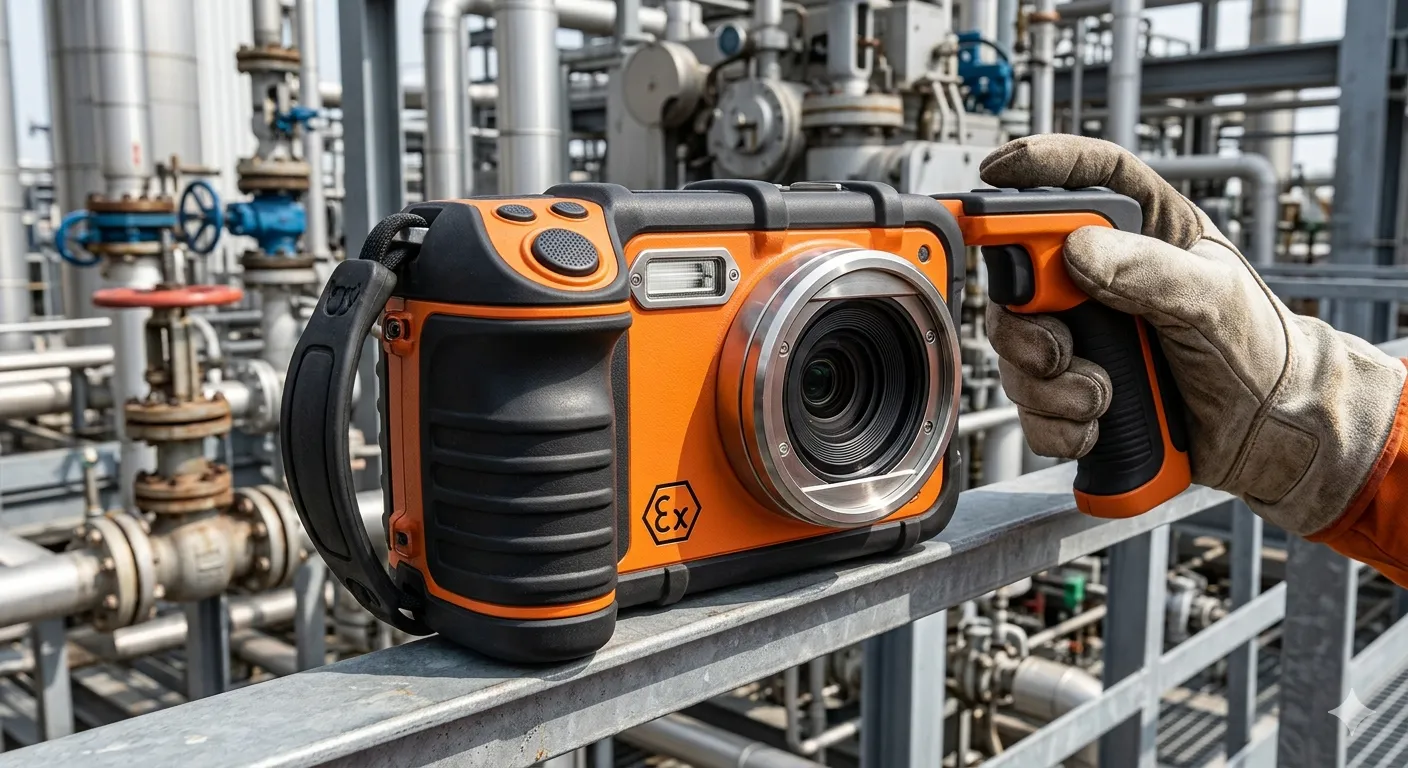
- Facilities handling ATEX-classified environments where the camera hardware must meet explosion-proof standards alongside its functional requirements
Conclusion
Material handling safety has always depended on what operators can see, and technology has finally reached the point where the most critical blind spots in forklift operation can be closed with practical, durable, purpose-built solutions. The ForkView vision solution represents that thinking applied directly to the fork-level visibility problem — engineered for industrial conditions, built for real fleet deployment, and designed to deliver measurable improvement in both safety outcomes and operational precision.
For a detailed technical breakdown of how this technology works and how to specify it correctly for your facility, read our complete guide: The Complete Guide to the Fork View Camera System

























Sign in to leave a comment.