
Warehouse designers face a tension that never fully resolves. Storage density drives profitability — the more racking that fits into a given footprint, the better the return on space. But every metre of racking added to a facility makes the aisles between them narrower, the sightlines shorter, and the margin for error smaller. At some point, the logic of density and the logic of safety pull in genuinely opposite directions, and the people working in the space between the racking bear the consequences.
Narrow aisle warehousing has become standard across high-value storage operations in the UAE and Kuwait — in pharmaceuticals, electronics, fast-moving consumer goods, and the kinds of high-SKU logistics operations that free zone warehousing has made possible at scale across the Gulf. The efficiency case for narrow aisles is compelling and well understood. The safety case for managing them properly is equally compelling and considerably less often discussed with the same rigour.
When forklift operations move into genuinely narrow aisles, every existing blind spot risk becomes more acute. The distances between the vehicle and the racking on either side shrink to the point where the physics of collision leave no room for error. Reaction times that might allow a last-second correction in an open space are simply not available. And the restricted geometry of the aisle itself concentrates pedestrian and vehicle traffic into a channel where encountering each other without warning is not a possibility to be managed — it is a near-certainty to be prevented.
Prevention, in this context, requires active detection. And active detection, in the specific geometry of narrow aisle operations, is where the Radar Object Detection System earns its place as essential infrastructure rather than optional upgrade.
What Makes Narrow Aisles Specifically More Dangerous
The blind spot risks that affect every forklift operation are amplified in narrow aisle environments in ways that matter practically for how safety technology needs to perform.
In an open warehouse bay or a wide main aisle, there is space for both the vehicle and any hazard in its path to occupy the same general area without immediate contact. That space — measured in metres — represents a buffer of time that allows detection, alert, and response to occur sequentially before the situation becomes unrecoverable. It is not a large buffer, but it exists.
In a narrow aisle, that buffer compresses dramatically. The vehicle occupies most of the available width. A pedestrian entering from an aisle end, or stepping back from a task at racking height, has nowhere to go. The forklift approaching from the blind direction has no margin to steer around the obstacle even if the operator sees it with reasonable warning. The geometry of the space turns every unexpected encounter into a high-severity event.
This compression of margin is precisely why the speed of detection and alert matters so much more in narrow aisle environments than it does anywhere else on the warehouse floor. A system that gives an operator two seconds of warning in an open bay might give them the same two seconds in a narrow aisle — but in the narrow aisle, two seconds is sometimes not enough. The system that detects earlier, alerts faster, and gives the operator maximum possible response time is the system that saves lives in this specific environment.
Why Camera Systems Face Their Steepest Challenges in Narrow Aisles
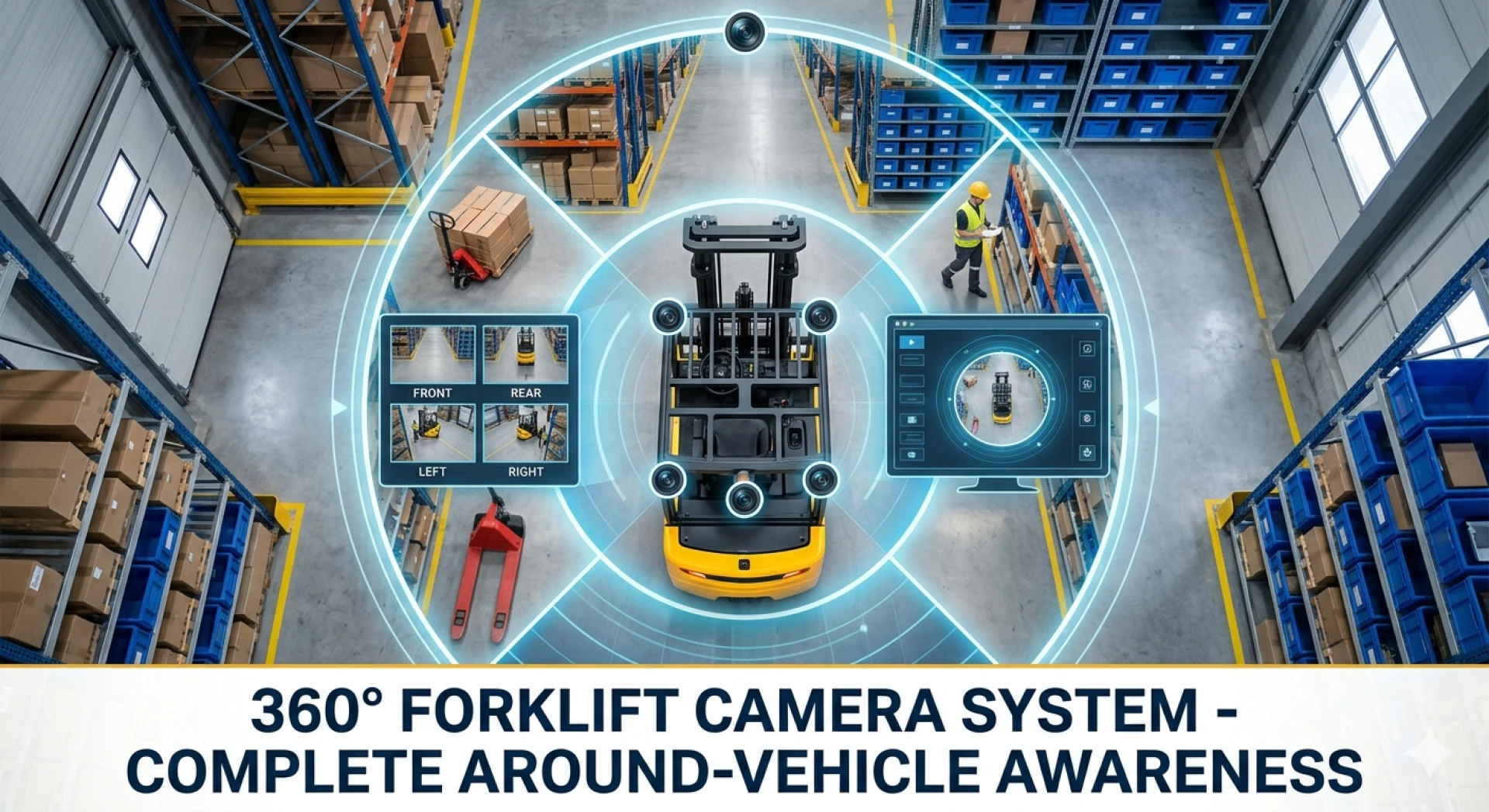
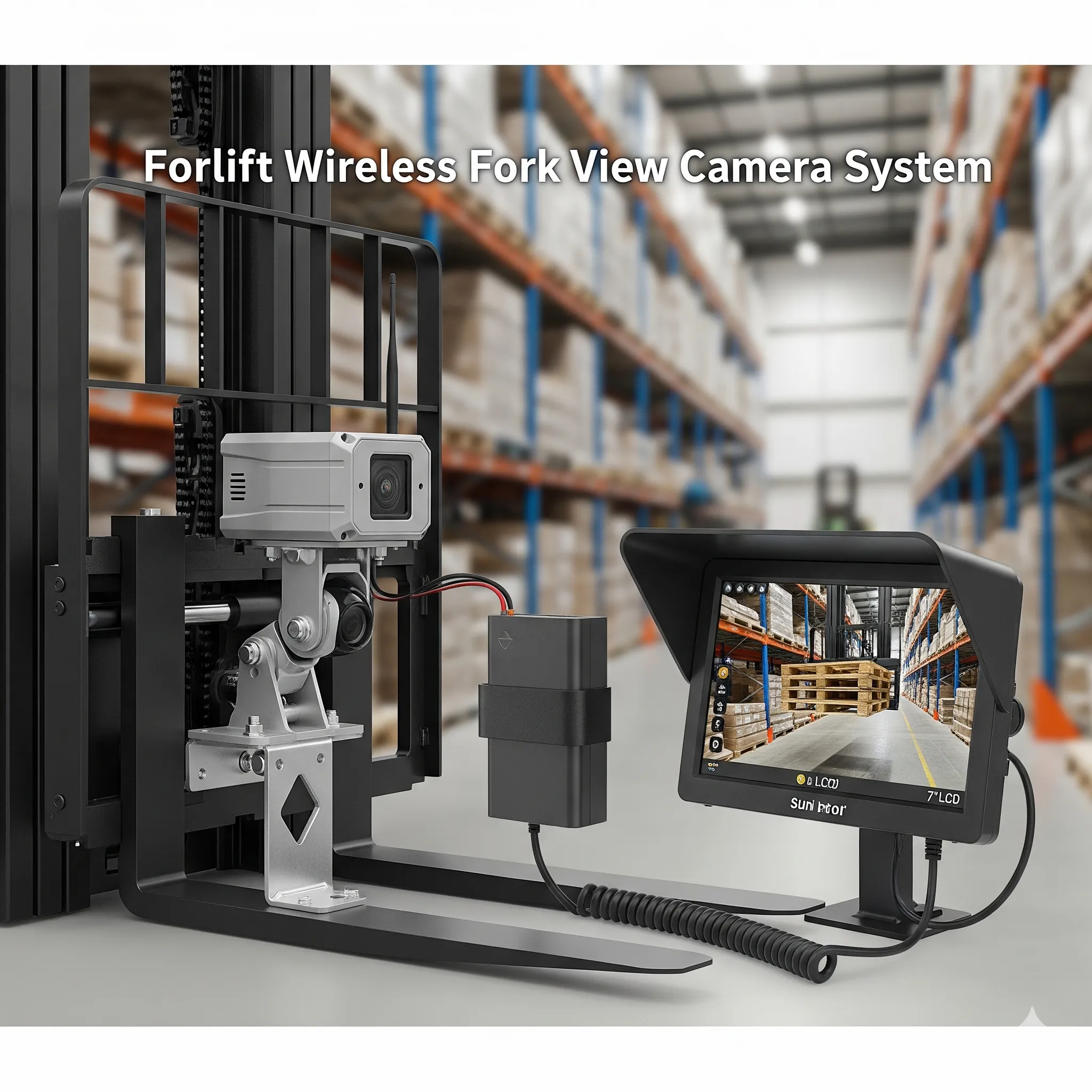
Camera-based reversing systems face a particular set of limitations in narrow aisle operations that compound the baseline challenges these systems carry in any environment.
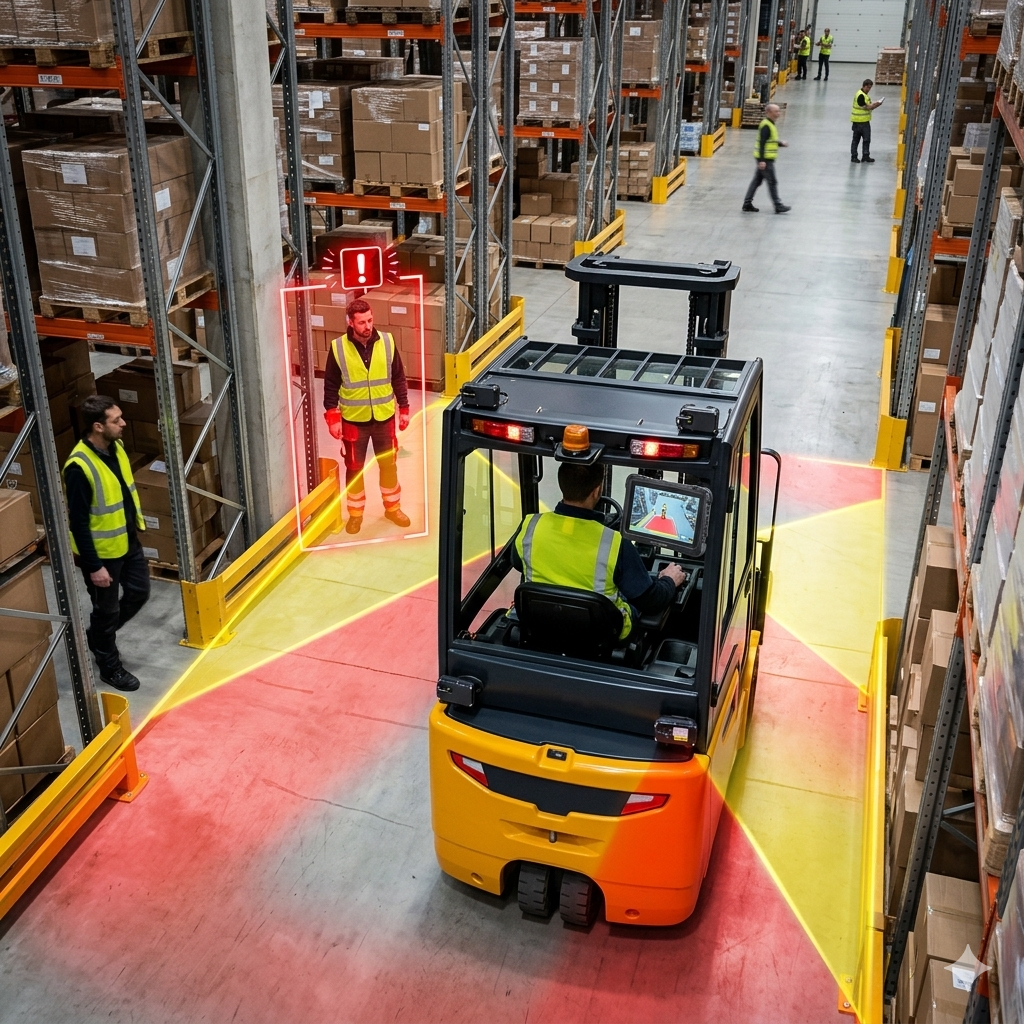
The field of view from a rear-mounted camera in a narrow aisle is constrained by the racking on either side. The camera sees the aisle behind the vehicle — but it cannot see around corners, it cannot detect a pedestrian approaching the aisle from a cross-aisle until they are already in the frame, and it cannot alert the operator before that pedestrian appears in the image. By the time a hazard is visible in a narrow aisle camera feed, the available response window has often already closed.
Add the environmental factors that affect optical performance — the variable lighting conditions common in high-bay narrow aisle facilities, the dust generated by frequent pallet movement, the lens contamination that accumulates in busy operations — and the picture of camera adequacy in this specific environment becomes genuinely concerning.
A Radar Object Detection System operates on principles that are structurally unaffected by every one of these limitations. It does not depend on light. It does not depend on a clear lens. It does not require the hazard to be visible within a camera frame before detection occurs. Radar waves travel beyond what optics can capture and return information about what is present in the detection zone — not what happens to be visible from the camera's fixed perspective.
In the narrow aisle environment specifically, this difference in detection architecture translates directly into earlier warning, longer response windows, and meaningfully better outcomes in the moments that matter most.
How the RODS-L Delivers Protection in the Tightest Operational Spaces
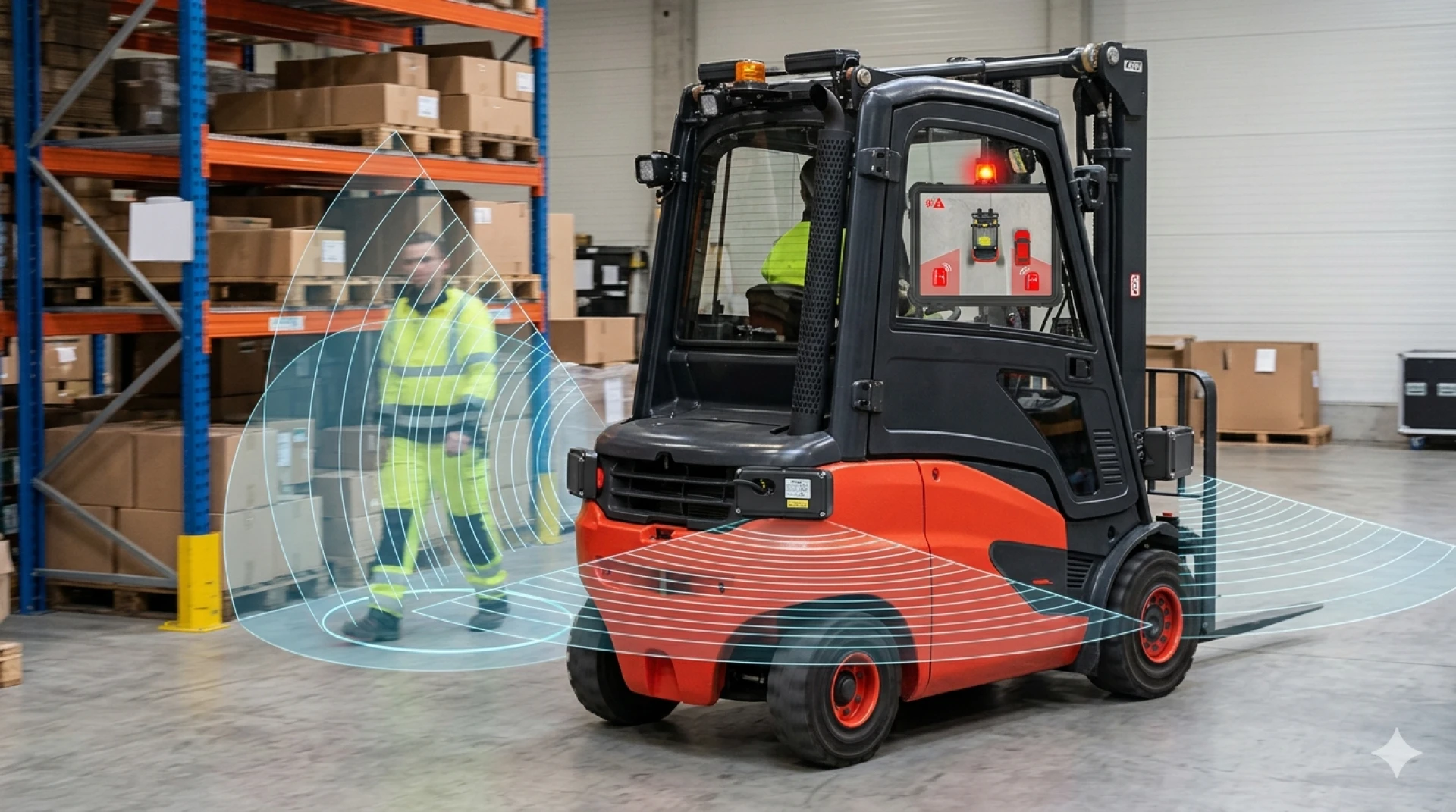
SharpEagle's Radar Object Detection System RODS-L was engineered to provide reliable, intelligent blind spot detection in the full range of industrial forklift environments — including the narrow aisle operations where conventional safety technology faces its steepest performance challenges.
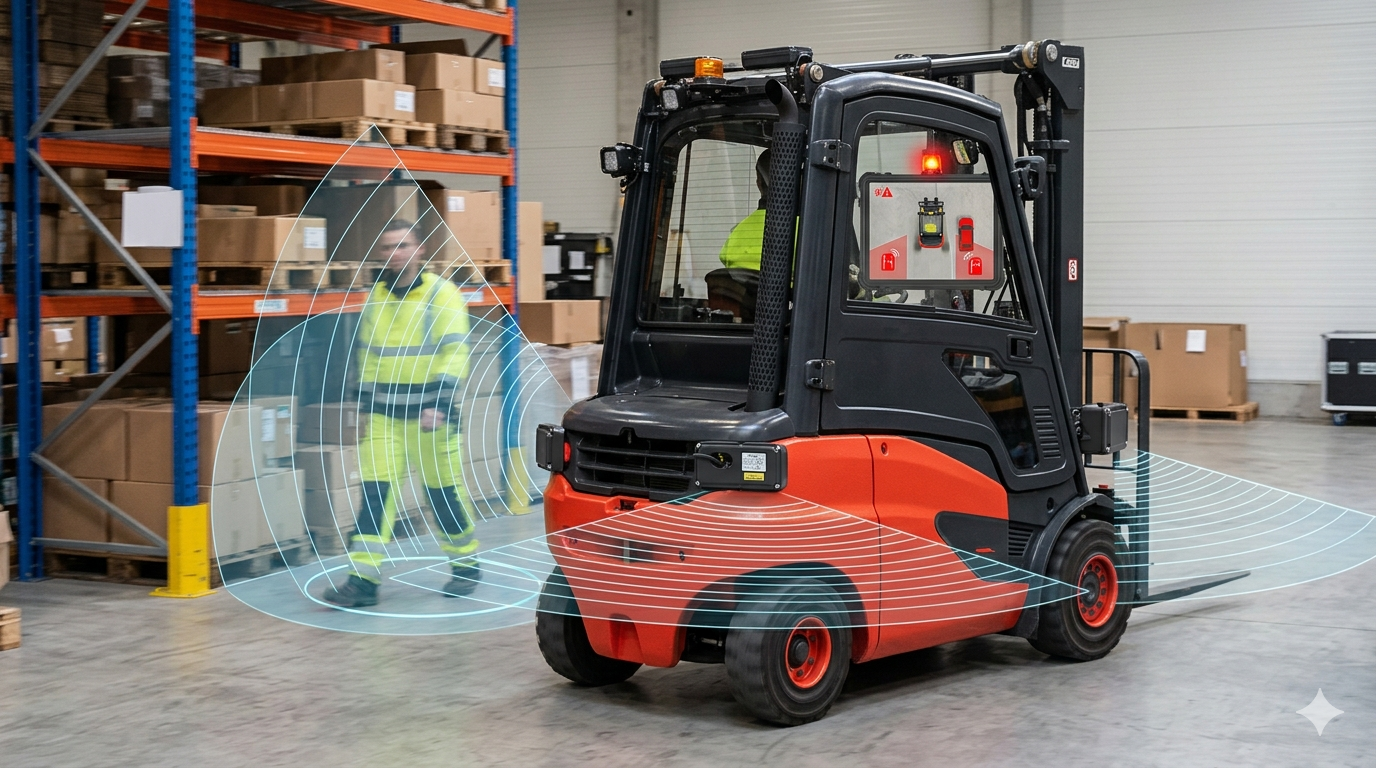
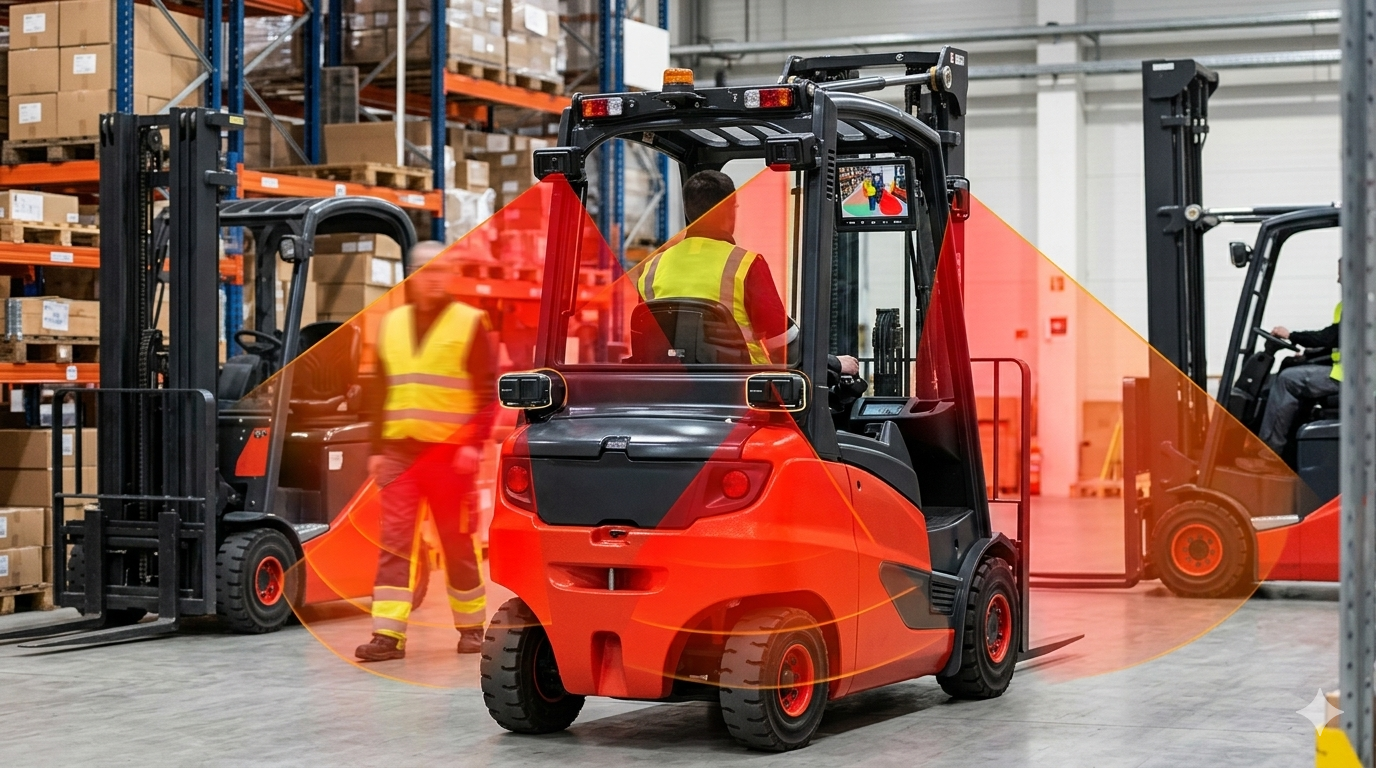
The RODS-L radar system mounts directly onto the forklift and establishes a defined detection zone that monitors the areas of highest blind spot risk continuously and independently of environmental conditions. When a person or obstacle enters that zone — whether at the aisle end, emerging from a side bay, or stepping back from racking work — the Radar Object Detection System RODS-L delivers immediate audible and visual alerts to the operator without requiring any manual input or screen monitoring.
The detection happens before visual contact is possible. The alert fires before the operator would otherwise know the hazard exists. And in a narrow aisle, where the geometry allows no margin for late information, that earlier warning is what makes the difference between a controlled stop and an unrecoverable situation.
The intelligent filtering built into the RODS-L radar system is particularly valuable in narrow aisle environments where the racking structure is a constant presence on both sides of the vehicle. A system without sophisticated filtering would generate continuous false alerts from the racking itself, producing the kind of alert fatigue that renders detection technology operationally useless within days of deployment. The RODS-L is calibrated to distinguish between fixed infrastructure and dynamic hazards — alerting on people and moving objects while filtering the static environment that surrounds the vehicle throughout its operating route.
For facilities running narrow aisle forklifts — reach trucks, order pickers, and very narrow aisle turret trucks — the forklift radar blind spot detection system from SharpEagle provides a level of active protection that matches the elevated risk profile of these specific vehicle types and the environments they operate in.
The Operational Reality of Narrow Aisle Safety Across the UAE and Kuwait
Industrial facilities across the UAE and Kuwait operating narrow aisle configurations face a specific combination of challenges that makes the case for active radar detection particularly clear. High ambient temperatures affect the performance and longevity of optical equipment. Dust is a persistent feature of many operational environments. The pace of throughput in Gulf logistics operations leaves limited tolerance for the kind of cautious, low-speed manoeuvring that compensates for inadequate detection technology.
A Radar Object Detection System that performs consistently across these conditions — that does not degrade in heat, does not fail under dust load, and does not require the operational slowdown that compensates for camera system limitations — delivers value that compounds across every shift, every season, and every square metre of narrow aisle space in the facility.
For safety managers overseeing narrow aisle operations in these environments, the choice between a system that performs reliably and one that performs conditionally is not a close one. The conditions that challenge optical systems are not exceptions in Gulf industrial facilities. They are the baseline against which any safety technology needs to be measured.
Conclusion
Narrow warehouse aisles concentrate every forklift blind spot risk into the most unforgiving geometry on the warehouse floor — where margins are smallest, response windows are shortest, and the consequences of late detection are most severe. The Radar Object Detection System addresses this environment on its own terms, providing active, continuous, environmentally independent detection that gives operators the earliest possible warning in the spaces where every second of additional response time carries genuine protective value. SharpEagle's Radar Object Detection System RODS-L brings that capability to narrow aisle operations across the UAE and Kuwait with the intelligent filtering, environmental resilience, and operational reliability that facilities running at real industrial pace need from a safety system they depend on every shift — making the RODS-L radar system the most practically consequential investment available for operations where the gap between a near-miss and a serious injury is measured not in metres but in centimetres. To build a complete forklift safety programme that addresses every compliance requirement alongside your detection investment, make sure to read blog post: Forklift Safety Lights: Ultimate Guide to OSHA Compliance & Accident Prevention.



























Sign in to leave a comment.