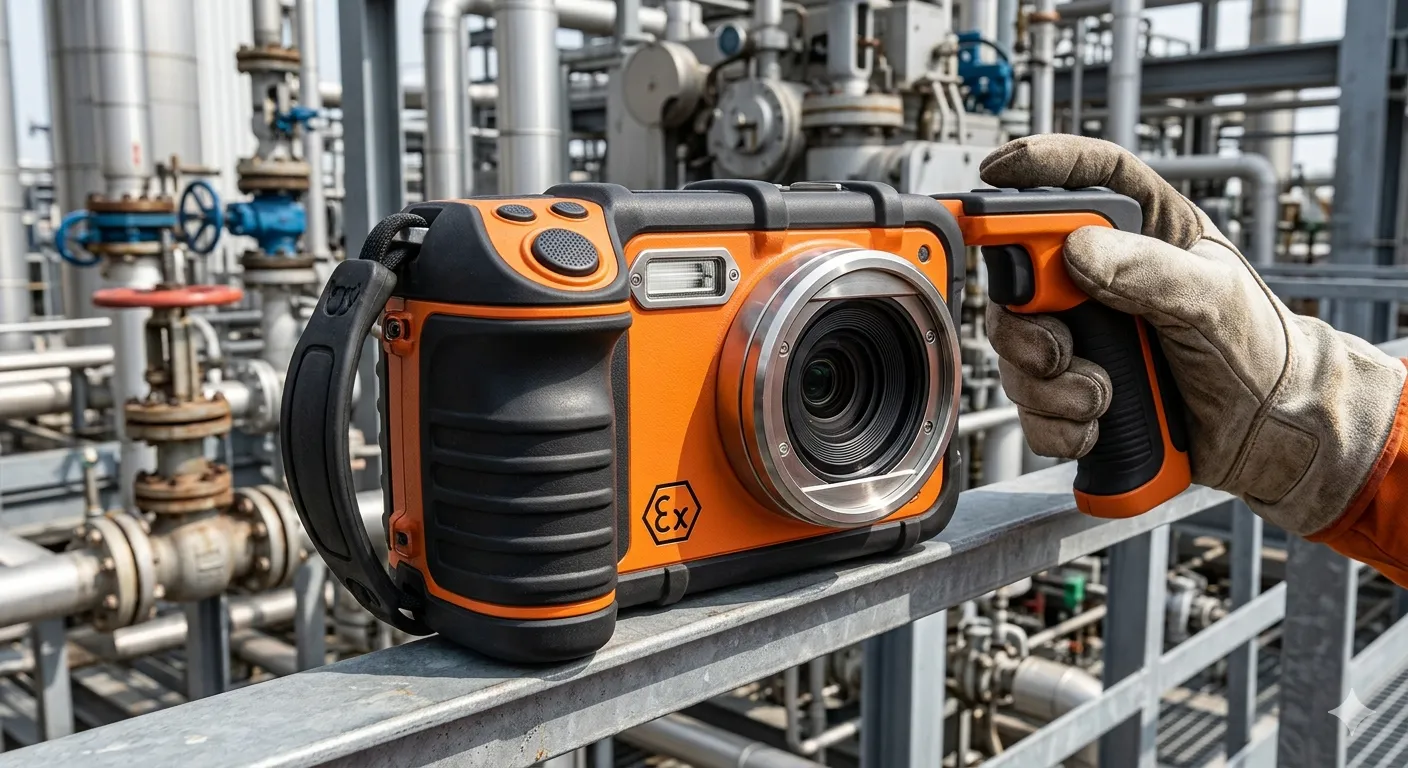

The HSE issued over 1,000 enforcement notices to offshore and onshore oil and gas operations in a recent reporting period — and equipment certification failures remain one of the most consistently cited categories. If your rig camera installations haven't been audited against current ATEX and DSEAR requirements since they were first specified, there is a meaningful probability that at least one unit in your hazardous area coverage is non-compliant today. Regulation hasn't stood still. Post-Brexit, the UK has retained the ATEX framework in domestic law, and the PFEER Regulations continue to govern emergency response and prevention on the UK Continental Shelf. Your camera specifications need to reflect all of it.
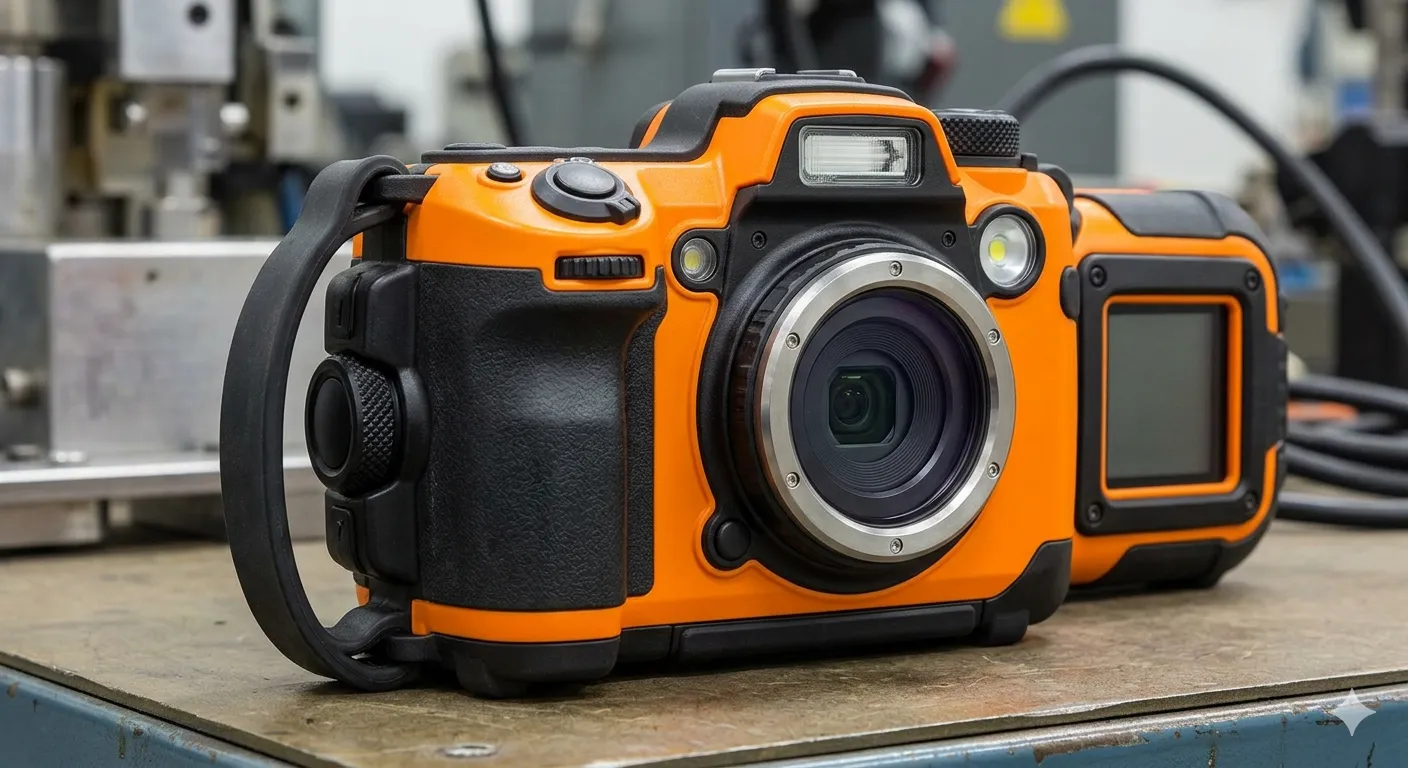
Start With Your Zone Drawing, Not Your Supplier Catalogue
Every compliance decision for rig cameras begins with the same document: your current area classification drawing. This should reflect your most recent DSEAR assessment and be reviewed whenever process conditions, layout, or substances change. Specifying cameras without this in hand is working backwards.
The zone determines the equipment category your cameras must carry:
- Zone 0 — Category 1G equipment only. Continuous flammable atmosphere present. Very few camera technologies are certified to this level; intrinsic safety (Ex ia) is the predominant protection concept applicable here.
- Zone 1 — Category 2G. Flammable atmosphere likely during normal operation. Both flameproof (Ex d) and intrinsically safe equipment are applicable.
- Zone 2 — Category 3G. Flammable atmosphere possible but not expected in normal operation. Category 3G covers this zone; Category 2G equipment also qualifies.
An ATEX camera installed in the wrong category for its zone isn't a minor documentation issue. Under DSEAR and the Offshore Installations (Prevention of Fire and Explosion, and Emergency Response) Regulations 1995 — PFEER — it is a regulatory breach with potential criminal liability attached.
Gas Group: The Certification Detail Most Procurement Teams Miss
Temperature class gets attention. Gas group often doesn't — and that's where costly mistakes happen.
ATEX equipment for surface industries (your context) carries a Group II designation, subdivided into IIA, IIB, and IIC. These reflect the minimum ignition energy and maximum experimental safe gap of the gases involved:
- IIA covers propane and similar lower-hazard gases
- IIB covers ethylene and hydrogen sulphide — common in process environments
- IIC covers hydrogen and acetylene — the highest risk category
North Sea rig environments routinely involve hydrogen sulphide (H₂S) in produced gas streams, which demands IIB certification as a minimum. If your installation involves any hydrogen-containing streams — increasingly relevant as energy transition projects introduce hydrogen into existing infrastructure — you need IIC. An explosion proof digital camera rated only to IIA in an H₂S-present environment is not compliant, regardless of what the rest of its certification says. Check the full ATEX marking, not just the headline Ex rating.
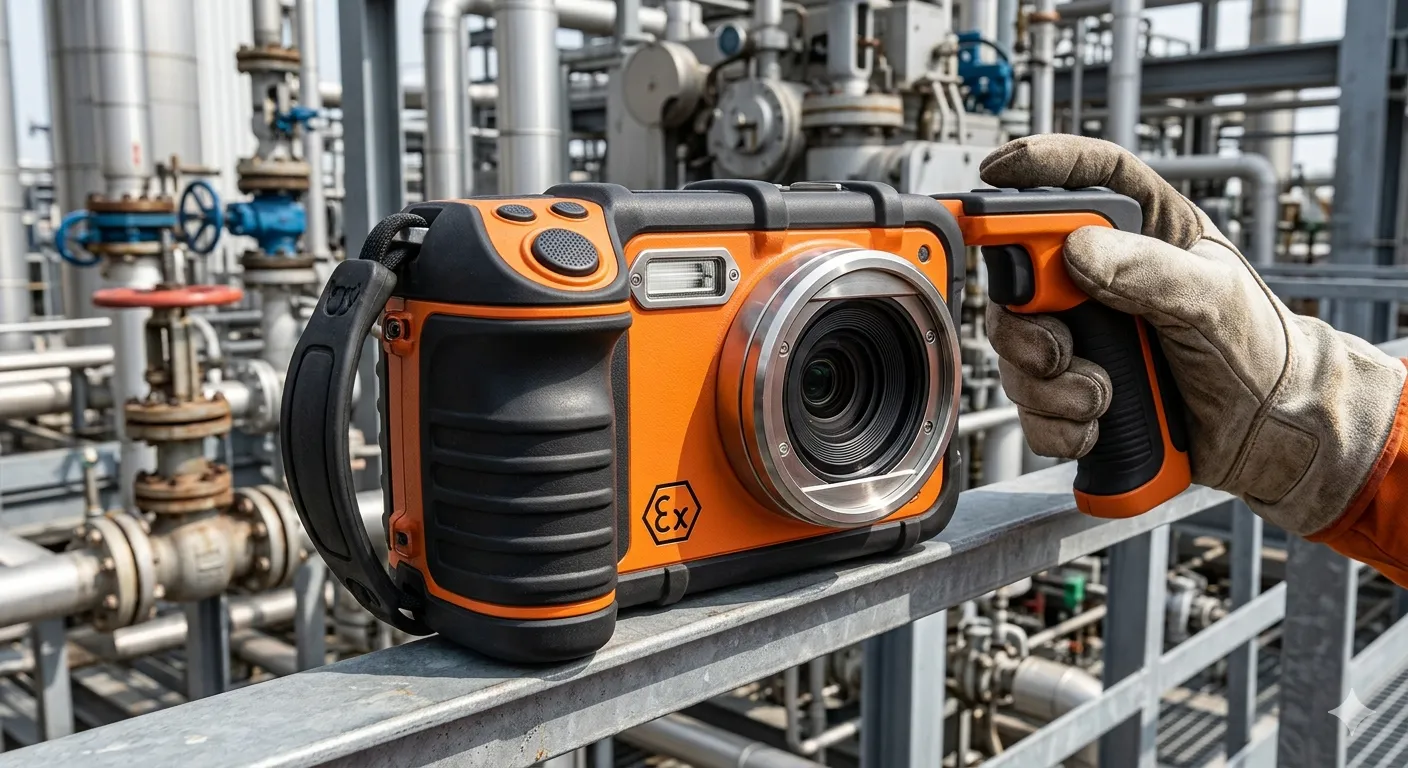
Temperature Class: Match to Auto-Ignition, Not Ambient Conditions
The temperature class (T-class) on an ATEX-certified device defines the maximum surface temperature the equipment will reach under fault conditions. It must be lower than the auto-ignition temperature of the most hazardous substance present in the classified zone.
The T-class scale runs from T1 (450°C maximum surface temperature) down to T6 (85°C). The lower the auto-ignition temperature of your process gases, the higher the T-class you require. Carbon disulphide, for example, auto-ignites at around 90°C — demanding T6 certification. Most hydrocarbons sit in the T3–T4 range.
Your DSEAR assessment should identify the relevant substances and their auto-ignition temperatures. Cross-reference that against your camera's T-class marking. If your procurement process hasn't verified this match, verify it now. An ex proof digital camera with the correct Ex d category and gas group rating but an insufficient T-class is still a non-compliant installation.
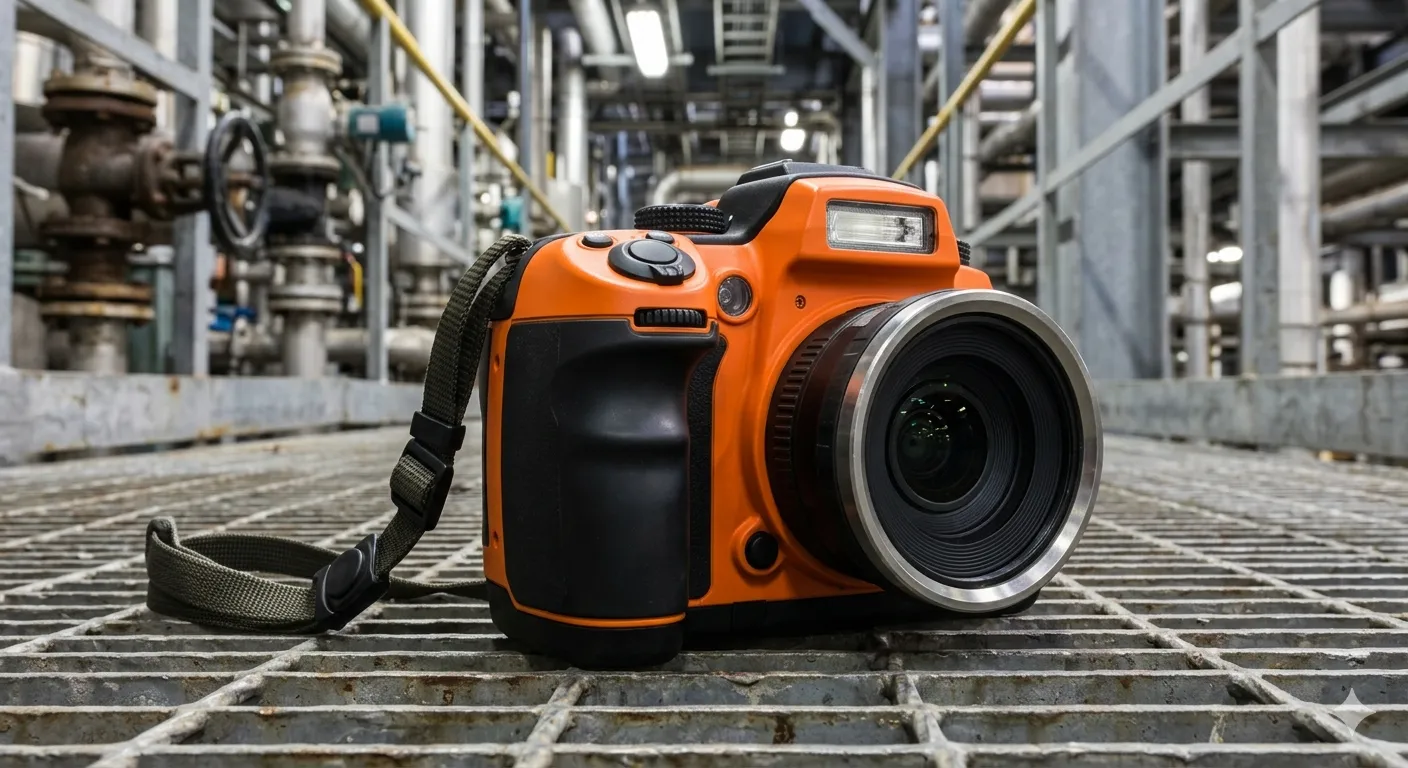
IP Rating Requirements for UKCS Operating Conditions
Offshore and onshore rig environments impose mechanical and environmental stresses that go well beyond the baseline ATEX electrical certification. IP rating governs ingress protection against dust and water — and on a rig, both matter.
For exposed positions on process decks, wellhead areas, and equipment modules, IP66 is the practical minimum. IP67 is preferable where water ingress risk from high-pressure cleaning or wave exposure is a factor. IP ratings are not part of the ATEX certification itself — they are a separate mechanical standard — but they are directly relevant to your PUWER obligations to maintain equipment in a safe and functional condition throughout its operational life.
An intrinsically safe camera specified for Zone 0 or Zone 1 work that carries inadequate IP protection will degrade faster than its certification schedule assumes. Plan for that in your inspection and replacement cycle, and document it.
IECEx Equivalency: What It Means for Your 2026 Specifications
IECEx is the international certification scheme that runs parallel to ATEX. It is not identical — but for UK operations, ATEX remains the applicable standard. Post-Brexit, UK-CA marked equipment is technically required for Great Britain, though ATEX-marked equipment placed on the market before 1 January 2021 retains its validity.
For new procurement in 2026, confirm that your supplier's equipment carries current UK-CA or ATEX marking valid for GB. An ATEX digital camera carrying only IECEx certification — without ATEX or UK-CA marking — does not automatically satisfy UK domestic requirements. Verify the documentation trail from the notified body through to the Declaration of Conformity before any unit enters a classified zone.
Conclusion
Rig camera compliance on the UK Continental Shelf in 2026 is not a static target. Regulation continues to evolve, energy transition is introducing new substances and zone configurations, and HSE enforcement scrutiny of classified area equipment remains high. The checklist above gives you a structured starting point — but it is a starting point, not a substitute for a full DSEAR review and documented equipment audit. Build that audit into your annual safety management cycle, and treat every camera specification as the engineering and legal commitment it is. For the full procurement picture before your next purchase, the recommended read is 10 things to consider when buying an explosion-proof digital camera










![The Benefits of Using a CNC Touch Probe [Infographic]](https://writeupcafe.com/data/post/1677697/bfdf3e040e67936848aa232d2dfe3d03.jpg.webp)







Sign in to leave a comment.