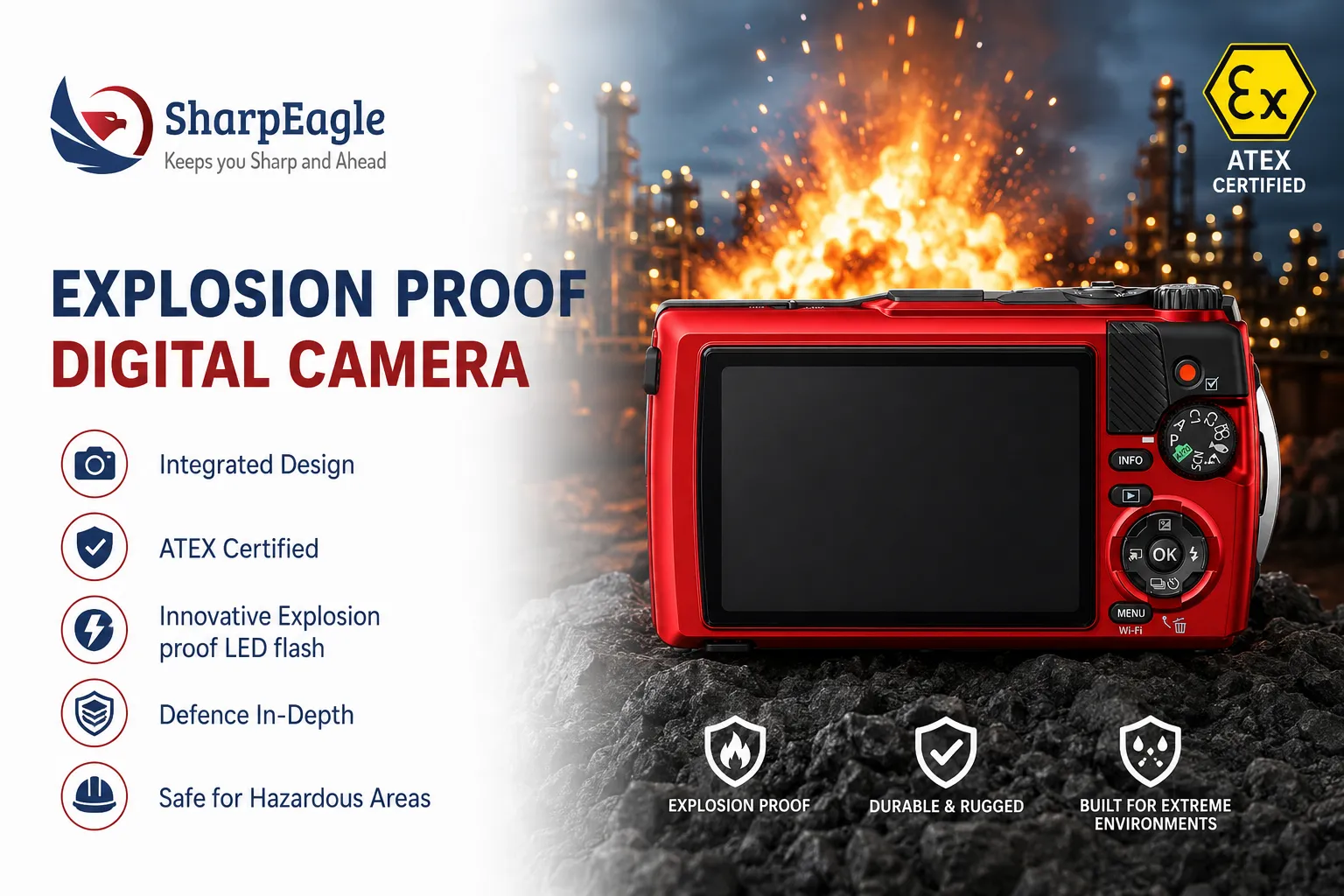

A single undocumented equipment defect can trigger days of unplanned downtime in a major oil and gas facility. Across the UAE, inspection requirements are expanding as operators strengthen safety programmes, improve asset reliability, and align with increasingly rigorous compliance expectations. Facilities handling flammable gases, vapours, and combustible substances must demonstrate that inspections are not only completed but properly recorded and traceable.
This creates a challenge. Standard imaging devices are often unsuitable for hazardous environments where ignition risks must be tightly controlled. Inspection teams need reliable methods for capturing evidence without compromising safety. As a result, specialised imaging technology has become an essential tool for maintenance, integrity management, and regulatory compliance throughout the UAE’s oil and gas sector.

Rising Inspection Demands in UAE Hazardous Areas
The UAE continues to invest heavily in refining, petrochemical processing, LNG infrastructure, offshore production, and energy diversification projects. With this growth comes increased emphasis on workplace safety, operational transparency, and documented inspection procedures.
Your facility may be required to comply with internal HSE frameworks while also aligning with internationally recognised standards such as the ATEX Directive, DSEAR principles, PUWER requirements, and broader workplace safety expectations. Inspection records are now routinely reviewed during audits, shutdowns, incident investigations, and asset integrity assessments.
Photographic evidence has become a critical component of this process. Whether you are documenting corrosion, equipment damage, valve conditions, structural degradation, or maintenance activities, visual records provide an objective reference that supports decision-making and demonstrates compliance.
However, conventional cameras present a serious problem in hazardous locations.
Why Standard Cameras Cannot Be Used in Explosive Atmospheres
Many oil and gas environments contain potentially explosive mixtures of gases, vapours, or dust. In these locations, even a small electrical spark or excessive surface temperature may become an ignition source.
Consumer-grade cameras are not designed for operation in hazardous areas. Their batteries, circuitry, switches, and electronic components can generate sufficient energy to ignite a flammable atmosphere under certain conditions. For this reason, their use is commonly restricted or prohibited within classified zones.
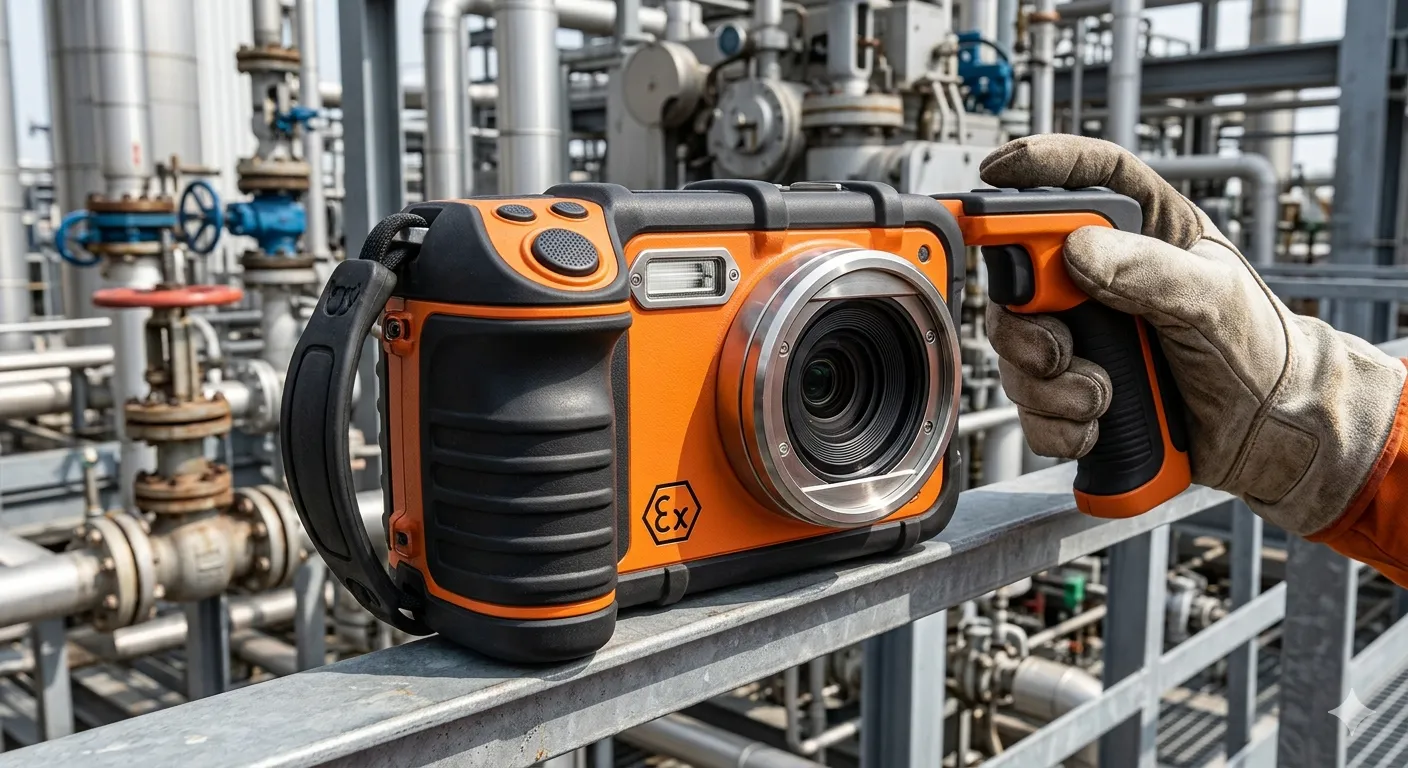
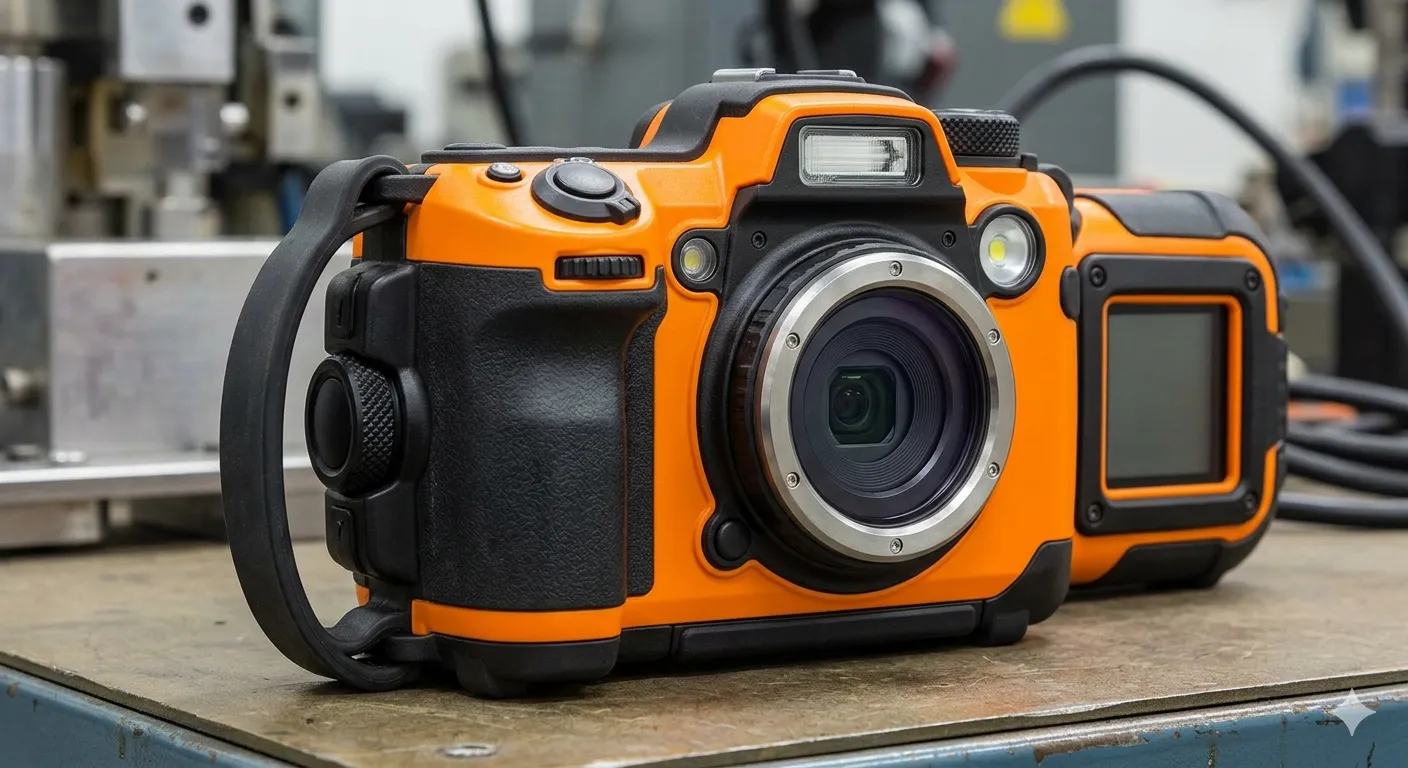
A properly certified Explosion Proof Digital Camera is engineered specifically for these environments. The device is designed to prevent internal ignition sources from causing an external explosion, allowing inspection teams to capture critical visual information while maintaining safety requirements.
For operators across the UAE, this capability supports safer inspections without introducing unnecessary operational risk.
Certifications That Matter When Selecting Inspection Equipment
Not all hazardous-area imaging devices offer the same level of protection. Understanding certification requirements is essential before procurement decisions are made.
Key certifications and classifications include:
- ATEX certification for equipment intended for explosive atmospheres
- IECEx certification demonstrating compliance with internationally recognised standards
- Zone 1 approval for areas where explosive atmospheres are likely during normal operations
- Zone 2 approval for areas where explosive atmospheres are less likely and occur infrequently
- Manufacturer documentation confirming suitability for your specific operating environment
An atex digital camera provides documented evidence that the equipment has been assessed against recognised hazardous-area requirements. Equally important is ensuring the certification matches the classification of the area where your personnel will operate.
Your procurement team should always verify certification scope, operating limitations, environmental ratings, and maintenance requirements before deployment.
Improving Documentation During Shutdowns, Audits, and Integrity Programmes
Maintenance shutdowns create narrow inspection windows. During these periods, teams must gather large volumes of information quickly while maintaining accuracy.
Using a Digital Camera Explosion proof solution enables personnel to document findings directly within hazardous areas without relocating equipment or relying on handwritten descriptions alone. This improves reporting quality and reduces the risk of missing important details.
Visual documentation supports:
- Corrosion monitoring programmes
- Mechanical integrity assessments
- Regulatory compliance audits
- Root cause investigations
- Preventive maintenance planning
- Contractor verification activities
An intrinsically safe camera may also be used in certain hazardous-area applications where energy limitation principles are appropriate for the operating environment. Selecting the correct technology depends on your facility's classification and risk assessment requirements.
The result is more reliable inspection data, stronger audit readiness, and improved traceability throughout the asset lifecycle.
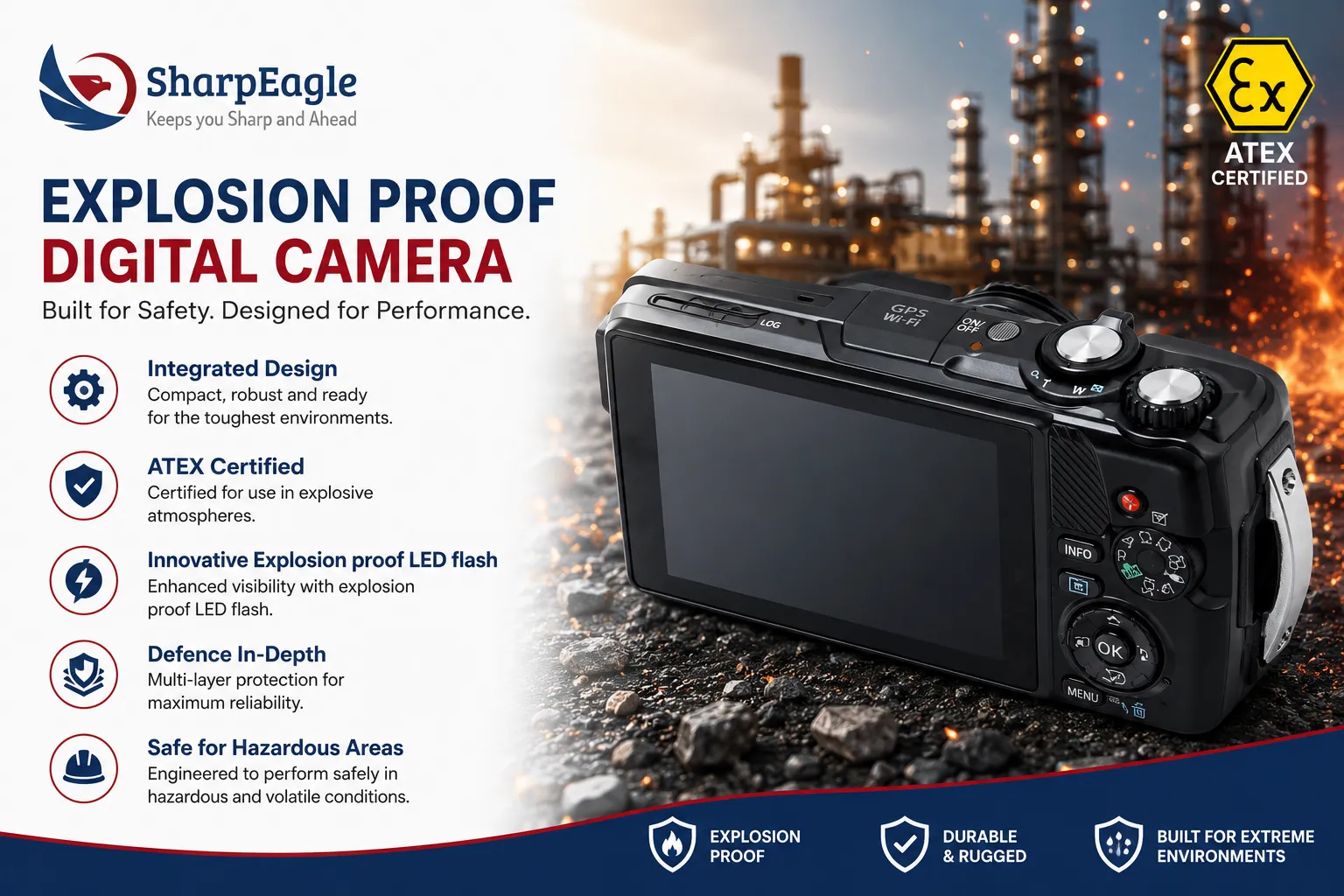
SharpEagle Technology: A Purpose-Built Solution for Hazardous Inspections
Among the specialised solutions available to the industry, SharpEagle Technology's explosion proof digital camera is designed specifically for demanding industrial environments.
Key features and advantages include:
- Certified hazardous-area operation for oil and gas applications
- High-resolution image capture for detailed inspection records
- Rugged construction suitable for harsh industrial conditions
- Reliable battery performance during extended field operations
- User-friendly design that supports efficient inspection workflows
- Durable protection against challenging environmental conditions
For inspection teams operating in refineries, petrochemical complexes, LNG terminals, and offshore installations, the system helps streamline evidence collection while supporting safety and compliance objectives. The equipment is particularly valuable when documentation quality directly influences maintenance decisions and regulatory reporting outcomes.
An ex proof digital camera also contributes to improved collaboration between field personnel, maintenance planners, reliability engineers, and safety teams by providing clear visual evidence that can be reviewed long after an inspection is completed.
Delivering Measurable Return on Investment
The value of hazardous-area imaging extends beyond regulatory compliance. Accurate visual records reduce uncertainty and support faster decision-making throughout maintenance and operations.
When inspection findings are documented correctly the first time, your organisation can reduce repeat inspections, improve maintenance planning accuracy, and minimise disruption to production schedules. Better evidence also strengthens asset integrity programmes by helping teams identify developing issues before they become costly failures.
Over time, improved inspection accuracy contributes to lower downtime, enhanced safety performance, and more efficient resource allocation. In an industry where every operational hour matters, those benefits can translate into substantial financial returns.
Conclusion
As UAE oil and gas operators continue to strengthen safety, compliance, and asset reliability programmes, specialised imaging technology will play an increasingly important role in inspection strategies. Facilities that equip personnel with certified hazardous-area cameras gain more accurate documentation, stronger audit readiness, and greater confidence in maintenance decisions. The combination of regulatory compliance, operational efficiency, and improved integrity management makes these solutions a practical investment for modern industrial operations. Recommended read: Complete Guide to Explosion Proof Digital Cameras











![The Benefits of Using a CNC Touch Probe [Infographic]](https://writeupcafe.com/data/post/1677697/bfdf3e040e67936848aa232d2dfe3d03.jpg.webp)







Sign in to leave a comment.