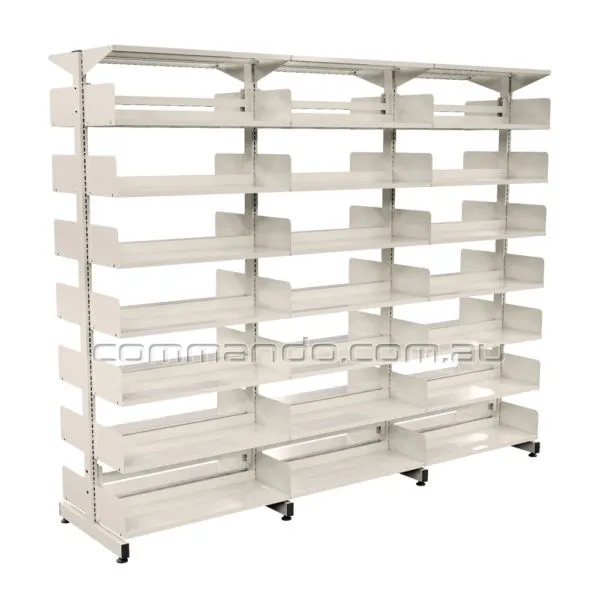

Walk into a library where everything works well - checkout and returns are quick, collections are easy to browse and shelving seems logical. Commercial library shelving doesn't make a daily presence in your operations, but when done right (or wrong), it subtly influences every part of your collection management.
Good library shelving systems help staff work efficiently and keep collections safe. Bad shelving creates small problems that add up over time to impact your hours, accuracy and service quality. Often, these issues sneak up gradually. Your shelving probably doesn't cause one moment of total dysfunction, but it might cause hundreds of small inefficiencies each day.
More wear and tear on collections
Librarians move books a lot. Every day, books are pulled, returned, shifted and replaced. Poor shelving turns this necessary handling into an opportunity for damage. Crowded shelves rub books in and out. Deep shelves cause leaning/tipping when restocked. Inconsistent row heights force oversized books into unfit spaces. Over time, that wear adds up.
Libraries commonly see damage rates increase by 15–25% when shelving units aren't configured to fit their collections. It leads to more repairs, more early replacements and more expenses. And it's not just dollars. Heavily worn books also send messages to your users. A deteriorating collection tells them that the library doesn't care about quality. Even if your staff care deeply and work hard to maintain your collection, poor shelving can undermine those efforts.
Lost time in misplaced items
Would you know if someone took one book from your shelves and returned it to the wrong spot? Poor shelving quietly encourages this behaviour. Books are more likely to be shelved incorrectly when shelves are too crowded, and label makers are weak and inconsistent, forcing employees to second-guess where items "should" go. Libraries lose an average of 2–5% of their collection to misplacement at any given time. That means a library with 50,000 items could have up to 2,500 misplaced volumes.
When books are missing, they take time to find. Hours of staff time are spent searching for misplaced books that the catalogue indicates are already on the shelf. Visitors grow frustrated when they can't find items that should be in your collection. Failed searches lead to more interlibrary loans, purchase requests, and unnecessary expenses.
Compounding cost of staff time
When something takes too long, we simply spend less time doing it. This may be the most insidious way in which library shelving limits your organisation. Reshelving books is tedious, but it doesn't have to be time-consuming. Ideal shelving conditions let staff work quickly. Everything is easy to see. Labels are clear and complete. Everything is where they expect it to be.
But when any of those conditions are lacking, staff will spend more time problem solving than they should. An extra 30-minute reshelving books here and there doesn't seem like a problem. But add it up over a week for every employee who handles collection materials and it’s an issue.
Lost titles and inventory errors
The accuracy of your catalogue is only as good as what’s on your shelves. When your shelving practice is inconsistent and stressful, inventory audits become unenjoyable and inaccurate. Titles will often appear as lost in inventories, only to magically appear correctly shelved later. False positives will be everywhere.
Over time, these micro effects take a toll on your buying choices. You’ll buy extra copies of titles your library already owns. Highly used and rare titles get overlooked simply because they can’t be found. The more titles you own, the larger the disparity between your online catalogue and shelf reality becomes.
What you gain when you optimise shelving practices
The best part is you don’t need to demolish your library shelves to get it right. Small changes can lead to big improvements.
Saving your collection from damage during routing begins with spacing between shelves. Proper shelf height even affects the efficient processing of tall and short materials. Clear signage and logically placed shelves cut down on reshelving time and limit unnecessary travel when planning your routing.
Libraries that have tweaked their practices have experienced:
- Less circulation damage and overall longer life cycle for your collection
- Fewer items incorrectly shelved and less time lost tracking down lost items
- Hours saved across all operations
- More accurate inventory audits
An hour a week per staff member may not seem like much. But that’s hundreds of staff hours you can use elsewhere.
Shelving is the last stop for books when they aren’t in use. But it’s also one of the biggest factors in your library’s operational workflow. That lost book. That extra time it takes you to reshelve. That book with the damaged cover. They all begin with poor shelving. Eventually, these losses add up. They’re back-office losses for sure, but they’re losses.
When you take the time to improve your shelving practices, you’re doing more than just helping your library users. You’re preserving your collection. And you’re making your team’s job that much easier. These small margins add up when you look at your library as a whole. Making smart choices about your collection storage and investing in quality commercial shelving are some of the most direct ways you can save your library money and improve your visitors’ experience.





























Sign in to leave a comment.