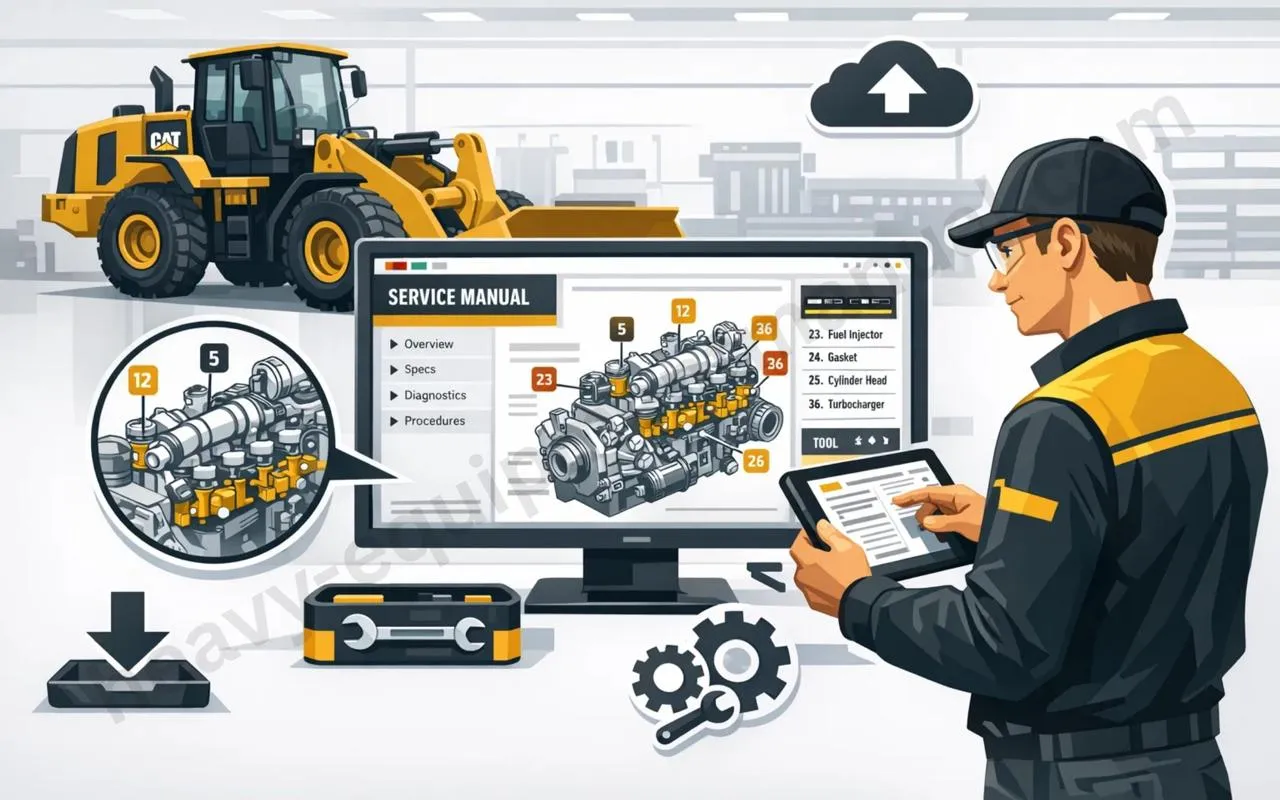
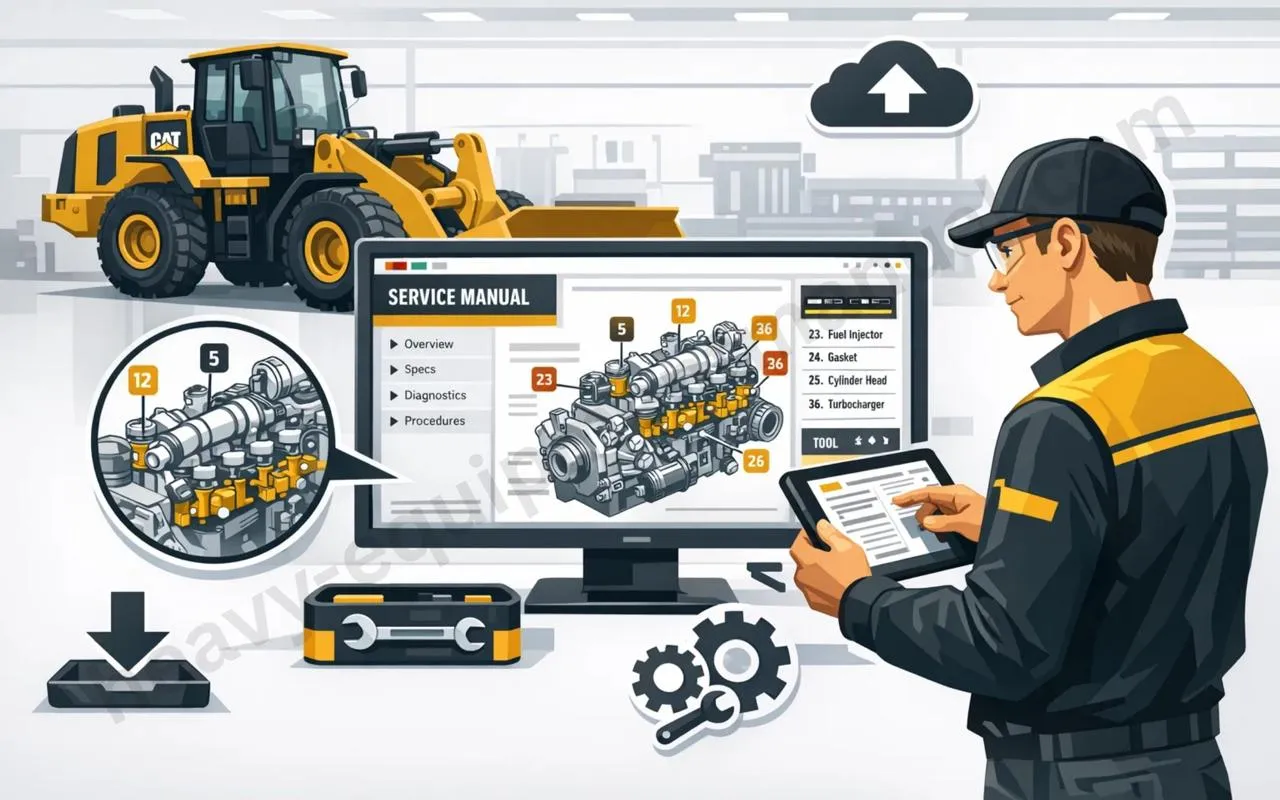
Caterpillar equipment covers such a wide range of machines that owners of less common attachments, like brush cutters or telehandlers, often struggle to find documentation as easily as owners of mainstream excavators or loaders. The right Caterpillar parts catalog can help identify the correct components, while a service manual provides the repair procedures needed to complete the job.
Finding the Right Caterpillar Parts Catalog for Niche Attachments
For niche attachments, this distinction matters more than it does for common models, since misordering a part on a less-documented machine can mean weeks of delay waiting for a return and reorder.
Why Niche Attachments Are Harder to Document
Machines like the Caterpillar BR166 brush cutter or the TH460B telehandler are produced in smaller volumes than core excavators or wheel loaders, so fewer independent resources exist online covering them. Owners searching for a BR166 parts diagram or a TH460B service procedure often find that generic search results point to unrelated brush cutter or telehandler brands instead of Caterpillar-specific documentation.
This is a common problem across the wider Caterpillar range, not just these two machines. Attachments, compaction equipment and specialty tools frequently share a base engine or hydraulic system with a more common model, but the attachment-specific components, such as cutting heads or telescoping boom sections, require their own dedicated parts breakdown.
How to Confirm You Have the Right Documentation
Before relying on any parts catalog or manual, check three things:
- Model designation – Caterpillar often uses a serial number prefix alongside the model name (for example, a three-letter prefix like SWB or SLF) to distinguish between production runs of the same base model.
- Component scope – confirm whether the document covers the full machine or only a specific system, since some catalogs are split between the base carrier and the attachment itself.
- Source reliability – OEM-sourced or factory-reproduced documentation is far more reliable than user-submitted forum scans, particularly for torque values and safety-critical procedures.
Where This Fits Into Regular Maintenance Planning
Attachments like brush cutters see heavy wear on cutting components, while telehandlers place ongoing stress on boom pivots and hydraulic cylinders. Having the correct parts reference on hand before a breakdown, rather than searching for it during downtime, is one of the simplest ways independent workshops and equipment owners reduce repair delays on less common Caterpillar machines.
Owners who manage a mixed fleet with several attachment types often find it worthwhile to build a small reference library covering each machine's parts catalog, rather than relying on a single general Caterpillar guide that may not go deep enough on attachment-specific components.
Frequently Asked Questions
What is the difference between a parts catalog and a service manual? A parts catalog identifies components and OEM part numbers for ordering, while a service manual covers the actual repair, diagnostic and maintenance procedures.
Why is documentation harder to find for niche Caterpillar attachments? Lower production volumes mean fewer independent resources and forum discussions exist compared to mainstream Caterpillar excavators or loaders.
Does a serial number prefix really change which manual I need? Yes. Caterpillar frequently uses the prefix to distinguish between production runs of the same model name, and specifications can differ between them.
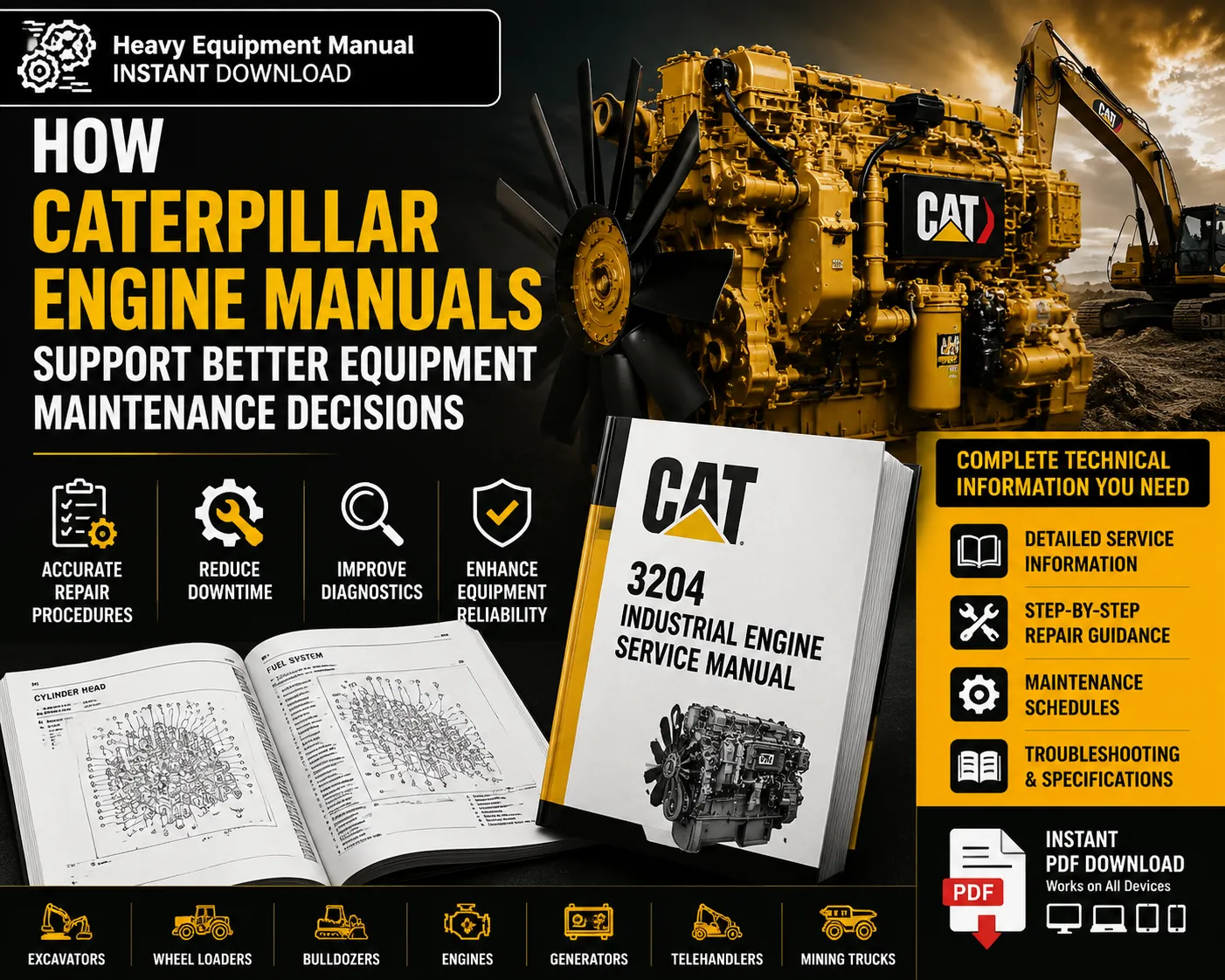
Readers who want to see how one specialist resource organises this kind of documentation can find a dedicated Caterpillar parts catalog collection for reference.





























Sign in to leave a comment.