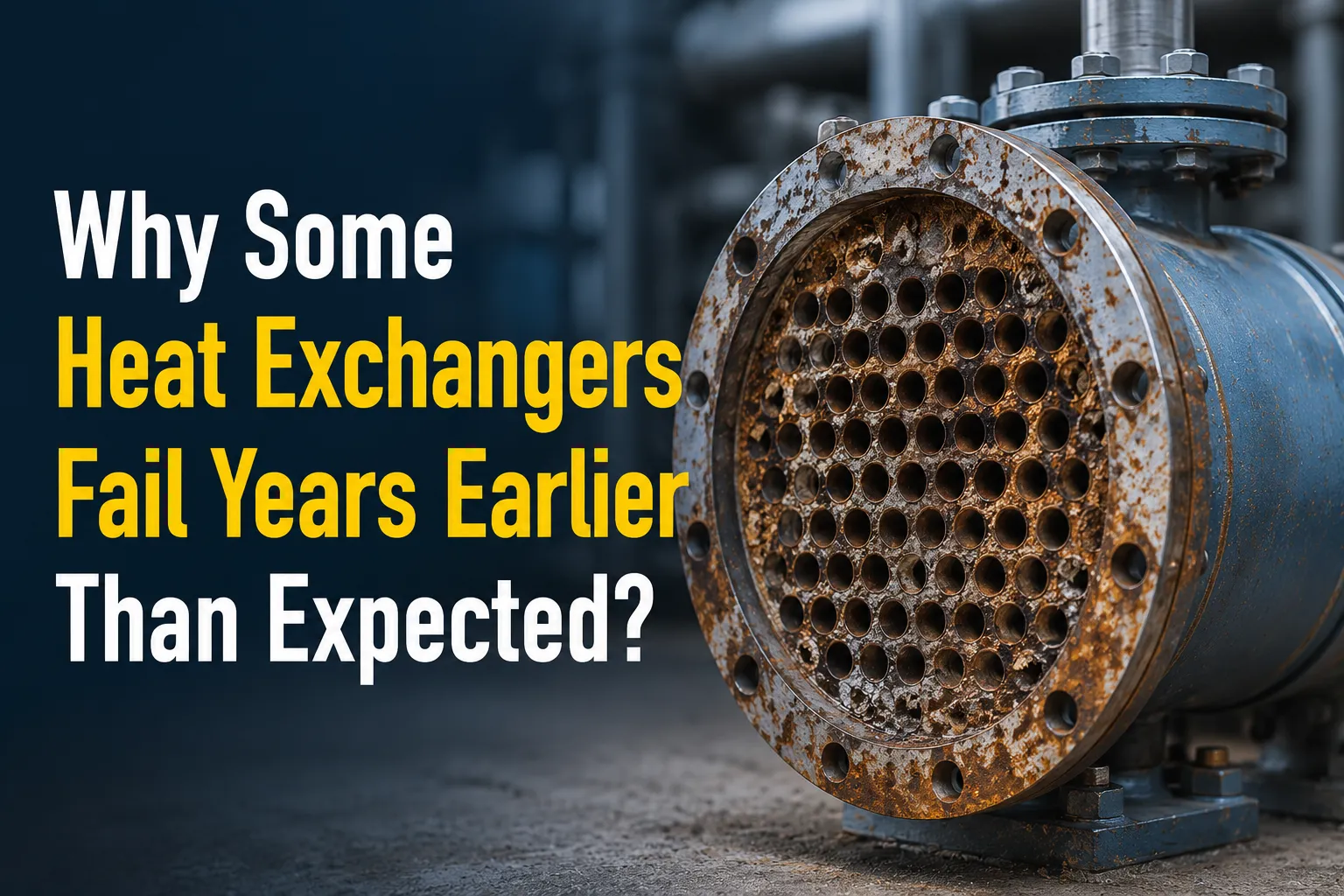

Heat exchangers are among the hardest-working components in industrial cooling, HVAC, manufacturing, and process systems. Designed to transfer heat efficiently between fluids, they often operate continuously under demanding conditions. While many units are engineered to last for decades, some begin showing serious performance issues much earlier than expected.
Unexpected heat exchanger failures can lead to production delays, higher energy costs, expensive repairs, and even complete system shutdowns. Understanding the factors that shorten equipment life can help facility managers, engineers, and maintenance teams make better decisions and avoid preventable problems.
Corrosion Remains One of the Biggest Threats
Corrosion is a leading cause of premature heat exchanger failure. Even when high-quality materials are used, exposure to aggressive fluids, poor water quality, or incompatible chemicals can gradually weaken internal surfaces.
Over time, corrosion can create small pits, cracks, and leaks that reduce heat transfer efficiency and compromise structural integrity. In severe cases, the exchanger may require complete replacement long before its expected service life.
Regular monitoring of water chemistry, proper material selection, and routine inspections can significantly reduce corrosion-related damage.
Fouling Reduces Performance and Increases Stress
Fouling occurs when unwanted deposits accumulate on heat transfer surfaces. Common examples include mineral scale, biological growth, dirt, oil residues, and process contaminants.
At first, fouling may seem like a minor issue. However, even a thin layer of deposits acts as an insulating barrier, making it harder for heat to transfer efficiently. As a result, the system works harder to achieve the same cooling or heating performance.
This additional strain often leads to:
- Increased energy consumption
- Higher operating temperatures
- Reduced efficiency
- Accelerated wear on connected equipment
Routine cleaning schedules are essential for maintaining optimal performance and extending equipment lifespan.
Poor Maintenance Practices
Many heat exchanger failures are linked to inadequate maintenance rather than manufacturing defects.
Small issues such as loose connections, blocked channels, damaged gaskets, or early signs of corrosion are often easy to address when detected promptly. Unfortunately, these warning signs can go unnoticed when inspections are delayed or skipped.
Preventive maintenance programs help identify developing problems before they become major failures. Regular inspections, performance monitoring, cleaning, and component replacement contribute significantly to long-term reliability.
Organizations that invest in proactive maintenance often experience fewer breakdowns and lower lifecycle costs.
Operating Conditions Beyond Design Limits
Every heat exchanger is designed to operate within specific temperature, pressure, and flow-rate limits. Problems arise when equipment is routinely pushed beyond those specifications.
Excessive temperatures can weaken materials and accelerate corrosion. High pressure can stress joints and seals. Inconsistent flow rates may create thermal shock, causing expansion and contraction cycles that damage components over time.
Repeated exposure to extreme operating conditions can dramatically shorten equipment life, even if no immediate failure is visible.
Following manufacturer recommendations and monitoring system performance can help prevent unnecessary stress on the equipment.
Incorrect Material Selection
Not all heat exchangers are suitable for every application. Choosing the wrong construction material can lead to early deterioration, especially in environments involving corrosive fluids or challenging operating conditions.
For example, a material that performs well in one industrial process may deteriorate quickly when exposed to different chemicals or water compositions.
When selecting new heat exchangers, it is important to consider:
- Fluid characteristics
- Temperature requirements
- Pressure conditions
- Environmental factors
- Maintenance expectations
Proper material selection can make a significant difference in long-term durability.
Water Quality Problems
Water quality directly impacts heat exchanger performance and lifespan. Hard water can promote scale formation, while untreated water may introduce contaminants that encourage corrosion and biological growth.
Common water-related issues include:
- Mineral scaling
- Sediment buildup
- Microbiological fouling
- Corrosive chemical imbalances
Implementing water treatment programs and conducting routine water analysis can help minimize these risks and maintain efficient operation.
Installation and Design Errors
Even a high-quality heat exchanger can experience premature failure if it is installed incorrectly.
Poor piping design, improper alignment, inadequate support structures, or insufficient flow balancing can place unnecessary stress on the equipment. These issues may not be immediately visible but can contribute to long-term damage.
Professional installation and system commissioning help ensure the equipment operates as intended from day one.
Final Thoughts
Heat exchangers are built to provide reliable service for many years, but their lifespan depends heavily on operating conditions, maintenance practices, water quality, and proper equipment selection.
Corrosion, fouling, poor maintenance, unsuitable materials, and operating beyond design limits are among the most common reasons some units fail years earlier than expected. Fortunately, most of these issues can be managed through preventive maintenance, regular inspections, and informed system design decisions.
By addressing these factors early, businesses can improve efficiency, reduce downtime, and maximize the return on their equipment investment while ensuring long-term operational reliability.








![The Benefits of Using a CNC Touch Probe [Infographic]](https://writeupcafe.com/data/post/1677697/bfdf3e040e67936848aa232d2dfe3d03.jpg.webp)






Sign in to leave a comment.