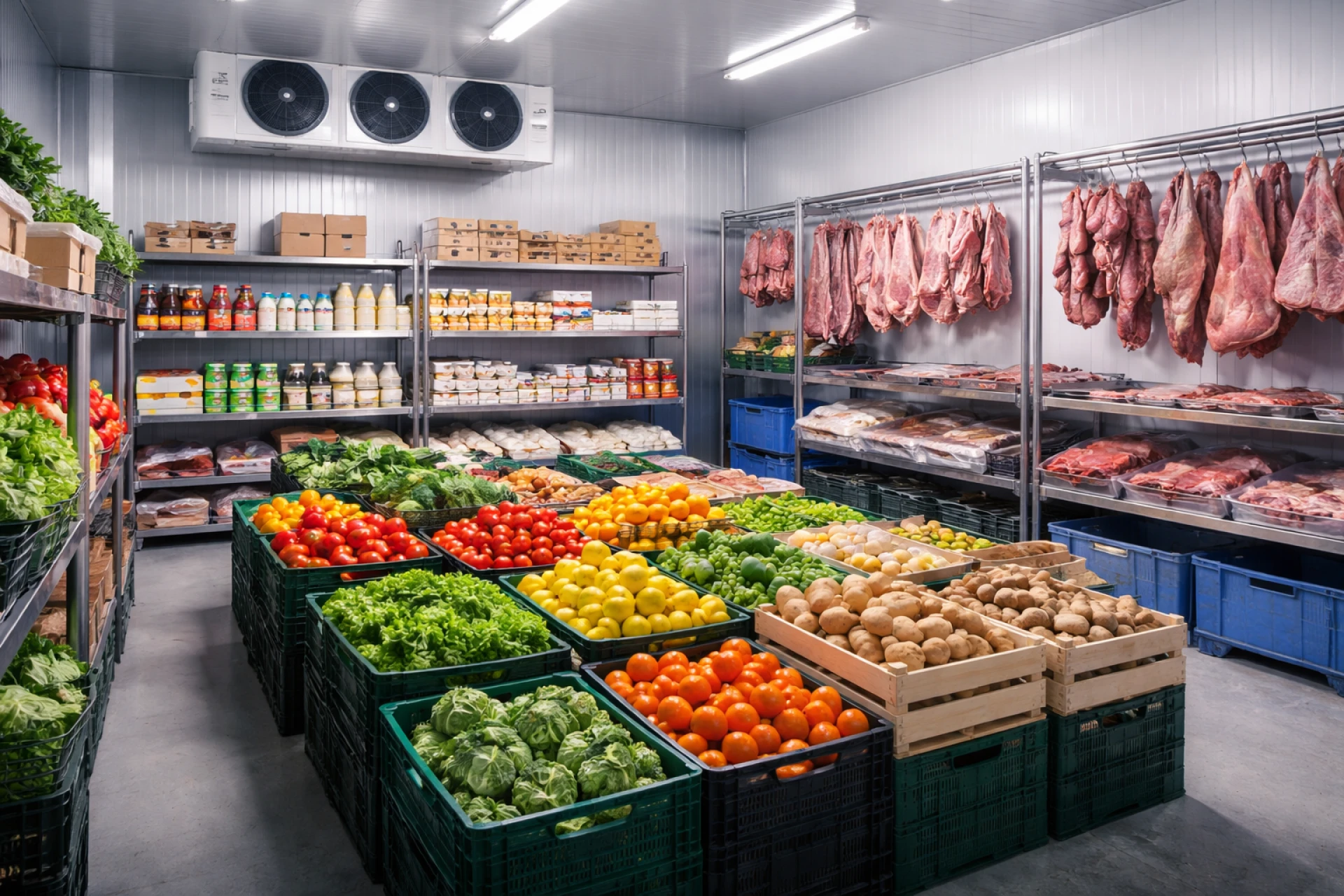

Food waste is a major challenge for restaurants and supermarkets. Large quantities of fresh vegetables, meat, dairy products, and prepared food spoil quickly if they are not stored at the right temperature. Proper storage systems are essential to keep food fresh for longer periods.
This is where a cold room becomes important. A temperature controlled storage room helps businesses manage perishable food safely and efficiently. Many restaurants, supermarkets, and food distributors install cold rooms to maintain product quality and reduce losses.
You can learn more about commercial cold room systems here:
Cold Room
What Is a Cold Room?
A cold room is a refrigerated storage space designed to maintain a stable low temperature. Unlike household refrigerators, cold rooms can store large volumes of food and maintain consistent cooling across the entire room.
Common temperature ranges include:
- Chilled storage: 0°C to 5°C
- Frozen storage: -18°C or lower
These controlled conditions slow bacterial growth and prevent food spoilage.
Why Food Waste Happens in Restaurants and Supermarkets
Food waste often occurs due to poor storage conditions and inconsistent temperatures. Common causes include:
- Improper refrigeration
- Overstocking perishable items
- Temperature fluctuations
- Poor inventory management
- Limited storage capacity
When food is stored at unstable temperatures, it spoils faster and must be discarded.
Cold rooms help solve many of these issues.
How Cold Rooms Reduce Food Waste?
1. Stable Temperature Control
Cold rooms maintain a consistent temperature throughout the storage area. Stable cooling slows bacterial growth and keeps food fresh for a longer period.
Fresh vegetables, meat, dairy, and seafood stay safe for extended storage when temperature levels remain stable.
2. Larger Storage Capacity
Restaurants and supermarkets often handle large food inventories. Cold rooms provide significantly more storage space than standard refrigerators.
This allows businesses to:
- Store bulk purchases safely
- Organize products properly
- Prevent overcrowded refrigeration units
Better organization reduces accidental spoilage.
3. Longer Shelf Life for Perishable Food
Temperature controlled storage extends the shelf life of many food products.
Examples:
- Vegetables stay crisp for several days longer
- Dairy products maintain quality
- Meat and seafood remain safe for storage
- Prepared foods last longer
Longer shelf life directly reduces waste and improves stock management.
4. Better Inventory Management
Cold rooms make it easier to organize food based on expiry dates. Restaurants and supermarkets can follow the FIFO method (First In, First Out) to use older stock first.
Proper stock rotation ensures food is used before it spoils.
5. Improved Food Safety
Food safety is critical for restaurants and retail food stores. Cold rooms keep food within safe temperature ranges, reducing the risk of contamination.
This helps businesses comply with food safety regulations while protecting customers.
Industries That Benefit From Cold Rooms
Cold rooms are widely used across the food industry, including:
- Restaurants and commercial kitchens
- Supermarkets and grocery stores
- Seafood and meat processing units
- Catering businesses
- Food distribution companies
These industries rely on temperature controlled storage to protect product quality.
Key Advantages for Restaurants and Supermarkets
Installing a cold room offers several operational benefits:
- Reduced food waste
- Lower operational losses
- Better product freshness
- Improved food safety compliance
- Efficient bulk storage
These benefits make cold rooms an essential part of modern food storage systems.
Conclusion
Food waste can significantly affect the profitability of restaurants and supermarkets. Proper storage systems are necessary to maintain food quality and prevent spoilage.
Cold rooms provide stable temperature control, larger storage capacity, and better inventory management. By maintaining the right conditions for perishable items, businesses can reduce waste, improve food safety, and operate more efficiently.
For businesses handling large quantities of fresh food, investing in a reliable cold room system is a practical and cost effective solution.




























Sign in to leave a comment.