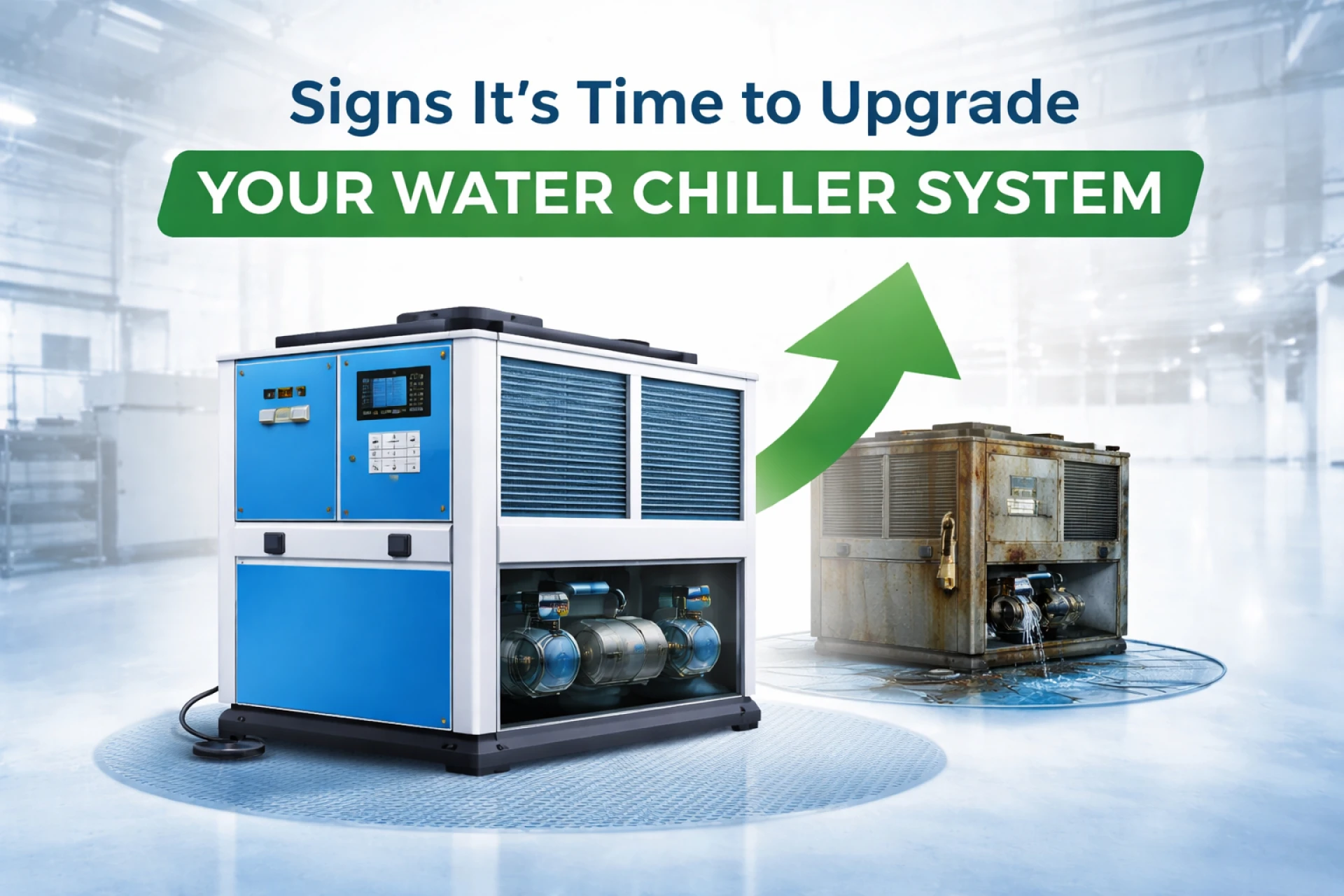

Water chillers are the backbone of many industrial and commercial cooling operations. Over time, even a well-maintained system can lose efficiency, reliability, and control. Ignoring the warning signs often leads to higher costs, unplanned shutdowns, and compromised process performance.
This guide explains the clear indicators that your water chiller system is due for an upgrade.
Why Aging Water Chillers Become a Risk?
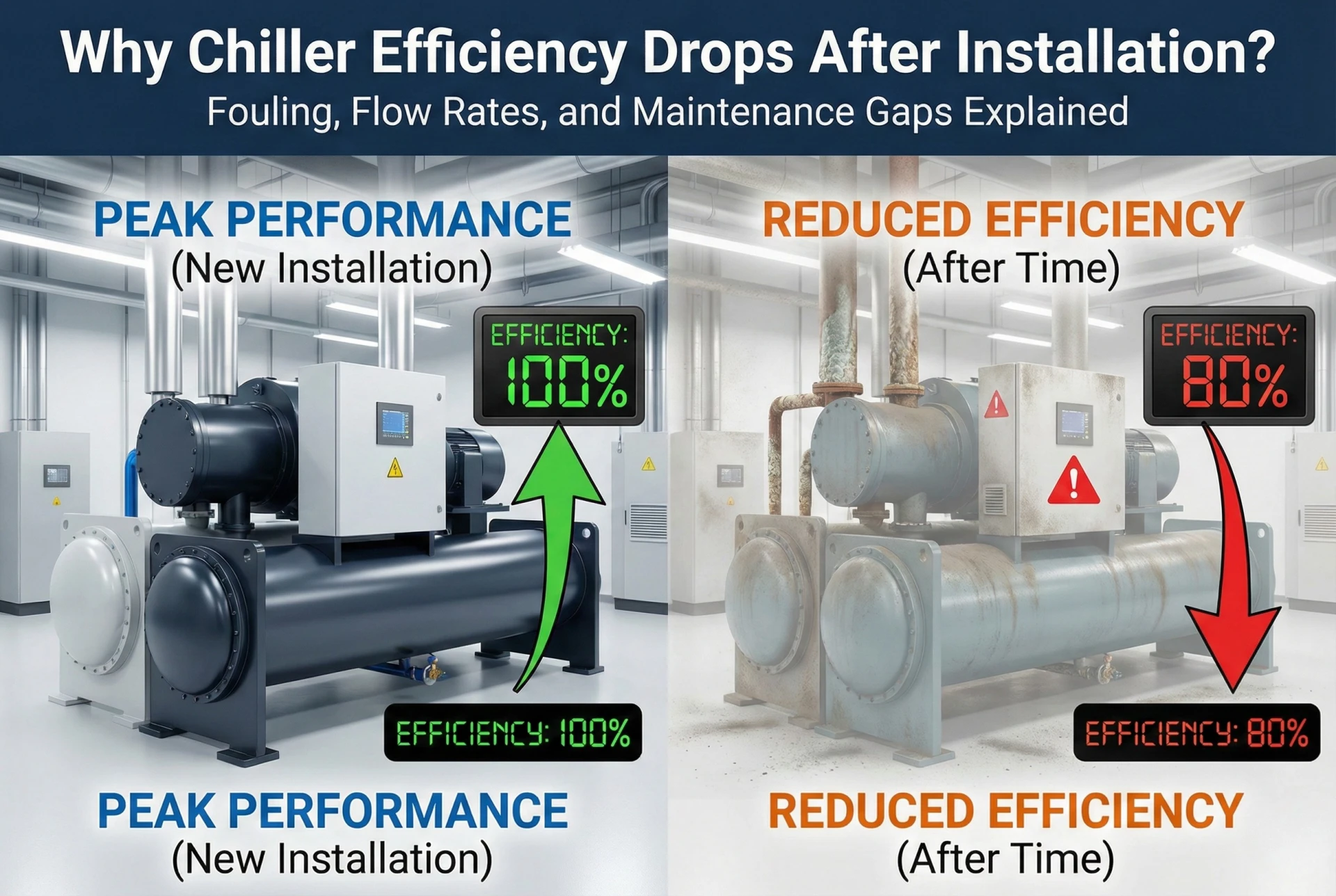
Chillers operate under continuous thermal and mechanical stress. As components age, performance declines and energy use increases. Older systems also struggle to meet current efficiency standards and process demands.
Upgrading at the right time prevents costly breakdowns and improves overall operational stability.
Key Signs Your Water Chiller Needs an Upgrade
1. Rising Energy Consumption
If your electricity bills keep increasing without changes in production load, the chiller may be running inefficiently. Worn compressors, fouled heat exchangers, and outdated controls force the system to work harder to maintain set temperatures.
Modern chillers consume significantly less power for the same cooling output.
2. Frequent Breakdowns and Repairs
Occasional servicing is normal. Repeated failures are not.
Warning signs include:
- Compressor faults occurring more often
- Control panel errors and sensor failures
- Spare parts becoming difficult to source
When repair costs start approaching replacement cost, upgrading is the smarter choice.
3. Inconsistent Cooling Performance
An aging chiller may struggle to maintain stable water temperatures. This can cause:
- Process quality issues
- Equipment overheating
- Production delays or rejects
Temperature fluctuations often indicate reduced heat transfer efficiency or failing internal components.
4. Outdated Refrigerant Type
Many older water chillers use refrigerants that are being phased out due to environmental regulations. These refrigerants are expensive, harder to procure, and subject to compliance risks.
Upgrading ensures:
- Easier refrigerant availability
- Better environmental performance
- Long term regulatory compliance
5. Increased Maintenance Downtime
If your chiller requires frequent shutdowns for cleaning, repairs, or adjustments, it disrupts operations and raises labor costs.
New systems are designed with:
- Improved component access
- Advanced fault diagnostics
- Lower routine maintenance requirements
6. Limited Control and Monitoring Capabilities
Older chillers often lack modern control features such as:
- Precise temperature regulation
- Remote monitoring
- Energy consumption tracking
Upgrading gives better visibility into system performance and allows proactive maintenance planning.
7. Capacity No Longer Matches Your Needs
Production expansion, new equipment, or higher ambient temperatures can overload an older chiller.
Signs of undersizing include:
- Continuous full-load operation
- Inability to recover temperature quickly
- Reduced system life due to overworking
A new chiller can be properly sized for current and future demand.
8. Excessive Noise and Vibration
Increased noise or vibration usually points to mechanical wear. Left unaddressed, this can lead to serious component failure and safety concerns.
Newer chillers operate with improved acoustic design and smoother mechanical operation.
Benefits of Upgrading Your Water Chiller System
Upgrading is not just about replacement. It is a performance investment.
Key benefits include:
- Lower operating and energy costs
- Improved temperature stability
- Reduced maintenance and downtime
- Better process control and reliability
- Compliance with modern efficiency standards
When Is the Right Time to Upgrade?
If your water chiller is over 10 to 15 years old and showing multiple warning signs, planning an upgrade now prevents emergency replacements later. A planned transition allows proper system selection, installation scheduling, and cost control.
An aging water chiller can quietly drain energy, increase risk, and limit productivity. Recognizing the signs early helps you move from reactive repairs to proactive system improvement.
Upgrading at the right time ensures reliable cooling, stable processes, and long term operational efficiency.
Discover Drchiller water chiller solutions engineered for dependable industrial cooling, energy-efficient operation, precise temperature control, and long-lasting performance across demanding commercial and manufacturing applications.


























Sign in to leave a comment.