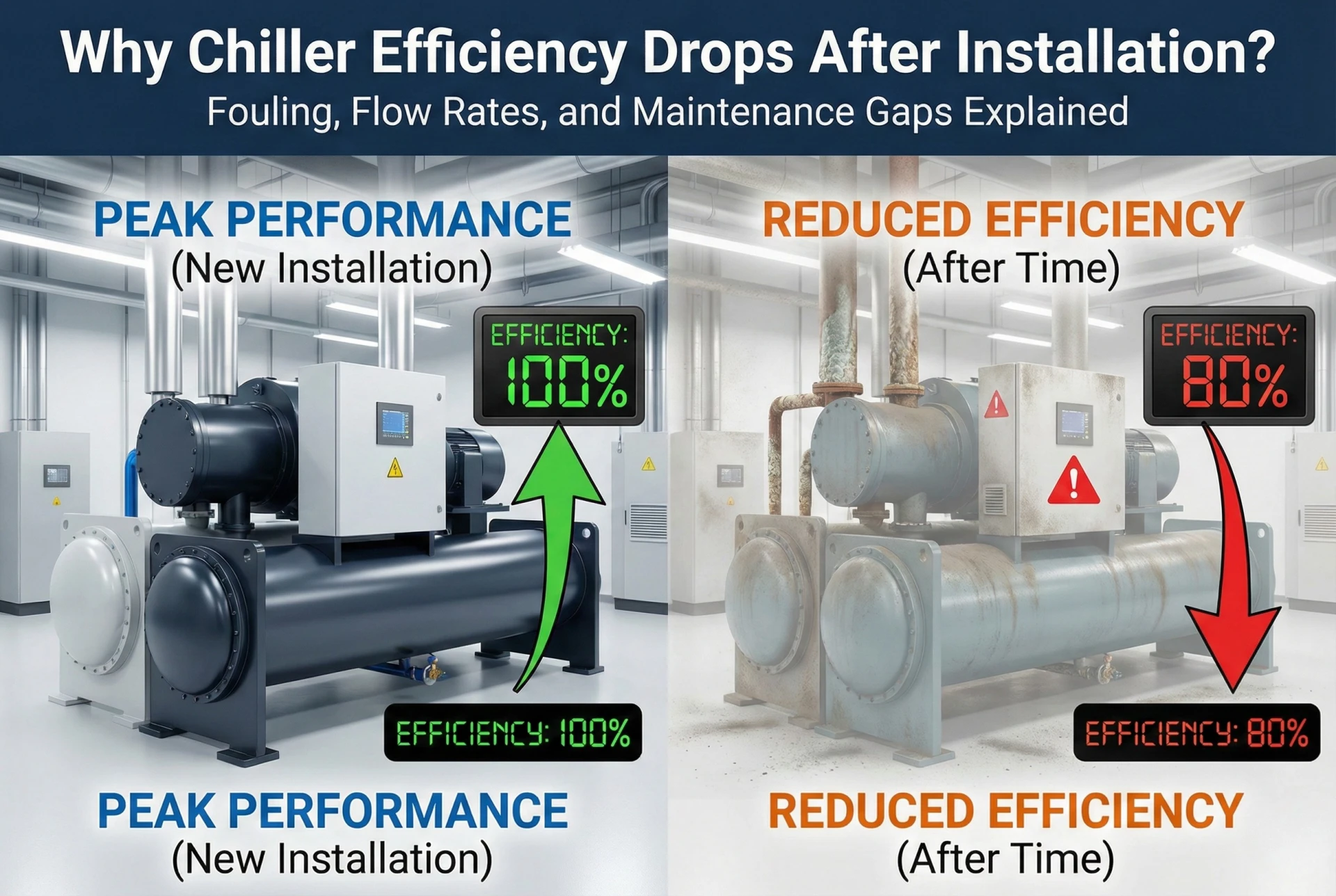

When a chiller is first commissioned, it runs at peak performance. However, facility managers often notice a steady climb in energy consumption within the first few years. Why does a machine designed for efficiency start to struggle so quickly?
The short answer is that chiller efficiency drops primarily due to heat transfer resistance (fouling), improper water flow rates, refrigerant leaks, or changes in the operating load that differ from the original design.
Here is the breakdown of exactly why this happens and where the hidden energy costs come from.
1. The Number One Culprit: Scale and Fouling
The most common reason for a drop in efficiency is the buildup of minerals on the heat exchanger tubes. This is known as fouling.
Even a very thin layer of scale (calcium carbonate, biological growth, or mud) acts as an insulator. It prevents the chiller from transferring heat effectively. As a result, the compressor has to work harder to achieve the same cooling effect.
- The Impact: Just 0.8 mm of scale can increase energy consumption by nearly 10-15%.
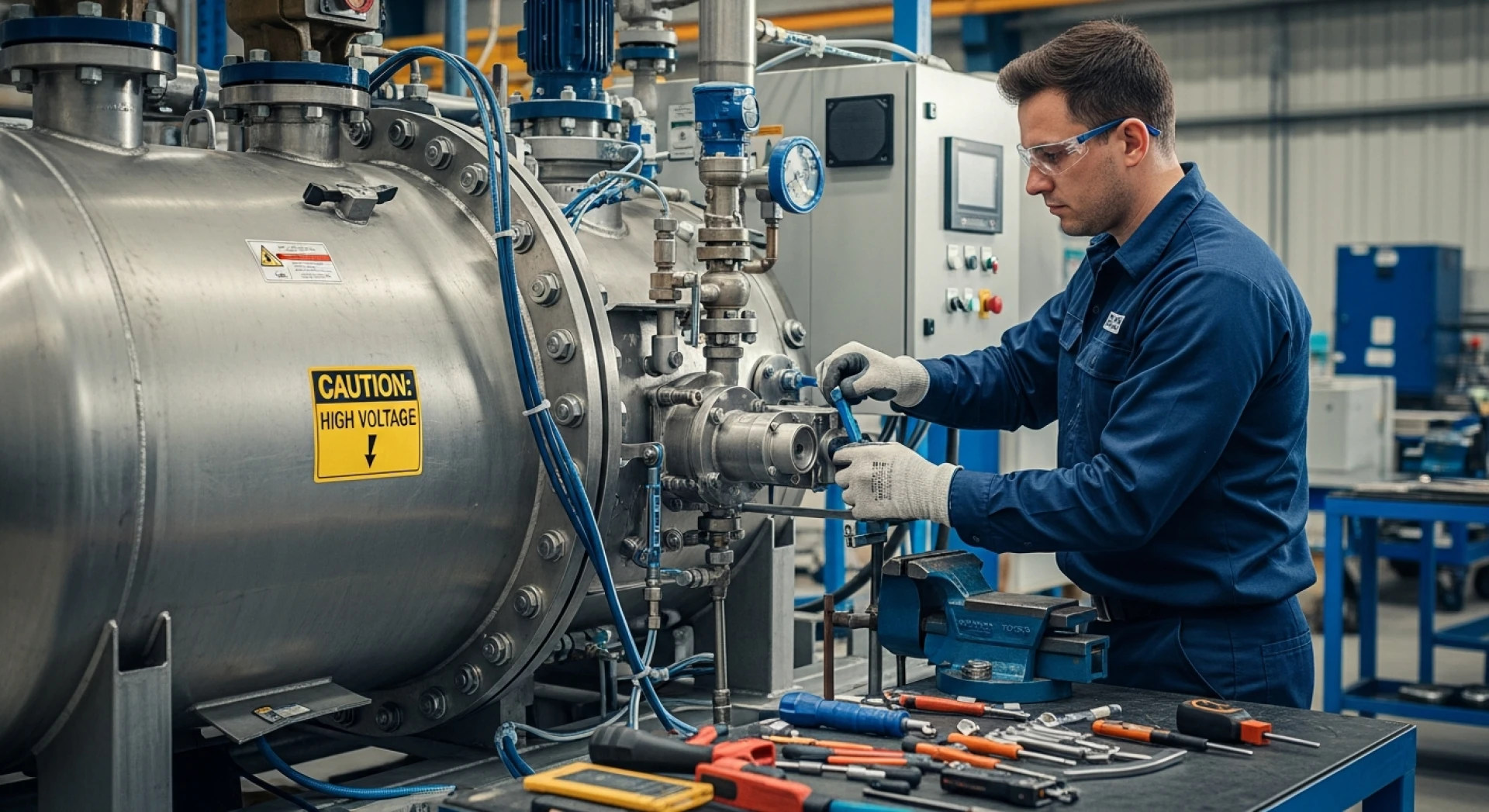
- The Fix: Regular tube brushing and maintaining proper water treatment chemistry are non-negotiable.
2. Incorrect Flow Rates (Low Delta T)
Chillers are designed to operate with a specific flow rate of water through the evaporator and condenser. If the flow rate is too high or too low, efficiency suffers.
- Low Flow: If water moves too slowly, it creates laminar flow rather than turbulent flow. Turbulent flow is necessary for good heat exchange.
- High Flow: If water rushes through too fast, there is potential for tube erosion, and the water doesn't spend enough time in the barrel to absorb or reject heat properly. This is often called "Low Delta T syndrome," where the temperature difference between supply and return water is too small.
3. Refrigerant Leaks and Levels
A chiller needs a precise amount of refrigerant to maintain the correct pressure and temperature.
- Undercharged: If there is a small leak, the compressor has to run longer and work harder to deliver the required cooling capacity.
- Overcharged: Too much refrigerant increases the discharge pressure, which also forces the compressor to draw more amps.
4. Oil Contamination
In many older chillers, oil from the compressor can migrate into the refrigerant circuit. When oil coats the inside of the heat exchanger tubes, it creates a thermal barrier similar to scale.
- The Reality: Oil has poor thermal conductivity compared to copper. If oil logs in the evaporator, the chiller’s ability to cool water drops significantly, even if the mechanics are working fine.
5. Wear and Tear on Mechanical Parts
Like any machine, moving parts degrade.
- Compressor Wear: Valves, piston rings, or scroll sets can wear down, causing internal bypassing of hot gas. This reduces the volumetric efficiency of the compressor.
- Damaged Tower Fans: If the cooling tower fans (for water-cooled systems) aren't rejecting heat efficiently due to belt slippage or broken blades, the condenser water entering the chiller will be too warm. This forces the chiller to lift heat against a higher head pressure, wasting energy.
6. Ignoring Partial Load Conditions
Chillers rarely run at 100% capacity all the time. In fact, they spend most of their life at partial load (50-70%).
- The Problem: If a chiller was oversized during installation (a common safety buffer by engineers), it may constantly cycle on and off or run at a very low load where it is least efficient. This rapid cycling wears out the motor and controls faster than steady operation.
How to Stop the Drop?
To keep efficiency close to factory specifications, focus on these four areas:
- Water Treatment: Keep tubes clean.
- Annual Eddy Current Testing: Check for tube degradation.
- Refrigerant Analysis: Ensure proper charge and check for oil migration.
- Log Daily Readings: You cannot fix what you do not track. Watch the approach temperatures (the difference between the leaving water temperature and the refrigerant temperature). If the approach temperature rises, efficiency is falling.
Don't let hidden faults drain your operating budget. Contact our technical team today for an efficiency audit to see exactly where you can save.


























Sign in to leave a comment.