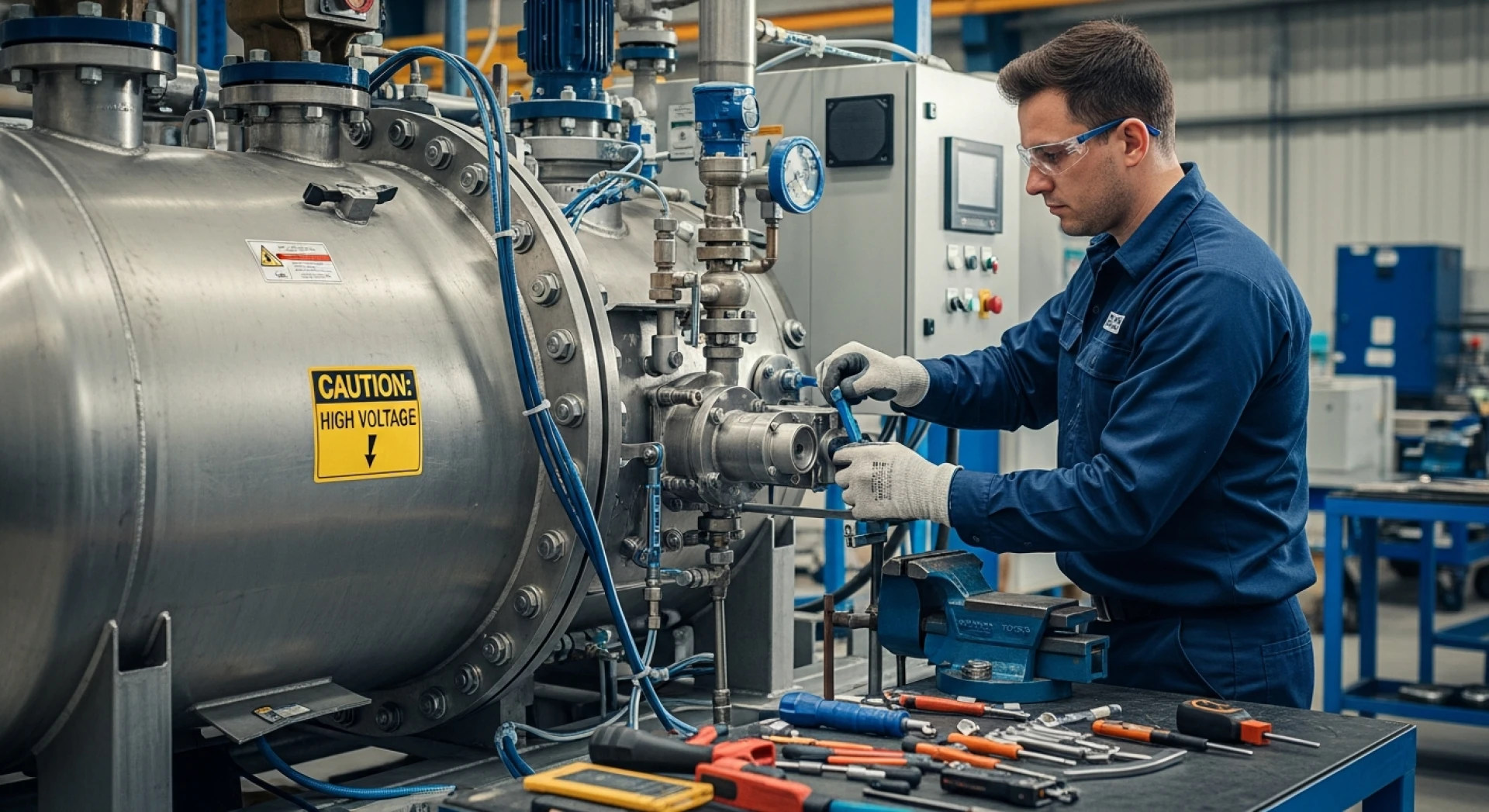

Maintaining a chiller in good condition is essential for keeping cooling systems stable and preventing costly breakdowns. Most chiller failures do not happen suddenly. They start with small performance changes that grow into major issues if ignored. Knowing these early signs helps facility managers take action before the system fails.
1. Drop in Cooling Capacity
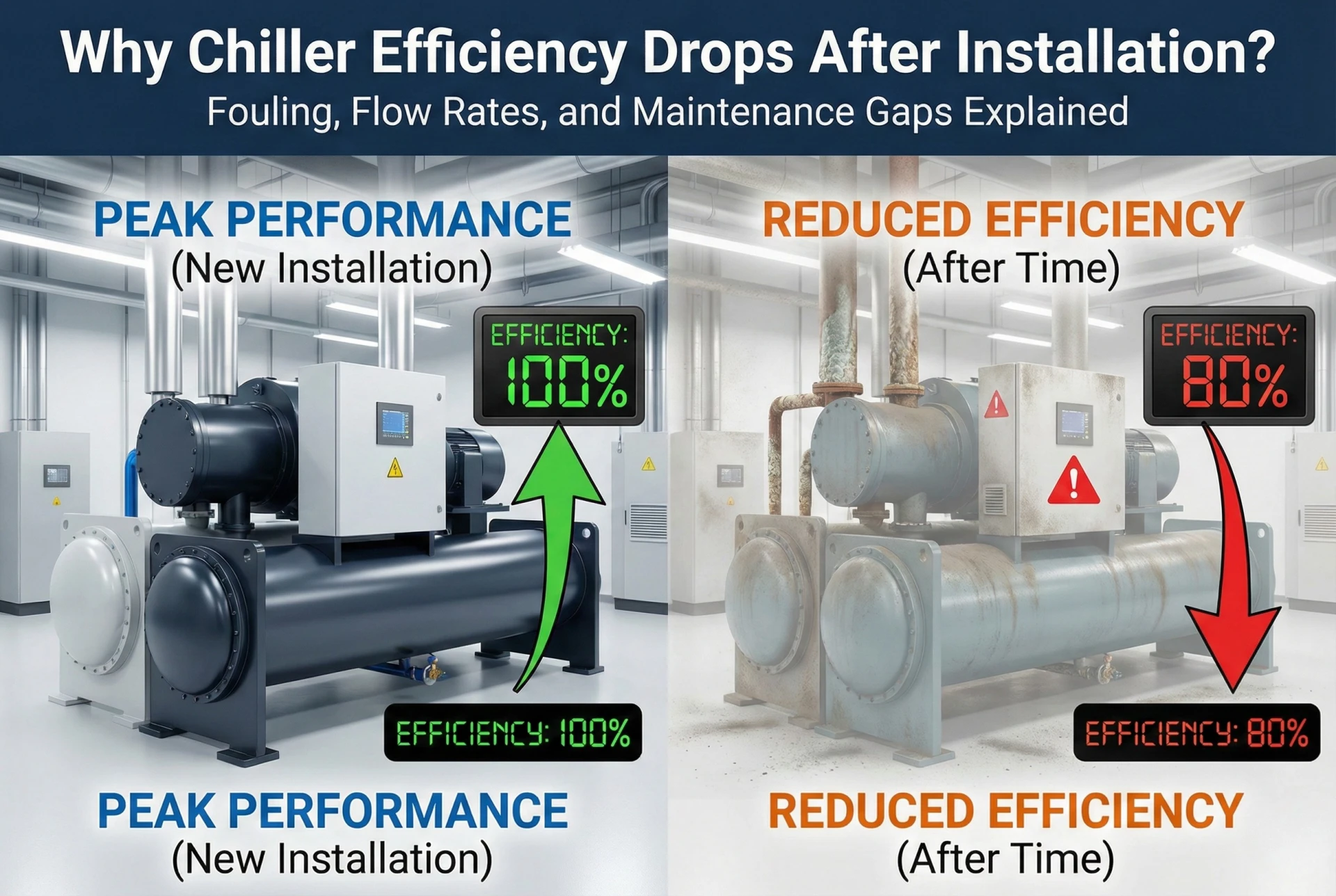
If the chiller takes longer to reach set temperature or struggles during peak load, it is often the first sign of trouble. Reduced cooling usually points to issues such as clogged coils, low refrigerant levels, fouled tubes or reduced heat transfer inside the system.
2. Unusual Noise or Vibration
A healthy chiller runs with steady and predictable sound. New noises such as rattling, grinding or knocking suggest developing mechanical faults. Common causes include worn bearings, loose components, air in the refrigerant circuit or misaligned compressors.
3. Unexpected Increase in Power Consumption
A sudden rise in electricity use is a strong indicator of poor performance. When the system works harder to produce the same cooling output, it often means the evaporator or condenser is dirty, the compressor is stressed or there is a drop in system efficiency.
4. Irregular Temperature Fluctuations
If chilled water supply temperature swings up and down, the control system may be struggling to maintain balance. This can be caused by sensor errors, faulty thermostats, low refrigerant charge or failing valves.
5. Frequent Cycling or Short Cycling
Short cycling is when the compressor switches on and off more often than normal. This wears out components and points to deeper problems such as incorrect sizing, blocked airflow, faulty controls or refrigeration imbalances.
6. Visible Leaks or Moisture Around the Unit
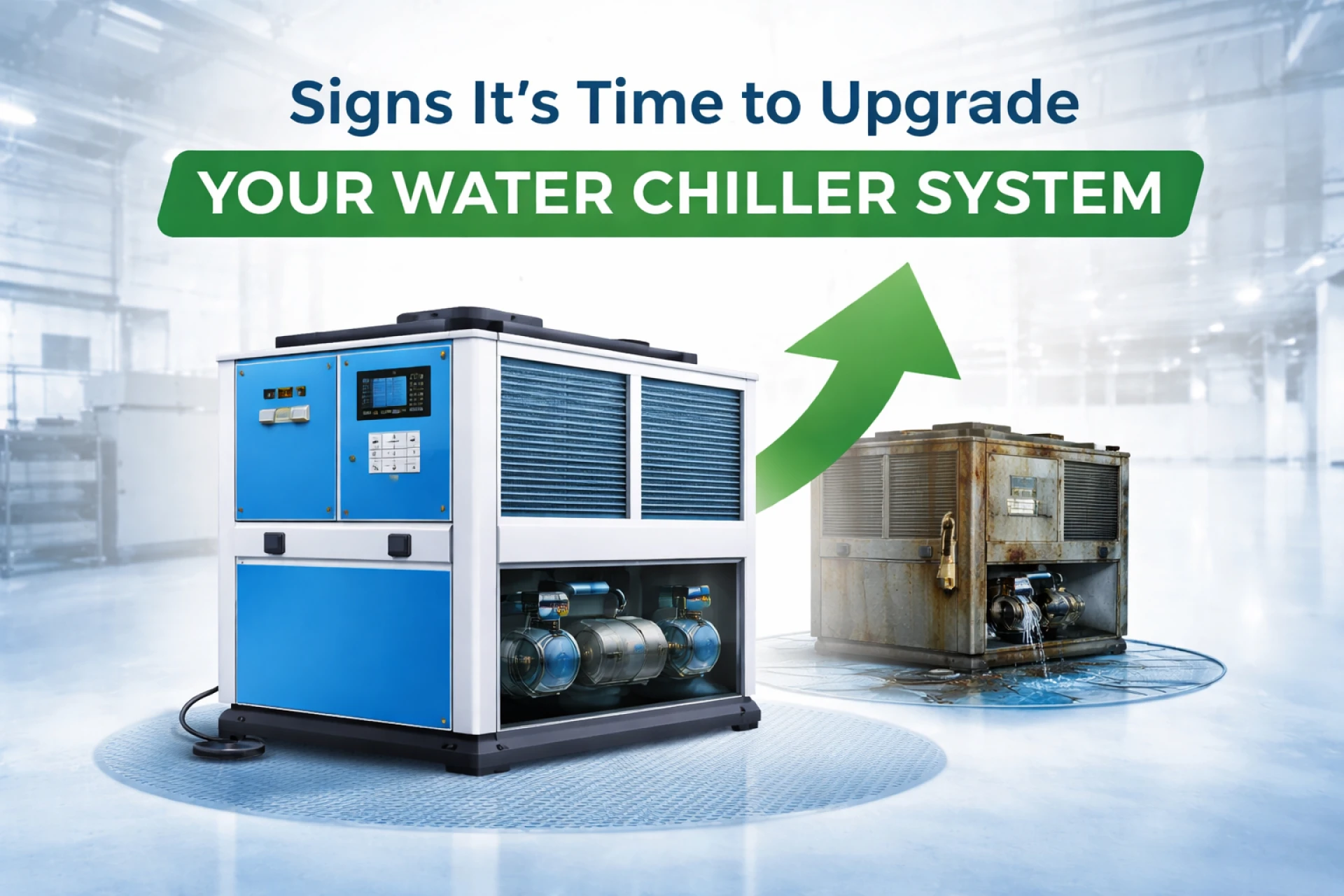
Water pooling near the chiller is a warning sign. It may come from pipe leaks, cracked insulation, clogged drains or condenser problems. Oil stains can also indicate refrigerant leaks, which should be addressed immediately to prevent compressor damage.
7. Alarms or Fault Codes in Control Panel
Modern chillers display fault codes long before failure. Ignoring repeated alerts leads to sudden breakdowns. Pay attention to alarms related to high pressure, low pressure, sensor failure or temperature deviations.
8. Uneven Coil Temperature
If parts of the coil feel much colder or hotter than others, it signals poor refrigerant flow or partial blockages. This reduces heat transfer and lowers the system’s efficiency.
Why Early Detection Matters?
Acting early avoids major mechanical repairs, prevents downtime, lowers energy bills and keeps the system running within safe limits. Routine inspection combined with timely chiller maintenance keeps chillers reliable throughout the year.
Watch out for unusual noise, temperature swings, rising energy bills and any visible leaks. These small changes are the first signs of chiller performance failure. Addressing them quickly protects your equipment and maintains cooling stability.






























Sign in to leave a comment.