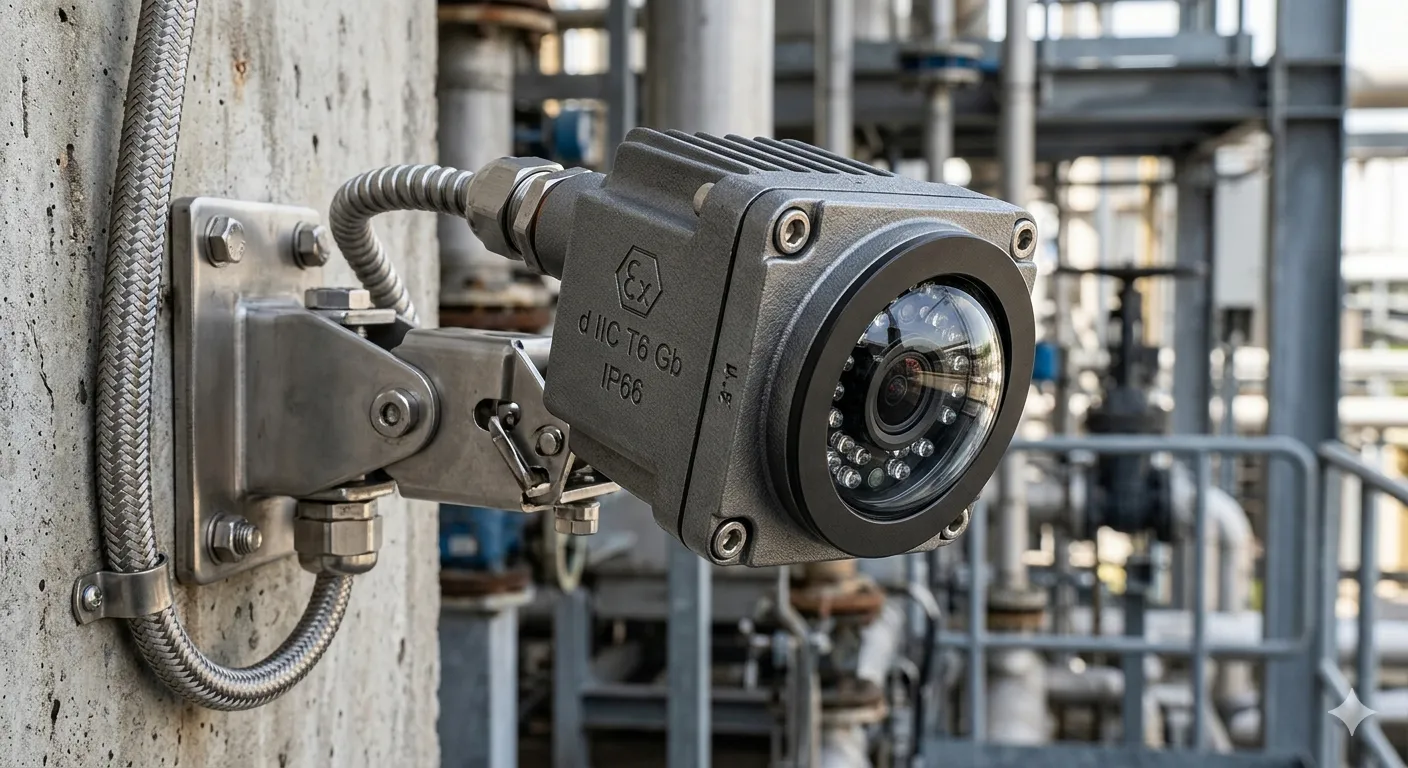
Walk through almost any onshore oilfield in the UAE and you will find surveillance cameras that were installed a decade ago — analogue systems with no ATEX certification, degraded housings, and zero night-vision capability. They were fit for purpose once. They are a liability now.
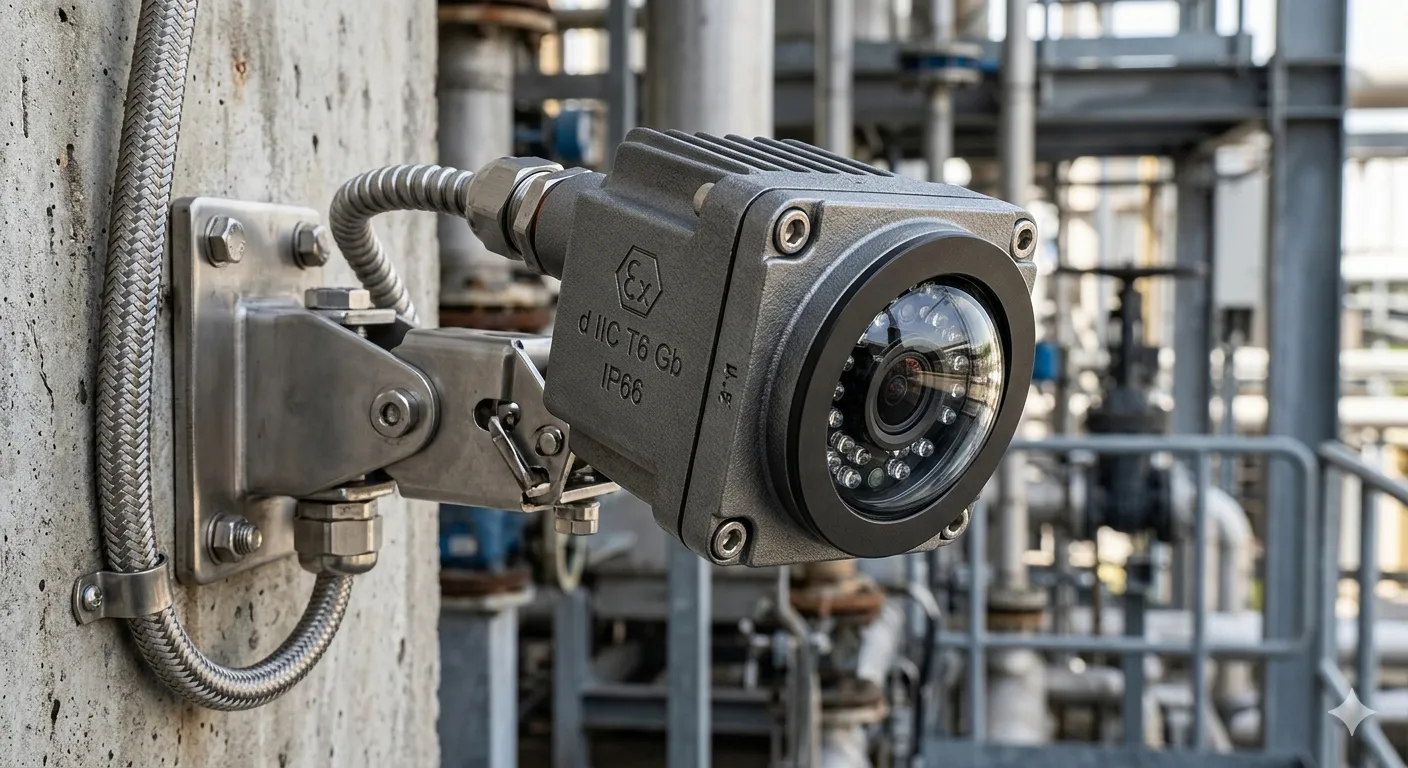
The UAE's oil and gas sector accounts for roughly 30% of the country's GDP, and its regulatory environment has tightened considerably since many of those legacy systems were put in place. The Abu Dhabi Occupational Safety and Health Centre (OSHAD) and federal HSE frameworks now demand that all electrical equipment operating in classified hazardous zones meets verified explosion-proof and intrinsically safe standards. If your current cameras do not carry valid ATEX certification, you are not simply running outdated hardware — you are operating outside the law.
The question is not whether to upgrade. The question is whether the cost makes sense. It does. Here is the full business case.
The Hidden Costs of Running Legacy Systems
Most operations directors think of legacy CCTV as a sunk cost — already paid for, still functioning, therefore acceptable. This view misses the larger financial picture.
Non-certified cameras in Zone 1 and Zone 2 environments carry several compounding cost burdens:
- Regulatory exposure: Under UAE Federal Law No. 8 of 1980 and the OSHAD Systematic Framework (OSHAD-SF), non-compliant electrical equipment in hazardous areas can trigger facility shutdowns, mandatory audits, and financial penalties. A single enforcement notice from OSHAD can cost your operation more than a complete camera upgrade.
- Insurance implications: Many industrial liability insurers now require documented ATEX or IECEx compliance for equipment operating in explosive atmospheres. Running uncertified cameras can invalidate claims or increase your premium loading significantly.
- Maintenance drain: Older analogue systems require specialist servicing, replacement parts that are increasingly scarce, and more frequent callouts. Studies in the GCC industrial sector consistently show that legacy surveillance infrastructure costs two to three times more in annual maintenance than modern IP-based equivalents.
- Incident investigation gaps: When an incident does occur, your ability to defend your position — legally and operationally — depends on clear, retrievable footage. Degraded analogue cameras operating in poor light conditions produce footage that is often inadmissible or unhelpful in post-incident analysis.
The costs are real. They are just distributed across insurance, legal, maintenance, and lost productivity budgets rather than appearing as a single line item.
Why the Mini IR Form Factor Is the Right Upgrade for Onshore Fields
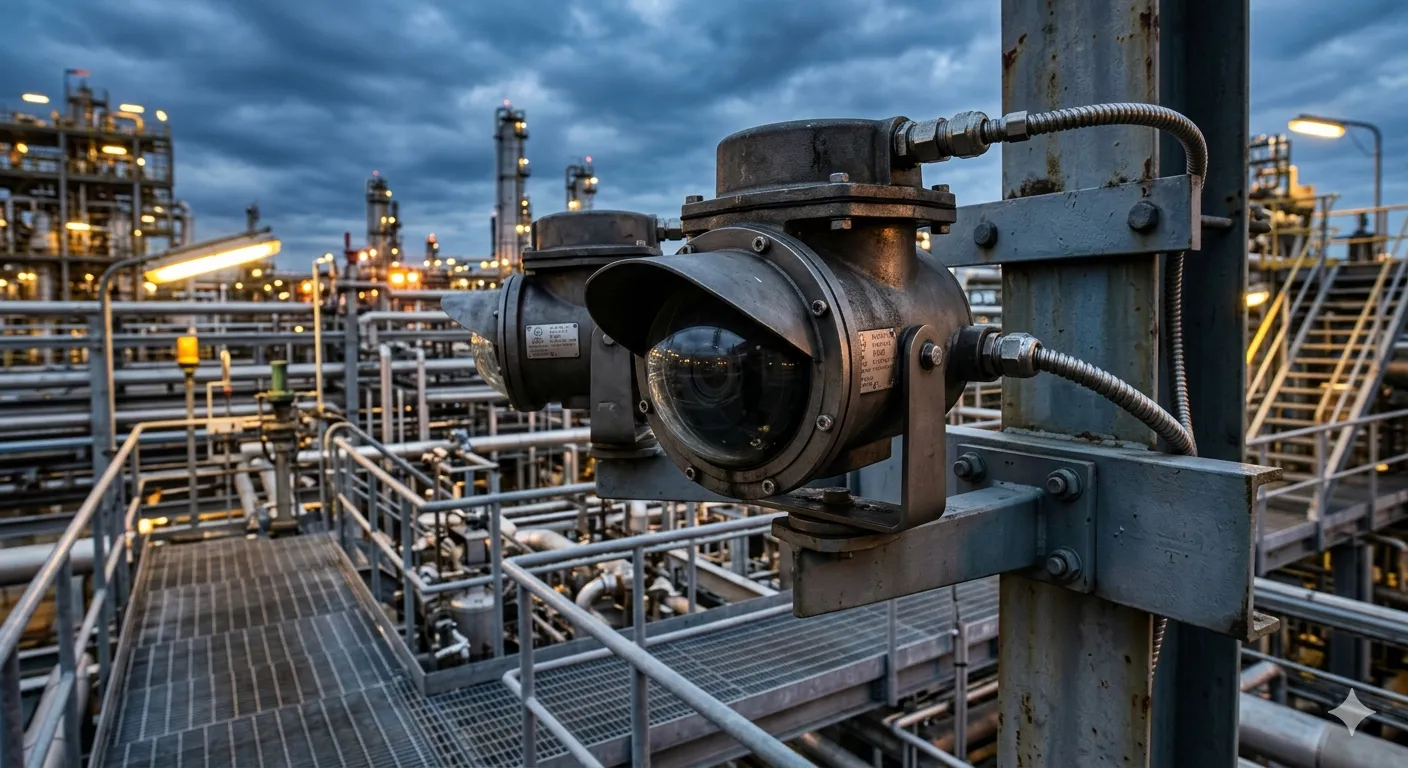
Onshore oilfields in the UAE present specific surveillance challenges that larger PTZ or dome systems do not always address efficiently. Pump rooms, valve manifold areas, cable conduit runs, and wellhead enclosures are tight, confined spaces — exactly where a compact solution delivers.
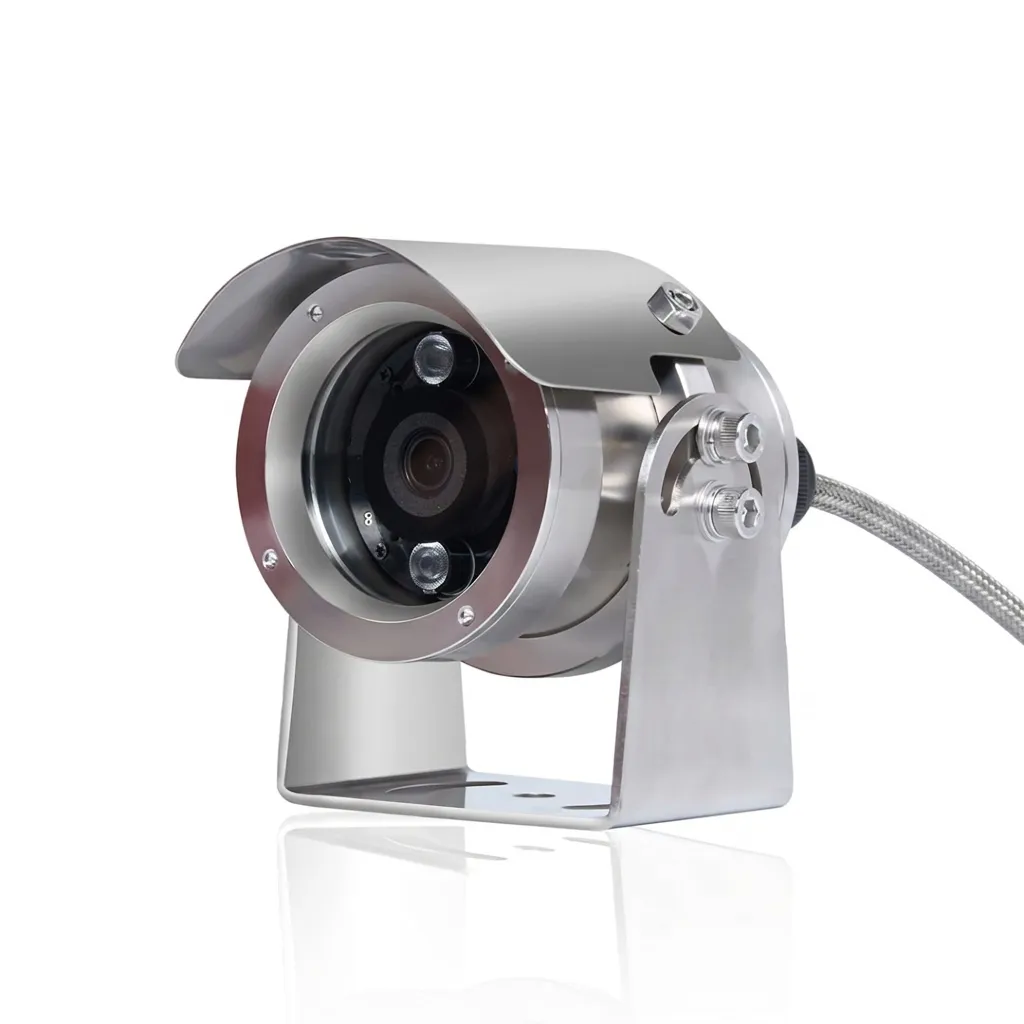
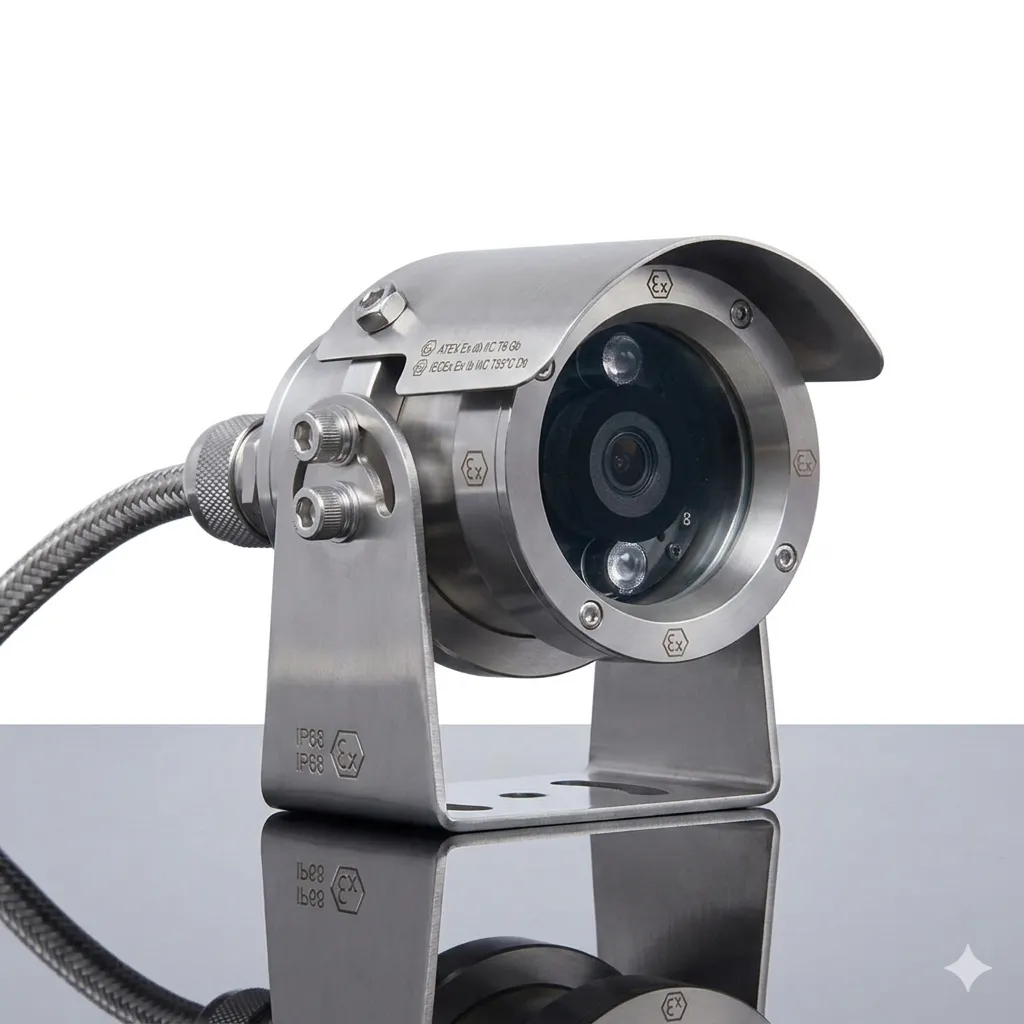
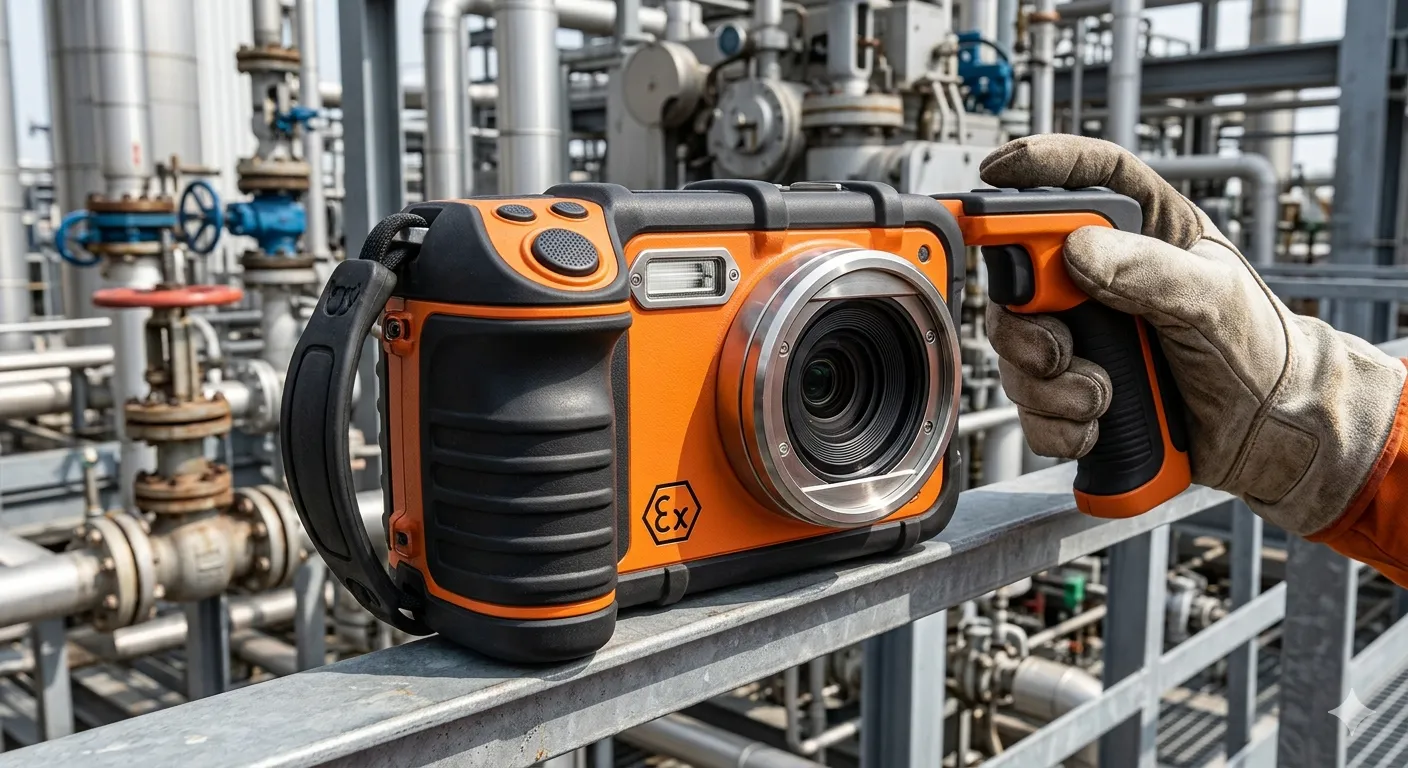
The Explosion proof IR Mini Camera UAE configuration has become the preferred specification for these environments precisely because of its footprint. At roughly the size of a fist, it can be mounted in confined spaces, angled to cover critical process points, and installed without major structural modifications to existing equipment racks or housings.
Beyond size, the infrared capability fundamentally changes night and low-light surveillance.
UAE onshore sites run 24-hour operations. Without effective IR imaging, your night-shift crew is effectively unsupervised from a visual monitoring perspective. A quality ATEX mini IR camera provides clear, high-definition footage in near-total darkness — covering the hours when response times are slowest and human oversight is thinnest.
How the ROI Calculates Within 12 Months
Sceptics are right to ask for numbers. Here is a straightforward breakdown based on typical UAE onshore oilfield scenarios.
The average cost of deploying explosion proof mini IR camera UAE systems across a mid-size onshore facility — covering approximately 20 to 30 critical monitoring points — ranges from AED 80,000 to AED 150,000 including installation and integration. That figure sounds significant until you measure it against avoided costs.
A single OSHAD-directed facility shutdown, even for 48 hours, can cost an onshore oilfield operator between AED 200,000 and AED 500,000 in lost production alone, before legal and remediation fees. One avoided incident investigation claim, supported by clean IR footage rather than degraded analogue recordings, can save upwards of AED 100,000 in legal costs and insurance excess. Elimination of legacy maintenance contracts typically saves between AED 15,000 and AED 30,000 annually per facility.
The maths does not require complex modelling. In most deployment scenarios, the capital cost is recovered before month twelve.
Compliance as a Competitive Advantage
There is a longer-term argument that goes beyond cost recovery. UAE oil and gas operators are increasingly subject to scrutiny from international partners, insurers, and ESG-focused investors. ADNOC's supply chain compliance requirements, for instance, include documentary evidence that third-party contractors meet specified safety equipment standards on-site.
If you can demonstrate that your monitoring infrastructure carries valid ATEX Directive certification — properly documented, zone-matched, and regularly inspected — you are not just avoiding penalties. You are strengthening your position in tender evaluations and partnership negotiations. Safety compliance, properly managed, becomes a commercial differentiator.
When your procurement team is ready to assess what certified surveillance costs against what non-compliance costs, Get Quote for Explosion Proof Mini IR Camera from a qualified supplier. Ensure the quotation includes zone classification matching, IECEx documentation, and post-installation commissioning — not just the hardware price.
Choosing the Right Supplier: What to Verify Before You Buy
Not all explosion-proof cameras sold in the UAE market carry genuine ATEX or IECEx certification. Some carry declarations of conformity based on self-assessment rather than third-party testing. Before committing budget, verify the following with any supplier:
- Third-party ATEX certification with clearly listed Ex marking (e.g., II 2G Ex d IIC T6)
- Documented zone rating (Zone 1, Zone 2, Zone 21, Zone 22 as appropriate)
- IP66 or higher ingress protection rating
- Operational temperature range suitable for UAE desert conditions (typically -20°C to +60°C minimum)
- Post-installation support and warranty terms
A reliable SharpEagle Explosion Proof Mini IR Camera Supplier will provide full documentation as standard, not as an afterthought.
When you are ready to move from assessment to procurement, you can Buy SharpEagle Explosion Proof Mini IR Camera with confidence that certification, zone compliance, and technical support are included in the package — not negotiated separately.
The Window to Act Is Now
UAE regulatory enforcement is not softening. OSHAD enforcement activity has increased year-on-year since 2023, and the 2026 amendments to UAE Labour Law have further strengthened the legal position of authorities conducting workplace safety inspections. If your legacy CCTV systems have not been reviewed against current hazardous area classification requirements, the audit will eventually come to you.
Upgrading now, on your timeline, with a budget you control, is materially different from upgrading under a remediation order with a deadline imposed externally. The ROI calculation above assumes the former. The latter carries costs that are significantly harder to predict.
For operations managers responsible for monitoring in similarly demanding environments, the principles explored here apply beyond the oilfield — for a deeper look at certified surveillance in equally high-stakes settings, the recommended read is Advanced Monitoring for Critical Mining Operations

















Sign in to leave a comment.