

A single ignition source in a hazardous warehouse can trigger losses running into millions of dirhams within minutes. As the UAE strengthens its position as a global logistics and industrial hub, the demand for specialised storage facilities handling chemicals, fuels, lubricants, solvents, and industrial materials continues to rise across Jebel Ali, KIZAD, Hamriyah Free Zone, Ruwais, and Dubai Industrial City.
This growth brings a significant challenge. Hazardous storage environments require continuous surveillance, yet many operators still rely on conventional camera systems that were never designed for explosive atmospheres. If your facility stores flammable substances or combustible dust, selecting the right surveillance technology is no longer simply a security decision. It is a critical component of operational safety, regulatory compliance, and risk management.
Why Hazardous Warehouses Need Specialised Surveillance
Warehouses storing petroleum products, industrial chemicals, paints, lubricants, gases, and manufacturing materials face elevated fire and explosion risks. Vapours, airborne particles, and combustible dust can accumulate around loading bays, storage tanks, dispensing points, and processing areas.
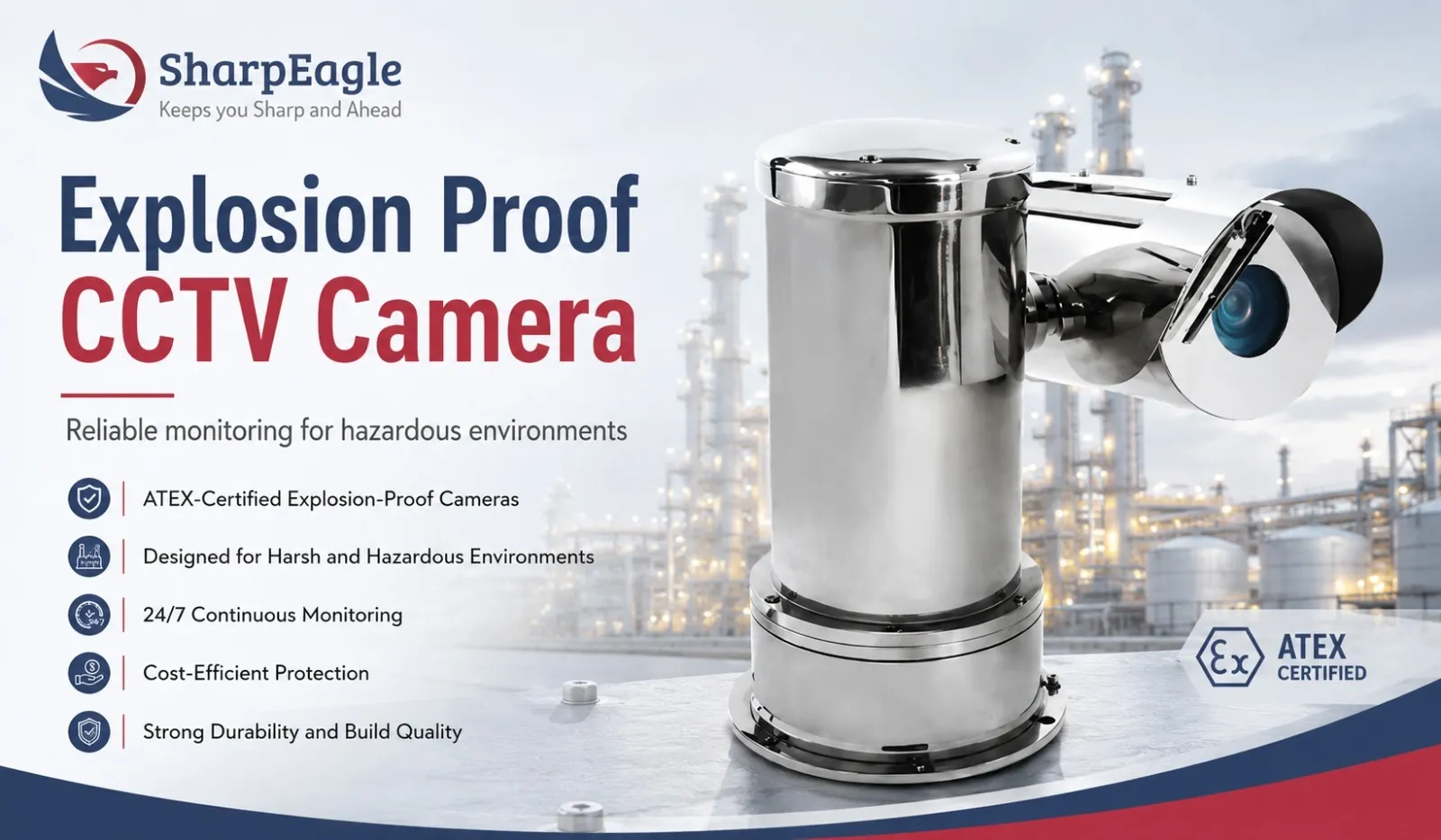
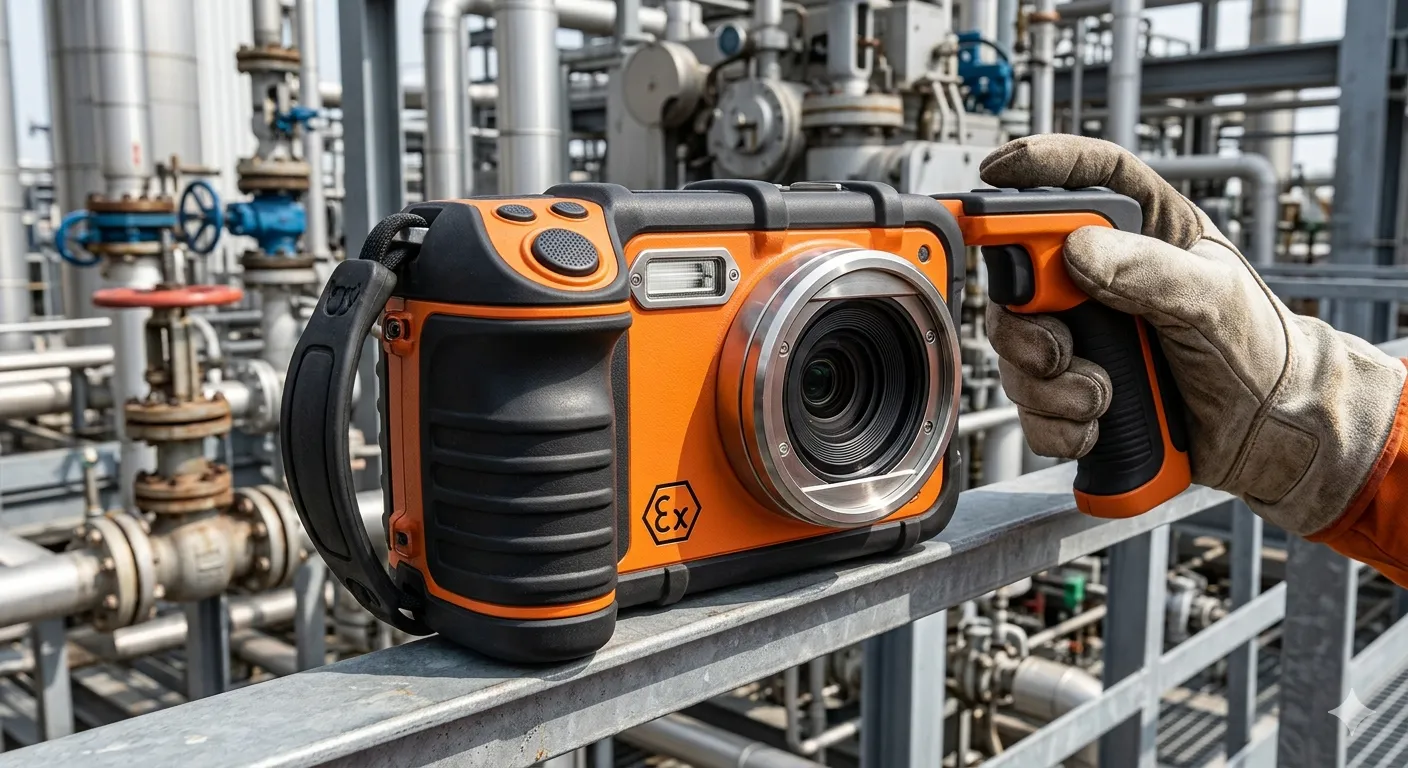
Standard surveillance devices may generate heat, electrical arcs, or sparks under fault conditions. In hazardous zones, even a minor ignition source can have catastrophic consequences. This is why a Explosion Proof CCTV Camera is designed differently from conventional equipment.
Rather than merely monitoring activity, these cameras are engineered to operate safely within potentially explosive environments. Their protective enclosures prevent internal ignition sources from interacting with surrounding hazardous atmospheres, helping reduce operational risk while maintaining uninterrupted surveillance coverage.
For warehouse operators, this distinction is fundamental when developing a compliant security strategy aligned with workplace safety obligations and recognised international standards.
Understanding Compliance, Zone Classification, and Camera Selection
Selecting surveillance equipment begins with understanding hazardous area classification. The ATEX Directive and related international safety frameworks categorise locations according to the likelihood of explosive atmospheres being present.
For example:
- Zone 0: Explosive gas atmosphere continuously present
- Zone 1: Explosive atmosphere likely during normal operations
- Zone 2: Explosive atmosphere unlikely but possible under abnormal conditions
- Zone 20, 21, and 22: Areas involving combustible dust hazards
Your camera specification must match the zone classification identified through site risk assessments.
A properly rated ex proof cctv camera provides protection appropriate for the designated hazardous area while supporting operational monitoring requirements. Compliance considerations should also align with DSEAR principles, HSE workplace safety standards, and PUWER requirements governing equipment suitability and safe operation.
Facilities operating in oil and gas, petrochemicals, maritime logistics, automotive manufacturing, and industrial processing sectors should ensure all surveillance equipment is selected according to documented hazard assessments rather than general security specifications.
Critical Features of Modern Hazardous-Area Camera Systems
Not all hazardous-area cameras deliver the same level of protection or operational value. Procurement teams should evaluate both safety certification and performance capabilities.
Key requirements include:
- Certified hazardous-area construction
- High-definition video quality
- Corrosion-resistant housing
- Wide operating temperature range
- Infrared or low-light monitoring capability
- Remote diagnostics and management support
- Integration with existing security platforms
The importance of ATEX Certified Explosion Proof Cameras becomes particularly evident in facilities where regulatory compliance and operational continuity are equally important. Certification demonstrates that equipment has undergone rigorous testing for safe deployment in hazardous environments.
Environmental conditions across the UAE also influence equipment selection. High temperatures, humidity near coastal regions, airborne dust, and corrosive industrial atmospheres can significantly reduce the lifespan of inadequately protected devices.
For this reason, many operators prioritise solutions specifically designed for Gulf operating conditions, including ATEX certified explosion proof camera UAE applications and Industrial CCTV for hazardous areas UAE projects where environmental resilience is essential.
Integrating Explosion-Proof Surveillance with Warehouse Security
An effective explosion proof CCTV system should function as part of a wider security and safety ecosystem rather than as a standalone technology.
Integration opportunities include:
- Access control systems
- Perimeter intrusion detection
- Fire and gas detection systems
- Emergency response procedures
- Centralised security operation centres
- Video analytics and incident investigation tools
When surveillance data is connected with operational safety systems, your team gains improved situational awareness and faster incident response capabilities.
Large logistics operators across Jebel Ali Port, Abu Dhabi industrial zones, and Sharjah manufacturing centres increasingly utilise integrated monitoring platforms to manage security, safety, and compliance from a unified interface. This approach supports both operational efficiency and regulatory reporting requirements.
SharpEagle Technology Explosion Proof CCTV Cameras for UAE Facilities
For organisations seeking specialised hazardous-area surveillance, SharpEagle Technology offers a comprehensive range of solutions engineered for demanding industrial environments.
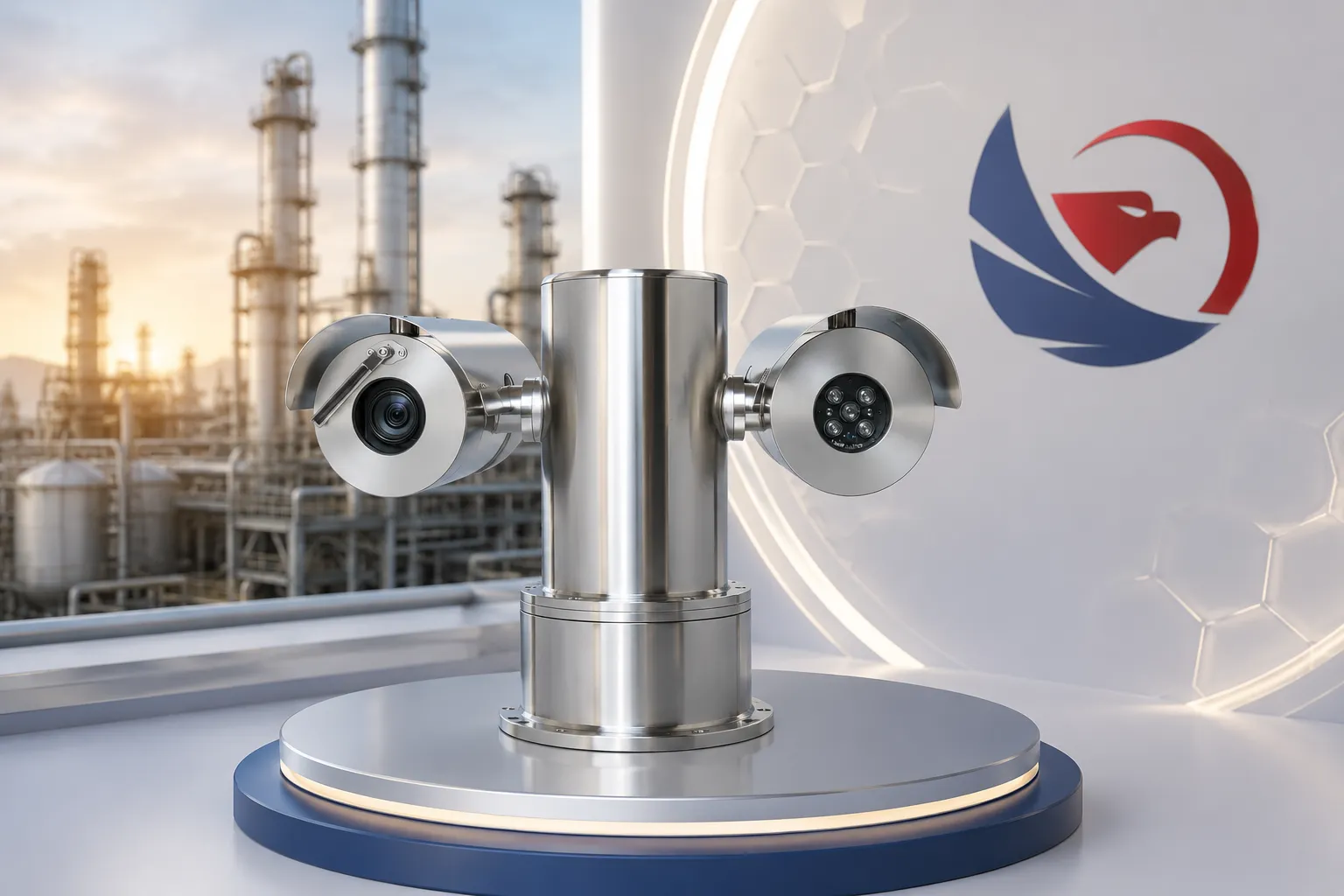
Its product portfolio includes ATEX Certified Explosion proof CCTV camera UAE applications designed for oil and gas facilities, chemical warehouses, maritime operations, and industrial manufacturing sites. These systems feature certified explosion-proof enclosures, high-definition imaging, robust weather protection, and dependable performance under harsh operating conditions.
SharpEagle products are particularly well suited for Industrial explosion proof camera UAE deployments where exposure to dust, heat, humidity, vibration, and corrosive atmospheres presents ongoing operational challenges. Their designs support long-term reliability while helping operators maintain compliance with recognised hazardous-area standards.
In addition, the company provides Industrial Safety Cameras for Hazardous Locations UAE environments that require continuous monitoring without compromising workplace safety objectives.
Procurement Checklist and Long-Term Value
Before finalising any purchase decision, confirm that your selected explosion proof camera solutions meet the following criteria:
- Appropriate ATEX and hazardous-area certification
- Compatibility with identified zone classifications
- Environmental protection suitable for UAE conditions
- Integration capability with existing infrastructure
- Reliable maintenance and technical support
- Lifecycle cost analysis and warranty coverage
- Proven performance within comparable industries
While certified hazardous-area equipment may involve a higher initial investment, the long-term return is substantial. Reduced accident risk, improved regulatory compliance, lower downtime, enhanced asset protection, and stronger operational resilience all contribute to measurable value over the lifespan of the system.
Conclusion
As hazardous warehousing capacity expands throughout the UAE, surveillance technology is becoming an increasingly important part of industrial risk management. The right camera system helps protect personnel, safeguard assets, support compliance obligations, and improve operational visibility in environments where conventional equipment cannot safely operate. Organisations that align surveillance procurement with hazard classifications, environmental conditions, and long-term safety objectives will be better positioned to manage future risks and regulatory expectations. For further insights, explore the Recommended read: Ultimate Guide to Explosion Proof CCTV Cameras and contact SharpEagle Technology.









![The Benefits of Using a CNC Touch Probe [Infographic]](https://writeupcafe.com/data/post/1677697/bfdf3e040e67936848aa232d2dfe3d03.jpg.webp)







Sign in to leave a comment.