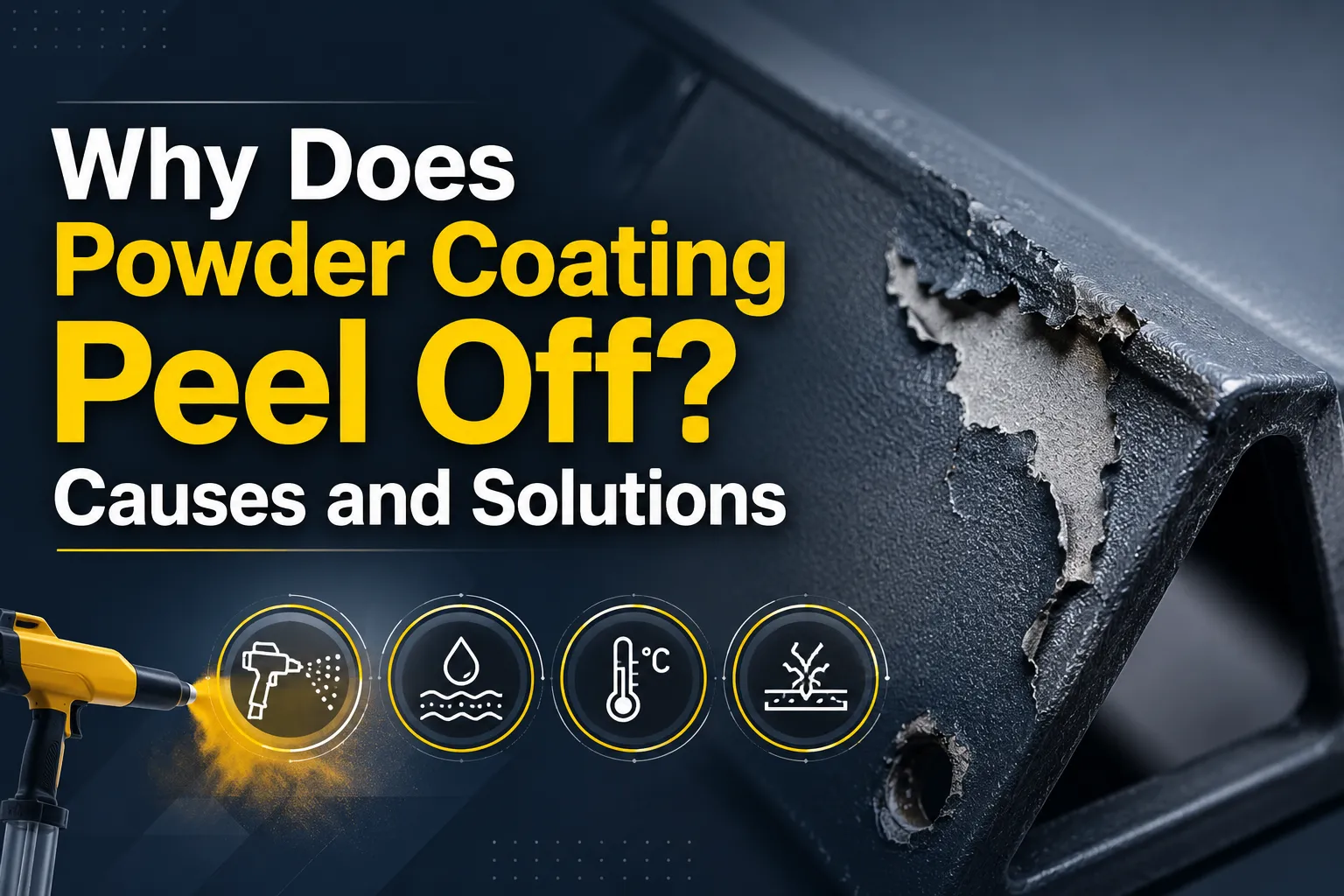

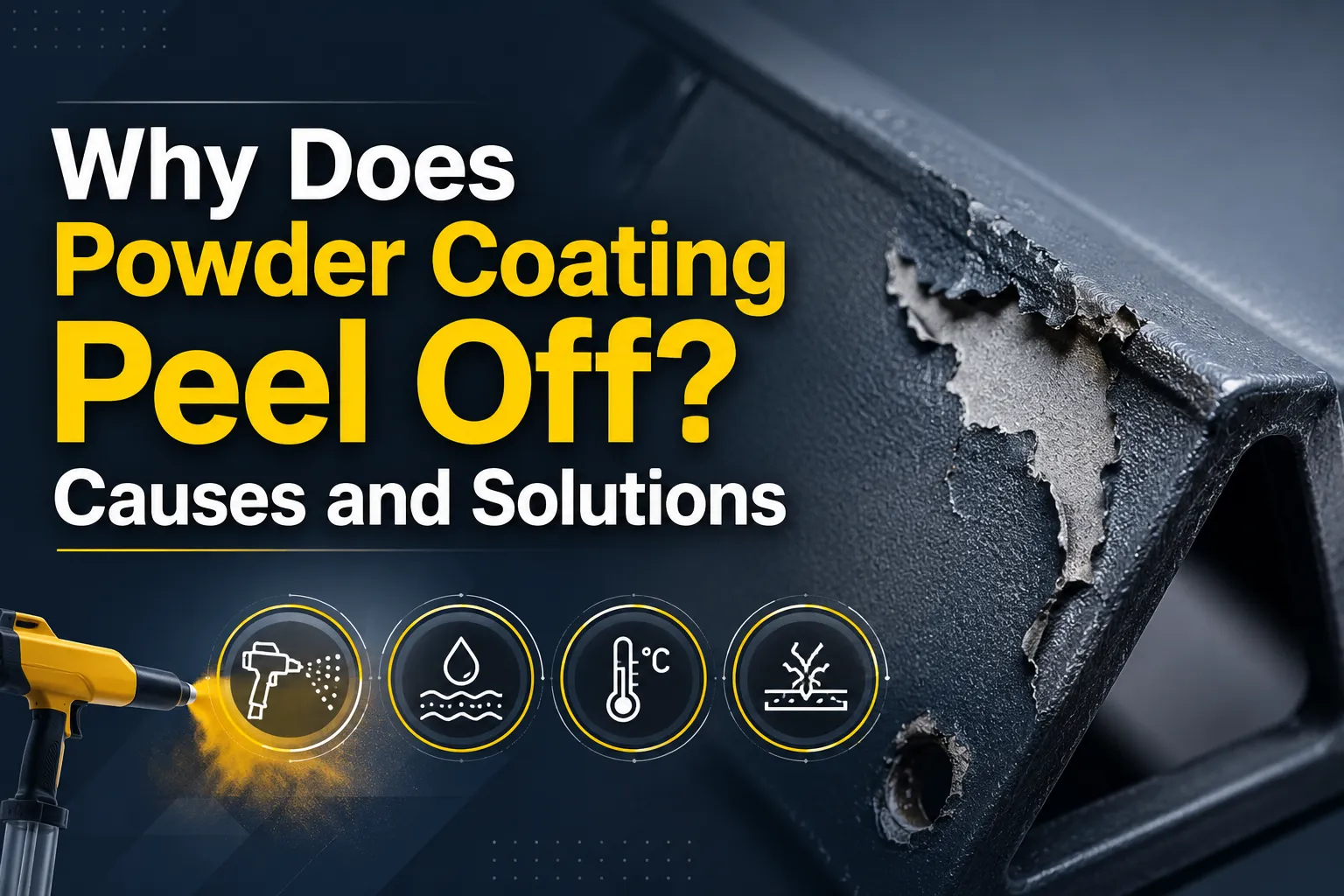
If you've ever noticed powder coating chipping, flaking, or peeling away from a metal surface — sometimes just weeks after application — you're dealing with one of the most common and frustrating problems in the coating industry.
What Does "Powder Coating Peeling" Actually Look Like?
Before troubleshooting, it helps to recognize the signs:
- Coating lifting off in sheets or flakes, often starting at edges or corners
- Coating that can be scratched or peeled off with a fingernail
- Bubbling or blistering that eventually breaks open and peels
- Coating separating cleanly from the metal, leaving bare substrate exposed
If any of these sound familiar, the root cause is almost always related to adhesion — the coating simply isn't bonding to the metal the way it should.
Common Causes of Powder Coating Peeling
1. Improper or Incomplete Surface Preparation
This is, by far, the leading cause of powder coating failure. Powder coating relies on a chemical and mechanical bond with the metal surface. If that surface still has oil, grease, rust, mill scale, or oxide layers on it, the powder has nothing solid to bond to — no matter how well it's applied or cured.
Even surfaces that "look clean" can carry invisible contamination like light oils from machining or handling, which are enough to prevent proper adhesion.
2. Skipping or Rushing the Pretreatment Process
Surface preparation isn't just wiping a part down — it's a multi-stage chemical process. Skipping stages, using worn-out chemical baths, or rushing components through the process is one of the most common reasons coating fails prematurely.
3. Incorrect Curing Temperature or Time
Powder coating needs to reach a specific temperature for a specific duration to fully cross-link and bond. Under-curing leaves the coating soft and poorly bonded. Over-curing can make it brittle. Both conditions increase the risk of peeling later.
4. Contaminated or Inconsistent Powder Application
Applying powder over a surface with residual moisture, dust, or inconsistent film thickness can cause weak spots in the coating that peel first.
5. Environmental Exposure Beyond the Coating's Rating
Some peeling issues only show up after the part is in service — exposure to moisture, chemicals, or temperature swings the coating wasn't designed for can accelerate failure at weak adhesion points.
The Real Root Cause: Why Surface Preparation Matters Most
Out of all these factors, surface preparation is where most peeling problems actually originate — even when the visible symptom shows up later, during curing or in the field. A powder coat can be applied perfectly and cured perfectly, and it will still fail if the metal underneath wasn't properly prepared beforehand.
This is exactly why industrial coating lines rely on a pretreatment plant as a mandatory step before powder coating — not an optional one.
What a Pretreatment Plant Does
A pretreatment plant prepares the metal surface through a sequence of controlled stages, typically including:
- Degreasing – removes oils, grease, and machining residues
- Rinsing – clears away loosened contaminants
- Phosphating – forms a chemical conversion layer (iron or zinc phosphate) that improves adhesion and adds corrosion resistance
- Passivation – provides an additional protective layer for long-term durability
- Final rinse and drying – ensures the surface is completely clean and dry before coating
Each stage removes a different type of contamination or adds a layer that helps the powder coating bond mechanically and chemically to the metal. Without this process, even premium powder and perfect spray technique won't prevent peeling.
Dip Type vs. Spray Type Pretreatment Plants
Manufacturers typically choose between two pretreatment methods, depending on component size, shape, and production volume:
- Dip type pretreatment plants – components are submerged in a series of tanks. Better suited for complex shapes, hollow parts, and high-volume production.
- Spray type pretreatment plants – chemicals are sprayed onto the surface. Often faster for flat or simple-shaped components and requires less floor space.
The right choice depends on your product mix, throughput requirements, and available shop floor space.
How to Prevent Powder Coating Peeling: A Quick Checklist
- Never skip surface preparation, even for "clean-looking" parts
- Use a properly maintained pretreatment plant with consistent chemical concentrations
- Monitor and log pretreatment bath temperatures and dwell times
- Verify curing oven temperature and time against the powder manufacturer's specifications
- Apply consistent film thickness across the part
- Store powder and prepared parts in a clean, moisture-controlled environment before coating
Frequently Asked Questions
Is pretreatment necessary for powder coating? Yes. Pretreatment is considered a mandatory step in any reliable powder coating process. Without it, adhesion failures like peeling, blistering, and premature corrosion are significantly more likely.
Can peeling be fixed after the coating has already failed? The affected coating typically needs to be stripped, and the part must go through proper pretreatment again before recoating. There's no reliable way to "patch" a peeling coating.
What's the difference between dip type and spray type pretreatment plants? Dip type plants submerge components in treatment tanks and work well for complex or high-volume parts, while spray type plants apply chemicals directly and suit flatter components with faster throughput needs.
Final Thoughts
Powder coating peeling is rarely caused by the powder itself — it's almost always a surface preparation issue. A properly maintained pretreatment plant is the single most effective way to prevent adhesion failures, extend coating life, and reduce costly rework or warranty claims.
If you're setting up or upgrading a powder coating line, investing in the right pretreatment plant — whether dip type or spray type — is the most reliable way to eliminate peeling problems at the source, rather than troubleshooting them after the fact.


















Sign in to leave a comment.