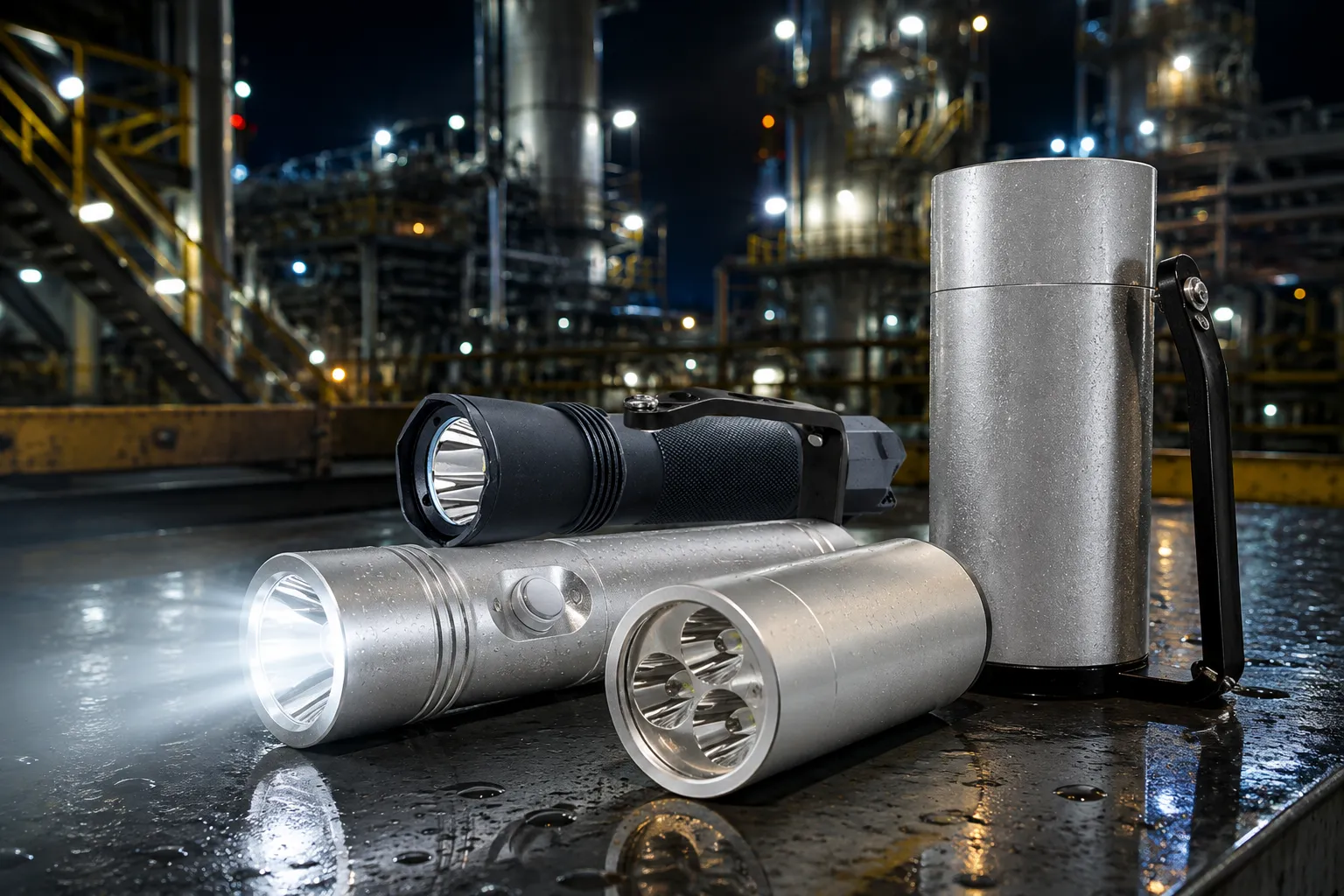

Explosion Proof Flashlight for Offshore Oil Rigs in Saudi Arabia: Marine-Grade Features Safety Teams Should Specify
A flashlight that fails on an offshore platform doesn't fail quietly. It fails during a wellhead check in low light, or worse, mid-evacuation when a crew is relying on it to find the muster point. Drilling rigs and offshore platforms operating in Saudi waters combine two demanding conditions at once: classified hazardous atmospheres from hydrocarbons and drilling fluids, and the corrosive, high-vibration reality of marine operations. Equipment specified for either condition alone won't survive both, and safety teams sourcing lighting for these environments need to understand exactly where general industrial torches fall short.
Two Environments, One Piece of Equipment
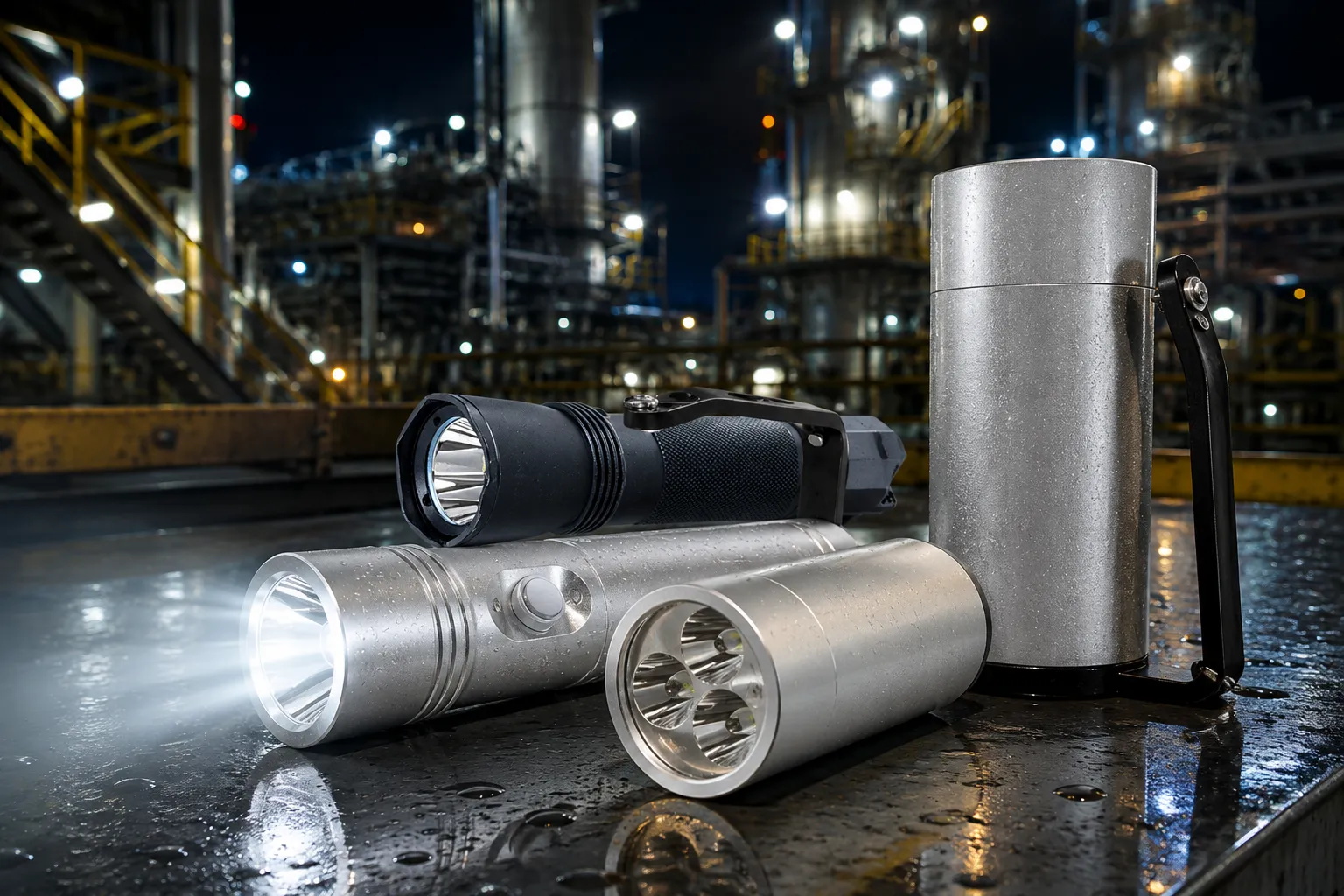
Offshore rigs demand lighting that performs under simultaneous stress: an explosive atmosphere that could ignite from a single spark, and a physical environment that corrodes, vibrates and soaks equipment daily. A torch certified purely against gas group and temperature class, without marine-grade construction, is only solving half the problem. Safety officers reviewing procurement specs need to treat these as two separate requirement sets that both have to be satisfied by the same unit.
Where the Risk Actually Lives on a Rig
Deck inspections, wellhead maintenance, helideck checks, pipework inspections, emergency response and night operations all place a handheld light directly into areas containing hydrocarbons, vapours, drilling fluids and volatile chemicals. Each of these tasks carries a different exposure profile, but all of them demand equipment that won't become an ignition source the moment conditions turn unfavourable. An explosion proof flashlight rated for the specific zone classification of each work area isn't optional kit — it's the baseline for anyone stepping into these spaces.
Certification Is the Starting Point, Not the Finish Line
ATEX or IECEx certification for classified offshore zones confirms a unit won't ignite the surrounding atmosphere, and that's non-negotiable. But certification alone doesn't guarantee the equipment will still function reliably after six months of salt exposure and constant vibration. Safety officers should review both the hazardous-area documentation and the manufacturer's marine durability testing before a unit gets approved for rig deployment.
Marine-Specific Requirements That Actually Matter
Beyond hazardous-area certification, offshore equipment needs to satisfy a separate list of demands:
- Corrosion-resistant housing material that won't degrade under sustained salt-spray exposure
- A genuine IP67 or IP68 waterproof rating, not just splash resistance
- Impact resistance sufficient for regular drops on steel decking
- Secure wrist straps or belt clips that keep the unit attached during platform movement or rough seas
Skipping any of these turns a certified flashlight into a short-lived asset.
Performance in the Conditions That Matter Most
An explosion proof LED flashlight earns its keep in low-visibility conditions, confined machinery spaces, cluttered pipe racks and open decks exposed to glare or darkness. LED output holds up consistently across these varied conditions in a way older bulb technology never managed, and that consistency matters when a technician is working alone in a confined space with limited margin for error.
Choosing the Right Beam for the Task
A focused beam suits long-distance inspections down pipe racks or across open deck areas, where throw distance matters more than spread. A wide beam works better for close-range maintenance and emergency work, where peripheral visibility helps a technician spot hazards outside the immediate task. Rigs running mixed operations often standardise on dual-beam units to avoid carrying two separate torches for different tasks.
Planning Battery Runtime for Rig Realities
Shift work, evacuation scenarios, helicopter-deck operations and remote offshore locations all demand more runtime margin than a standard onshore estimate would suggest. Build in contingency for extended shifts and emergency scenarios where a torch might need to run well beyond its rated duration — a unit that dies mid-evacuation isn't a specification failure you want to discover in the moment.
What Safety Officers Should Confirm Before Deployment
Before any unit goes into service, review the temperature class against process conditions, confirm the equipment group matches the zone it's deployed in, verify the permitted zone rating explicitly, and check that only approved accessories — batteries, chargers, mounts — are in use. An unauthorised accessory can quietly invalidate the entire certification.
Marine-Grade Versus Intrinsically Safe: Know What You're Buying
A marine-grade flashlight is built to survive the physical environment — corrosion, water, vibration — but that alone doesn't make it hazardous-area rated. A genuinely intrinsically safe LED flashlight Saudi offshore teams can trust for Zone 0 and Zone 20 work limits electrical and thermal energy low enough that ignition can't occur, regardless of housing damage. Buyers sometimes conflate the two, assuming rugged construction implies certification — it doesn't, and the distinction matters when specifying equipment for the most sensitive zones.

SharpEagle Explosion Proof Flashlight
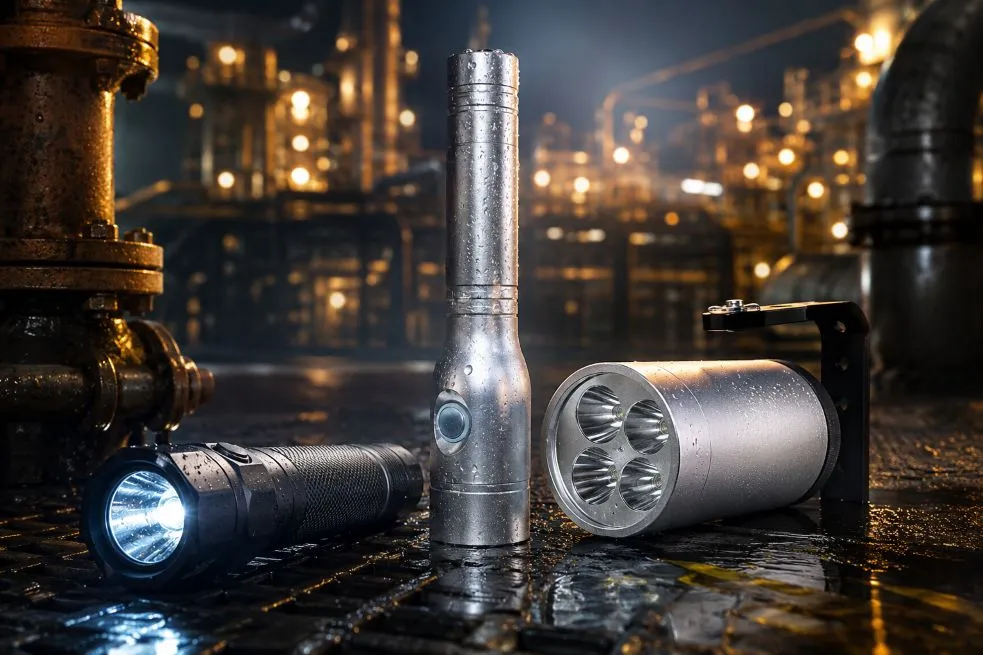
SharpEagle Technology's marine-rated range was designed to satisfy both requirement sets at once. Corrosion-resistant housings with IP68 sealing hold up against sustained salt-spray exposure, while impact-rated construction and secure attachment points suit the daily handling of deck and machinery work. It's an ATEX approved hazardous area flashlight Saudi offshore contractors can standardise across drilling and platform operations, delivering the reliability profile expected of an explosion proof flashlight for oil rigs Saudi deployment while remaining a genuine atex certified industrial flashlight Saudi procurement leads can validate quickly during technical review, with support extending across Saudi offshore contracting scopes.
Conclusion
As offshore development continues across Saudi waters, the equipment that holds up under both hazardous-area scrutiny and genuine marine punishment will separate reliable safety programmes from ones facing constant equipment turnover. Build both requirement sets into your specification from the outset, not as an afterthought once units start failing. To standardise your offshore lighting fleet, speak to SharpEagle Technology about your rig or platform requirements.

























Sign in to leave a comment.