
Explosion Proof ATEX PTZ Camera With IR in Saudi Arabia: Managing Extreme Heat and Dust at Oilfield Facilities
Surface temperatures at Saudi oilfield sites can exceed 60°C during peak summer months, and a standard commercial camera rated to 50°C simply stops functioning reliably long before conditions become dangerous for personnel. Add recurring sandstorms across the Eastern Province and the Rub' al Khali, and you have an environment that degrades ordinary surveillance equipment faster than most procurement teams expect. Wellheads, separators, and pump stations across Ghawar, Shaybah, and the Empty Quarter's gathering systems need continuous monitoring precisely when heat, dust, and glare make that monitoring hardest to sustain. If your site's cameras were specified against a generic outdoor rating rather than genuine desert and hazardous-area conditions, the gap will show up exactly when you need reliable footage most.
How Heat, Dust, and Sandstorms Undermine Standard Surveillance
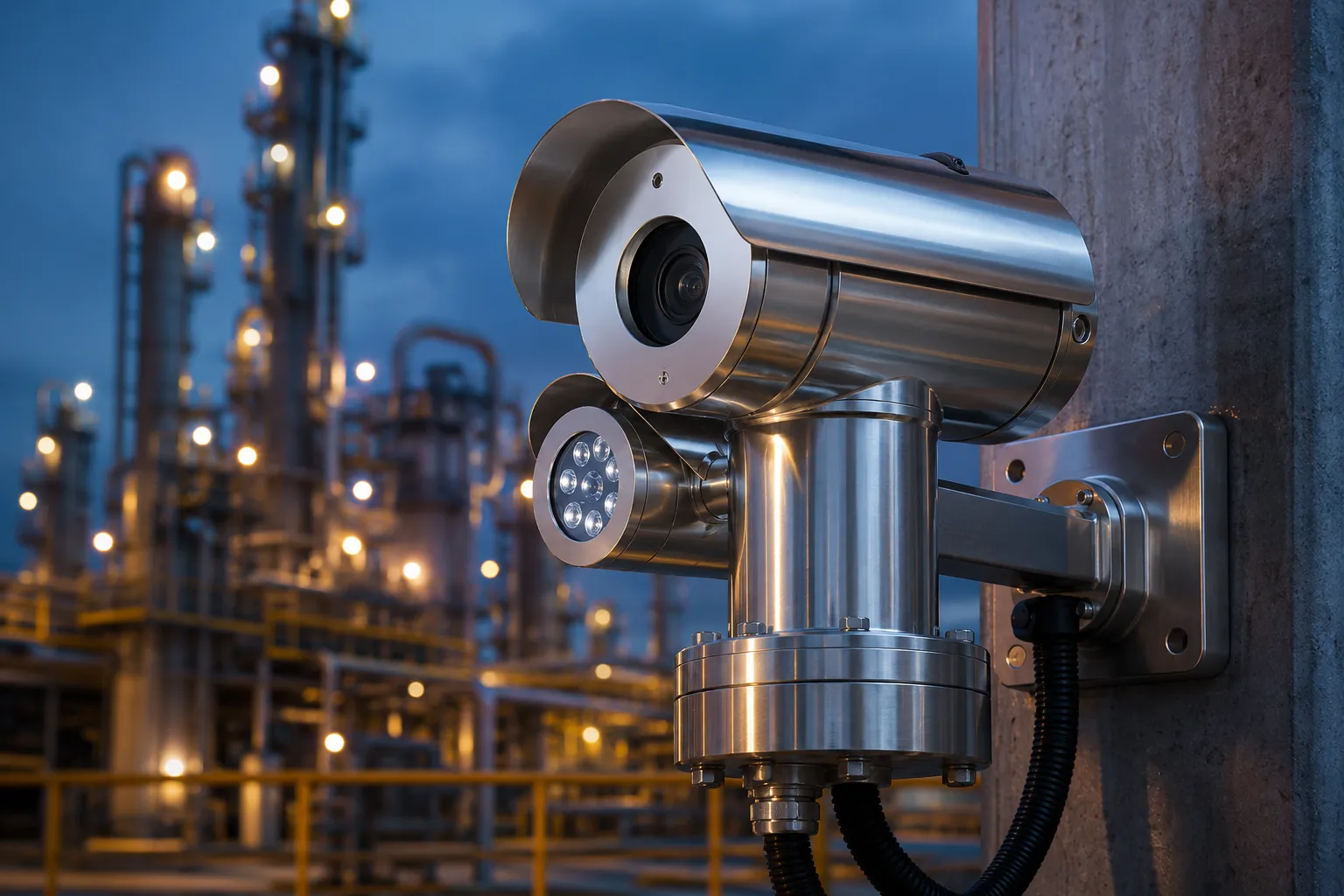
Extreme heat accelerates component failure inside any enclosure not designed for sustained high ambient temperatures, shortening the working life of electronics that would otherwise last years. Airborne dust infiltrates seals that were adequate for temperate climates but inadequate for Saudi field conditions, while sandstorms can reduce visibility to near zero for hours at a time. Glare off sand and exposed metal equipment compounds the problem further, washing out footage from cameras with limited dynamic range. None of these factors are secondary considerations for oilfield surveillance in the Kingdom — they are the baseline environment your equipment has to survive every single day. It is the same baseline that shapes specification decisions for explosion proof PTZ camera oil and gas projects across the wider Gulf region, not a uniquely Saudi challenge.
What Camera Selection Must Account For
Ambient temperature, enclosure design, thermal management, and ingress protection need to be evaluated together, not as separate checkboxes. Before specifying equipment for a Saudi wellhead or gathering station, confirm the following:
- Operating temperature range that comfortably exceeds your site's recorded summer highs, not just the regional average
- Enclosure design with genuine thermal management, not passive venting alone
- IP66 rating or higher, tested specifically against fine desert sand, not generic dust
- Materials and seals rated for repeated thermal cycling between day and night extremes
Cameras that meet only one or two of these criteria tend to underperform within a single desert summer.
Monitoring Wellheads, Separators, and Remote Gathering Systems
An explosion proof ptz camera for Saudi Hazardous Areas brings genuine operational value to widely dispersed oilfield infrastructure. Wellheads benefit from continuous visual monitoring without requiring a technician to travel out for routine checks. Separators and pump stations gain early visual indication of leaks, pressure issues, or equipment faults. Gathering systems and remote access roads, often kilometres from the nearest manned facility, become far easier to secure and monitor when a single PTZ unit can sweep the surrounding area rather than relying on periodic patrols alone.
IR Illumination When Light and Power Are Unreliable
Night shifts, unplanned power interruptions, and dust-reduced daytime visibility all create the same underlying problem: your operators lose the ability to see clearly. A Hazardous area ex proof PTZ IR camera addresses this directly, giving control room staff usable imagery regardless of whether the limitation is darkness, a generator fault, or a dust cloud rolling across the site. Poorly lit perimeter zones, in particular, benefit from IR coverage that does not depend on auxiliary lighting infrastructure that itself needs maintaining across a remote field.
Why PTZ and Optical Zoom Matter for Distributed Assets
Oilfield infrastructure rarely sits in one convenient location. A single control room might be responsible for dozens of wellheads spread across a wide gathering area, and installing a fixed camera at every point quickly becomes impractical and expensive. PTZ control with genuine optical zoom lets one unit cover ground that would otherwise need several static cameras, giving operators the ability to swing attention to a specific pump station or access road the moment an alarm triggers, rather than waiting for a patrol vehicle to arrive.
Managing Dust Accumulation on Lenses and IR Windows
Dust does not just affect the surrounding air — it settles directly on lenses, IR windows, and housing surfaces, gradually degrading image clarity even on well-specified equipment. Wiper mechanisms, self-cleaning coatings, or scheduled maintenance intervals all need to be part of the specification conversation, not an afterthought discovered after installation. A camera with excellent specifications on paper delivers little value if nobody has planned for how it stays clean in an active sandstorm zone. This is precisely the kind of practical detail an IR PTZ camera Saudi hazardous area oil and gas project needs resolved before commissioning, not discovered afterwards.
Explosion-Proof Enclosure vs Properly Certified Equipment
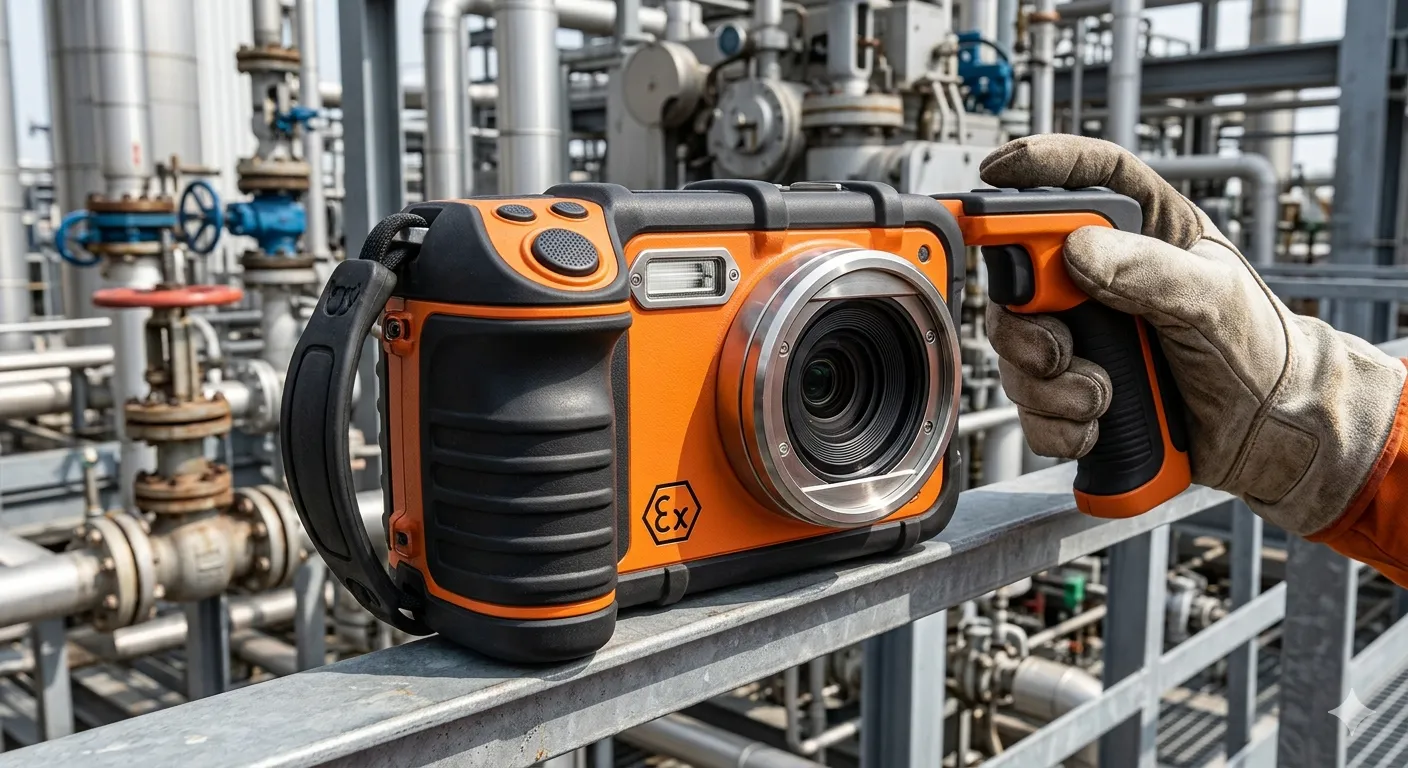
An explosion-proof enclosure and a camera genuinely certified for your specific gas or dust zone are not automatically the same thing. Check ATEX category, gas group, temperature class, and IECEx documentation against your facility's actual area classification, and confirm the IP rating and operating temperature range match real site conditions rather than a generic industrial specification. Where a project requires certification aligned with international standards referenced by Saudi hazardous-area workplace safety practice, this documentation should be requested and verified before any equipment reaches site.
SharpEagle Explosion Proof ATEX PTZ Camera With IR
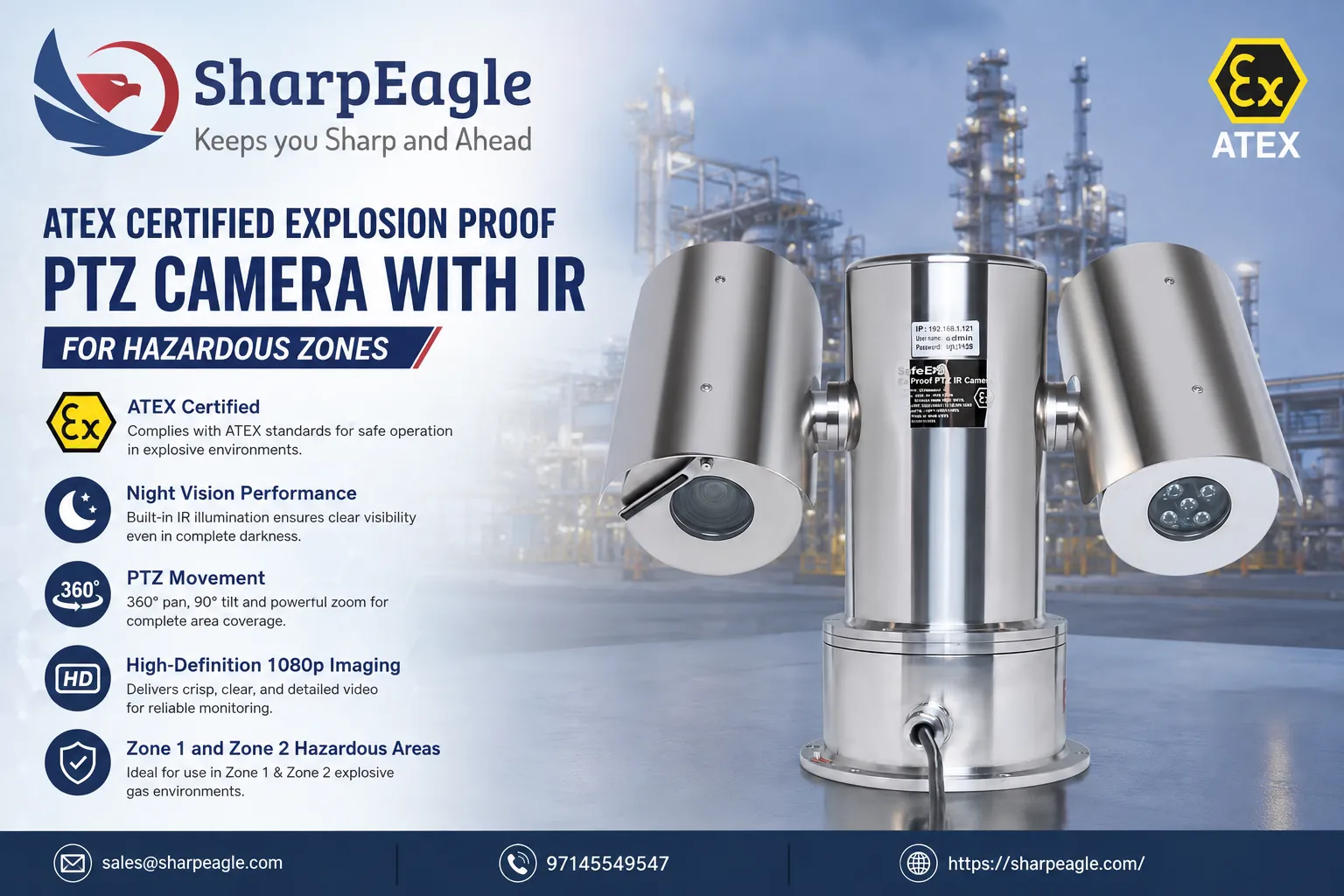
SharpEagle Technology's Explosion Proof ATEX PTZ Camera With IR is ATEX certified and engineered for exactly these desert oilfield conditions, with thermal management suited to extreme heat and sealing tested against fine airborne dust. It pairs long-range IR performance with true optical zoom, giving control rooms reliable coverage across wellheads, pump stations, and remote gathering infrastructure. As an ex proof PTZ IR camera supplier Saudi operators can work with directly, SharpEagle supports certification documentation and site-specific guidance for Kingdom-based hazardous-area projects, working as a supplier of hazardous area PTZ cameras Saudi teams can rely on from initial specification through to installation.
As Saudi Arabia's upstream and gas-processing sector continues to expand into increasingly remote terrain, surveillance equipment built for genuine desert and hazardous-area conditions is becoming a project requirement rather than a preference. Facilities that specify correctly now avoid the repeat failures and maintenance costs that come from underrated equipment. If your oilfield site needs surveillance that can handle heat, dust, and hazardous-area classification together, it is worth speaking with SharpEagle Technology about the right explosion-proof PTZ solution for your operation.

























Sign in to leave a comment.