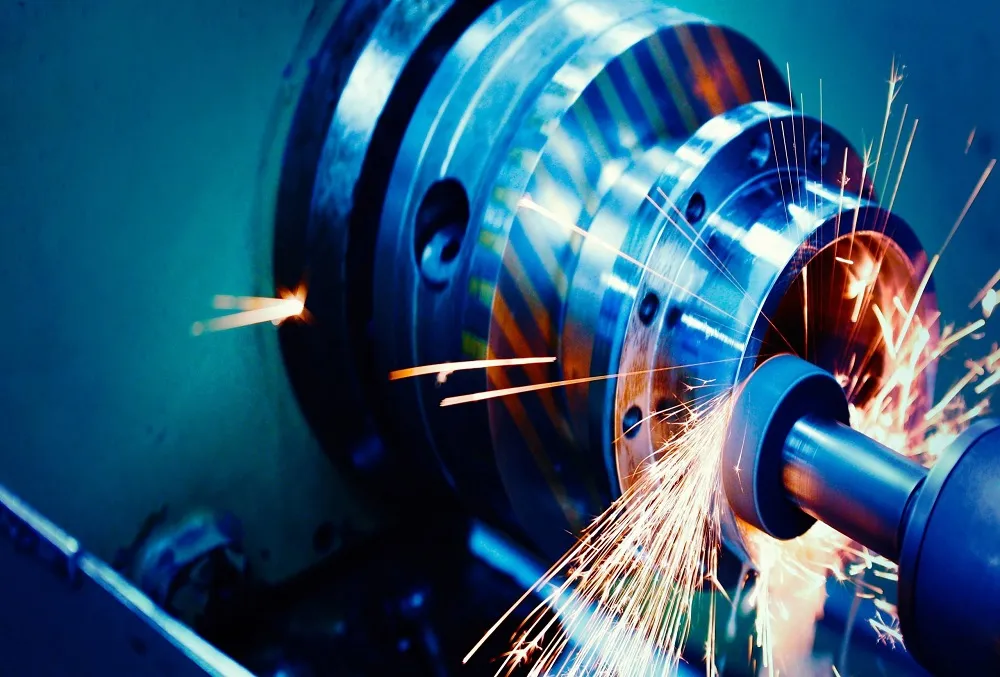

Precision machining sits at the centre of heavy manufacturing, and vertical boring machines remain one of its most capable and widely deployed tools. Heading into 2026, demand across sectors including power generation, marine, mining, and defence continues to place significant pressure on machining capacity, particularly for large, complex components where dimensional accuracy directly determines assembly performance and operational reliability. CNC-driven vertical boring technology has kept pace with those demands, but the industry faces structural challenges that will shape its development through the near term.
What Is a Vertical Borer?
A vertical borer, also called a vertical boring mill or vertical turret lathe, machines large, heavy, and often irregularly shaped workpieces that would be impractical to mount horizontally. The workpiece rotates on a horizontal table while the cutting tool moves vertically and radially, removing material to produce cylindrical bores, faced surfaces, tapers, and contoured profiles. The vertical orientation allows gravity to assist with workpiece stability, making it particularly well suited to components that are larger in diameter than in height.
Applications include machining large gearbox housings, turbine casings, marine engine components, pump bodies, and structural parts for mining equipment. Where a conventional horizontal lathe or machining centre struggles with component mass and diameter, the vertical borer handles the task efficiently. CNC control has extended that capability: modern vertical borers produce complex profiles with repeatability that manual operation couldn't approach.
Key Industries Driving Demand in 2026
Heavy engineering and industrial manufacturing remain the largest consumers of vertical boring capacity. Gearbox housings, bearing seats, and large transmission components all require the precision that vertical boring delivers. Power generation — both conventional and renewable relies on large turbine and generator components machined to tight tolerances. And infrastructure investment in both sectors continues to grow.
Marine and offshore engineering demand components that combine large physical dimensions with exacting surface finish and dimensional accuracy. Mining and material handling equipment follows a similar pattern: the components are heavy, the operating conditions are harsh, and dimensional errors create failure modes that are expensive to address in service. Defence and aerospace manufacturing adds the further dimension of traceability and compliance, both of which CNC vertical boring supports through controlled, documented processes.
The Impact of CNC and Automation on Vertical Boring
CNC integration has changed vertical boring from a predominantly skilled-manual process to one where complex profiles are produced through programmed toolpaths with consistent repeatability. Setup times have reduced, particularly for repeat components, and the accuracy achievable on modern CNC vertical borers exceeds what manual operation could reliably deliver. Multi-axis capability extends the range of features producible in a single setup, reducing the handling and repositioning that traditionally introduced error.
Digital monitoring adds further value. Tool wear tracking, dimensional verification during machining, and process data logging all contribute to quality assurance without interrupting production. For sectors where traceability is a requirement, aerospace, defence, and nuclear, this data capability addresses compliance needs directly. Meanwhile, the integration of vertical boring into broader digital manufacturing workflows continues to improve scheduling efficiency and capacity utilisation.
The Connection Between Vertical Borers and Industrial Gear Manufacturing
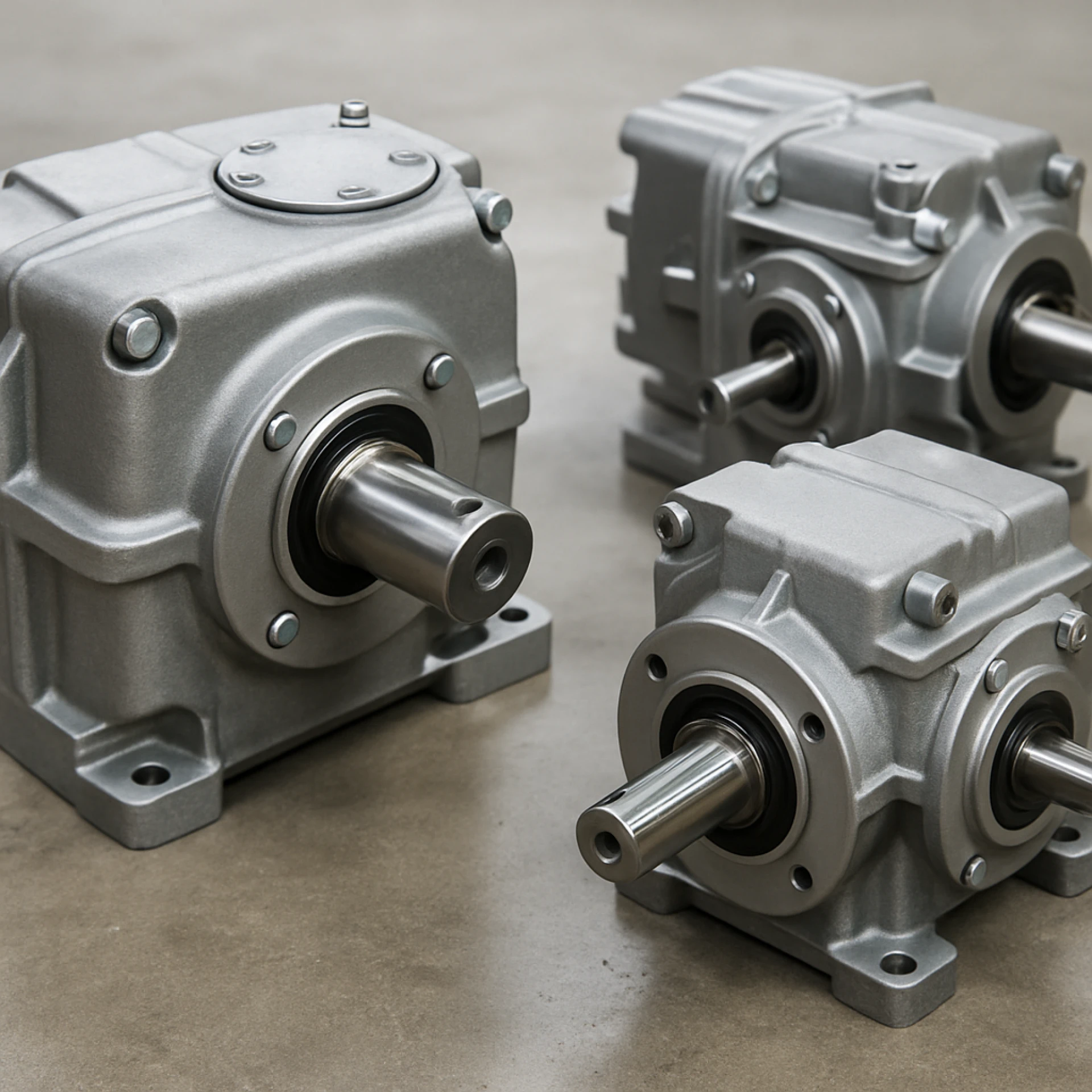
Large industrial gearbox housings are among the most demanding components that a vertical borer processes. The bore seats for bearing fits, the machined faces for cover and flange connections, and the register diameters for gear alignment all require the accuracy that only a capable vertical borer can consistently deliver. An industrial worm gearbox housing, for instance, combines multiple precision bore features across a large casting, exactly the type of work where vertical boring proves its value.
Refurbishment of existing industrial worm gearbox systems adds further demand on vertical boring capacity. Rather than replacing complete assemblies, many operators choose to rebore and re-sleeve worn housings, extending service life at a fraction of replacement cost. That approach depends on machining capability that can work within existing casting envelopes while restoring dimensional accuracy. Vertical boring provides that capability reliably.
Challenges Facing the Industry in 2026
Skilled operator shortages represent the most persistent structural challenge. Operating large CNC vertical borers requires a combination of machining knowledge, programming capability, and the practical judgement that develops through experience, and the pipeline of incoming talent doesn't currently match attrition rates in many markets. Apprenticeship programmes and structured training pathways are addressing this, but the gap remains real.
Rising material and energy costs compress margins throughout the machining supply chain. Faster lead times are increasingly a customer expectation rather than a premium service requiring either greater capacity or smarter scheduling, both of which carry cost. And tolerance demands continue to tighten: components that were acceptable at ±0.05mm a decade ago now require ±0.02mm or better, placing higher demands on machine condition, tooling, and process control.
Future Trends Shaping the Vertical Boring Machine Market
Automation investment continues to increase, particularly around workpiece handling and in-process measurement. Robotic loading systems reduce operator dependency for repetitive work, and integrated probing systems verify dimensions without removing the component from the machine. Both trends improve throughput and reduce the risk of error between machining stages.
Refurbishment over replacement is gaining traction as sustainability considerations and capital cost pressures align. Rebuilding a vertical borer to current specification with new CNC controls, reconditioned spindles, and updated tooling systems extends machine life significantly at lower cost than new capital procurement. That trend supports both equipment manufacturers who offer rebuild services and the workshops that depend on continuous machining capacity.
Heading into 2026, the vertical boring machine market reflects the broader dynamics of heavy manufacturing: growing demand, constrained capacity, and ongoing pressure to produce more complex components faster and to tighter tolerances. Precision machining and the industrial worm gearbox systems and large engineered components it supports remain indispensable to the industries that build and maintain the world's most demanding mechanical infrastructure.








![The Benefits of Using a CNC Touch Probe [Infographic]](https://writeupcafe.com/data/post/1677697/bfdf3e040e67936848aa232d2dfe3d03.jpg.webp)










Sign in to leave a comment.