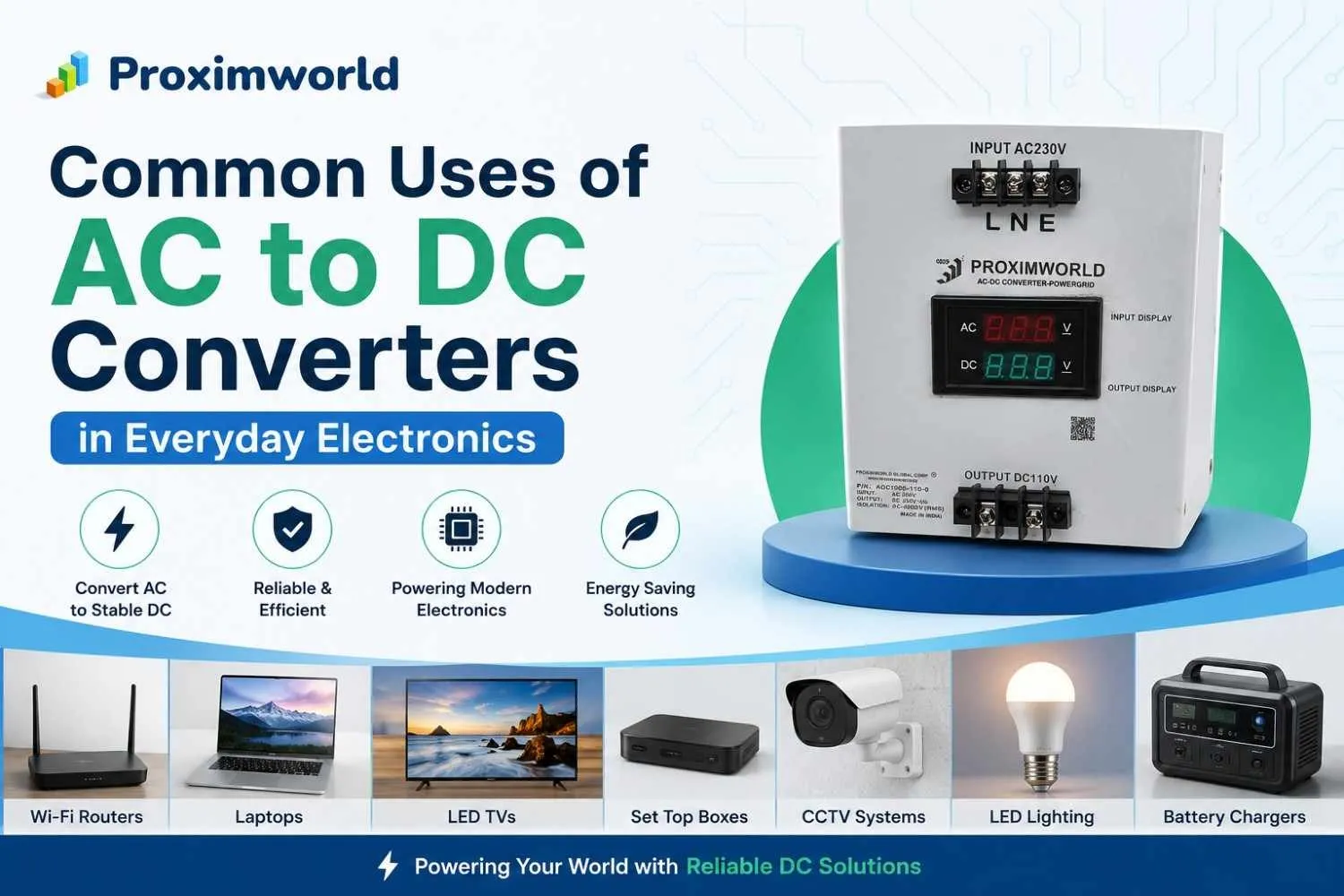

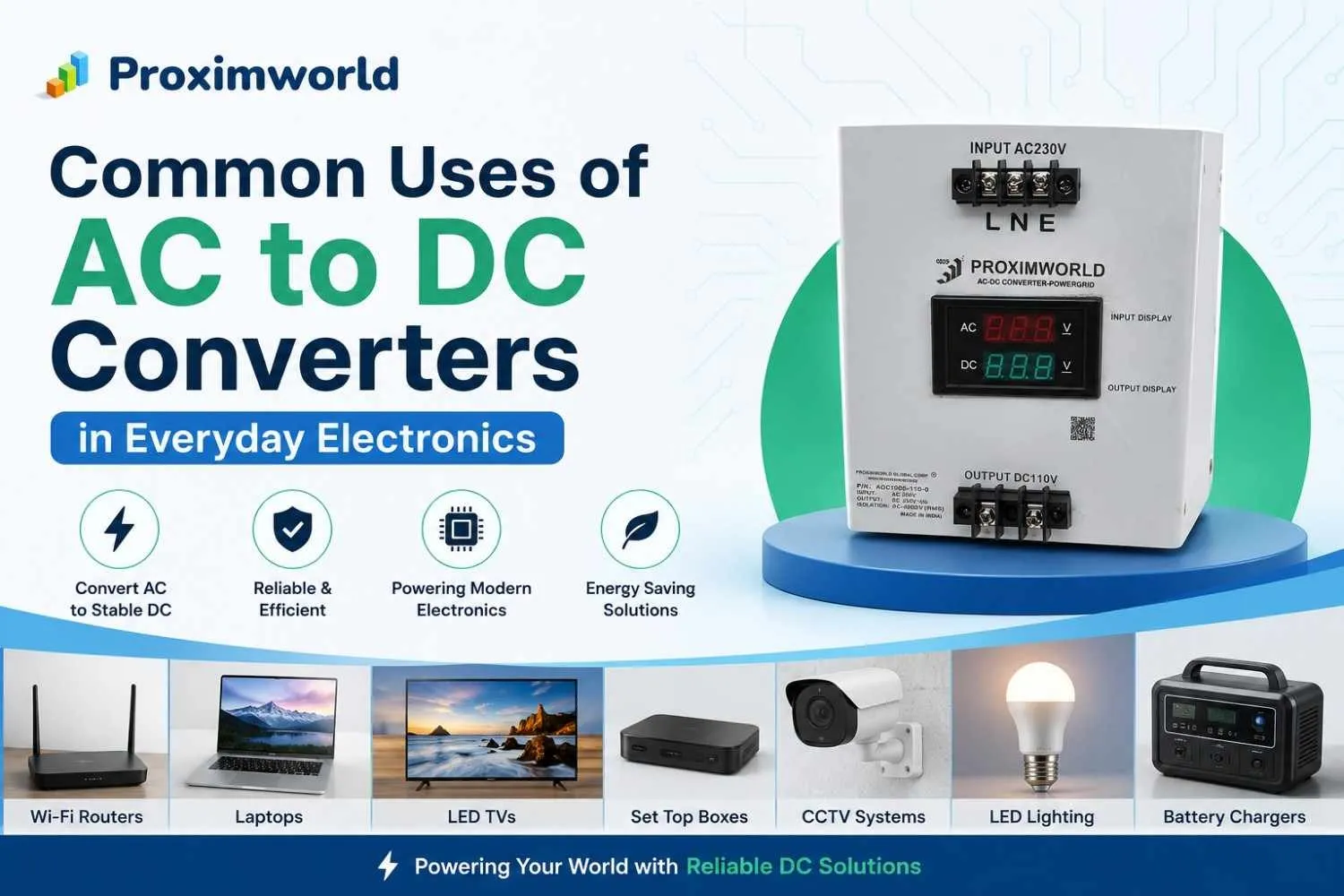
Take a moment to look around you. Your smartphone is charging on the desk, your laptop is connected to a power adapter, the Wi-Fi router is blinking quietly in the corner, and perhaps an LED lamp is lighting up your workspace. While these devices seem completely different, they all have one thing in common: they rely on an AC to DC Converter to function properly.
Most people use electronic devices every day without realizing that the electricity coming from a wall outlet is not the same type of power that these devices actually need. Household power is supplied as Alternating Current (AC), while the majority of modern electronics operate using Direct Current (DC). Bridging this gap is the job of an AC to DC Converter, a technology that has become one of the most important components in today's electrical and electronic systems.
Without AC to DC conversion, many of the devices we depend on daily simply would not work. From consumer electronics and industrial machinery to medical equipment and electric vehicles, AC to DC converters play a vital role in delivering safe, stable, and efficient power.
Understanding an AC to DC Converter
An AC to DC Converter is an electrical device or circuit that transforms alternating current into direct current. Alternating current continuously changes direction, making it ideal for long-distance power transmission. Direct current, on the other hand, flows in a single direction and is required by most electronic circuits, batteries, and digital devices.
The conversion process involves several stages. First, the AC signal is rectified into a pulsating DC signal. Next, filters smooth out voltage fluctuations. Finally, voltage regulation ensures a consistent and stable output suitable for powering sensitive electronic equipment.
Although this process occurs behind the scenes, it is essential for the reliable operation of countless technologies that we use every day.
Why AC to DC Conversion Is So Important
Modern electronics are becoming increasingly sophisticated. Microprocessors, sensors, communication modules, and integrated circuits require precise voltage levels to operate correctly. Even minor power fluctuations can affect performance or damage sensitive components.
An AC to DC Converter provides several critical benefits:
- Delivers stable power to electronic devices
- Protects equipment from voltage fluctuations
- Improves energy efficiency
- Enables battery charging systems
- Supports automation and control systems
- Enhances the lifespan of electronic components
These advantages make AC to DC conversion an indispensable part of modern electrical infrastructure.
Everyday Applications of AC to DC Converters
Smartphone and Laptop Chargers
Perhaps the most familiar example of an AC to DC Converter is the charger you use every day. When you plug your smartphone or laptop charger into a wall socket, the charger converts household AC electricity into the DC voltage required by your device.
Without this conversion process, batteries could not be charged safely and efficiently. Modern chargers also incorporate advanced power management technologies to improve charging speed while protecting battery health.
LED Lighting Systems
LED technology has revolutionized the lighting industry because of its energy efficiency and long lifespan. However, LEDs operate on direct current rather than alternating current.
This means every LED lighting system requires an AC to DC Converter to provide the stable DC power necessary for consistent illumination. High-quality converters reduce flickering, improve efficiency, and extend the lifespan of LED fixtures.
Home Appliances and Smart Devices
Smart home technology continues to grow rapidly. Devices such as smart speakers, security cameras, Wi-Fi routers, smart thermostats, and home automation systems all depend on DC power internally.
An AC to DC Converter enables these devices to receive clean and regulated power, ensuring smooth and uninterrupted operation.
Industrial Uses of AC to DC Converters
While consumer electronics represent a major application area, industrial environments rely even more heavily on AC to DC conversion technology.
Manufacturing Automation
Modern manufacturing facilities use automated machinery, programmable logic controllers (PLCs), robotics, sensors, and monitoring equipment. Most of these systems require stable DC power supplies.
An AC to DC Converter helps maintain operational consistency while minimizing the risk of downtime caused by power instability.
Process Control Systems
Industries such as chemical processing, food manufacturing, pharmaceuticals, and automotive production depend on precise control systems. AC to DC converters provide the reliable power necessary to support accurate monitoring and process management.
Data Centers and Communication Networks
Data centers process enormous volumes of information every second. Servers, storage systems, networking equipment, and telecommunications infrastructure all rely on DC power internally.
High-efficiency AC to DC Converter solutions help reduce energy consumption while ensuring maximum uptime and reliability.
AC to DC Converters in Renewable Energy Systems
The global shift toward renewable energy has increased the importance of advanced power conversion technologies.
Solar Power Systems
Solar panels generate DC electricity. However, many renewable energy systems require sophisticated power management solutions to optimize energy storage and distribution.
AC to DC converters are commonly used in battery charging systems, solar energy storage installations, and hybrid renewable energy applications.
Energy Storage Solutions
Battery storage systems are becoming increasingly important for both residential and commercial energy management. These systems rely on efficient AC to DC conversion to store energy safely and maximize overall system performance.
The Role of AC to DC Converters in Electric Vehicles
Electric vehicles represent one of the fastest-growing sectors in modern transportation. Every EV depends on efficient power conversion technology to charge and manage its battery system.
When an electric vehicle is connected to a charging station, incoming AC power must be converted into DC power before it can be stored in the battery pack. Advanced AC to DC Converter systems ensure fast charging, high efficiency, and enhanced battery protection.
As EV adoption continues to grow worldwide, the demand for high-performance AC to DC conversion solutions is expected to increase significantly.
Medical Applications of AC to DC Converters
Healthcare facilities require highly reliable power systems because equipment performance directly affects patient care.
Medical devices such as:
- Patient monitoring systems
- Diagnostic equipment
- Laboratory instruments
- Medical imaging systems
- Portable healthcare devices
all depend on stable DC power for accurate operation.
An AC to DC Converter ensures that these critical devices receive the clean and reliable power necessary to perform effectively and safely.
Future Trends in AC to DC Converter Technology
The future of AC to DC Converter technology is being shaped by several emerging trends:
Higher Energy Efficiency
Manufacturers are developing more efficient converter designs to reduce energy losses and improve sustainability.
Compact Designs
As electronic devices become smaller and more powerful, converters must deliver greater performance within increasingly compact footprints.
Smart Power Management
Advanced converters are incorporating intelligent monitoring and control features that optimize energy consumption in real time.
Renewable Energy Integration
Growing adoption of solar power, battery storage, and electric vehicles will continue driving innovation in power conversion technologies.
Conclusion
Although often overlooked, the AC to DC Converter is one of the most essential technologies in modern life. It enables smartphones to charge, powers industrial automation systems, supports renewable energy installations, and makes electric vehicle charging possible.
As technology continues to evolve, the demand for reliable, efficient, and intelligent AC to DC Converter solutions will only increase. Whether in homes, hospitals, factories, or transportation systems, these converters remain at the heart of modern power management.
The next time you charge your phone, switch on an LED light, or connect your laptop to a power adapter, remember that an AC to DC Converter is working behind the scenes to make it all possible.


















Sign in to leave a comment.