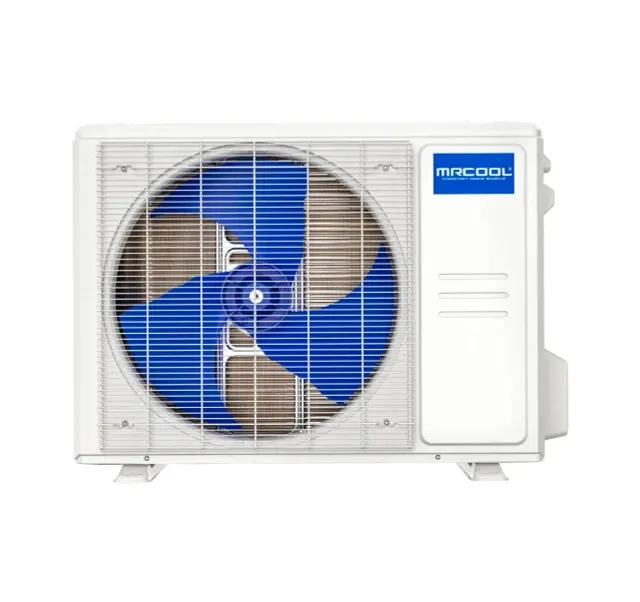

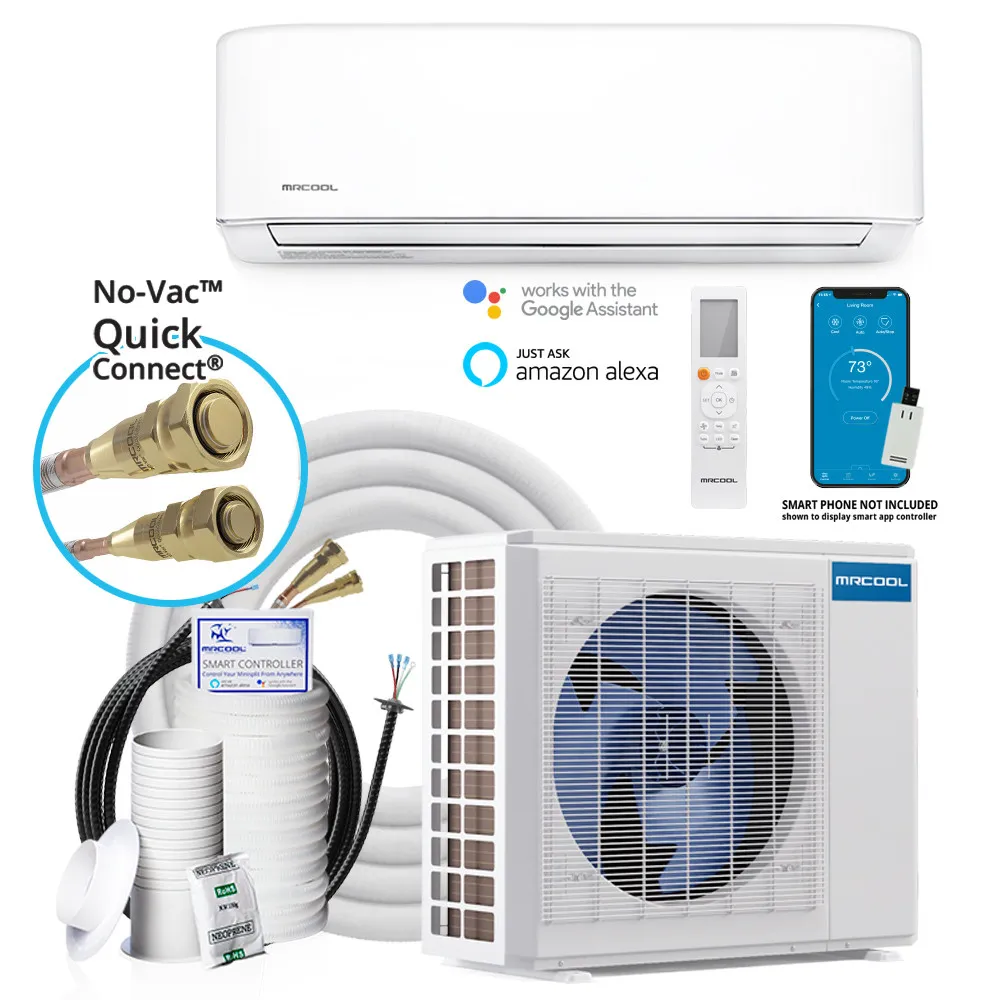
Ductless mini split systems have earned their growing market share through genuine performance advantages that efficiency-focused homeowners, cost-conscious contractors, and environmentally motivated buyers all find compelling for different but compatible reasons. The combination of zone-level temperature control, elimination of duct losses, inverter-driven efficiency at partial load conditions, and the heating capability that heat pump technology provides without separate equipment makes ductless systems one of the more comprehensively advantaged comfort technology investments available in today's market.
What many homeowners and contractors do not fully account for when evaluating ductless systems is the financial assistance ecosystem that makes this investment more affordable than the equipment and installation costs alone suggest. Federal tax credits, utility rebate programs, state energy efficiency incentives, and manufacturer rebate programs — including mr cool rebates available through various channels — collectively reduce the net cost of qualifying ductless installations in ways that change the economic calculation significantly when properly identified and captured.
Understanding both the technology being purchased and the incentive landscape that supports its adoption produces purchase decisions and installation plans that capture maximum available financial assistance alongside maximum system performance.
Ductless Mini Split Systems: Performance That Justifies the Investment
The Efficiency Case in Plain Terms
The efficiency advantage of ductless mini split systems over conventional alternatives rests on two distinct mechanisms that together produce the energy savings that utility rebate programs and efficiency incentives are designed to encourage. The first mechanism is heat pump heating whose coefficient of performance of two to four means the system delivers two to four times as much heating energy as it consumes in electrical energy by moving heat from outdoor air rather than generating it through resistance. The second mechanism is the elimination of duct losses whose fifteen to thirty percent reduction in effective system efficiency in many existing homes disappears when conditioned air is delivered directly to the conditioned space without intermediate ductwork.
These two efficiency mechanisms operate simultaneously in heat pump ductless mini split applications, making their combined efficiency advantage over conventional ducted gas or electric resistance systems substantial enough to produce operating cost savings that partially offset the higher upfront cost of ductless equipment relative to conventional alternatives. The specific savings magnitude depends on local energy prices, climate conditions, existing system efficiency, and the specific ductless equipment installed — variables that make general statements about savings less useful than location-specific calculations using actual utility rates and load profiles.
Zone Control and Its Comfort and Efficiency Benefits
The zone-level conditioning that ductless mini split systems provide through independent indoor units in each conditioned zone delivers both comfort and efficiency benefits that single-thermostat central systems cannot replicate without zone control additions that add cost and complexity.
Comfort benefits of zone control include the ability for different occupants in different spaces to maintain the temperatures they prefer simultaneously rather than compromising on a single whole-home setpoint that satisfies nobody completely. A homeowner who sleeps cooler than their partner can maintain their bedroom at their preferred temperature without affecting their partner's space. A home office that receives significant afternoon solar gain can be cooled independently without overcooling the rest of the home to compensate for the solar-loaded space pulling up the average temperature that a single thermostat measures.
Efficiency benefits of zone control emerge from the ability to condition only occupied spaces rather than conditioning the entire home uniformly regardless of which spaces are actually occupied. A household whose members occupy different spaces at different times of day can save conditioning energy by operating only the zones serving currently occupied spaces, reducing total runtime compared to a central system that conditions the entire home whenever any occupied space requires conditioning.
Understanding the Rebate and Incentive Landscape
Federal Tax Credits for Qualifying Heat Pump Systems
The federal tax credit available for qualifying heat pump installations represents the most universally accessible financial incentive for ductless mini split system purchasers because it applies based on federal tax filing rather than local utility program participation or state residence. The Inflation Reduction Act provisions that affect heat pump tax credits have made this incentive more substantial than its predecessor programs, though the specific credit amount, qualifying equipment requirements, and annual and lifetime caps require verification against current IRS guidance rather than reliance on general descriptions that may reflect prior program parameters.
Qualifying ductless mini split systems must meet efficiency thresholds specified by the credit program — thresholds that current high-efficiency products from established manufacturers typically meet or exceed but that should be verified for any specific equipment being considered. The credit applies to both equipment cost and installation cost for qualifying systems, which is relevant because installation cost represents a meaningful portion of total project cost for ductless systems where professional labor is involved.
Homeowners planning ductless mini split installations benefit from confirming current credit availability, applicable thresholds, and claiming procedures through the IRS website or a tax professional rather than relying on information that may reflect prior program parameters. The tax credit landscape for energy efficiency improvements has changed meaningfully over the past several years and may continue evolving as energy policy develops.
Utility Company Rebate Programs
Utility company rebate programs for high-efficiency HVAC equipment represent one of the more valuable and often underutilized financial assistance sources for ductless mini split system installations. Many electric utility companies operate rebate programs that provide direct payments to customers who install qualifying high-efficiency equipment, motivated by the utility's interest in reducing peak electrical demand through efficiency improvements rather than adding generation capacity to serve inefficient equipment.
The specific rebate amounts, qualifying equipment requirements, and application procedures vary enormously between utility companies in ways that make general statements about utility rebate availability less useful than direct inquiry with the specific utility serving the installation location. Some utilities offer flat rebates per qualifying system installed. Others provide rebates scaled to the efficiency level of the installed equipment, rewarding higher-efficiency installations more generously. Some programs require pre-approval before equipment is purchased. Others accept applications after installation is complete.
Identifying applicable utility rebates before equipment is purchased allows selection decisions to account for rebate availability when comparing system options. A system that qualifies for a meaningful utility rebate at slightly higher upfront cost may represent better total investment than a non-qualifying alternative at lower upfront cost when the rebate is factored into the comparison. This rebate-aware purchasing approach requires knowing what rebates are available before purchase commitments are made rather than discovering them afterward.
State Energy Efficiency Incentive Programs
State-level energy efficiency incentive programs administered through state energy offices, housing agencies, or dedicated efficiency program organizations provide financial assistance for qualifying ductless mini split installations that supplements federal tax credits and utility rebates with state-specific support. These programs vary significantly in structure, funding availability, qualifying equipment requirements, and application procedures between states in ways that require state-specific research rather than general guidance.
Some states operate direct rebate programs similar to utility rebate structures but funded through state budget appropriations or utility surcharge mechanisms. Others provide low-interest financing for qualifying efficiency improvements rather than direct rebates, reducing monthly financing costs for homeowners who cannot afford upfront system costs even with other incentive assistance. Some programs specifically target income-qualified households with more generous assistance than programs available to all income levels, recognizing that the households with the most to gain from energy cost savings are sometimes those with the least financial flexibility to make upfront efficiency investments.
The Database of State Incentives for Renewables and Efficiency — commonly known as DSIRE — provides a comprehensive online resource for identifying state-level incentive programs by location and technology type. Checking this resource during the planning phase of any ductless mini split installation provides the most reliable overview of state incentive availability without requiring individual inquiry to multiple state agencies.
Mr. Cool Rebates: What's Available and How to Find Them
Manufacturer Rebate Programs and How They Work
The mr cool rebates that MrCool periodically makes available through various program structures represent a distinct category of financial assistance from the utility and government incentive programs discussed above. Manufacturer rebates are funded by MrCool as marketing investments designed to stimulate demand, increase market share, and encourage customers to purchase within promotional periods that concentrate sales volume beneficially for the brand's distribution and manufacturing planning.
Because manufacturer rebate programs are marketing initiatives rather than regulatory programs, they change more frequently than utility or government incentives — they may be available during certain promotional periods and unavailable during others, may apply to specific product lines or configurations rather than the full product range, and may have terms and conditions that differ from one program period to the next. This variability means that the most reliable information about currently available mr cool rebates comes from current sources — the MrCool website, authorized dealers, and distributors — rather than from general descriptions of past programs that may no longer be active.
Homeowners and contractors planning ductless mini split installations using MrCool equipment benefit from checking current mr cool rebates availability at the time of purchase planning rather than assuming that rebates available during prior purchases remain available for current ones. Building rebate research into the early stages of purchase planning — before equipment is ordered rather than after — allows rebate availability to inform product selection and timing decisions rather than being discovered too late to affect them.
Where to Find Current Mr. Cool Rebates
The most reliable sources for current mr cool rebates information include the MrCool manufacturer website where active promotions are typically published, authorized MrCool dealers who receive information about active manufacturer programs as part of their dealer relationships, and HVAC supply houses carrying MrCool products whose sales staff tracks active manufacturer incentive programs as a routine part of their customer service function.
Online HVAC communities and forums sometimes provide timely information about active manufacturer rebate programs based on member experiences, though this source requires verification against official channels because forum information may reflect programs that have since expired or changed. Social media channels maintained by MrCool occasionally announce promotional programs before they appear through other channels, making them a useful supplementary source for homeowners actively monitoring for mr cool rebates opportunities.
Contractors who install MrCool products regularly and maintain active dealer relationships typically have the most current and reliable access to information about active mr cool rebates programs because manufacturer representatives communicate with dealer networks about active programs as a standard sales support function. Homeowners who work with authorized MrCool installers consequently have access to rebate information through the contractor relationship rather than needing to independently research manufacturer programs.
Stacking Incentives for Maximum Savings
The most financially advantageous ductless mini split installations combine multiple available incentive types rather than relying on any single source of financial assistance. A qualifying installation might capture federal tax credits for equipment and installation costs, a utility rebate for the high-efficiency heat pump system, a state incentive for qualifying energy efficiency improvement, and a manufacturer rebate from MrCool's current promotional program — each representing a distinct financial assistance source that reduces the net installation cost when all are properly identified and claimed.
Successfully stacking multiple incentives requires understanding the interaction between different program types and any restrictions that prevent combining specific incentives. Some programs explicitly restrict claiming alongside other incentives. Others are designed to complement federal and state programs rather than substitute for them. Understanding these interaction rules before purchase prevents the disappointment of discovering after installation that assumed incentive stacking is not permitted under one program's terms.
Organizing the documentation required for multiple incentive claims before installation begins — identifying what receipts, equipment specifications, installation records, and program applications are required for each incentive being pursued — prevents the common problem of discovering that required documentation was not collected during the installation process and cannot be reconstructed afterward to support incentive claims.
Installation Considerations That Affect Incentive Eligibility
Professional Installation Requirements for Some Incentives
Several incentive programs — particularly utility rebate programs and some state efficiency incentive programs — require professional installation by licensed contractors as a condition of rebate eligibility, even for products like certain MrCool systems where homeowner installation is technically feasible. This professional installation requirement reflects the incentive program's interest in ensuring that qualifying systems are correctly installed and will actually deliver the efficiency performance that motivates the incentive.
For homeowners planning DIY installation of ductless mini split systems and expecting to claim utility or government rebates, verifying the installation requirement for each applicable incentive before proceeding with homeowner installation prevents discovering after the fact that the installation approach disqualifies the system from rebates that would have changed the economic calculation significantly.
Equipment Efficiency Requirements and Documentation
The qualifying efficiency thresholds for federal tax credits, utility rebates, and state incentive programs typically require documentation confirming that installed equipment meets or exceeds the threshold. This documentation is most reliably obtained from equipment specification sheets provided by the manufacturer, which should be retained as part of the installation file along with purchase receipts and installation records that incentive applications typically require.
Verifying that the specific mr cool universal, mr cool hyper heat, or other MrCool product line and capacity configuration being installed meets the efficiency thresholds for all incentive programs being claimed should happen before equipment is purchased rather than after. If the planned equipment does not meet the threshold for a specific incentive, selecting an alternative configuration that does qualify may be worthwhile depending on the value of the missed incentive relative to any cost difference between qualifying and non-qualifying options.
FAQs About Ductless Mini Split Systems and Mr. Cool Rebates
How do I find out what utility rebates are available for ductless mini split systems in my area?
Contact your electric utility directly — either through their website's energy efficiency or rebate program section or by calling their customer service line and asking specifically about rebates for high-efficiency heat pump systems. The ENERGY STAR rebate finder tool also aggregates utility and government rebate information by location and product type, providing a useful starting point for identifying available programs before contacting specific utilities for program details and application procedures.
Do mr cool rebates apply to both professional installation and DIY installation scenarios?
Manufacturer rebate program terms vary between promotional periods and may or may not distinguish between professional and DIY installation as a qualifying condition. Checking the specific terms of currently active mr cool rebates programs through the MrCool website or authorized dealers provides accurate information about installation requirements for specific current promotions rather than general guidance that may not reflect current program terms.
What efficiency ratings do ductless mini split systems need to qualify for federal tax credits?
Federal tax credit qualifying thresholds for heat pump systems have evolved as the credit programs have changed, making current IRS guidance the most reliable source for specific threshold requirements applicable to current installations. The ENERGY STAR program certification is often used as a proxy for federal credit eligibility since ENERGY STAR thresholds are designed to align with credit program requirements, but verification against current IRS guidance rather than reliance on ENERGY STAR certification alone provides the most reliable eligibility confirmation.
Can I claim both a federal tax credit and a utility rebate for the same ductless mini split installation?
Federal tax credits and utility rebate programs are generally independent programs that can be combined for qualifying installations, though the federal tax credit calculation may need to account for rebates received in ways that reduce the cost basis for the credit calculation depending on how the rebate is structured. Consulting a tax professional familiar with energy efficiency incentive interactions provides reliable guidance for specific situations rather than general statements that may not reflect the interaction rules applicable to the specific combination of incentives being claimed.
How long does it typically take to receive mr cool rebates and utility incentive payments after installation?
Processing timelines vary significantly between program types and specific programs. Manufacturer rebate programs typically process within four to eight weeks of application submission with required documentation. Utility rebate programs vary more widely, with some utilities processing within a few weeks and others taking several months depending on program volume and administrative resources. Federal tax credits apply when filing tax returns for the tax year in which the qualifying installation occurred, making their effective timing dependent on the tax filing calendar rather than a separate application process. Planning to submit rebate applications promptly after installation with complete required documentation minimizes processing time regardless of the specific program.























Sign in to leave a comment.