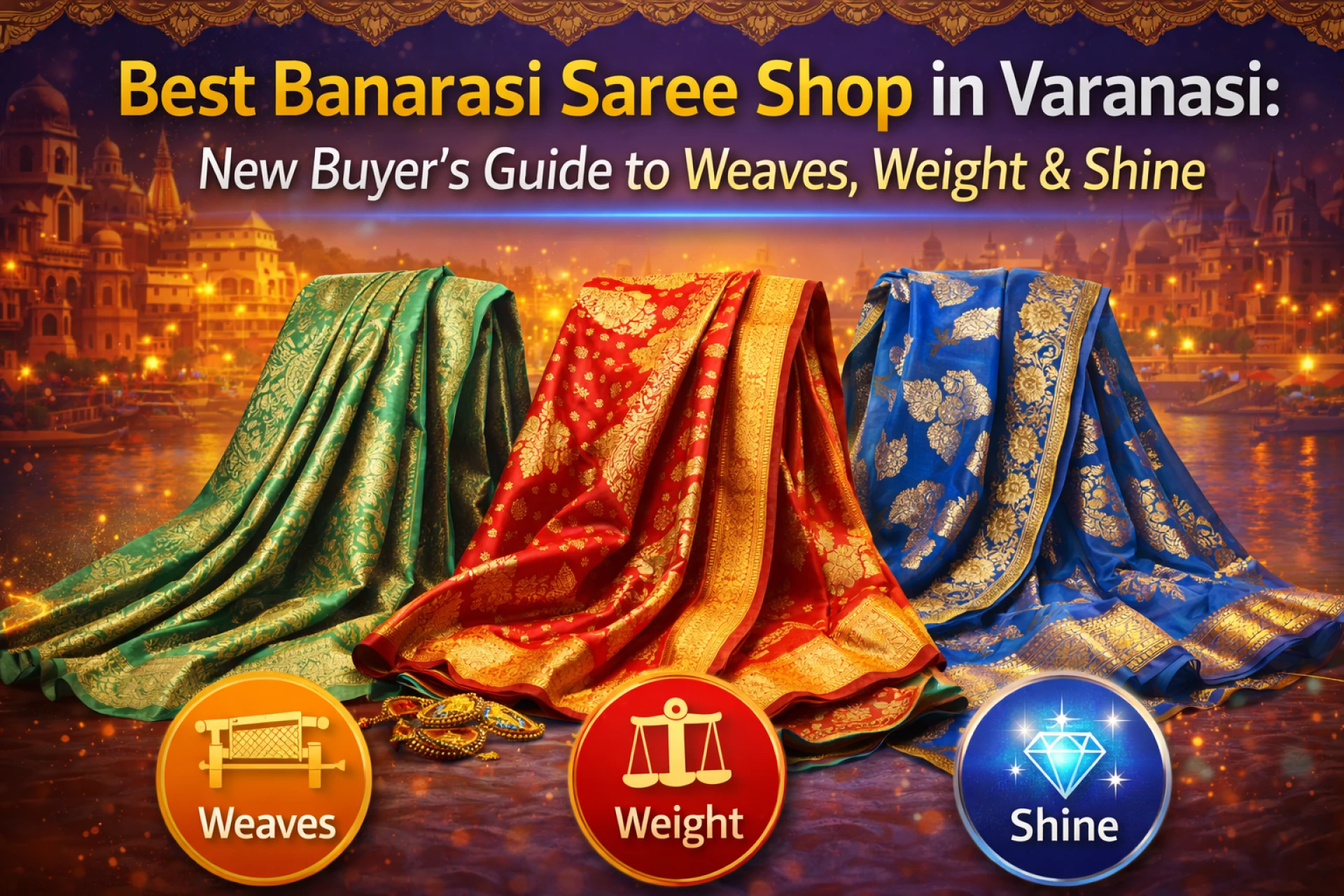

If you're buying a Banarasi saree for the first time, welcome to a world where tradition meets timeless elegance. A Banarasi saree isn't just a piece of fabric—it's six yards of cultural legacy, woven with threads of history, heritage, and heart. And if you’re doing your saree shopping in Varanasi, you’re already in the right place—the birthplace of these masterpieces.
But let’s be honest—walking into a Banarasi saree shop for the first time can be a bit overwhelming. So many weaves, so many patterns, zari that sparkles, fabrics that shine, and prices that swing from budget-friendly to extravagant. What should you look for? How do you know what makes a good Banarasi saree? And above all, where should you go to make sure your first buy is memorable, authentic, and truly special?
This guide is made just for new buyers—breaking down everything you need to know about weaves, weight, and shine—and why Vandana Sarees is the best banarasi saree shop in varanasi, especially for first-time saree lovers.
Let’s unravel it all.
Understanding Banarasi Weaves: What’s in a Weave?
Before choosing your saree, it's essential to know that Banarasi sarees come in different weaves, and each has its own story and look. The most popular weaves include:
- Katan: Pure silk with a smooth, lustrous finish. It’s classic, rich, and often used for bridal wear.
- Organza (Kora): Lightweight and sheer, perfect for elegant day functions. Organza weaves give a crisp look and feel heavenly.
- Georgette: Soft, flowy, and modern—ideal for casual and semi-formal occasions.
- Shattir: A lesser-known but versatile fabric, often used for contemporary Banarasi designs.
- Tissue: Extremely glossy and luxurious, often used in party wear sarees with heavy zari.
Each weave not only changes the texture and weight of the saree but also influences how it drapes and how the zari looks against it. At Vandana Sarees, the variety of weaves is beautifully organized and thoughtfully explained to every buyer. First-time visitors are often surprised at how easy it becomes to choose once the weaves are understood.
Fabric Weight: How Heavy Is Too Heavy?
One of the most common mistakes first-time buyers make is underestimating the weight of a Banarasi saree. Some of the heavier ones can feel overwhelming, especially if you’re not used to draping sarees. So understanding saree weight is key.
Here’s a quick breakdown:
- Katan silk sarees are heavier because of their dense silk base and rich zari work.
- Organza and Georgette sarees are lighter, breezier, and more manageable.
- Tissue sarees can also be on the heavier side but come with a metallic shine that compensates with visual drama.
At Vandana Sarees, the team helps you try on different types so you can literally feel the difference. They’ll guide you based on the occasion—whether it’s a wedding, a function, or just a special family gathering. Their transparency and willingness to educate new buyers is what truly makes them stand out in Varanasi.
Zari Shine: Real vs. Tested—What Should You Pick?
Zari is the glitter in your Banarasi saree. But all that glitters isn't gold—and not all zari is created equal. You’ll typically find two types:
- Real Zari (Pure Zari): Made from real silver and gold-plated threads. It's durable, luxurious, and perfect for heirloom sarees.
- Tested Zari: Made from copper or synthetic threads, gold-colored to mimic real zari. Affordable, lighter, and perfect for occasional wear.
The difference isn’t always obvious at first glance, especially to a new buyer. But with time and exposure, you’ll learn that real zari has a soft, understated glow, while tested zari tends to be a bit brighter and shinier.
Vandana Sarees stocks both types and never misrepresents one for the other. They explain the benefits of each and let the customer decide based on budget, preference, and occasion. Whether you’re buying your first saree or your tenth, they make sure you walk away knowing exactly what you’ve purchased.
Motifs & Patterns: What Are You Really Wearing?
Banarasi sarees are famous for their intricate motifs—and knowing what you’re wearing makes your saree even more meaningful. Some common patterns include:
- Butidar: Small, repetitive floral motifs.
- Jangla: Heavy, intricate patterns that span the body of the saree.
- Tanchoi: Brocade-style, fine detailing with no zari on the reverse.
- Cutwork: Created using zari threads on a plain base, giving a delicate lace-like effect.
Each motif has its own cultural and historical significance. Vandana Sarees makes sure to explain this to their customers, turning your saree purchase into a cultural journey rather than just a shopping experience.
Pallu and Border: Where the Beauty Lives
New buyers often focus too much on the body of the saree and overlook the pallu and border, which are just as crucial—if not more so.
- A rich pallu adds weight and visual balance to your drape.
- Borders should match the body in tone and weaving style for a cohesive look.
At Vandana Sarees, sarees are displayed in full drape so you can see the flow, the pallu fall, and how it frames the body. This makes a massive difference when visualizing how it’ll look on you—and it’s a customer-friendly practice that few other stores follow with such consistency.
Color Choice: Make It About You
Your first Banarasi saree should reflect you—your skin tone, personality, and purpose for buying it. While deep reds and golds are classics, today’s Banarasi sarees come in pastels, jewel tones, dual tones, and even ombre styles.
Vandana Sarees has one of the most vibrant and diverse color palettes in Varanasi. Whether you love bold colors or subtle shades, they help you explore options that enhance your natural glow, rather than just sticking to tradition for tradition's sake.
Price Transparency: Budget Doesn’t Mean Basic
First-time buyers often assume that Banarasi sarees are always expensive. While pure silk and real zari pieces do command high prices, there are stunning options available for every budget.
At Vandana Sarees, pricing is transparent, fair, and reflective of quality. Whether you’re buying a bridal masterpiece or a soft georgette for daily wear, you’ll never feel like you’re compromising on beauty or authenticity.
Explore their trustworthy collections at https://vandanasarees.com/.
Try Before You Buy: Experience Over Pressure
Another mistake first-time buyers make is rushing. A Banarasi saree should feel like a second skin—comfortable, empowering, and elegant. Vandana Sarees invites buyers to take their time, try different styles, feel the fabrics, and ask questions. It’s not just a shop—it’s an experience.
Aftercare Tips for Beginners
Buying your first Banarasi saree is just the beginning. Caring for it ensures it stays stunning for years.
- Always dry clean your Banarasi sarees.
- Store in a muslin cloth to allow airflow.
- Refold every few months to prevent permanent creases.
When you buy from Vandana Sarees, they guide you through all these care tips so your saree remains a showstopper even decades later.
Final Thoughts: Trust the Right People, Pick the Right Saree
Buying your first Banarasi saree can be magical—or confusing. It all depends on where you go and who you trust. Vandana Sarees takes away the confusion, respects your budget, explains the art behind each weave, and makes sure you leave with something that truly feels yours.
From understanding the weave, choosing the right weight, to admiring the delicate shine—your journey into the world of Banarasi sarees should begin with confidence and joy. And Vandana Sarees ensures exactly that.
So if you’re stepping into this world for the first time, don’t just walk into any shop—step into Vandana Sarees, where tradition, transparency, and true craftsmanship meet.

























Sign in to leave a comment.