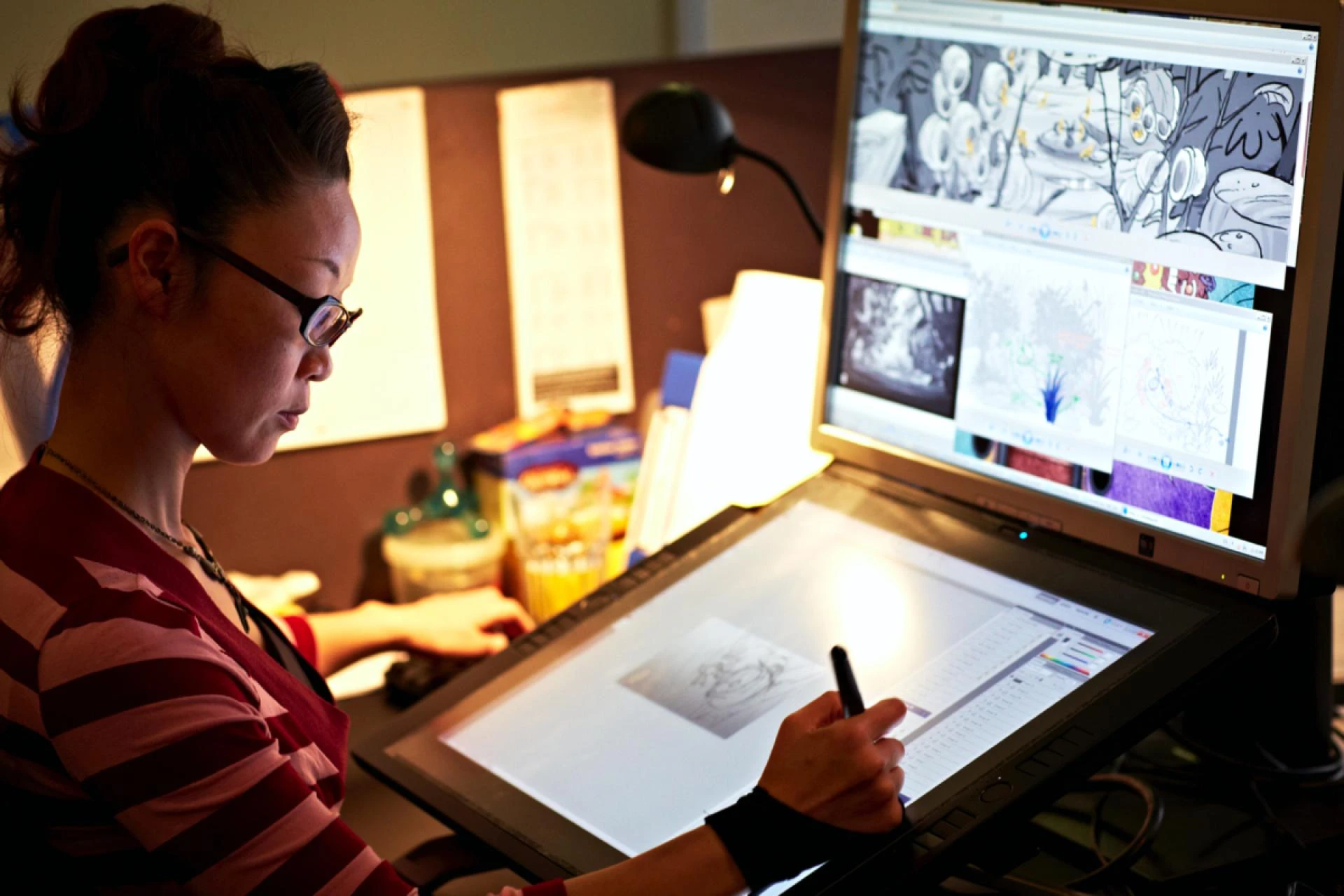

With the advent of virtual production on set, filmmakers are changing the paradigm of shooting-motion pictures by synchronizing real-time computer-generated images with live-action footage to build a seamless immersive worlds while actually standing on the sound stage. It has suddenly become a standard practice in most of today's filmmaking.
With the change to virtual production, a change has begun to permeate through not just the end product but the entire production pipeline. Virtual sets utilizing LED walls and real-time rendering are saving money, allowing creative flexibility, and creating more informed decision-making on the part of directors from pre-visualization all the way into post-production.
The Tech Behind the Magic
Real-time rendering technology forms the basis of the on-set virtual production; most importantly, it is being carried out using game engines like Unreal Engine 5. Instead of simply working with green screens and adding backgrounds later in post, the filmmakers can project digital environments between their actors on huge LED walls.
These LED stages react dynamically to the movement of cameras, changing the parallax and lighting in real time to offer a truly realistic experience. The results are stunning: faithful reflections and consistent lighting make the experience much more immersive for both the actors performing in it and the audience viewing it.
This technology has been thrust into the limelight by the success of productions like The Mandalorian, Avatar: The Way of Water, and more recently, Zack Snyder's Rebel Moon. Streaming companies like Netflix and Disney, as well as independent studios, are now investing massively in virtual production facilities worldwide.
Real-Time Creativity, Real-Time Problem Solving
Perhaps one of the biggest advantages of on-set virtual production is that creative decisions can be made in real time." Directors and cinematographers can change lighting, sets, and camera angles at will-without cost of rendering in post-production.
A real-time environment helps lower the carbon kick of productions. Instead of flying crew to remote locations, a crew can shoot jungle scenes in the morning and futuristic cityscapes in the afternoon-from the same studio.
Actors can be more luckily too. The process of engaging with immersive backdrops instead of green screens fosters a level of performance and emotional commitment. High-concept scenes in which the environment plays a pivotal role-as in alien worlds or dystopian landscapes-fare much better for this technology.
Adoption Increase in the Bollywood Scenario
In technology, illuminating innovation and technical advancement have ever been a part of the Indian entertainment industry, which catches the attention of filmmakers here. Adroitness, such as Hyderabad, Mumbai, up to the last tier cities, is apparently pouring considerable money into LED volume stages while training technicians in real-time virtual production workflows.
What is special about this trend in India is how it is localized. So, for example, the virtual set could recreate heritage Indian architecture, such as in period films, with so much detail, while local independent filmmakers will experiment with smaller technology to produce short films or web series in the sci-fi genre.
This transformation is also highly significant for the animation and special effects professionals in cities with robust creative ecosystems. The institutes like Animation course in Kolkata are now incorporating virtual production modules in their training programs to make students employable in this genre, such as game engines, LED stage setup, and digital-to-live-action content generation.
Real-World Applications Beyond Film
Even if it is commonly associated with cinema, it is also going beyond film:
- Advertising: Commercials can now be shot with changing virtual backgrounds, effectively customising for each client without a reshoot.
- Education: Providing student experience in creating sets without the actual physical building costs to film and animation schools.
- Live Events & Broadcasting: It is used in newsrooms and events to give them beautiful visuals without even turning a screwdriver.
- Gaming & XR: Creating interactive narrative game production is being updated with the virtual production workflow for immersive AR/VR experiences.
This convergence in media formats will mean that a profession in animation, filmmaking, or design, of whatever sort, will have to know how to navigate this new space.
Latest Developments in 2025
By the start of 2025, several advances were incorporating into research for on-set virtual production and increasing the power of that technology:
- MetaHuman Animator: This new Unreal Engine tool allows creators to animate human facial performances using minimal hardware, enabling the synced action in a virtual environment.
- AI Pre-scena Creation: Generative AI is being used to design whole environments pre-scripted by a director's moodboard, cutting down on the time taken by previsualization considerably.
- Remote LED Volume Control: New software allows production designers and directors to control LED stages remotely opening up avenues for global collaboration.
These breakthroughs make it easier for smaller studios and independent creators to freely experiment with virtual production, in that it expands the democratization process of high-end filmmaking.
Conclusion: A Virtual Leap into the Future
On-set virtual production has certainly turned the entire storytelling paradigm upside down, not just as a fad. It makes possible to marry the physical and the digital into a homegenous and credible visual experience, encouraging a storyteller to break important boundaries while still being grounded by practical production. As this kind of technology becomes ever more widespread and available, it is being taken up by creative professionals across the world.
Wherever such digital media industries emerge and blossom, educational institutions are now reflecting this change. Enrolments of students in 2D visualization course in Kolkata, now have cutting-edge techniques combining traditional design with virtual storytelling that prepares them for a future seamlessly infused with creativity and real-time innovation.























Sign in to leave a comment.