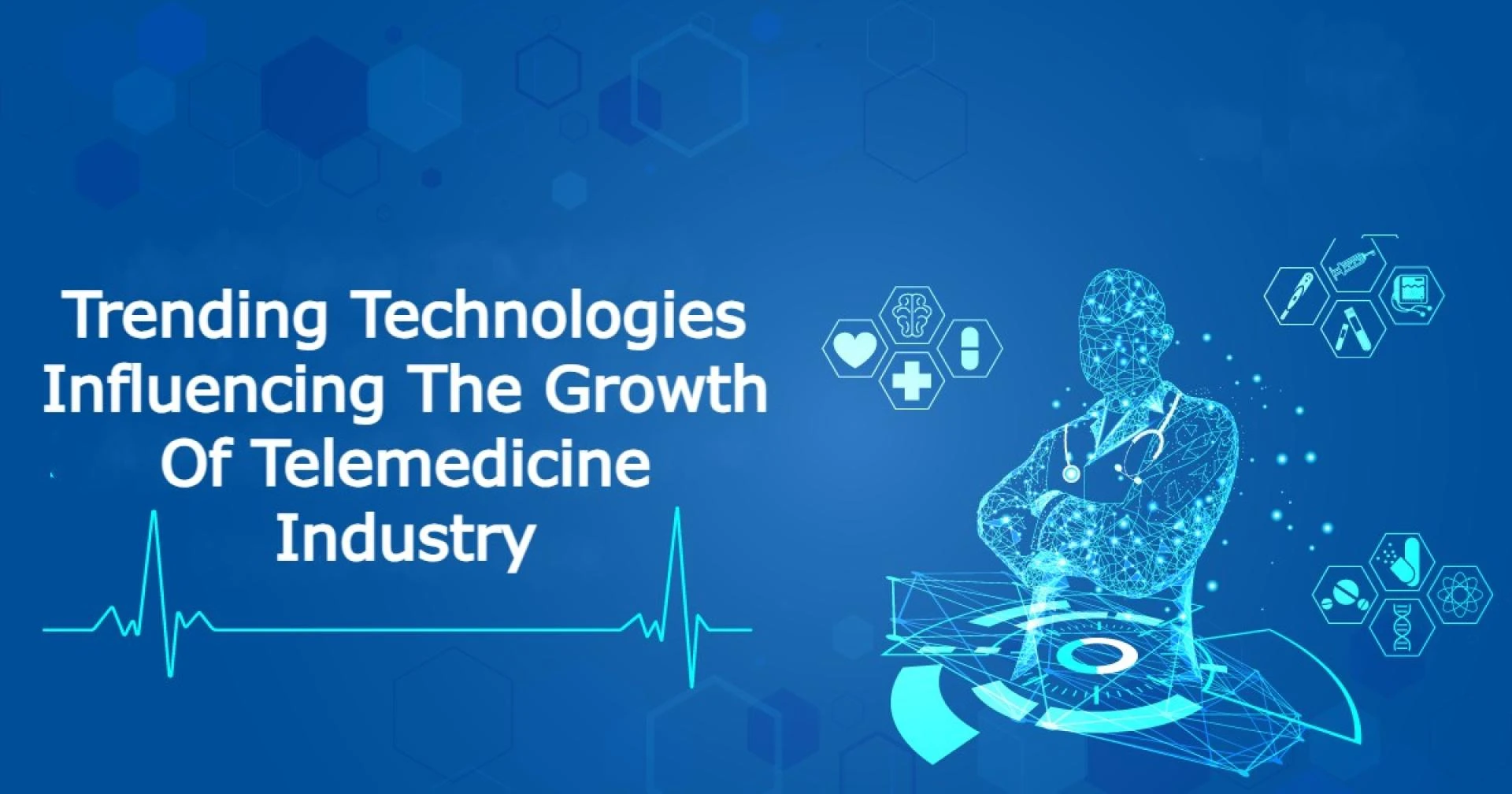

In recent years, the telemedicine industry has witnessed unprecedented growth and adoption due to advancements in technology. Telemedicine, the remote delivery of healthcare services through digital communication, has revolutionized the way patients access medical care. This paradigm shift has been accelerated by various trending technologies that have further enhanced the effectiveness of telemedicine and improved healthcare app development service. In this blog post, we will explore some of these technologies and their impact on the growth of the telemedicine industry.
6 Trending Technologies Impacting the Telemedicine Industry
Artificial Intelligence (AI) and Machine Learning (ML)
Artificial intelligence and machine learning are the top trending technologies that have become instrumental in transforming telemedicine. These technologies enable healthcare providers to analyze vast amounts of patient data, identify patterns, and make accurate predictions. With the help of AI algorithms, telemedicine platforms can offer personalized treatment plans, recommend suitable medications, and predict potential health risks. Additionally, AI-powered chatbots and virtual assistants have enhanced patient engagement by providing 24/7 support, answering queries, and even assisting in the initial diagnosis process.
Internet of Things (IoT)
The Internet of Things has revolutionized healthcare by connecting various medical devices and wearables to a wide network. IoT-enabled devices can collect and transmit real-time patient data to telemedicine apps, allowing remote monitoring of vital signs, glucose levels, blood pressure, and more. This data can be analyzed instantly, enabling doctors to provide timely interventions, remotely manage chronic conditions, and offer personalized care. The integration of IoT with telemedicine has greatly improved the efficiency and quality of online care services.
Big Data Analytics
The telemedicine industry generates an enormous amount of healthcare data. Big data analytics plays a crucial role in extracting valuable insights from this data, leading to improved patient outcomes and healthcare decision-making. By analyzing trends, treatment outcomes, and population health data, telemedicine platforms can identify patterns, predict disease outbreaks, and offer targeted interventions. The healthcare app development company will integrate Big data analytics to streamline operations, optimize resource allocation, and enhance the overall efficiency of your app.
Virtual Reality (VR) and Augmented Reality (AR)
VR and AR technologies are making significant strides in telemedicine by creating immersive and interactive experiences. Virtual reality can transport patients to simulated environments, providing pain management, mental health therapy, and rehabilitation sessions. Augmented reality overlays digital information onto the real world, allowing healthcare professionals to guide patients through procedures and surgeries remotely. Healthcare app development services include these technologies to expand the capabilities of telemedicine app development. Check out this Telemedicine App Development Guide to understand more about the telemedicine landscape.
Blockchain Technology
Blockchain technology, known for its decentralized and secure nature, has the potential to revolutionize telemedicine by ensuring data integrity, privacy, and interoperability. By storing patient records on a blockchain, telemedicine platforms can eliminate data breaches and maintain the confidentiality of sensitive medical information. Blockchain also enables secure sharing of medical records across different healthcare providers, ensuring seamless continuity of care. Additionally, smart contracts based on blockchain can automate and streamline payment processes in telemedicine, making transactions transparent and efficient.
Telemonitoring and Remote Patient Monitoring
Telemonitoring and remote patient monitoring technologies allow healthcare providers to remotely monitor patients’ health conditions and provide timely interventions. Connected devices such as wearables, sensors, and mobile apps can track vital signs, collect data, and transmit it to healthcare professionals. This real-time monitoring empowers patients to actively participate in their own healthcare and enables early detection of potential health issues. Telemonitoring improves the efficiency of telemedicine app development and has been particularly effective in managing chronic conditions, reducing hospital readmissions, and improving overall patient outcomes.
Conclusion
The telemedicine industry is experiencing rapid growth and transformation, largely due to the integration of trending technologies. Artificial intelligence, machine learning, IoT, big data analytics, virtual reality, augmented reality, blockchain, and telemonitoring have all played significant roles in enhancing the accessibility, efficiency, and effectiveness of remote healthcare services. These technologies are empowering healthcare providers to reach patients in remote areas, offer personalized care, and make data-driven decisions. As technology continues to advance, we can expect further innovation in the telemedicine industry, ultimately improving global healthcare accessibility and patient outcomes.













Sign in to leave a comment.