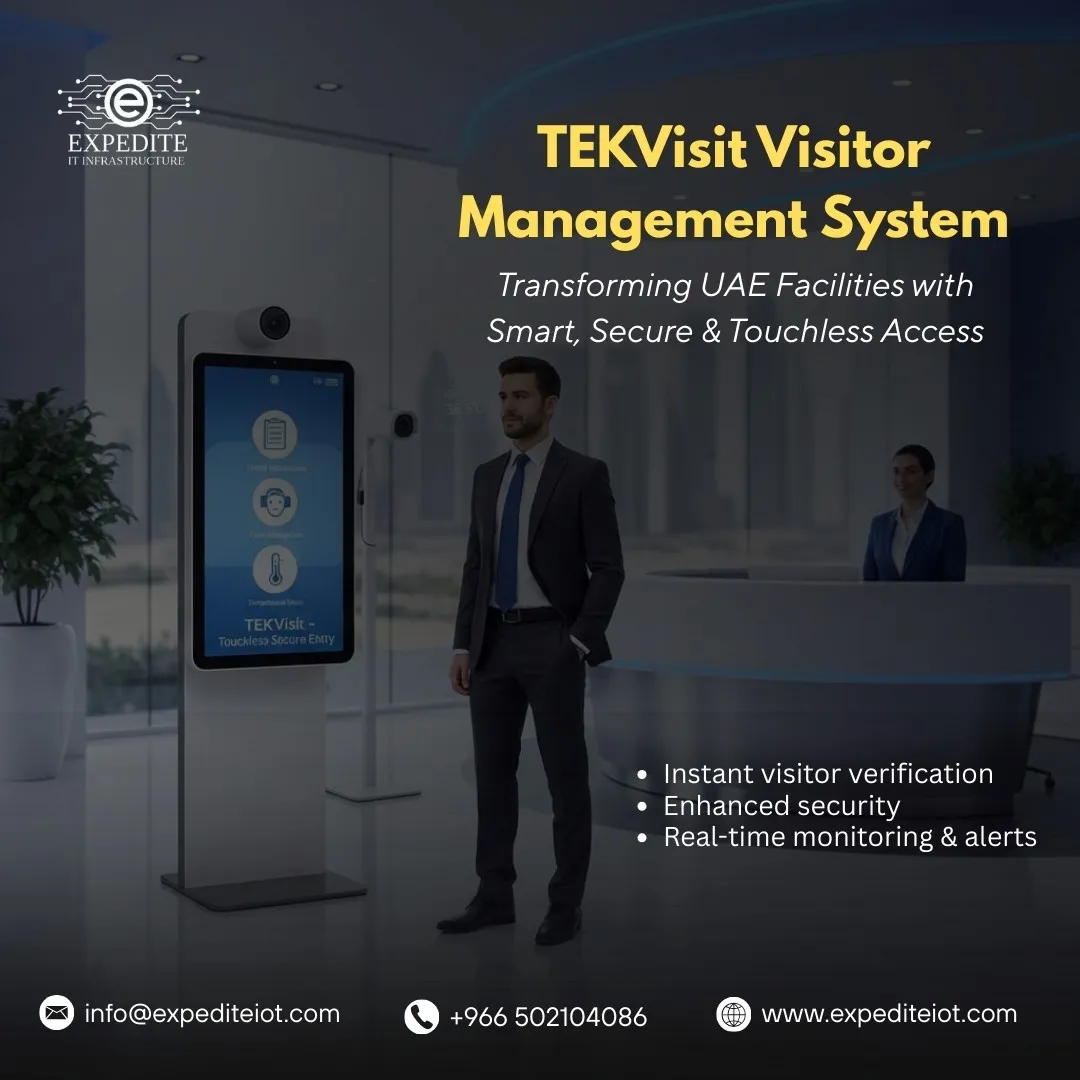

Saudi Arabia's corporate, industrial, and institutional sectors are undergoing a profound digital transformation — and visitor management systems in KSA are at the heart of it. As organizations across Riyadh, Jeddah, Dammam, and NEOM prioritize workplace safety, operational efficiency, and data-driven security, the traditional paper-based visitor logbook has become obsolete. In its place, modern touchless visitor management systems deliver a fully digital, contactless, and highly secure visitor experience from pre-registration to departure.
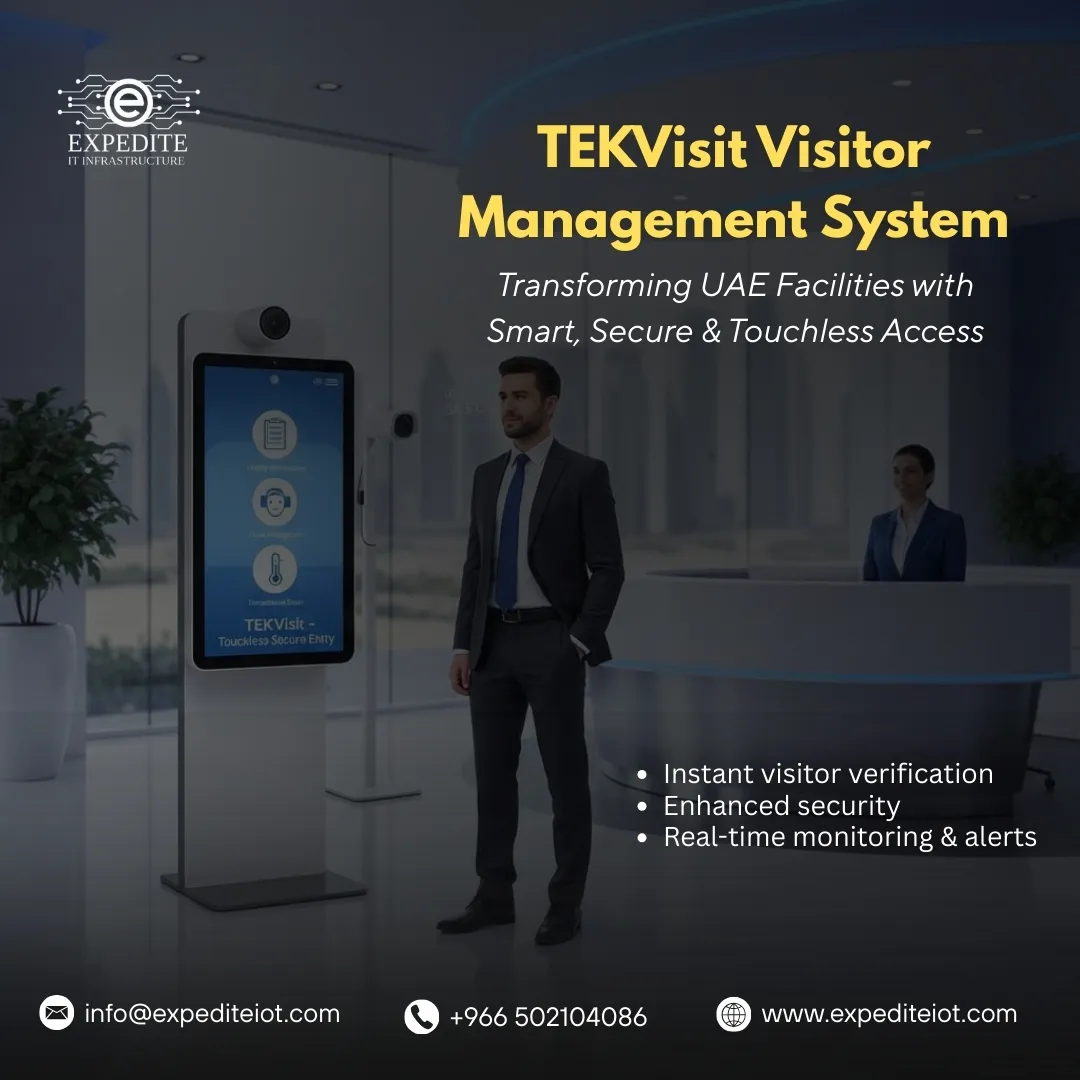
Whether managing high foot traffic in a corporate headquarters, controlling vendor access at a logistics warehouse, or safeguarding students on a school campus, a visitor management system provides the centralized control, real-time visibility, and compliance assurance that modern KSA organizations demand. Aligned with Vision 2030's goals for smart infrastructure and digital governance, VMS adoption is accelerating rapidly across every sector in the Kingdom.
What Is a Visitor Management System?
A visitor management system (VMS) is a digital platform that automates the end-to-end process of registering, verifying, tracking, and managing visitors entering a facility. It replaces paper sign-in logs with an intelligent, cloud-connected system that captures visitor data, verifies identities, issues digital badges, notifies hosts, and maintains a complete, searchable audit trail — all in real time.
Modern visitor management systems in KSA go beyond simple check-in. They integrate with access control systems, CCTV platforms, building management systems (BMS), and HR databases to create a unified security and operations ecosystem that is both proactive and fully auditable.
Core Components of a Visitor Management System
A fully featured VMS comprises several integrated components working together:
- Visitor management device — purpose-built tablets, self-service kiosks, or smartphone-enabled check-in hardware
- Visitor registration system — digital form captures for name, ID, purpose of visit, host, and photo
- Pre-registration portal — web or app-based platform for visitors to register before arrival
- QR code and NFC-enabled contactless check-in — eliminating physical surface contact
- Cloud-based real-time dashboard — for live monitoring, reporting, and instant alerts
- Digital badge printing — for on-site identification and zone-specific access
- Host notification engine — automatic SMS, email, or app alerts when visitors arrive
- Data compliance module — secure storage meeting KSA data protection requirements
How Touchless Visitor Management Systems Work
A touchless visitor management system removes all physical contact points from the check-in process, using digital and contactless technologies to deliver a seamless visitor experience. The workflow typically follows these steps:
Step 1: Pre-Registration
Visitors receive a secure link or invitation from their host prior to arrival. Through the visitor registration system portal, they complete their registration online — entering personal details, the purpose of visit, and any required compliance declarations. For high-security environments, ID verification and background checks can be triggered at this stage.
Step 2: Contactless Arrival Check-In
Upon arrival, visitors scan a unique QR code using their smartphone at the entrance visitor management device — a tablet kiosk or wall-mounted display. The system instantly retrieves their pre-registration, confirms their identity, and triggers a host notification. In facilities using biometric integration, facial recognition can complete verification without any manual input.
Step 3: Access Granting and Badge Issuance
The system cross-references the visitor's credentials against pre-approved access levels and automatically unlocks designated doors or zones. A digital or printed visitor badge is issued, clearly indicating permitted areas, visit duration, and the host contact.
Step 4: Real-Time Monitoring and Alerts
Security and facility managers monitor all visitor activity through a centralized visitor management system dashboard. Any anomaly — such as an unregistered arrival, a visitor overstaying their permitted duration, or an access attempt to a restricted zone — triggers an instant alert to the relevant team.
Step 5: Checkout and Data Retention
At departure, visitors check out digitally, and the system logs exit time, duration of stay, and areas accessed. This data is securely stored in compliance with applicable KSA and international data protection regulations, and is available for audit, reporting, and analytics.
Key Benefits of Implementing a Visitor Management System in KSA
Enhanced Physical Security and Access Control
A visitor management system in KSA ensures that only pre-approved, verified individuals gain access to your facilities. By eliminating anonymous walk-in access and maintaining real-time visitor logs, organizations significantly reduce the risk of unauthorized entry, tailgating, and internal security breaches. Integration with access control systems ensures that visitor credentials and permitted zones are enforced automatically at every access point.
Fully Contactless and Hygienic Visitor Experience
Touchless visitor management devices and QR code check-in eliminate shared surfaces, sign-in sheets, and physical ID handling. This is especially critical in healthcare facilities, laboratories, and food-processing environments where hygiene standards are paramount — and it aligns directly with the health and safety priorities that have reshaped KSA workplaces.
Operational Efficiency and Time Savings
Manual sign-in processes create queues, consume receptionist time, and introduce data entry errors. An automated visitor registration system processes arrivals in seconds, notifies hosts instantly, and eliminates all paper-based administration. In high-traffic facilities — such as corporate campuses or government buildings in Riyadh — this translates to significant reductions in lobby congestion and administrative overhead.
Real-Time Visibility and Audit-Ready Reporting
The centralized dashboard of a visitor management system provides facility managers with a live view of every visitor on-site at any moment — their identity, location, host, and access permissions. In the event of an emergency, evacuation lists are generated instantly. For compliance audits, complete visitor records are available with a single search.
Data Security and Regulatory Compliance
A secure visitor registration system captures and stores visitor data in encrypted, access-controlled cloud environments. This ensures compliance with KSA's National Data Governance Interim Regulations (NDGIR) and international frameworks such as GDPR for multinational organizations operating in the Kingdom. Data retention policies, access logs, and consent management are all handled automatically.
Scalability Across Facilities and Geographies
Whether managing a single office in Jeddah or a multi-site enterprise spanning Riyadh, Dammam, and NEOM, a cloud-based visitor management system in KSA scales effortlessly. New locations, additional visitor management devices, and expanded user accounts can be provisioned remotely without requiring on-site IT infrastructure changes.
Industry Applications of Visitor Management Systems in KSA
Corporate Offices and Business Parks
Corporate organizations use visitor management systems to manage client visits, contractor access, and inter-departmental movement. Role-based access permissions ensure that visitors only enter approved areas, while host notification systems eliminate front-desk delays. Visitor analytics also provide insight into peak traffic periods for better workforce planning.
Visitor Management System for Schools and Universities
Educational institutions across KSA face unique security challenges. A visitor management system for schools provides a robust safeguarding layer — requiring all visitors (parents, contractors, government inspectors) to pre-register, present verifiable identification, and receive host confirmation before entering the campus. Real-time monitoring ensures no unregistered individuals are on school grounds, and automatic alerts notify administrators of any irregularities. Universities benefit from the same capabilities scaled to larger, multi-building campuses.
Visitor Management System for Warehouses and Industrial Facilities
Logistics hubs, manufacturing plants, and distribution centers rely on a visitor management system for warehouses to manage the continuous flow of delivery drivers, vendors, maintenance contractors, and third-party auditors. The system controls which zone each visitor may access, tracks dwell times, enforces safety induction requirements, and ensures compliance with occupational health and safety regulations. In high-security industrial environments, integration with vehicle access management adds an additional layer of control.
Healthcare Facilities and Hospitals
Hospitals and clinics implement touchless visitor management systems to enforce strict infection control protocols, manage patient-visitor access by ward, and comply with Ministry of Health visitor regulations. Pre-registration and QR check-in reduce lobby congestion, while the system's audit trail supports Joint Commission International (JCI) accreditation requirements.
Government Buildings and Ministries
Government facilities in KSA require the highest standards of visitor screening and access control. A visitor management system in these environments integrates with national identity verification databases, biometric authentication, and classified zone access control — ensuring full compliance with national security mandates.
Hospitality and Mixed-Use Developments
Hotels, serviced offices, and mixed-use retail and residential developments use visitor management devices to create a premium, frictionless check-in experience for guests and tenants. Integration with property management systems allows seamless visitor scheduling and automated access provisioning for amenity areas.
Integration with Smart Building and Security Ecosystems
The full value of a visitor management system in KSA is realized when it operates as part of an integrated smart building ecosystem rather than as a standalone solution. Leading VMS platforms connect natively with:
- Access control systems — automatic door unlocking based on verified visitor credentials
- CCTV and AI video analytics — real-time facial recognition and behavioral monitoring
- Building Management Systems (BMS) — visitor-triggered lighting, HVAC, and lift access
- HR and Active Directory platforms — automatic credential provisioning and deprovisioning
- Emergency management systems — real-time on-site visitor lists for evacuation planning
- ERP and CRM systems — linking visitor data to procurement, sales, and vendor records
This deep integration positions the visitor management system as a central node in KSA's smart building infrastructure — a cornerstone of Vision 2030's commitment to intelligent, data-driven facilities management.
Future Trends in Visitor Management Systems in KSA
AI-Powered Identity Verification
Next-generation visitor management solutions in KSA are deploying AI-driven facial recognition and liveness detection to verify visitor identities in under two seconds — eliminating the need for manual ID checks and dramatically reducing the risk of credential fraud.
Mobile-First and App-Based Check-In
Visitors increasingly expect to manage their check-in entirely from their smartphone. Mobile VMS apps allow visitors to pre-register, receive QR codes, complete health and safety declarations, and check in contactless — all before leaving their vehicle.
Predictive Visitor Analytics
Cloud-based visitor management systems are incorporating machine learning to analyze visitor patterns, predict peak arrival times, optimize staffing, and flag anomalous behaviors before they escalate into security incidents.
Blockchain-Based Visitor Identity Records
Emerging VMS platforms are exploring blockchain to create tamper-proof, decentralized visitor identity records — particularly relevant for government and critical infrastructure facilities in KSA where the integrity of access logs carries legal weight.
Integration with National Identity Platforms
KSA's Absher platform and National ID infrastructure are increasingly being integrated with enterprise visitor registration systems, enabling instant identity verification against government databases — a major advancement for high-security and regulated environments.
Conclusion
Investing in a visitor management system in KSA is no longer a luxury — it is a strategic necessity for any organization serious about security, compliance, and operational excellence. As Saudi Arabia accelerates its Vision 2030 digital transformation agenda, touchless visitor management systems are becoming the standard across corporate offices, healthcare facilities, educational campuses, warehouses, and government buildings throughout the Kingdom.
From frictionless visitor registration systems and intelligent visitor management devices to AI-powered analytics and deep smart building integration, today's VMS platforms deliver measurable improvements in security, efficiency, and visitor experience. Specialized solutions such as visitor management systems for schools and visitor management systems for warehouses demonstrate the adaptability of these platforms across every industry vertical.
As KSA continues to build the smart, secure, and sustainable cities of tomorrow, a robust visitor management system in KSA is an essential investment — protecting your people, safeguarding your assets, and future-proofing your facilities for the demands of a rapidly evolving security landscape.
Frequently Asked Questions (FAQs)
1. What is a visitor management system?
A visitor management system (VMS) is a digital platform that automates the registration, identity verification, access control, and tracking of visitors entering a facility. It replaces paper sign-in logs with a secure, cloud-connected system that captures visitor data in real time and maintains a complete, searchable audit trail.
2. Why is a visitor management system important in KSA?
KSA organizations face growing requirements for workplace security, hygiene, and data compliance. A visitor management system in KSA addresses all three — eliminating anonymous walk-in access, enabling contactless check-in, and ensuring visitor data is stored in compliance with national data protection regulations. It also directly supports Vision 2030's smart infrastructure goals.
3. How does a touchless visitor registration system work?
Visitor’s pre-register online via a secure portal before their visit. On arrival, they scan a QR code at a visitor management device — a kiosk or tablet — which retrieves their registration, verifies their identity, notifies their host, and grants access to permitted areas, all without any physical contact with shared surfaces.
4. What is a visitor management device?
A visitor management device is the physical hardware through which visitors interact with the VMS — typically a wall-mounted tablet, self-service kiosk, or NFC-enabled terminal located at building entrances. It handles QR code scanning, facial recognition check-in, digital badge printing, and host notifications.
5. How does a visitor management system for schools improve campus safety?
A visitor management system for schools requires all campus visitors — including parents, contractors, and inspectors — to pre-register and verify their identity before gaining access. The system issues time-limited visitor badges, restricts access to approved areas, and provides real-time on-site visitor counts for emergency management. Administrators receive instant alerts for any unregistered or flagged individuals.
6. Can a visitor management system be used in warehouses and industrial facilities?
Yes. A visitor management system for warehouses manages the constant flow of delivery drivers, vendors, contractors, and auditors. It enforces zone-specific access permissions, tracks dwell times, ensures safety induction compliance, and integrates with vehicle access and gate management systems — making it essential for large-scale logistics and industrial operations in KSA.
7. Is visitor data secure in a cloud-based visitor management system?
Yes. Enterprise-grade visitor management systems encrypt all visitor data at rest and in transit, apply role-based access controls, and maintain configurable data retention policies. They are designed to comply with KSA's National Data Governance Interim Regulations (NDGIR) and international frameworks including GDPR — ensuring full legal compliance for both local and multinational organizations.
8. Can a visitor management system integrate with existing access control and security systems?
Yes. Modern visitor management systems are built with open APIs that allow seamless integration with access control platforms, CCTV and AI video analytics, building management systems (BMS), HR and Active Directory databases, and emergency management tools — creating a fully unified smart security infrastructure.
visitor management systems for schools





























Sign in to leave a comment.