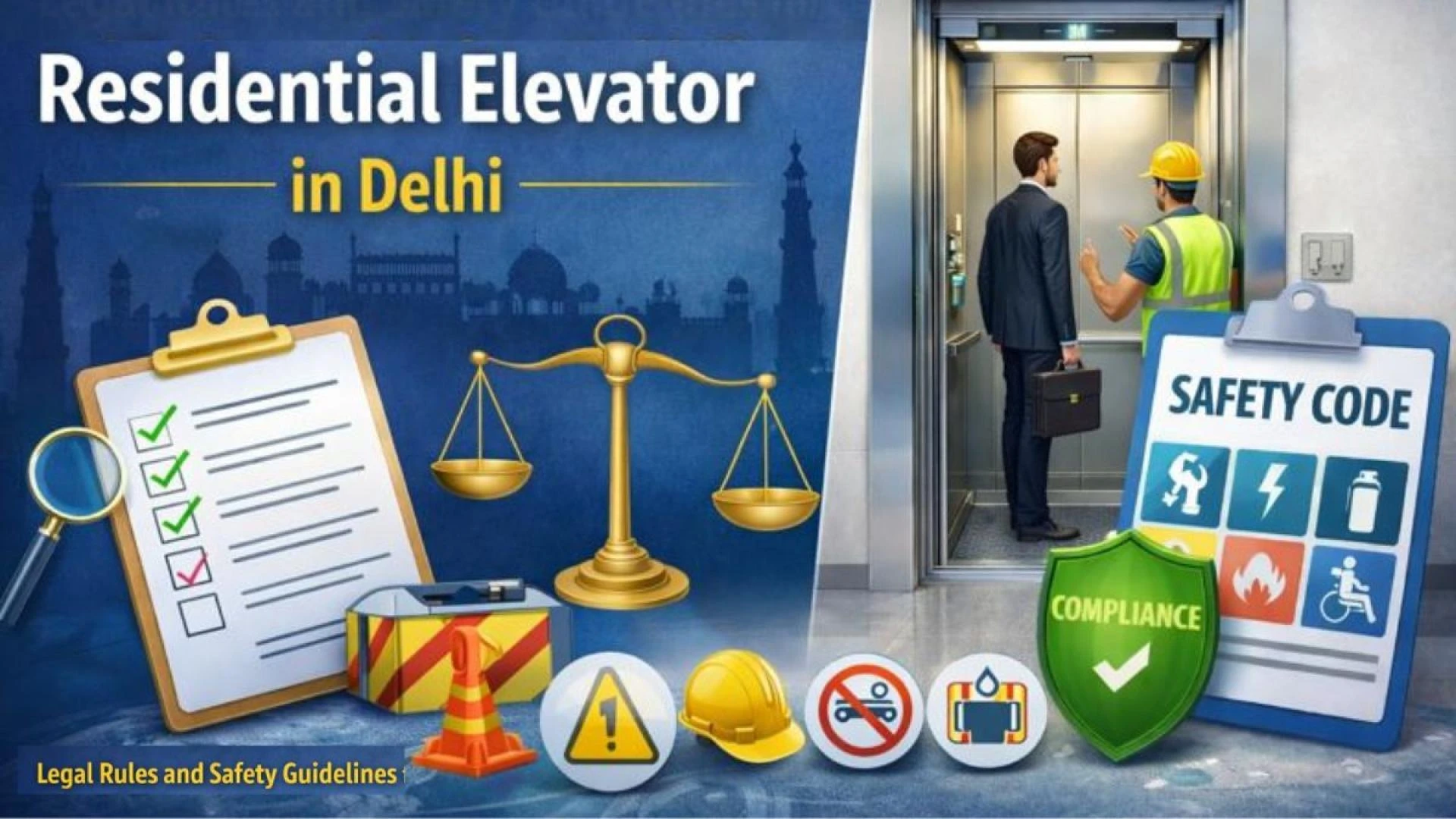

Installing a home lift in Delhi is becoming common in independent houses, villas, and duplex homes. While home lifts add comfort and long-term convenience, it is important to understand the legal rules and safety guidelines before installation. Knowing these basics helps avoid future issues and ensures safe usage for your family.
Are Residential Elevators Legal in Delhi?
Yes, residential elevators are completely legal in Delhi, provided they are installed according to safety norms and local building guidelines. Home elevators used in private houses do not fall under heavy commercial lift regulations, but they must still follow standard safety practices and manufacturer guidelines. In some cases, especially in gated societies or multi-owner properties, prior approval from the society or local authority may be required.
For independent homes, permissions are usually simpler, but a technical site inspection is always recommended.
Building and Space Guidelines
Before installing a residential lift in Delhi, the structure of the house must support it. Key points include:
Adequate shaft space or allocated lift area
Proper floor alignment and load-bearing capacity
Safe pit depth and headroom (many modern lifts require minimal pit)
Modern residential elevators are designed for compact spaces, making them suitable even for existing houses with limited room.
Electrical and Power Requirements
Every residential elevator in Delhi needs a dedicated power supply. Proper earthing, wiring, and control panels are essential for safe operation. Many home lifts also include battery backup or emergency lowering systems, which allow the lift to reach a safe floor during power cuts—an important feature in residential settings.
Electrical work should always be handled by qualified technicians to meet safety standards. Check the list of inclusions Services provided by elevator company.
Mandatory Safety Features in Residential Elevators
Safety is the most critical part of home lift installation. A standard residential elevator should include:
Emergency stop button
Door safety sensors
Alarm or intercom system
Emergency lowering or auto-rescue device
Overload protection
These features protect users during unexpected situations and reduce risk, especially for elderly residents and children.
Installation and Manufacturer Responsibility
Choosing a reliable lift manufacturer in Delhi or supplier is important. A professional company ensures proper installation, load testing, and safety checks before handover. They also provide documentation, user instructions, and maintenance guidance.
Using uncertified or poorly installed elevators can lead to safety hazards and future legal complications.
Maintenance and Periodic Checks
Even after installation, safety does not end. Regular servicing and annual maintenance contracts (AMC) help keep the elevator running smoothly. Routine inspections check braking systems, cables, doors, and control panels, reducing the risk of breakdowns or accidents.
In Delhi’s climate, proper maintenance also helps protect lift components from dust, humidity, and electrical fluctuations.
Final Thoughts
Installing a residential elevator in Delhi is safe and legal when done correctly. By following basic legal guidelines, ensuring proper electrical setup, following the complete process of lift installation and prioritizing safety features, homeowners can enjoy the benefits of a home lift without worry. A well-installed and well-maintained residential elevator not only improves daily comfort but also adds long-term value and peace of mind to your home.























Sign in to leave a comment.