

Why some messages arrive in seconds and others never arrive at all
Why do some SMS messages arrive reliably while others don’t?
Usually, it comes down to the Bulk SMS gateway carrying them, and specifically, how many routes it has to reach a phone when the first one is congested or blocked. A weak gateway means messages queue, fail silently or land minutes too late to matter. A strong one routes around problems before you ever notice them.
Key Takeaways
- An SMS gateway is the technical bridge between your software and a customer’s phone, routed through mobile networks.
- SMS delivery depends on route quality, network congestion and correct sender registration, not just the message content.
- A good SMS gateway API lets messages trigger automatically from your own systems.
- Transactional and promotional messages often need different routing to meet delivery speed and compliance needs.
- Choosing a provider means checking delivery reports, redundancy and compliance support, not just price per message.
What Is an SMS Gateway?
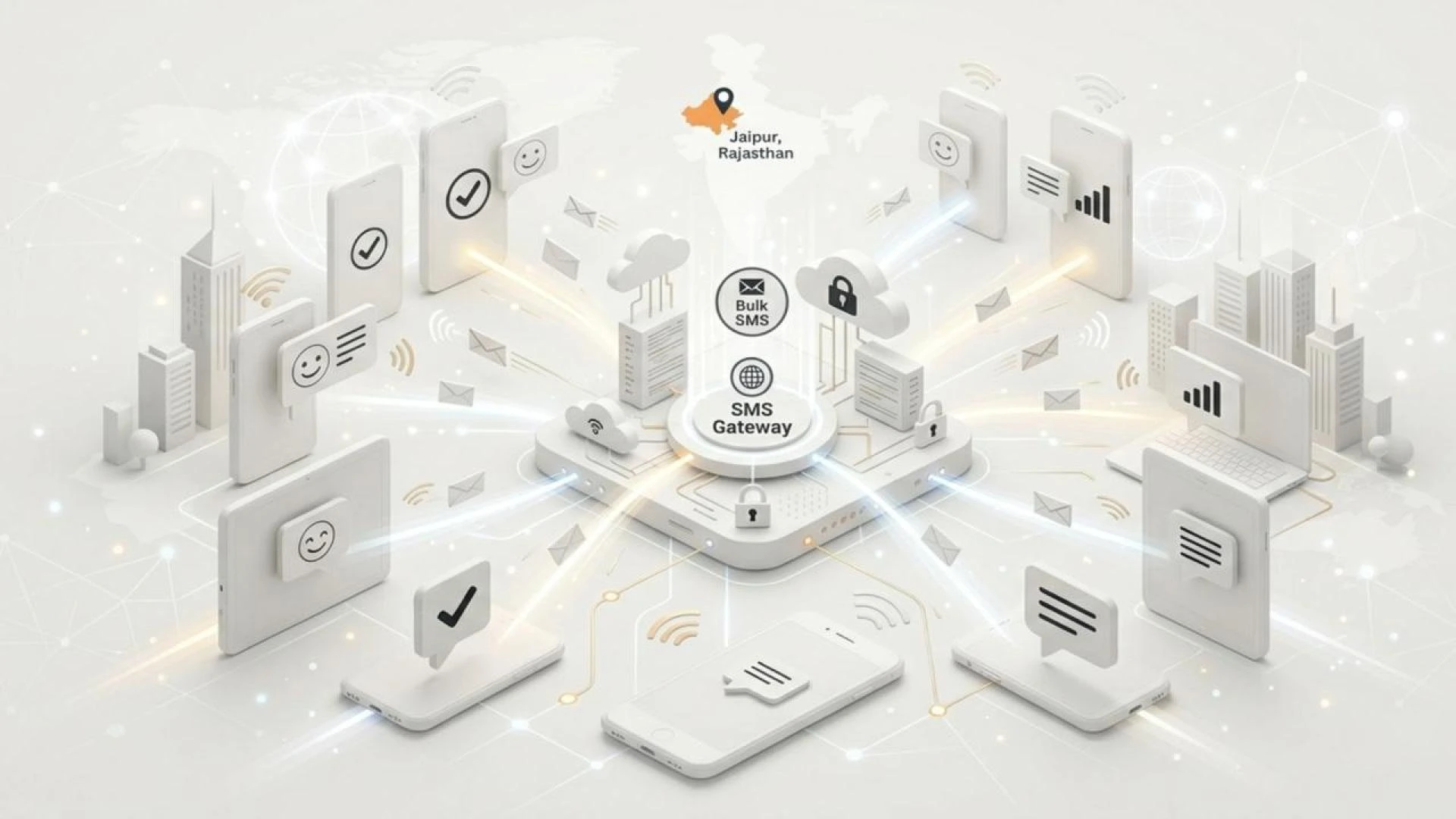
An Bulk SMS gateway is the software system that connects a business’s app, website or CRM to the mobile networks that actually deliver a text message to a phone. Instead of a business needing a direct relationship with every mobile operator in every country, a gateway provider maintains those connections and offers one simple way in, usually through an SMS gateway API.
How Does an SMS Travel From Business to Recipient?
The message starts in your system, triggered by an event like a purchase or a manual send. It passes through the gateway provider’s SMS gateway API, which chooses a delivery route based on the recipient’s network and location. The message then goes to the mobile operator, which delivers it to the phone. Delivery reports flow back through the same chain, confirming whether the message actually reached the device.
What Affects SMS Delivery?
A handful of factors decide whether a message arrives quickly, arrives late, or doesn’t arrive at all. Network congestion, especially during high-traffic periods like festivals or big sale events, can slow things down. Incorrect or unregistered sender IDs can cause messages to be blocked outright. Route quality, whether the gateway has a direct connection to the operator or is routing through several intermediaries, also plays a big role in both speed and reliability.
The Role of APIs and Integrations
SMS API integration is what lets a message get sent automatically the moment something happens in your own system, an order confirmed, an OTP requested, a delivery dispatched, rather than someone manually typing and sending it. Reliable SMS API integration also means receiving delivery status back in real time, so your system knows immediately if a message failed and can decide whether to retry or fall back to another channel.
Transactional vs Promotional Routing
Not all SMS should travel the same route. A transactional SMS gateway is optimized for speed and reliability, since messages like OTPs are useless if delayed by even a minute. Promotional messages typically travel a different, often more cost-effective route, since a slight delay matters far less for a marketing offer than it does for a login code. Providers that offer both routes, clearly separated, tend to give more consistent results for each type of message.
What Should Businesses Check in an SMS Gateway Provider?
- Delivery rates and reporting: can you see, in real time, whether a message was delivered, failed or delayed?
- Route redundancy: does the provider have backup paths if one network route is congested or down?
- Compliance support: do they help with India’s DLT registration, sender ID approval and TRAI rules?
- API documentation: is the SMS gateway API well documented, with a test environment available?
- Support availability: can you reach someone quickly if delivery drops during a live campaign?
- Pricing clarity: is pricing per message clear, with transactional and promotional rates shown separately?
Common Gateway-Related Mistakes
- Choosing a provider purely on price per message, without checking delivery rates.
- Sending promotional content through a transactional route, which can violate regulations.
- Skipping DLT and sender ID registration, leading to blocked messages.
- Not monitoring delivery reports, so failures go unnoticed until a customer complains.
- Relying on a single route with no backup during high-traffic periods.
A Simple SMS Gateway Selection Checklist
- Ask for real delivery rate data, not just a marketing claim.
- Confirm support for DLT registration and sender ID approval in India.
- Check whether transactional and promotional messages route separately.
- Test the SMS gateway API in a sandbox environment before committing.
- Confirm what backup routing exists if one network path fails.
- Get a clear, written rate card for both message types.
Final Thoughts
Delivery problems usually trace back to routing, registration or route quality, not the message itself. A provider that’s transparent about delivery rates and redundancy tends to save far more time than one that’s simply cheaper per message. Arihant Global’s CPaaS team in Jaipur works with businesses across India to set up reliable, compliant SMS gateway integrations.
Frequently Asked Questions
Q1. What’s the difference between an SMS gateway and a bulk SMS service?
A bulk SMS service is often a dashboard for sending campaigns manually. An SMS gateway is the underlying infrastructure, usually accessed through an SMS gateway API, that both bulk SMS dashboards and custom applications rely on to actually deliver messages.
Q2. Why do my SMS messages sometimes fail to deliver?
Common causes include an unregistered sender ID, network congestion, an invalid or unreachable phone number, or a provider with limited route redundancy. Checking delivery reports usually points to which of these applies.
Q3. Is DLT registration required to use an SMS gateway in India?
Yes, for commercial SMS. Businesses must register their sender IDs and message templates on the DLT platform through their telecom operator before sending, or messages can be blocked entirely.
Q4. How fast should a transactional SMS arrive?
Typically within a few seconds under normal network conditions. If OTPs or confirmations are regularly taking a minute or more, it’s worth reviewing your provider’s route quality and transactional routing setup.
Q5. Can an SMS gateway integrate with my existing CRM or app?
Yes, most SMS gateway providers offer an API specifically for this, letting messages trigger automatically from events in your CRM, app or website rather than being sent manually.


























Sign in to leave a comment.