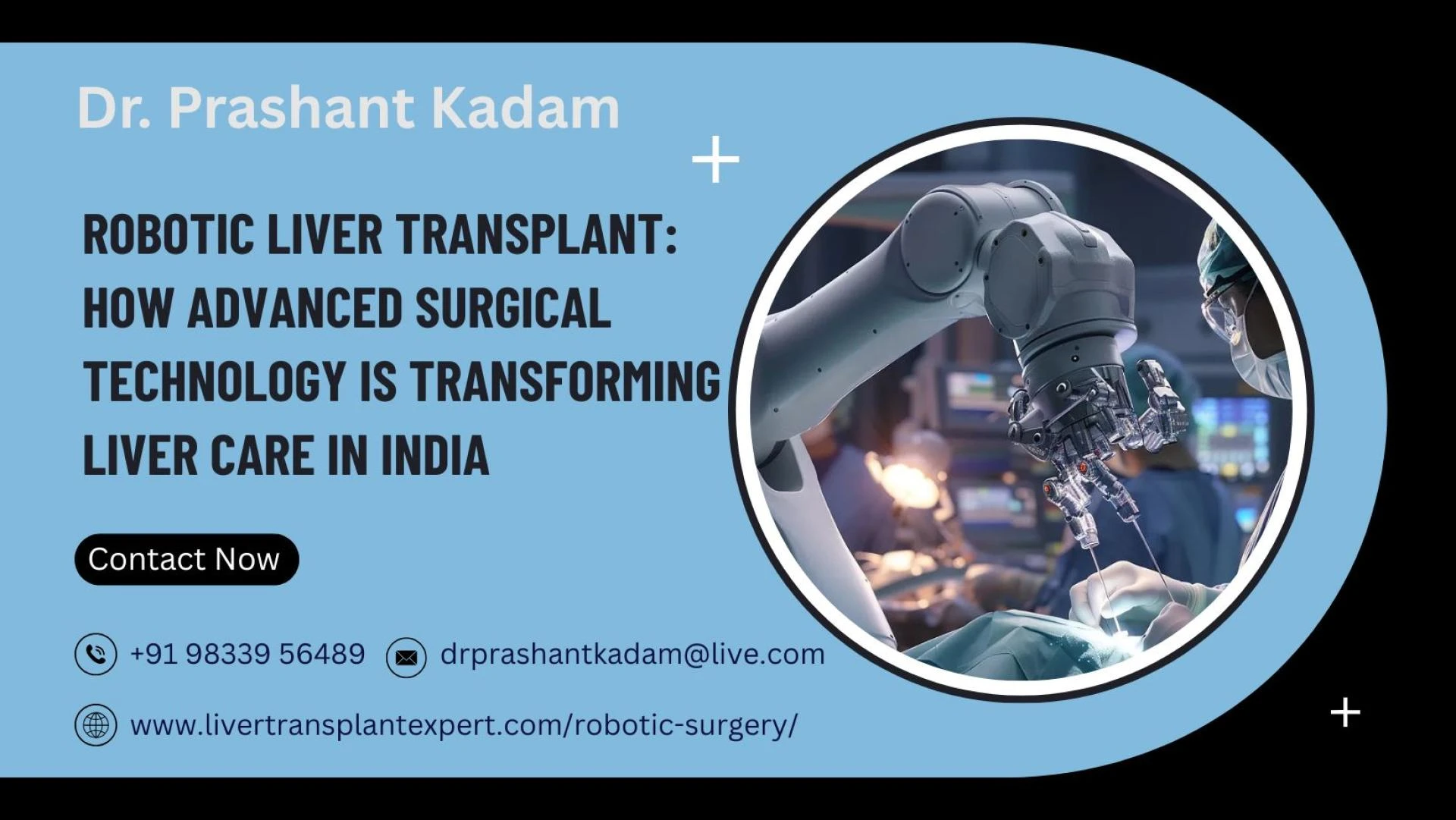

Liver transplantation is among the most complex and life-saving procedures in modern medicine. As India continues to advance in healthcare innovation, robotic liver transplant and Robotic HPB Surgery (Hepato-Pancreato-Biliary surgery) are redefining what is possible in the operating room. With improved precision, lower complication risks, and faster recovery times, robotic technology is rapidly becoming an important adjunct to conventional liver transplant techniques in select cases.
India is already a global leader in liver care, home to the best liver transplant doctor in India and several world-class transplant centres. Now, robotic platforms are helping these highly experienced surgeons perform delicate steps of liver resection and reconstruction with enhanced control and visibility.
What Is Robotic Liver Transplant Surgery?
A robotic liver transplant uses a robotic surgical system to assist the surgeon during key parts of the procedure. The surgeon remains fully in control, operating from a console that translates hand movements into incredibly precise robotic actions. This approach is particularly helpful in Robotic HPB Surgery, where accuracy is critical due to the proximity of major blood vessels and bile ducts.
High-definition 3D visualization and tremor-free instrument control allow surgeons to work with meticulous precision that may be difficult to achieve with the human hand alone. While not every transplant step is robotic today, the technology is increasingly being integrated into donor hepatectomy, minimally invasive liver resections, and hybrid liver transplant workflows.
Why Robotic Technology Matters in Liver Transplantation
Liver transplant surgery demands technical excellence. The introduction of robotics brings several important potential benefits:
Greater Surgical Precision
Robotic instruments can rotate beyond the normal range of the human wrist. This allows minute movements in confined spaces, reducing accidental tissue trauma.
Smaller Incisions and Less Pain
Compared with traditional open surgery, robotic-assisted techniques often use smaller incisions, which may mean less postoperative discomfort, reduced scarring, and faster mobility.
Reduced Blood Loss and Infection Risk
Highly controlled instrument handling may help minimize intraoperative bleeding and lower contamination risk.
Faster Recovery and Shorter Hospital Stay
Minimally invasive robotic techniques—where applicable—can support quicker rehabilitation timelines, enabling patients to resume normal life earlier.
These advantages are especially meaningful in the context of liver transplant success rate in India, which is already internationally competitive. As robotic systems refine surgical accuracy and consistency, long-term outcomes may continue to improve.
India’s Growing Leadership in Robotic Liver Transplant and HPB Surgery
India has rapidly become a preferred destination for advanced liver surgery due to its skilled surgeons, integrated transplant programs, and modern technology infrastructure. Many surgeons performing robotic procedures are internationally trained and widely regarded as among the best doctor in Mumbai for liver transplant and the best liver transplant doctor in India.
Top centres across major cities now offer:
- Dedicated robotic transplant units
- Multidisciplinary hepatology and transplant teams
- Advanced post-operative ICUs
- Structured follow-up and rehabilitation programs
As a result, India offers global-standard robotic surgical capability at comparatively lower costs than many Western countries.
Understanding Robotic Surgery Cost in India
One common patient concern is the robotic surgery cost in India. Robotic procedures generally involve higher operating costs due to the technology, consumables, and infrastructure required. However, these costs must be considered alongside potential benefits such as reduced hospital stay, fewer complications, and faster return to work.
Actual cost varies depending on:
- The hospital and city
- The patient’s clinical condition
- Whether the surgery involves living donor hepatectomy or recipient transplant
- Length of hospitalization and medications
- Insurance coverage or financial assistance programs
While robotic liver transplant costs are higher than conventional methods, India still offers significantly more affordable treatment compared to many international destinations.
How Robotic Technology Enhances Donor and Recipient Safety
Living donor liver transplantation requires the removal of a portion of a healthy person’s liver. Here, robotic assistance is especially valuable because donor safety is paramount. The precision and minimally invasive approach used in Robotic HPB Surgery can help reduce trauma to the donor while maintaining surgical accuracy.
For recipients, robotics supports improved visibility during delicate dissections, particularly in complex anatomical situations or redo surgeries.
Liver Transplant Success Rate in India: Continuous Improvement Through Innovation
The liver transplant success rate in India continues to improve due to advances in:
- Surgical techniques, including robotics
- ICU and infection control protocols
- Organ preservation
- Patient selection and optimization
- Long-term immunosuppression management
With strong clinical governance and the expertise of some of the best liver transplant doctor in India, outcomes today rival many leading global institutions.
Is Robotic Liver Transplant Right for Every Patient?
Not all patients or donors are suitable candidates for robotic approaches. Suitability depends on factors such as liver anatomy, disease complexity, prior surgeries, co-morbidities, and surgeon expertise. Therefore, consultation with an experienced transplant team is essential.
A transparent evaluation process typically includes imaging studies, liver function tests, risk assessment, and multidisciplinary review before a surgical plan is finalized.
Choosing the Right Specialist and Centre
Selecting an experienced surgeon and centre remains the most critical factor in transplant success. Patients often prefer centres led by the best doctor in Mumbai for liver transplant or similarly reputed national experts because these clinicians combine:
- High surgical volumes
- Strong track records
- Advanced robotic infrastructure
- Comprehensive pre- and post-operative care
This combination ensures clinical safety, structured communication, and long-term follow-up support.
The Future of Liver Care in India
Robotics represents the next phase of surgical evolution. As technology becomes more widespread, training programs expand, and clinical data grows, robotic liver transplant and Robotic HPB Surgery are expected to become more mainstream across India.
Ultimately, the goal is not only technological advancement but improved patient survival, reduced recovery burden, and enhanced quality of life.
Final Word
India is at the forefront of incorporating robotics into complex liver surgery. With strong medical expertise, modern infrastructure, and continuously improving outcomes, robotic transplant technology is transforming how liver disease is treated. For patients seeking advanced care with global standards, consultation with the best liver transplant doctor in India or the best doctor in Mumbai for liver transplant can provide clarity, confidence, and access to cutting-edge treatment pathways.

























Sign in to leave a comment.