
What Is Robotic Pipeline Inspection — and Why Does It Matter?
Every year, aging pipelines fail silently. Corrosion eats through steel walls. Root intrusion cracks concrete conduits. Sediment builds up inside stormwater lines until flow becomes a trickle. And in most cases, no one knows until it's too late — until a road collapses, a reservoir leaks, or an industrial outfall fails a regulatory audit.
Robotic pipeline inspection changes that equation entirely.
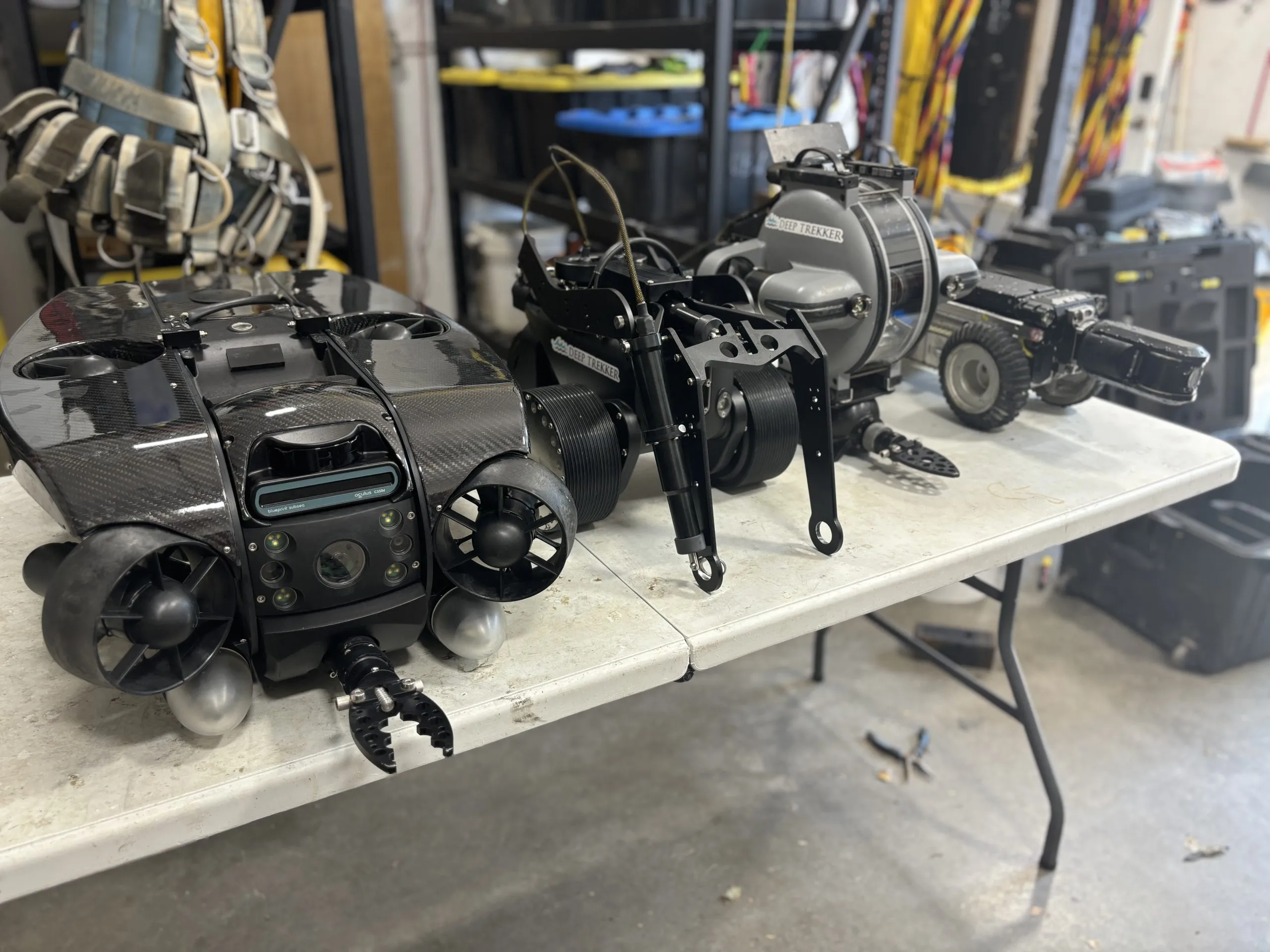
By deploying purpose-built robotic systems — tracked pipe crawlers, Remotely Operated Vehicles (ROVs), and magnetic utility crawlers — inspection teams can see inside pipelines that are buried, submerged, flooded, or simply too hazardous for human entry. The result is precise, documented, and actionable intelligence about the condition of your infrastructure, captured without excavation, without confined space entry, and without service disruption.
This guide breaks down how robotic pipeline inspection works, what technologies are involved, which industries rely on it, and how to choose a provider that delivers more than just video footage.
How Robotic Pipeline Inspection Works
Robotic pipeline inspection is a category of non-destructive testing (NDT) and condition assessment that uses remotely operated robotic platforms to travel through pipelines and collect data. Depending on the pipe diameter, material, fluid content, and access conditions, different robotic technologies are deployed.
Tracked Pipe Crawlers
The most common tool for inspecting pipelines from 4 inches to 60 inches in diameter, tracked pipe crawlers are wheeled or articulated robots that drive through the interior of a conduit. They carry high-definition cameras — often 4K pan-tilt-zoom systems — along with laser profiling modules and sonar heads that capture wall thickness, deformation, sediment levels, and structural defects in real time.
Modern pipe crawlers can navigate through live flow, traverse horizontal and gently sloped pipes, and transmit data wirelessly or via tether to surface operators. Reports are generated in PACP (Pipeline Assessment and Certification Program) format — the industry-standard coding system used by municipalities, engineers, and regulatory bodies across North America.
ROV-Based Pipeline Inspection
For submerged, flooded, or offshore pipelines, Remotely Operated Vehicles (ROVs) are the tool of choice. ROVs are submersible robotic platforms equipped with high-definition cameras, multibeam sonar, and ultrasonic thickness gauging (UT) sensors that can assess the condition of underwater pipelines, intake structures, and outfall systems.
ROV-based pipeline inspection eliminates the need for commercial diving in hazardous or confined spaces, making it faster, safer, and often more cost-effective than diver-assisted inspection for deepwater or long-run pipeline systems.
Magnetic Utility Crawlers
For ferrous pipelines, storage tanks, and structural steel — including water towers, caissons, and ship hulls — magnetic crawlers adhere to vertical and overhead surfaces using powerful permanent magnets. These platforms perform ultrasonic thickness (UT) mapping, coating surveys, and visual inspection of steel walls without requiring confined space entry or scaffolding.
Key Technologies Used in Robotic Pipeline Inspection
The value of robotic pipeline inspection lies not just in the robot itself, but in the sensor payload it carries. Leading inspection providers deploy a suite of integrated technologies:
4K High-Definition Video captures every crack, joint displacement, root intrusion, sediment deposit, and corrosion node with clinical clarity. Pan-tilt-zoom heads allow operators to rotate and magnify specific defects for detailed coding.
Laser Ring Profiling projects a laser ring around the inner circumference of a pipe, measuring deformation, ovality, and wall collapse with millimeter-level accuracy — critical for structural integrity assessments.
Multibeam Sonar Imaging is used in flooded or turbid pipelines where optical cameras cannot penetrate. Sonar produces high-resolution 3D maps of internal pipe geometry, sediment profiles, and blockages.
Ultrasonic Thickness (UT) Gauging measures remaining wall thickness in steel pipelines, flagging areas of thinning or corrosion before failure occurs.
NASSCO PACP Reporting standardizes defect coding and severity grading so that engineers, asset managers, and regulators can interpret inspection data consistently across projects and jurisdictions.
AI-Assisted Data Processing is increasingly integrated into pipeline inspection workflows, enabling automated defect detection, anomaly flagging, and report generation that reduces human error and accelerates turnaround time.
Industries That Rely on Robotic Pipeline Inspection
Municipal Utilities and Water Districts
Water and wastewater agencies manage thousands of kilometers of buried pipeline infrastructure — much of it aging well beyond its design life. Robotic CCTV pipe inspection allows utilities to prioritize rehabilitation spending based on actual condition data rather than age-based assumptions, saving millions in unnecessary capital expenditure while preventing costly emergency repairs.
Stormwater systems, sanitary sewers, and potable water transmission mains all benefit from regular robotic inspection programs aligned with AWWA (American Water Works Association) standards and municipal asset management frameworks.
Oil and Gas
Subsea pipeline networks in the oil and gas sector represent some of the highest-value and highest-risk infrastructure on the planet. ROV-based robotic pipeline inspection supports integrity management programs (IMP) by providing detailed visual and sonar data on pipeline condition, marine growth, free-span identification, and anode depletion — without requiring costly vessel mobilization or diver deployment.
Operators use robotic inspection data to comply with API standards, document pipeline integrity for regulatory submission, and plan targeted intervention and repair operations.
Industrial and Heavy Industry
Mines, pulp and paper mills, power generation facilities, and chemical plants all rely on complex networks of intake pipes, process conduits, and outfall systems. Many of these pipelines run through confined spaces, carry hazardous materials, or are partially submerged — making robotic inspection the only practical option for routine condition assessment.
Marine and Port Infrastructure
Underwater pipelines serving ports, harbors, and marine terminals require periodic inspection to detect marine fouling, joint failure, and structural movement. ROV-based inspection provides berth clearance verification, pre-dredging assessments, and post-storm structural surveys without interrupting terminal operations.
Environmental and Regulatory Agencies
Environmental assessors use robotic pipeline inspection to document outfall condition, detect illicit connections, and verify that discharge infrastructure is functioning as permitted. Inspection data supports regulatory compliance, environmental impact assessments, and enforcement proceedings.
The Business Case for Robotic Pipeline Inspection
The shift from manual to robotic pipeline inspection is not just a safety decision — it's a financial one. Consider the cost drivers that robotic methods address directly:
Elimination of Confined Space Entry reduces project risk, insurance costs, and regulatory compliance burden. Confined space incidents are among the most serious workplace hazards in industrial settings; robotic inspection removes workers from these environments entirely.
Trenchless Assessment eliminates the cost and disruption of excavating access points. A single robotic deployment can inspect hundreds of meters of pipe from a single entry point, compared to multiple excavations for manual inspection.
Faster Reporting through PACP coding, automated defect flagging, and digital reporting templates reduces the time from site visit to deliverable, accelerating downstream decisions on repair, rehabilitation, or replacement.
Better Data for Asset Management means capital budgets are spent where they matter most. Rather than replacing entire pipeline segments on a schedule, asset managers can identify the specific sections that require immediate intervention — extending the useful life of infrastructure and deferring unnecessary capital expenditure.
Regulatory Documentation is increasingly required for water system operators, environmental permit holders, and safety-regulated industries. Robotic inspection generates the standardized, timestamped, and verifiable records that regulators and auditors require.
What to Look for in a Robotic Pipeline Inspection Provider
Not all robotic inspection services are created equal. When evaluating providers, consider the following criteria:
Fleet Capability: Does the provider have the right robotic platform for your specific pipe size, material, access conditions, and fluid content? A provider with a diverse fleet — including pipe crawlers, ROVs, and magnetic crawlers — can adapt to the full range of conditions encountered in complex infrastructure systems.
Reporting Standards: Are inspection reports generated in PACP/NASSCO format? Are defects coded to industry-standard severity levels? Standardized reporting ensures your data can be used for engineering analysis, regulatory submission, and long-term asset management planning.
Safety and Compliance Credentials: Does the provider operate under CSA confined space standards, WorkSafe BC protocols, and AWWA potable water procedures? Regulatory compliance is non-negotiable for public utility and government clients.
Data Integration: Can the provider deliver data in formats compatible with your GIS, asset management, or maintenance management systems? The best inspection data is the kind that flows seamlessly into your existing workflows.
Experience and References: How long has the provider been operating robotic inspection services? Do they have documented experience in your specific industry and infrastructure type?
Robotic Pipeline Inspection in Canada: Setting the Standard
In Canada, robotic pipeline inspection has become an essential service for municipal water utilities, provincial regulators, and industrial operators managing aging infrastructure in challenging geographic and climatic conditions. From remote northern communities to urban water distribution networks and offshore oil and gas facilities, Canadian operators are increasingly turning to robotic inspection to meet safety, environmental, and regulatory obligations.
Companies like Ven-Tech Subsea, based in North Vancouver, British Columbia, are at the leading edge of this transition. With a fleet that includes tracked pipe crawlers capable of inspecting 4″ to 60″ diameter pipelines, ROVs equipped with multibeam sonar and UT sensors, magnetic utility crawlers for steel infrastructure, and Unmanned Surface Vehicles (USVs) for surface water surveys, Ven-Tech delivers fully integrated robotic inspection and survey services across land, marine, and confined environments.
Their proprietary ATHENA™ HSE and Data Engine provides AI-powered compliance tracking, operational logging, and report generation — giving clients full transparency and audit-ready documentation for every deployment.
Frequently Asked Questions: Robotic Pipeline Inspection
What pipe sizes can robotic crawlers inspect? Modern pipe crawlers can access pipelines ranging from 4 inches to 60 inches in diameter. For larger conduits or box culverts, specialized platforms or ROVs may be used.
Can robotic inspection be performed on live (flowing) pipelines? Yes. Many robotic systems are designed to operate in partially flowing conditions. For fully pressurized transmission mains, isolation or bypass is typically required. Your inspection provider will advise on the appropriate approach based on pipe type and operating conditions.
What is PACP reporting and why does it matter? PACP (Pipeline Assessment and Certification Program) is the North American standard for coding and grading defects observed during CCTV pipe inspection. PACP-certified reporting allows municipalities, engineers, and regulators to consistently interpret inspection findings and prioritize rehabilitation based on standardized condition grades.
How often should pipelines be inspected? Inspection frequency depends on pipe age, material, criticality, and regulatory requirements. Most municipal utilities target a full inspection cycle of 5 to 10 years for sanitary and stormwater assets, with higher-priority assets inspected more frequently. Industrial operators typically align inspection frequency with their integrity management program (IMP) requirements.
Is robotic inspection suitable for potable water pipelines? Yes, with appropriate protocols. Inspection providers working in potable water systems must follow AWWA C651/C652 disinfection standards and use equipment that meets food-grade material requirements. Confirm that your provider has documented experience and procedures for potable water inspections.
Conclusion:
The days of sending workers into confined spaces to manually assess pipeline condition are numbered. Robotic pipeline inspection delivers more accurate data, greater worker safety, faster reporting, and better value for asset owners than traditional methods — and the technology continues to improve rapidly.
Whether you manage a municipal water system, an industrial process network, an offshore oil and gas facility, or a port authority's marine infrastructure, robotic pipeline inspection should be a cornerstone of your asset management strategy.

























Sign in to leave a comment.