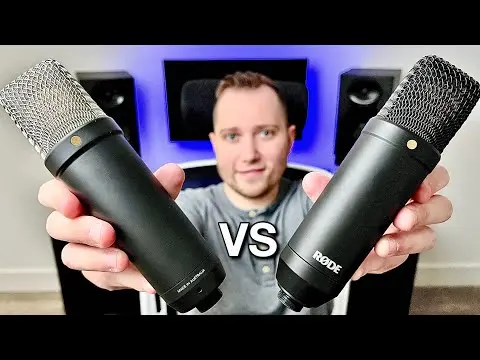

RØDE NT1 vs NT1 5th Gen: What's the Difference?
The RØDE NT1 has earned legendary status among recording enthusiasts, bedroom producers, and professional studios alike since its introduction in the 1990s. Renowned for exceptional audio quality at accessible pricing, the microphone has become synonymous with studio recording excellence. The release of the NT1 5th Generation represents RØDE's most significant reimagining of this iconic microphone, introducing features and capabilities that fundamentally expand its utility beyond traditional studio applications.
Understanding the differences between these two microphones helps content creators, musicians, podcasters, and voice-over artists make informed purchasing decisions aligned with their specific recording needs and production workflows. While both microphones share the NT1 designation and certain design philosophies, the 5th Generation introduces transformative changes that position it as a substantially different tool rather than merely an incremental update.
The Legacy of the Original NT1
The original NT1 achieved industry recognition through a combination of factors rarely found together in budget-conscious microphones. The ultra-low self-noise specification of just 4.5 dBA made it one of the quietest studio microphones available at any price point, enabling capture of delicate acoustic performances and subtle vocal nuances without intrusive background hiss. This technical achievement alone justified the microphone's reputation among discerning recordists.
RØDE designed the NT1 around a one-inch gold-sputtered true condenser capsule that delivers smooth, natural frequency response with gentle high-frequency lift enhancing vocal presence without harshness. The transformerless circuitry maintains signal purity throughout the audio path, avoiding the coloration some engineers associate with transformer-coupled designs. The combination produces transparent recordings that accurately represent source material while remaining forgiving of less-than-perfect recording environments.
The microphone's construction quality exceeded expectations for its price category, featuring a heavy-duty nickel-plated body, internal shock mounting, and precision-machined components throughout. This robust build quality ensured the microphone could withstand years of studio use without performance degradation, making it a sound long-term investment rather than disposable starter equipment. Many NT1 microphones purchased decades ago remain in active professional service today.
The value proposition proved particularly compelling for home studio builders and independent artists recording outside traditional commercial facilities. The microphone delivered professional results without requiring the five-figure investments typical of comparable-performing competitors. This democratization of quality recording technology enabled countless artists to produce commercially viable recordings from personal studios, fundamentally changing music production economics.
Introducing the NT1 5th Generation Revolution
The NT1 5th Generation represents far more than evolutionary refinement of the original design. RØDE reconceived the microphone from foundational principles, addressing modern recording workflows that extend well beyond traditional studio applications. The result combines the core audio excellence that defined the original with digital connectivity, onboard processing, and versatile operation modes that serve contemporary content creation demands.
The most immediately apparent difference involves connectivity options that dramatically expand the microphone's versatility. While the original NT1 requires phantom-powered XLR connection to audio interfaces or mixing consoles, the 5th Generation includes both XLR analog output and USB-C digital connection supporting direct computer connection. This dual-mode operation allows the microphone to function as a traditional studio condenser with dedicated preamps or as a self-contained USB microphone requiring no additional interface hardware.
The inclusion of a high-quality analog-to-digital converter within the microphone itself ensures excellent digital audio quality when operating in USB mode. The 32-bit float recording capability prevents digital clipping regardless of input level, automatically capturing everything from whisper-quiet passages to full-volume peaks without gain staging concerns. This feature proves transformative for unpredictable recording scenarios including interviews, field recording, and spontaneous creative sessions where optimal levels cannot be predetermined.
Onboard digital signal processing represents another significant departure from the original passive design. The 5th Generation includes RØDE's advanced APHEX audio processing suite featuring compressor, noise gate, and high-pass filter operations that can be applied during recording or monitoring. These tools address common recording challenges without requiring external processing hardware or post-production correction, streamlining workflows and reducing technical barriers for less experienced recordists.
Acoustic Performance Comparison
Both microphones share RØDE's commitment to transparent, natural sound reproduction, though subtle differences reflect the technological advances separating their development periods. The original NT1's frequency response exhibits gentle presence boost in the upper midrange and lower treble regions, enhancing vocal clarity and instrument definition without excessive brightness. This voicing suits a wide range of sources from spoken word through acoustic instruments and vocals across various genres.
The 5th Generation maintains similar frequency response characteristics while refining the overall tonal balance through improved capsule design and updated circuitry. The frequency curve shows slightly flatter response through midrange frequencies with more controlled high-frequency extension, resulting in even more neutral recordings that require less corrective equalization during mixing. These refinements prove particularly valuable for critical listening applications and recordings intended for extensive post-production manipulation.
Self-noise specifications reveal interesting differences despite both microphones achieving exceptionally quiet operation. The original NT1's 4.5 dBA self-noise remains among the lowest specifications ever achieved in large-diaphragm condenser microphones. The 5th Generation specifies slightly higher self-noise at approximately 4.5 dBA for analog XLR output, though this difference proves imperceptible in practical recording applications. The USB digital output introduces minimal additional noise from the analog-to-digital conversion process, though levels remain far below thresholds audible in typical recording scenarios.
Maximum sound pressure level handling determines how loud sounds the microphone can capture before distortion occurs. Both NT1 versions handle extremely high SPLs exceeding 140 dB, sufficient for close-miking loud instruments including drum kits, guitar amplifiers, and brass instruments without overload concerns. This headroom provides confidence when recording unpredictable sources or experimental techniques where conservative microphone placement might compromise artistic vision.
Sensitivity specifications indicate how much output voltage the microphone produces for a given sound pressure level. Both microphones exhibit similar sensitivity values ensuring adequate signal strength when connected to typical preamps and audio interfaces. The 5th Generation's digital output automatically optimizes gain structure when operating in USB mode, eliminating concerns about interface preamp quality affecting recording results.
Digital Connectivity and Modern Workflows
The USB-C digital connectivity distinguishes the 5th Generation as addressing contemporary recording paradigms where computers serve as primary recording platforms. Direct USB connection eliminates the need for separate audio interfaces in many recording scenarios, reducing equipment costs and setup complexity particularly valuable for content creators, podcasters, and mobile recordists who prioritize portability and simplicity.
The 32-bit float recording capability represents a genuine breakthrough for microphone technology, fundamentally changing gain staging approaches. Traditional 16-bit and 24-bit recording requires careful level setting to capture optimal signal-to-noise ratios without clipping. The expanded dynamic range of 32-bit float recording captures the entire range from noise floor to maximum SPL simultaneously, allowing gain adjustment during post-production without quality compromises. This forgiving operation proves invaluable for unpredictable recording situations where optimal levels cannot be established in advance.
Zero-latency monitoring through the headphone output enables comfortable recording experiences when operating in USB mode. The microphone includes both direct monitoring of the live input signal and computer playback return, allowing performers to hear themselves naturally while monitoring backing tracks or previously recorded material. The balance between these signals can be adjusted to personal preference without affecting recorded audio, accommodating different monitoring styles and ensuring comfortable recording experiences.
Sample rate flexibility up to 192 kHz supports high-resolution recording workflows preferred by some engineers for acoustic music and audiophile applications. While most content creation operates comfortably at 48 kHz sampling, the availability of higher rates future-proofs the investment and accommodates specialized recording scenarios where maximum fidelity proves beneficial. The microphone automatically configures itself to match computer audio settings, eliminating manual configuration requirements.
Onboard Processing Capabilities
The APHEX processing suite integrated into the 5th Generation provides professional-grade signal conditioning traditionally requiring outboard hardware or plugin processing. The compressor automatically controls dynamic range, smoothing volume variations that might otherwise require extensive manual editing. The gentle compression maintains natural character while ensuring consistent levels particularly beneficial for spoken word content including podcasts, audiobooks, and voice-over work.
The noise gate silences the microphone during pauses, eliminating room tone and background ambient noise that accumulates during editing. This proves especially valuable in untreated recording spaces where air conditioning, computer fan noise, or environmental sounds would otherwise require manual editing to remove. The threshold and release time parameters can be adjusted to match specific room conditions and program material characteristics.
High-pass filtering removes low-frequency rumble from HVAC systems, traffic noise, and handling vibrations that consume headroom and cause problems during mixing. The variable cutoff frequency allows precise tailoring to specific situations, removing only problematic low frequencies while preserving fundamental frequency content essential to program material. This surgical approach maintains tonal balance while eliminating technical problems.
Processing can be applied to monitoring, recording, or both simultaneously depending on workflow preferences. Applying processing only to monitoring allows performers to hear polished sound while preserving unprocessed recordings that provide maximum flexibility during post-production. Recording with processing applied reduces post-production workload when time constraints or skill limitations make elaborate mixing impractical. This flexibility accommodates different production philosophies and skill levels.
Build Quality and Physical Design
Both NT1 versions exhibit construction quality reflecting RØDE's commitment to durable, long-lasting equipment that withstands professional use. The original NT1's heavy nickel-plated brass body provides acoustic shielding and mechanical stability while projecting professional aesthetics suitable for client-facing recording situations. The substantial weight and precision machining communicate quality that justifies its studio placement alongside far more expensive competitors.
The 5th Generation maintains similar build philosophy while updating industrial design to contemporary aesthetics. The matte black finish provides modern appearance that photographs and videos well, important considerations for content creators who showcase equipment in social media posts or video content. The revised form factor accommodates the additional electronics required for digital connectivity and onboard processing without significantly increasing physical size or weight.
Both microphones include internal shock mounting that isolates the capsule from vibrations transmitted through the microphone body. This integrated suspension system provides significant vibration isolation without requiring external shock mounts in many applications, though external mounts still prove beneficial in high-vibration environments or when maximizing isolation proves critical. The internal mounting represents practical engineering that balances performance with convenience and cost effectiveness.
Grille design protects the delicate capsule while maintaining acoustic transparency. The multi-layer mesh construction provides physical protection against accidental contact and moisture while introducing minimal acoustic coloration. Both microphones can accommodate optional external windscreens and pop filters when recording situations demand additional protection against plosives or environmental air movement.
Included Accessories and Value Proposition
RØDE bundles both microphones with comprehensive accessory packages that provide everything needed to begin recording immediately. The original NT1 typically ships with shock mount, pop filter, XLR cable, and dust cover, representing significant value given the quality of included accessories. These components would cost substantial amounts purchased separately, effectively reducing the microphone's true cost when complete system price gets considered.
The 5th Generation package expands included accessories to reflect its dual-mode operation. In addition to shock mount and XLR cable for analog operation, the package includes USB-C cable for digital connectivity and ring mount adapter supporting various positioning options. The comprehensive package acknowledges different user scenarios and ensures the microphone delivers value regardless of intended application or existing equipment inventory.
Warranty coverage reflects manufacturer confidence in product reliability and provides peace of mind for significant equipment investments. RØDE offers extended warranty periods that substantially exceed industry minimums, protecting against manufacturing defects and premature failures. This warranty commitment reduces ownership risk and demonstrates company commitment to standing behind product quality over extended periods.
The value proposition consideration must evaluate total cost including necessary support equipment. The original NT1 requires audio interface investment to function, potentially doubling or tripling total system cost for users lacking existing interface hardware. The 5th Generation's USB connectivity eliminates this requirement in many scenarios, potentially representing better value despite higher standalone purchase price when complete system costs get compared.
Practical Application Scenarios
The original NT1 excels in traditional studio recording applications where dedicated audio interfaces and mixing infrastructure already exist. The microphone integrates seamlessly into established workflows, providing reliable performance for vocals, acoustic instruments, voice-over work, and any application benefiting from large-diaphragm condenser characteristics. The straightforward operation and predictable performance make it ideal for focused recording environments where technical complexity adds no value.
The 5th Generation's versatility enables it to serve broader application ranges spanning studio recording through mobile content creation and hybrid workflows. The USB connectivity supports laptop-based mobile recording for field interviews, location recording, and travel production where carrying separate audio interfaces proves impractical. The ability to switch between USB and XLR modes allows the single microphone to serve multiple roles depending on specific scenario requirements.
Podcasting represents a particularly compelling application for the 5th Generation given the combination of excellent voice reproduction, onboard processing, and USB convenience. The microphone delivers broadcast-quality audio without requiring extensive technical knowledge or elaborate equipment chains. The processing helps maintain consistent levels and clean recordings even in imperfect acoustic environments typical of home podcast studios.
Streaming and content creation benefit from the microphone's plug-and-play operation and processing capabilities. The zero-latency monitoring proves essential for comfortable streaming experiences, while the compressor and noise gate provide polished audio without requiring real-time mixing skills or dedicated audio engineers. The professional sound quality elevates content production value, helping creators stand out in increasingly competitive content landscapes.
For musicians and producers recording in project studios, both microphones deliver professional results supporting commercially viable recordings. The choice between them largely depends on existing infrastructure and workflow preferences. Studios built around traditional audio interfaces may find the original NT1 perfectly adequate, while those prioritizing flexibility and modern connectivity benefit from the 5th Generation's expanded capabilities. When comparing options at various retailers, reviewing the mic price in Pakistan helps identify the best value for specific budget constraints and feature requirements.
Recording Environment Considerations
Both NT1 versions exhibit similar sensitivity to acoustic environment characteristics, capturing not just intended sound sources but also room reflections, ambient noise, and environmental factors affecting recording quality. This sensitivity represents both strength and potential limitation depending on recording space quality. In properly treated studios with controlled acoustics, the microphones capture beautiful, detailed recordings that fully exploit their technical capabilities.
Home recording environments without acoustic treatment present challenges for any sensitive condenser microphone. The NT1 microphones capture room reflections and ambient noise faithfully, potentially creating problems during mixing when excessive room sound compromises recording clarity. Strategic positioning, temporary acoustic treatment, and recording technique adjustments help mitigate these issues regardless of which NT1 version gets employed.
The 5th Generation's onboard high-pass filter and noise gate provide additional tools for managing problematic acoustic environments. The high-pass filter removes low-frequency room modes and HVAC rumble that accumulate in untreated spaces, while the noise gate silences room tone during pauses. These processing tools help compensate for less-than-ideal recording spaces, though they cannot fully replace proper acoustic treatment in achieving optimal results.
Environmental noise from computers, hard drives, and cooling fans poses challenges in home studios where recording and monitoring happen in shared spaces with production equipment. Both microphones capture these sounds when positioned within pickup range, though careful equipment placement and acoustic shielding help minimize issues. The 5th Generation's USB operation potentially introduces computer noise through ground loops or USB power contamination, though RØDE's implementation includes filtering that minimizes these concerns.
Software Integration and Control
The original NT1 requires no software interaction, functioning as purely passive hardware that derives all operating power from phantom power voltage supplied through XLR connection. This simplicity proves advantageous when software complexity adds no value and when ensuring recording reliability takes precedence over feature flexibility. The microphone simply works consistently without configuration concerns or compatibility issues across different computer systems.
The 5th Generation introduces software control through RØDE Central application that manages microphone configuration, processing settings, and firmware updates. The software interface provides visual feedback for processing parameters, simplifies adjustment of gate thresholds and compressor ratios, and allows saving custom presets for different recording scenarios. This software integration follows industry trends toward software-configurable hardware providing flexibility without hardware complexity.
Firmware updates delivered through RØDE Central ensure the microphone remains current as technology evolves and new features become available. This upgradability extends product lifespan and value, potentially adding capabilities years after initial purchase that fundamentally enhance utility. The commitment to ongoing development demonstrates RØDE's investment in long-term customer satisfaction beyond initial sale.
Driver installation and computer compatibility generally proceed smoothly on modern operating systems, though occasional conflicts can occur depending on specific computer configurations and installed software. RØDE maintains compatibility documentation and support resources addressing common issues, though the reality remains that introducing complex digital hardware creates more potential failure points compared to purely analog equipment. Most users experience trouble-free operation after initial setup completes successfully.
Microphone Technique and Optimal Usage
Proper microphone technique significantly impacts recording quality regardless of equipment sophistication. Both NT1 versions benefit from appropriate positioning, with recommended distances between six and twelve inches providing optimal balance between direct sound capture and natural room ambience. Closer positioning increases proximity effect that boosts bass frequencies, while greater distances capture more room character that may or may not prove desirable depending on acoustic environment quality.
Pop filter usage remains essential when recording vocals with either microphone to prevent plosive consonants from creating distracting low-frequency bursts. While the 5th Generation includes some processing capability that might reduce plosive impact, physical prevention through pop filter placement proves more effective and maintains more natural sound quality. Both included pop filters and external alternatives work effectively when positioned appropriately between vocalist and microphone capsule.
Acoustic treatment surrounding the microphone position dramatically improves recording quality in home environments. Even modest treatment including absorption panels behind the speaker and surrounding the microphone position reduces early reflections that otherwise color recordings with room character. The investment in basic acoustic treatment often delivers greater quality improvements than upgrading to more expensive microphones without addressing acoustic fundamentals.
Gain staging requires attention when operating in traditional XLR mode to balance adequate signal strength against clipping headroom. The microphone's high sensitivity and low self-noise allow conservative gain settings that maintain ample headroom for unexpected peaks while achieving excellent signal-to-noise ratios. The 5th Generation's 32-bit float USB recording eliminates these concerns, capturing full dynamic range regardless of gain setting and allowing correction during post-production.
Expanding Your Complete Recording Setup
Neither microphone exists in isolation within complete recording systems, requiring complementary equipment to achieve professional results. Traditional XLR operation demands quality audio interfaces with clean preamps that don't compromise the microphone's low-noise performance. Budget interfaces with noisy preamps can introduce more noise than the microphone's self-noise, effectively negating the NT1's technical advantages.
Monitoring solutions prove equally critical for comfortable recording experiences and accurate quality assessment during recording sessions. Quality closed-back headphones provide isolation from room acoustics and prevent headphone bleed into the microphone during recording. The monitoring chain quality directly affects performer comfort and recording efficiency, with inadequate monitoring creating frustrating experiences that compromise performance quality.
Complete production setups extend beyond recording gear into acoustic treatment, furniture positioning, and room optimization that collectively determine achievable audio quality. Even exceptional microphones cannot overcome fundamentally problematic recording environments where excessive reverberation, parallel wall flutter echoes, or ambient noise intrude into recordings. Balanced investment across all system components delivers better results than concentrating excessive budget on single components while neglecting others.
For content creators building comprehensive production facilities, microphones represent just one element within larger systems encompassing cameras, lighting, acoustic treatment, and signal processing. Coordinating purchases across these categories ensures balanced capabilities without bottlenecks that limit overall quality. Exploring options through established retailers helps visualize how components integrate into complete systems, with resources like the camera market Lahore providing access to complementary equipment that works harmoniously with quality microphone investments.
Future-Proofing and Long-Term Value
Equipment longevity considerations factor heavily into purchasing decisions, particularly for significant investments intended to serve across multiple years. The original NT1's purely analog design provides inherent future-proofing through independence from digital standards and computer technologies that evolve rapidly. The microphone operates identically today as when manufactured, unaffected by operating system changes, software updates, or digital audio standard evolution.
The 5th Generation's digital connectivity introduces potential obsolescence concerns related to USB standards, driver compatibility, and software support across future operating systems. While USB-C represents current standards with expected longevity, technology history demonstrates that digital interconnection standards eventually supersede earlier implementations. RØDE's commitment to firmware updates and driver maintenance mitigates these concerns, though some uncertainty remains regarding support duration across extended periods.
The dual-mode operation of the 5th Generation provides inherent obsolescence protection through the included XLR analog output. Even if USB support eventually becomes problematic on future computer systems, the microphone continues functioning through traditional analog connectivity indefinitely. This fallback capability distinguishes the implementation from USB-only microphones that might become unusable when digital support ends.
Resale value considerations affect total cost of ownership when equipment eventually gets upgraded or replaced. The original NT1's established reputation and proven longevity support strong used market values with ready buyers for well-maintained examples. The 5th Generation's relative newness makes resale trajectory less certain, though RØDE's brand strength and product quality suggest it will maintain value comparably to the original.
Making Your Decision Between NT1 Versions
Choosing between the original NT1 and 5th Generation ultimately depends on specific recording needs, existing equipment infrastructure, and budget considerations. The original NT1 serves excellently when traditional studio recording applications predominate and when audio interface infrastructure already exists. The proven design delivers predictable, professional results without complexity that adds no value in focused recording scenarios.
The 5th Generation justifies its premium pricing through expanded versatility serving broader application ranges. The USB connectivity proves transformative for content creators, podcasters, and mobile recordists who benefit from simplified setups and computer-based workflows. The onboard processing addresses common recording challenges without requiring extensive technical knowledge or post-production skills.
Budget-conscious purchasers might initially lean toward the original NT1's lower price point, though total system cost considerations favor the 5th Generation when audio interface expenses get included. First-time recording equipment buyers without existing interfaces potentially save money overall by choosing the 5th Generation despite higher microphone cost, eliminating separate interface investments while gaining processing capabilities unavailable in basic interfaces.
Existing equipment inventory influences optimal choices significantly. Recordists with quality audio interfaces and established studio workflows might find the original NT1 integrates more seamlessly without requiring workflow adjustments to accommodate new capabilities. Those building recording systems from scratch or updating aging equipment benefit from the 5th Generation's modern feature set that aligns with contemporary production approaches.
Conclusion
Both the original RØDE NT1 and 5th Generation represent excellent microphone investments delivering professional audio quality supporting serious recording applications. The original NT1 remains relevant decades after introduction through timeless design excellence and acoustic performance that continues matching contemporary alternatives at any price point. The focused simplicity appeals to recordists valuing proven reliability over feature complexity.
The NT1 5th Generation reimagines what studio condenser microphones can accomplish, expanding beyond traditional recording applications into content creation, mobile recording, and hybrid workflows serving modern production realities. The digital connectivity, onboard processing, and versatile operation modes position it as comprehensive recording solution addressing diverse needs through single equipment investment.
Neither microphone represents universally superior choice, with optimal selection depending entirely on individual circumstances, recording applications, and production priorities. The original NT1 serves traditional studio recording beautifully with straightforward operation and predictable performance. The 5th Generation provides expanded versatility and modern convenience at premium pricing that proves justified for users benefiting from its additional capabilities.
Both microphones honor RØDE's commitment to democratizing professional recording quality through accessible pricing and thoughtful design. Whether choosing proven classic design or embracing modern reimagining, recordists gain tools capable of capturing professional-quality audio supporting creative visions and commercial applications across every genre and format.


























Sign in to leave a comment.