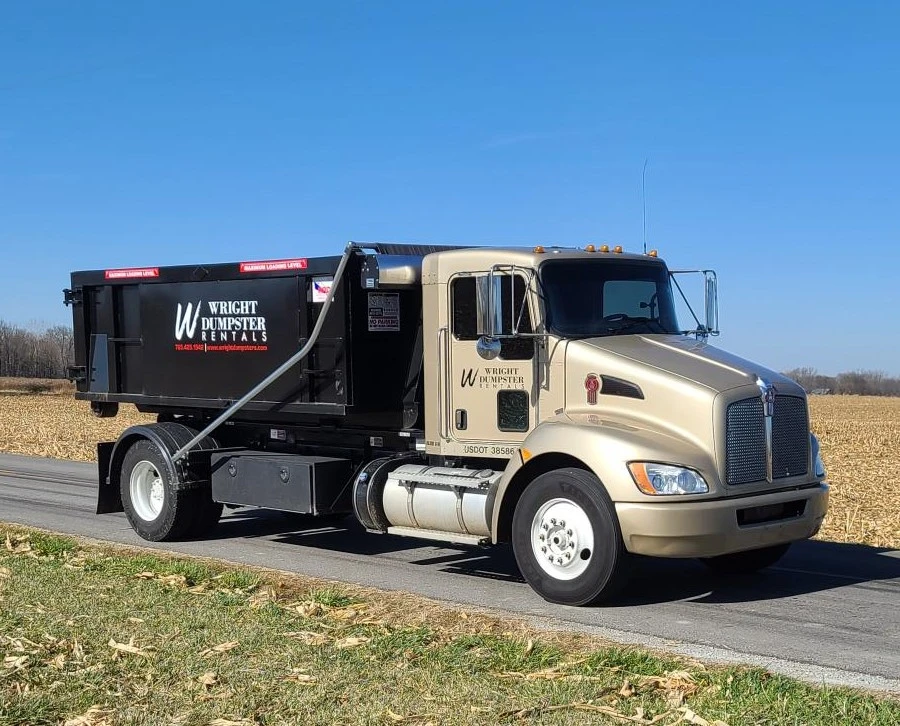

This guide from Wright Dumpster Rentals in Anderson, IN, explains the two main types of dumpsters to help you choose the right one for your needs.
1. Roll-Off Dumpsters (For Projects)
Roll-off dumpsters are the large, open-top containers typically seen at construction and cleanup sites. They are designed for short-term projects that generate a high volume of waste quickly.
- Best For: One-time cleanouts, remodels, roofing, and demolition.
- Sizes: They come in large sizes, typically ranging from 10-yard to 40-yard containers. For example, a 10-yard dumpster holds about 4 pickup truck loads.
- Placement: Placed on driveways, job sites, or flat, open ground.
- Pickup: The service is on-call, involving a single scheduled pickup when the project is complete.
- Cost: You pay a one-time rental fee based on the size, the number of days you keep it, and the weight of the debris.
- Common Uses: Clearing out garages or basements, disposing of construction debris, or handling large amounts of yard waste.
A roll-off is built for a temporary, heavy, high-volume mess.
2. Front-Load Dumpsters (For Businesses)
Front-load dumpsters are the smaller containers with lids, commonly located behind businesses and apartment buildings. They are designed for long-term, ongoing trash service.
- Best For: Routine, daily trash disposal (e.g., general commercial waste, food scraps).
- Sizes: They are smaller, ranging from 2-yard to 8-yard, and always feature lids.
- Placement: Usually tucked away behind offices, restaurants, or residential complexes.
- Pickup: Service involves scheduled regular collection, such as weekly or bi-weekly pickups.
- Cost: You pay a monthly contract fee that depends on the dumpster's size and how often it is emptied.
- Common Uses: Managing daily waste from offices, retail stores, or small apartment complexes.
A front-load is for consistent, lower-volume trash that needs regular emptying.
Summary of Differences
- Use: Roll-offs are for one-time, heavy jobs (like construction). Front-loads are for ongoing, routine trash (like restaurant waste).
- Sizes: Roll-offs are significantly larger (10+ yards); Front-loads are smaller (2–8 yards).
- Cost: Roll-offs are billed per rental; Front-loads are billed monthly via contract.
Common Mistakes and Restrictions
Avoid using a small front-load for a big remodel—it will fill instantly. Remember that roll-offs cannot be overfilled; debris must be level with the rim. Also, check local rules for permits if the dumpster must sit in the street.
What Not to Toss: Do not put hazardous materials in either type, including paint, chemicals, tires, batteries, electronics, or appliances containing Freon.






Sign in to leave a comment.