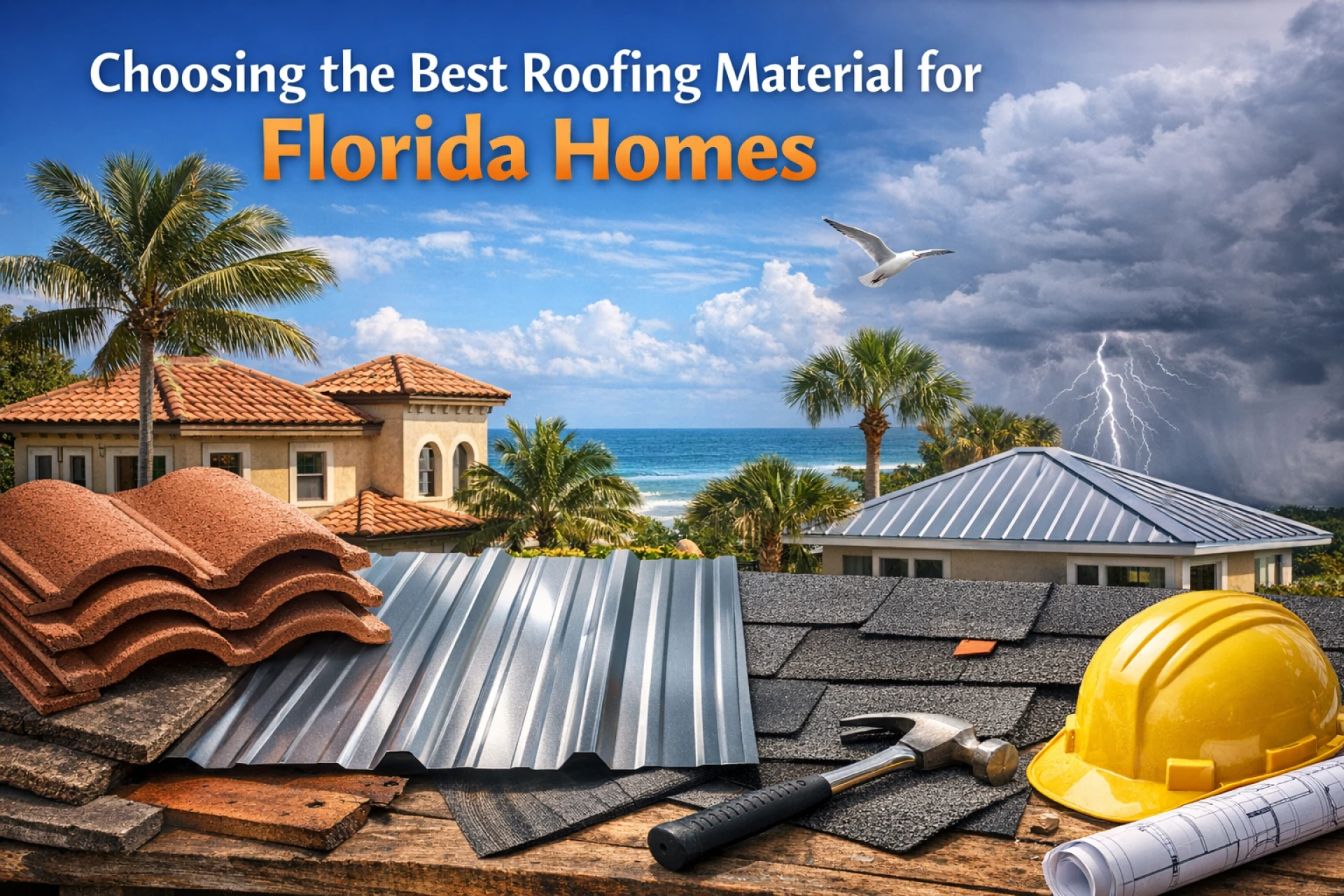
Choosing the right roofing material is one of the most important decisions for homeowners living in Florida. With intense sun, heavy rain, high humidity, tropical storms, and hurricanes, your roof must do more than look good. It must protect your home, withstand extreme weather, and last for decades.
This guide will help you understand the best roofing materials for Florida homes, how each performs in the local climate, and what factors you should consider before making a final decision.
Why Florida’s Climate Demands the Right Roofing Material
Florida’s weather is unlike most parts of the country. Your roof must handle:
- High heat and UV exposure
- Heavy rain and moisture
- Strong winds and hurricanes
- Salt air in coastal areas
- Mold and algae growth
Choosing the wrong roofing material can lead to early failure, leaks, and costly repairs. That is why Florida homeowners should always select materials designed for hot, humid, and storm-prone environments.
Key Factors to Consider When Choosing a Roof in Florida
Before comparing materials, keep these important decision factors in mind:
- Wind resistance rating
- Heat reflection and energy efficiency
- Moisture and mold resistance
- Roof lifespan
- Maintenance requirements
- Local building codes in Florida
- HOA and insurance requirements
Not all roofing systems perform equally in Florida conditions, even if they work well in other states.
Asphalt Shingle Roofing in Florida
Asphalt shingles are one of the most common roofing options in Florida homes due to affordability and availability.
Pros
- Lower upfront cost
- Easy installation
- Wide range of styles and colors
- Quick repairs
Cons
- Shorter lifespan in Florida heat
- Susceptible to wind damage
- Can deteriorate faster in humidity
Architectural shingles with higher wind ratings are a better option than basic three-tab shingles for Florida roofing.
Best for: Budget-conscious homeowners and non-coastal areas.
Metal Roofing: A Top Choice for Florida Homes
Metal roofing is one of the best roofing materials for Florida due to its durability and performance.
Benefits of Metal Roofing in Florida
- Excellent hurricane wind resistance
- Reflects heat and reduces cooling costs
- Resistant to moisture, mold, and rot
- Long lifespan (40–70 years)
- Fire-resistant
Metal roofs perform exceptionally well in coastal Florida, including areas like Fort Myers, Naples, Palm Coast, and Sanibel Island.
Best for: Homeowners seeking long-term value, storm protection, and energy efficiency.
Tile Roofing for Florida Homes
Tile roofing is iconic in Florida architecture and offers strong weather resistance when installed properly.
Types of Tile Roofing
- Concrete tile
- Clay tile
Advantages
- Highly resistant to heat
- Excellent wind performance
- Long lifespan (50+ years)
- Classic Florida appearance
Considerations
- Heavier material requiring structural support
- Higher upfront cost
- Professional installation required
Tile roofs are popular in South Florida, Bonita Springs, Marco Island, and other coastal regions.
Best for: Mediterranean-style homes and long-term homeowners.
Flat and Low-Slope Roofing Systems
Many Florida homes and commercial buildings use flat or low-slope roofs.
Common options include:
- TPO roofing
- Modified bitumen
- Built-up roofing
Why Flat Roofing Works in Florida
- Strong water resistance
- Reflective surfaces reduce heat
- Cost-effective for large roof areas
Proper drainage is critical. Standing water is a major risk in Florida if flat roofs are not maintained correctly.
Best for: Modern homes, additions, and commercial properties.
Energy Efficiency and Cool Roofs in Florida
Cooling costs are a major concern for homeowners in Florida.
Energy-efficient roofing materials can significantly reduce indoor temperatures, including:
- Metal roofing
- Light-colored shingles
- Reflective coatings
- Cool roof systems
Cool roofs reflect more sunlight and absorb less heat, making them ideal for Florida homes where air conditioning runs year-round.
Hurricane and Wind Resistance Ratings
In Florida, roofing materials must meet strict wind uplift standards.
Important wind considerations include:
- High wind-rated shingles
- Interlocking metal panels
- Proper fastening systems
- Enhanced underlayment
Roof installation quality is just as important as the material itself. Even the best roof can fail if not installed correctly.
Maintenance Requirements by Roofing Material
Understanding maintenance needs helps protect your investment.
- Asphalt shingles: Regular inspections and replacements
- Metal roofing: Minimal maintenance, periodic fastener checks
- Tile roofing: Occasional broken tile replacement
- Flat roofs: Drainage and membrane inspections
Routine roof inspections are especially important in Florida after storms and heavy rain.
Choosing the Right Roofing Contractor in Florida
No roofing material will perform well without expert installation.
When choosing a contractor:
- Licensed and insured in Florida
- Experience with local building codes
- Storm and hurricane expertise
- Knowledge of insurance claims
- Proven track record
A Florida-based contractor understands regional weather challenges and ensures your roof meets all local requirements.
Final Thoughts: Best Roofing Material for Florida Homes
There is no single “best” roof for every home, but there is a best roofing material for your specific Florida location, budget, and long-term goals.
Quick Recommendations
- Metal roofing: Best overall performance in Florida
- Tile roofing: Long lifespan and strong storm resistance
- Architectural shingles: Affordable with moderate durability
- Flat roofing systems: Ideal for low-slope structures
Investing in the right roofing material protects your home, increases value, and provides peace of mind during Florida’s toughest weather conditions.























Sign in to leave a comment.