
If you have ever looked at a UK course listing and wondered what "Level 3" or "Level 6" actually means, you are not alone. Most learners scroll past these numbers without giving them much thought, until they realise that those levels can determine whether they qualify for a job, a promotion, or a university place. Understanding RQF levels is one of the smartest things you can do before committing your time and money to any qualification in England, Wales, or Northern Ireland.
This guide breaks down the Regulated Qualifications Framework, so you know exactly where you stand and where you can go next.
What Is the RQF?
The Regulated Qualifications Framework, commonly known as the RQF, is the official system used in England, Wales, and Northern Ireland to classify qualifications by their level of difficulty and complexity. It replaced the older Qualifications and Credit Framework (QCF) in October 2015 and is overseen by Ofqual, the government's qualifications regulator.
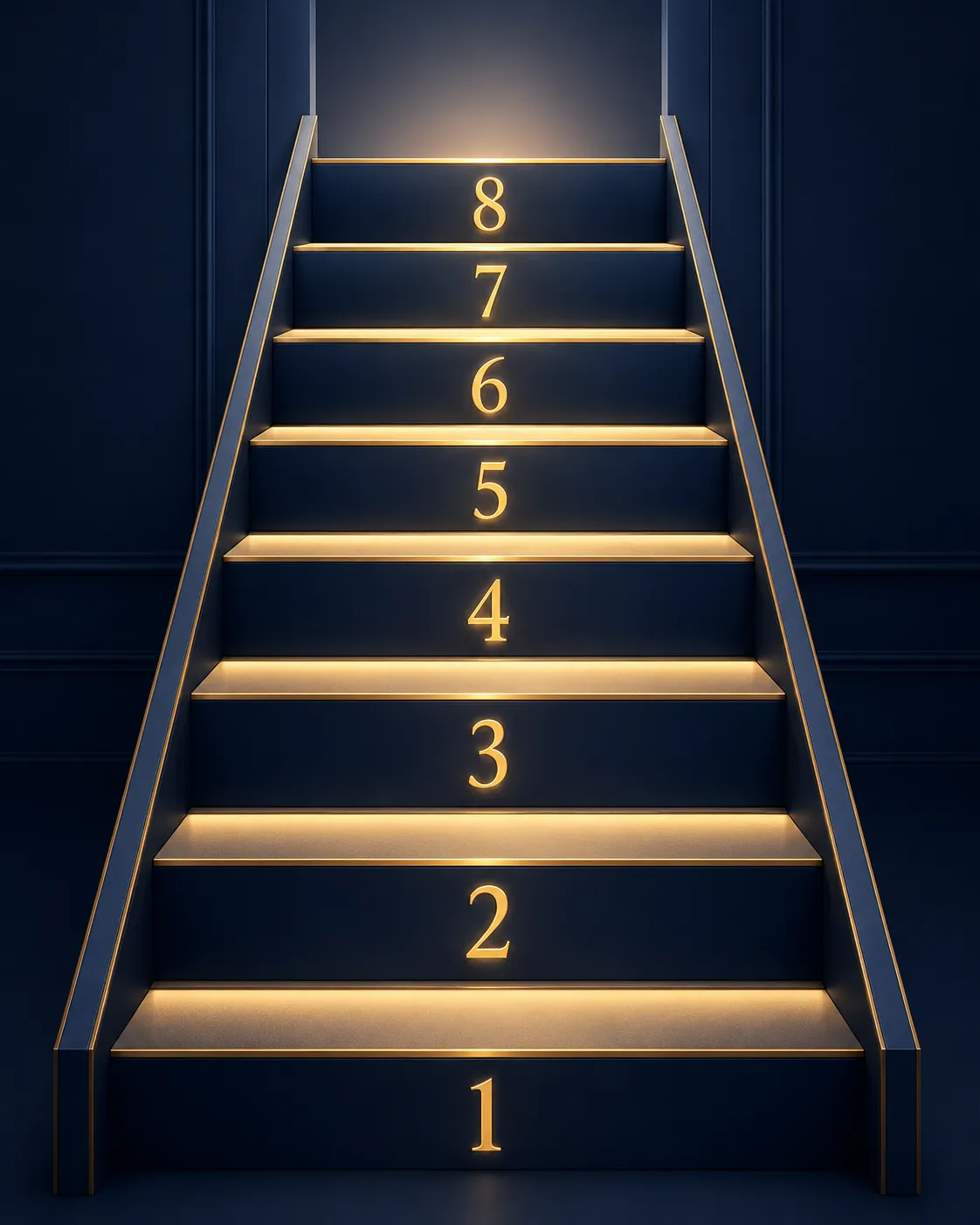
Think of it as a ladder. Every rung represents a different stage of learning, from entry-level basics all the way up to doctoral research. The level tells you how demanding the qualification is, not how long it takes or which subject it covers. A Level 3 in Business and a Level 3 in IT are equally demanding, even though the content is completely different.
Quick definition: The RQF is a nationally recognised framework that groups regulated qualifications by difficulty level, helping learners, employers, and universities compare and understand what a qualification represents.
How Many RQF Levels Are There?
The RQF runs from Entry Level (which has three sub-levels: 1, 2, and 3) through to Level 8. That gives you eight main levels plus the Entry Level band, covering everything from basic literacy skills to a Doctor of Philosophy.
Here is a straightforward breakdown of each level and what it typically equates to, as defined by the UK government's official qualification levels guide:
| RQF Level | Equivalent Qualification |
|---|---|
| Entry Level | Basic literacy, numeracy, and everyday skills |
| Level 1 | GCSEs (grades 3 to 1, previously D to G) |
| Level 2 | GCSEs (grades 9 to 4, previously A* to C) |
| Level 3 | A Levels, BTEC Nationals, T Levels |
| Level 4 | HNC, Higher Apprenticeship, CertHE |
| Level 5 | HND, Foundation Degree, DipHE |
| Level 6 | Bachelor's Degree (with or without honours) |
| Level 7 | Master's Degree, PGCE, Postgraduate Diploma |
| Level 8 | Doctorate (PhD, DPhil) |
It is worth noting that Scotland uses a separate framework called the Scottish Credit and Qualifications Framework (SCQF), which works differently. If you are based in Scotland, the level numbers will not map directly onto the RQF.
What Do RQF Levels Mean for Your Career?
This is where the framework becomes genuinely useful. Employers in the UK, particularly in sectors like healthcare, education, construction, and business services, often list a minimum RQF level as part of their job requirements. Knowing your level means you can scan job adverts with confidence and identify exactly where gaps might exist.
For working professionals looking to advance, understanding RQF levels helps you choose qualifications that employers actually recognise, rather than spending time and money on something that adds no formal weight to your CV. A Level 4 Award in Management, for example, signals first-year degree standard, making it a credible stepping stone for team leaders aiming for senior roles.
Career switchers benefit too. If you are moving into a new field, the RQF lets you spot which of your existing qualifications already align with that sector's expectations, and which gaps you need to fill. You might already be closer than you think.
Understanding Qualification Sizes: Awards, Certificates, and Diplomas
The RQF does not just describe the level of difficulty. It also gives qualifications a size, expressed through a credit system where one credit equals roughly ten hours of learning. This is called Total Qualification Time (TQT).
Within each level, you will typically find three sizes:
- Award: The shortest option, requiring between 1 and 12 credits (up to 120 hours of learning). Ideal for topping up skills or gaining targeted knowledge quickly.
- Certificate: A mid-sized qualification, covering 13 to 36 credits. It goes deeper into a subject than an Award and suits learners who want more structured coverage.
- Diploma: The most comprehensive option at any given level, requiring 37 or more credits. A full Diploma at Level 4, for instance, typically aligns with 120 credits, which is equivalent to the first year of a degree.
So when you see "Level 3 Diploma in Health and Social Care," you now know two things at once. The level tells you it sits at A Level standard. The diploma tells you it is a substantial qualification with considerable learning time behind it.
Which RQF Level Do You Need?
The right level depends entirely on your goal. Here is a practical way to think about it.
If you are a student fresh out of secondary school, Levels 1 to 3 are your starting ground. GCSEs sit at Level 2, and A Levels or BTECs sit at Level 3. If you want to go to university, most degree programmes require at least a Level 3 qualification for entry.
If you are a working professional looking to move into management or a specialist role, Levels 4 and 5 are often the sweet spot. These qualifications are equivalent to the first and second year of a degree, and many employers value them highly for supervisory and technical positions.
If you are planning a career switch into a regulated profession, such as teaching, nursing, or accountancy, you will likely be looking at Levels 5 to 7. These are postgraduate-level qualifications that demonstrate deep subject knowledge and professional competence.
A Common Mistake Learners Make
One of the most frequent errors people make is choosing a qualification by name recognition alone, rather than by level. Someone might hear that a "diploma" sounds impressive and enrol, without realising that a Level 2 Diploma sits at the same level as a GCSE, while a Level 5 Diploma is equivalent to a Foundation Degree.
Always check both the level and the size of the qualification before you commit. A Level 5 Diploma in Education and Training, for example, is a well-respected professional qualification used by further education lecturers across the UK. Its name alone does not tell you that, but its RQF level does.
How to Find Accredited, RQF-Aligned Courses
If you are looking for qualifications that carry real weight with employers and universities, make sure you choose courses that are regulated by Ofqual and listed on the Register of Regulated Qualifications. This register is publicly available and lets you verify any qualification before you enrol. You can also use the government's Find a Regulated Qualification service to search by subject, level, or awarding organisation.
Many training providers now offer flexible, online study routes for RQF-aligned qualifications, making it easier than ever to upskill without leaving your current job. Look for providers that clearly state the RQF level, the awarding organisation, and the total qualification time on their course pages. Transparency here is a good sign that the provider takes standards seriously.
Frequently Asked Questions
What is the RQF and why does it matter?
The RQF (Regulated Qualifications Framework) is the UK's official system for classifying qualifications by difficulty in England, Wales, and Northern Ireland. It matters because it helps learners, employers, and universities compare qualifications on an equal footing, ensuring that the level on your certificate carries a consistent and recognised meaning.
What RQF level is equivalent to a degree?
A bachelor's degree sits at RQF Level 6. A master's degree is Level 7, and a doctorate (PhD) is Level 8. If you hold a Level 6 qualification, you are educated to the same standard as a university graduate, regardless of whether you studied at a traditional university.
Is the RQF the same across all of the UK?
No. The RQF covers England, Wales, and Northern Ireland. Scotland operates under the SCQF (Scottish Credit and Qualifications Framework), which has 12 levels rather than 8. The two frameworks are broadly comparable but not identical, so it is important to check which one applies to the qualification you are considering.
Can I progress through RQF levels one at a time?
Yes. The framework is designed to support progression. Many learners start at Level 2 or 3 and work their way up over time, often while in employment. Some awarding bodies also allow credit transfer, meaning units you have already completed can count towards a new qualification.
What is the difference between an RQF Award and a Diploma?
Both can be at the same level, but they differ in size and depth. An Award is the shortest qualification (up to 12 credits), while a Diploma is the most comprehensive (37 or more credits). The level tells you how difficult the content is, while the size tells you how much of it you will cover.
Final Thoughts
The RQF is one of those frameworks that quietly shapes a huge part of your educational and professional journey in the UK, whether you realise it or not. Once you understand how it works, you gain a clear picture of where your current qualifications sit, what employers are actually asking for, and exactly which step to take next.
Whether you are a school leaver mapping out your future, a professional ready to move up the ladder, or someone making a bold career change, knowing your RQF level gives you a real advantage. It turns vague qualification titles into meaningful data points you can act on.
Take some time to review the qualifications you already hold, identify the level you need to reach your next goal, and then look for a regulated, Ofqual-recognised course that will get you there. The ladder is right in front of you. Now you know how to climb it.

















Sign in to leave a comment.