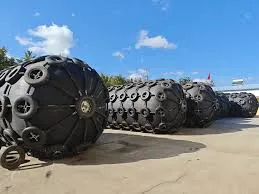

The maritime industry depends on reliable equipment to ensure safe and efficient operations. Among the most critical components are rubber fenders and marine airbags, which are widely used in ports, shipyards, and offshore environments.
These solutions help absorb impact, support heavy loads, and improve operational efficiency. This article provides a comprehensive overview of their functions, types, benefits, and applications in modern maritime operations.
Understanding Rubber Fenders and Marine Airbags
Rubber fenders and marine airbags serve different but complementary roles in maritime operations.
What Are Rubber Fenders?
Rubber fenders are protective systems installed on docks, piers, and vessels. Their main function is to absorb the kinetic energy generated when a ship docks, preventing damage to both the vessel and the structure.
What Are Marine Airbags?
Marine airbags are inflatable rubber devices used primarily for ship launching, lifting, and moving heavy structures. They are designed with multiple layers of reinforced rubber for strength and flexibility.
Together, rubber fenders and marine airbags provide a complete solution for docking and ship handling operations.
Types of Rubber Fenders
Rubber fenders come in various designs, each suited for specific applications.
Cone Fenders
Cone fenders offer high energy absorption and are commonly used in large ports.
Advantages:
- High efficiency
- Stable performance under heavy loads
Cell Fenders
Cell fenders are durable and suitable for large vessels.
Applications:
- Container terminals
- Bulk cargo ports
Arch Fenders
Arch fenders are simple in design and easy to install.
Best suited for:
- Small to medium-sized ports
- General-purpose docking
Types of Marine Airbags
Marine airbags are versatile tools used in various maritime operations.
Ship Launching Airbags
These airbags are used to launch vessels from shipyards without requiring expensive infrastructure.
Salvage Airbags
Used to lift and refloat sunken ships during rescue operations.
Heavy Lifting Airbags
Designed to move large structures such as caissons and heavy equipment.
Benefits of Rubber Fenders and Marine Airbags
These solutions are widely adopted due to their numerous advantages.
Enhanced Safety
Both fenders and airbags reduce the risk of damage during docking and ship handling.
Cost-Effective Solutions
Marine airbags eliminate the need for dry docks, while rubber fenders reduce maintenance costs.
Durability
High-quality rubber construction ensures long service life in harsh marine conditions.
Flexibility
These systems can be used in a wide range of applications, from small ports to large offshore projects.
Applications in Maritime Industry
The use of rubber fenders and marine airbags spans across multiple sectors.
Ports and Harbors
Fenders protect port infrastructure and vessels during berthing operations.
Shipyards
Marine airbags simplify ship launching and maintenance processes.
Offshore Operations
These solutions support offshore platforms by providing stability and protection.
Emergency and Salvage Operations
Airbags are used in rescue missions to lift and refloat vessels.
Key Factors to Consider When Choosing Equipment
Selecting the right equipment ensures optimal performance and safety.
Load Capacity
Ensure the equipment can handle the required weight and impact forces.
Environmental Conditions
Consider factors such as wave intensity, temperature, and salinity.
Material Quality
High-grade rubber and reinforcement layers improve durability.
Compliance with Standards
Choose products that meet international safety and quality certifications.
Maintenance and Best Practices
Proper maintenance is essential for long-term performance.
Regular Inspection
Check for cracks, wear, and pressure levels in airbags.
Cleaning and Storage
Keep equipment clean and store it in a dry, shaded area.
Timely Repairs
Address minor issues early to prevent major failures.
Future Trends in Rubber Fenders and Marine Airbags
The maritime industry continues to evolve with new technologies and innovations.
Smart Monitoring Systems
Sensors are being integrated to monitor performance and detect issues in real time.
Sustainable Materials
Eco-friendly materials are being developed to reduce environmental impact.
Improved Design Efficiency
Modern designs are enhancing energy absorption and load-bearing capabilities.
Conclusion
Rubber fenders and marine airbags are indispensable components of modern maritime operations. Their ability to enhance safety, improve efficiency, and reduce costs makes them essential for ports, shipyards, and offshore facilities.
By investing in high-quality rubber fenders and marine airbags, operators can ensure reliable performance and long-term operational success. As technology advances, these solutions will continue to play a vital role in shaping the future of the maritime industry.





























Sign in to leave a comment.