

Software as a Service has changed how businesses use software. Companies no longer need expensive installations or complex maintenance. Users can access software from anywhere through the internet. Today, businesses of all sizes invest in SaaS platform development to deliver products faster and serve users globally. From startups to enterprises, SaaS solutions continue to grow across industries.
However, building a SaaS product is not always simple. A successful platform requires planning, development, security, and continuous improvements. In this guide, we will discuss the major challenges, key features, and best practices of SaaS platform development.
What Is SaaS Platform Development?
Developing a SaaS platform is the process of building software that users access through the cloud. Rather than buying licenses for software, customers pay through subscriptions.
Unlike traditional software, SaaS applications are updated on a regular basis. The latest version is always installed, with no need for manual downloading.
These are some of the most popular SaaS products, such as project management tools, CRM systems, accounting software, and communication platforms.
Why Businesses Invest in SaaS Solutions
Many businesses choose SaaS because it offers flexibility and lower operational costs. It also helps companies reach customers around the world.
Some major benefits include:
- Lower infrastructure costs
- Faster software deployment
- Easy scalability
- Automatic updates
- Remote accessibility
- Better collaboration
- Subscription-based revenue
These advantages make SaaS products attractive for both businesses and customers.
Key Features of a SaaS Platform
A successful SaaS platform needs more than basic functionality. It should provide security, performance, flexibility, and a smooth user experience.

1. User Authentication: Users need secure access to their accounts. Authentication systems protect user data and prevent unauthorized access.
2. Secure User Login: Users should log in safely through protected authentication systems. Strong password policies improve account security.
3. Role-Based Access Control: Different users require different permissions. Administrators, managers, and customers often need separate access levels.
4. Multi-Factor Authentication: Additional verification adds another security layer. This reduces unauthorized access risks.
Features include:
- Secure registration process
- Password protection
- User roles and permissions
- Multi-factor authentication
- Session management
5. Multi-Tenant Architecture: In a multi-tenancy, the same application can be used by different users. Different users have separate information and settings. While the infrastructure remains shared.
Benefits of multi-tenant architecture:
- Reduced infrastructure costs
- Easier maintenance
- Faster updates
- Better resource utilization
- Centralized management
This approach helps SaaS businesses scale efficiently.
6. Scalability and Performance: A SaaS platform should support business growth. User numbers can increase quickly. Cloud infrastructure helps applications handle traffic and data growth.
Important elements include:
- Load balancing
- Auto scaling
- Cloud hosting
- Database optimization
- Performance monitoring
Scalability becomes important as the platform grows.
7. Data Security and Compliance: Security is one of the most important parts of any SaaS platform. Customer information is safeguarded through robust data encryption & strict access controls.
Security features include:
- Data encryption
- Secure backups
- Access monitoring
- Threat detection
- Regular security updates
Compliance requirements also vary by industry. Businesses may need to follow regulations such as GDPR or HIPAA.
8. Third-Party API Integrations: Modern SaaS products rarely work alone. They often connect with external tools.
Common integrations include:
- Payment gateways
- CRM systems
- Marketing platforms
- Email services
- Communication tools
- Accounting software
API integrations improve productivity and automation.
9. Responsive User Interface: Users expect consistent experiences across devices. A responsive interface improves usability and customer satisfaction.
Essential UI features include:
- Mobile-friendly layouts
- Simple navigation
- Consistent design
- Fast loading pages
- Accessible interfaces
- Clear workflows
A good user experience helps retain customers.
Challenges of SaaS Platform Development
Building a SaaS platform development comes with several challenges. Businesses must address these issues early.
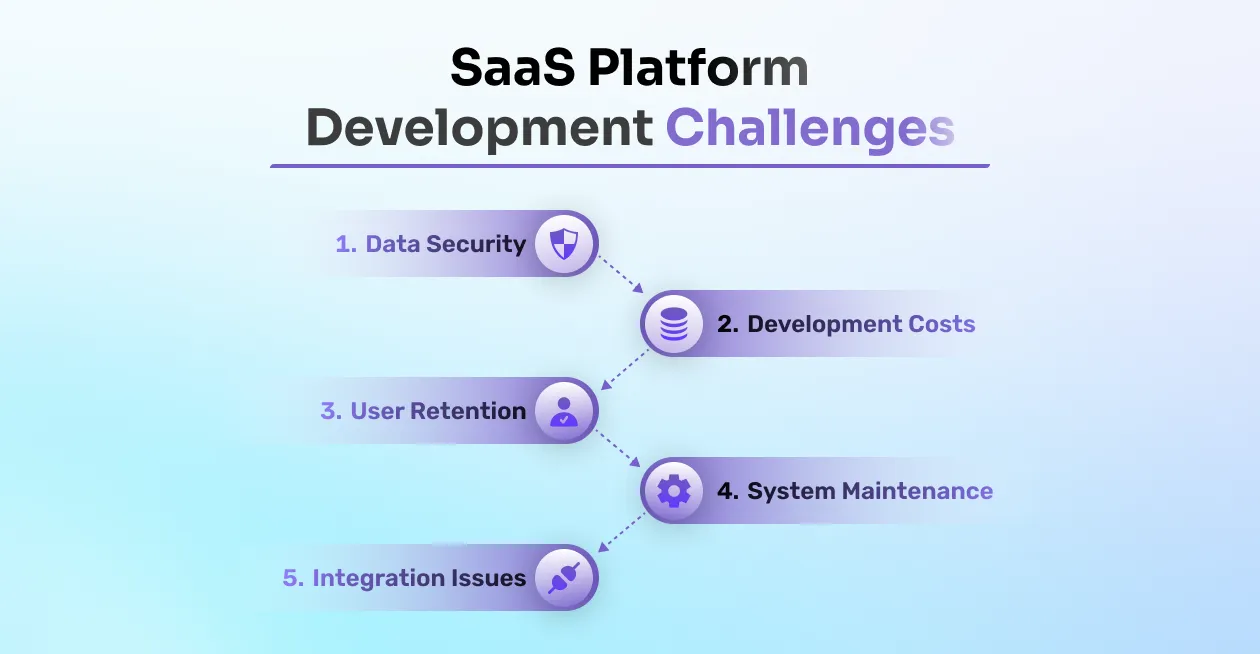
1. Maintaining Data Security: Security threats are continuing to grow every year. It is crucial to continually monitor the protection of user data. No matter how minor the security breach, it can be a big problem.
2. Scaling the Platform: As more users use the platform, performance can be impacted. Infrastructure must be capable of handling growing traffic and increasing amounts of data. Poor scalability may reduce user satisfaction.
3. Managing Development Costs: Development costs tend to rise during the project. Feature additions and technical changes affect budgets. Proper planning helps control expenses.
4. User Retention: Acquiring customers is only one part of success. Retaining users is equally important. Poor experiences often lead users to competitors.
5. System Maintenance: SaaS systems require ongoing updates and maintenance. Bugs, security problems, and ideas for new features need to be tackled regularly.
6. Third-Party Integration Issues: APIs of external tools sometimes change. This may lead to compatibility problems. Updates are important to prevent these problem areas.
Best Practices for SaaS Platform Development
Following proven practices helps build reliable and scalable products.
1. Start with Market Research: Understand user needs before development begins. Research helps identify problems and opportunities. A strong foundation reduces future risks.
2. Build a Minimum Viable Product (MVP): Start with essential features first. An MVP helps validate ideas quickly. User feedback guides future improvements.
3. Prioritize User Experience: Simple interfaces improve adoption. Users should complete tasks without confusion. Good UX often increases retention.
4. Provide Regular Updates: Continuous improvements keep users engaged. New features and bug fixes increase customer satisfaction. Regular updates also build trust.
Why Businesses Choose SaaS Development Services
Creating a SaaS product requires multiple skills. There is a need for design, development, security, testing, and deployment skills in development teams.
Professional SaaS development services offer several advantages:
- Faster development cycles
- Experienced technical teams
- Better security practices
- Lower development risks
- Ongoing support and maintenance
- Scalable development solutions
Conclusion
SaaS products keep changing modern businesses. Successful platforms need careful planning, strong security, and experiences that focus on users. Knowing the challenges and key features helps businesses make better choices. Following proven practices also lowers risks during development. Whether you build in-house or use SaaS development services, investing in quality development is crucial for long-term success. The right approach can create a SaaS platform that meets the needs of both users and business objectives.




























Sign in to leave a comment.