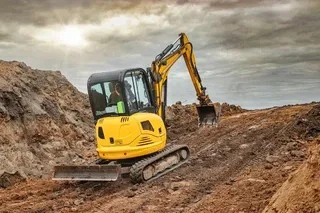
Safe Operation Guidelines for Mini Excavators: Performance Through Proper Handling
Leading Chinese Wheel Excavator Manufacturer Providing High-Quality Mini Wheeled Excavators, Construction Machinery, and Compatible Attachments.
Just as improper lifting techniques can injure a person, incorrect operation of mini excavators can lead to performance issues or dangerous accidents. While mini excavators are much more powerful than human limbs, their safety and efficiency rely heavily on careful handling and proper maintenance. Below are essential precautions and operational tips to ensure that your mini excavator performs safely and effectively on the job site.
Construction Precautions for Using Mini Excavators
1. Site Investigation
Worksite conditions directly influence how machines should be operated. Operators must inspect the job site for potential hazards that could affect machine stability—such as loose soil, underground voids, or hidden obstructions. Seemingly minor details can pose significant risks if overlooked.
2. Topographic Slope Awareness
Sloped terrain is common in construction, and while leveling the ground is ideal, it's not always practical. Mini excavators should avoid operating on slopes steeper than 25 degrees. If working on a slope is unavoidable:
- Drive slowly and cautiously.
- Keep the blade facing downhill and close to the ground to maintain a low center of gravity.
- Avoid carrying loads downhill and never traverse across slopes, as it greatly increases the risk of rollover.
3. Understanding Excavator Capacity
Each mini excavator model has different lifting capacities. Always refer to the lifting capacity charts provided by the manufacturer—found in the user manual or posted on the machine itself. These charts are based on detailed OEM testing and may vary by:
- Arm and boom length
- Track width
- Counterweight specifications
- Bucket type and weight
Operators must consider all attachments and lifted load weight—including the bucket, connector, and object—when calculating lift limits.
Key Factors Affecting Lifting Capacity:
- Hydraulic Limit: Reflects the power limits of the hydraulic system. Marked with an asterisk (*) in charts, and limited to 87% of the hydraulic lifting capacity as per ISO standards.
- Tipping Limit: Indicates the machine's stability threshold. Exceeding this limit can cause the machine to tip. Lifting without an asterisk on the chart is typically limited to 75% of the tipping load.
- Lift Point Height: Refers to the vertical distance from the ground to the load, or sometimes to the bucket pin. This height, combined with the object's size and destination height, determines lift feasibility.
- Lifting Radius: Measured from the swing center of the excavator to the load. Lifting from the side or with different boom positions changes this radius. Stability can be improved using a dozer blade or outriggers if available.
To determine whether a lift is safe, locate the lifting height and radius on the chart. If the corresponding cell is blank, the lift is not recommended and could be dangerous.
4. Moving Loads Safely
When transporting suspended loads instead of just lifting them:
- Verify that the actual load weight does not exceed the rated capacity.
- Keep the lifting radius short and the load close to the ground when possible.
- Align the boom with the direction of travel before lifting. Maintain this alignment even when turning.
- Make turns slowly and with wide angles to reduce swinging or tipping.
- Use a lifting hook or eyelet on the excavator—never improvise.
Applying cautious, deliberate techniques during load movement greatly reduces risk to the machine, operator, and nearby personnel.
Conclusion
By observing these best practices—conducting thorough site assessments, understanding your machine’s lifting capabilities, and executing safe lifting and transport—you can boost the efficiency and safety of your mini excavator operations. Each action taken with care not only prevents costly damage but also promotes a culture of safety and professionalism.
Safe operation is not just about protecting machinery—it reflects responsibility for your team and work environment. With ongoing awareness and refined operating skills, you’ll extend equipment life and build a stronger foundation for every successful project.
Wishing you safe, smooth, and productive work in all your construction endeavors!Know more about Google SEO Directory


























Sign in to leave a comment.