

Every week at LIFETIME HERITAGE FILMS INC, we speak with families who have just unearthed a treasure trove of vintage VHS tapes. Whether they were tucked away in a humid basement or baking in a hot attic, these plastic cassettes hold irreplaceable memories—weddings, childhood birthdays, and the voices of loved ones who are no longer with us.
The immediate instinct for many is to buy a cheap USB capture dongle from an online retailer, plug a dusty VCR into a laptop, and attempt to digitize the tapes at home over the weekend. But is that actually a good idea?
As archival experts who handle thousands of hours of aging magnetic media every single year, we have to share a hard truth: playing a thirty-year-old tape in an unserviced consumer VCR is one of the quickest ways to destroy it forever. If you want to know what is the safest way to convert your old family VHS tapes to digital, you first need to understand the severe physical vulnerabilities of vintage media.
The Mechanical Dangers of DIY Tape Conversion
Many people assume that because a VHS tape looks sturdy on the outside, the ribbon inside is perfectly fine. Unfortunately, magnetic video tape was never engineered for permanent archiving.
The magnetic particles that actually hold your precious video signal are glued to a thin plastic strip using a chemical binder. Over decades, this binder absorbs moisture from the air and begins to break down. When you attempt a DIY transfer using an old VCR, you are putting incredible mechanical stress on a fragile, actively decaying strip of plastic.
Here is what happens when you use consumer gear on decaying tapes:
- The Tape Gets "Eaten": As the chemical binder breaks down, the tape becomes sticky. Instead of gliding smoothly over the spinning video heads, it catches, causing the VCR's gears to chew up and mangle the delicate ribbon.
- Magnetic Oxide Shedding: The harsh friction of a consumer VCR can literally scrape the magnetic layer right off the plastic backing. Once that brown powder sheds into the machine, your video and audio signals are permanently erased.
- Tension Snaps: Older VCRs usually suffer from failing rubber drive belts and uneven tension rollers. These mechanical flaws can easily stretch or snap a brittle VHS tape right down the middle during playback.
How a Professional Studio Safely Captures Magnetic Media
At LIFETIME HERITAGE FILMS INC, our entire approach to digitizing your family history is built around physical safety and signal preservation. We never just "press play" and hope for the best.
A professional archival environment uses highly specialized, meticulously maintained hardware that simply cannot be replicated by a twenty-dollar capture card. The absolute safest way to convert your media involves a rigorous studio workflow designed to baby your fragile tapes.
Our professional transfer workflow includes:
- Pre-Transfer Inspection: Before a tape ever touches a machine, our technicians manually inspect the cassette housing for mold, dust, and cracked internal tension springs.
- Studio-Grade Playback Decks: We use heavily modified, broadcast-quality video tape recorders. These machines exert significantly less mechanical tension on the tape than store-bought VCRs, drastically reducing the risk of snapping.
- Time Base Correction (TBC): This is the secret weapon of professional studios. A hardware TBC mathematically rebuilds the unstable analog video signal before it hits the computer. It fixes jittery frames, straightens wavy edges, and ensures the audio stays perfectly synced with the video.
- Uncompressed Signal Capture: We route the stabilized signal through professional capture cards that read the full spectrum of color and sound exactly as it was originally recorded by your family's camcorder.

Treating VHS Tapes with Archival Respect
People often assume that because VHS is a relatively "newer" format from the 1980s and 90s, it doesn't require the same level of care as older movie reels. This is a dangerous misconception that leads to lost footage.
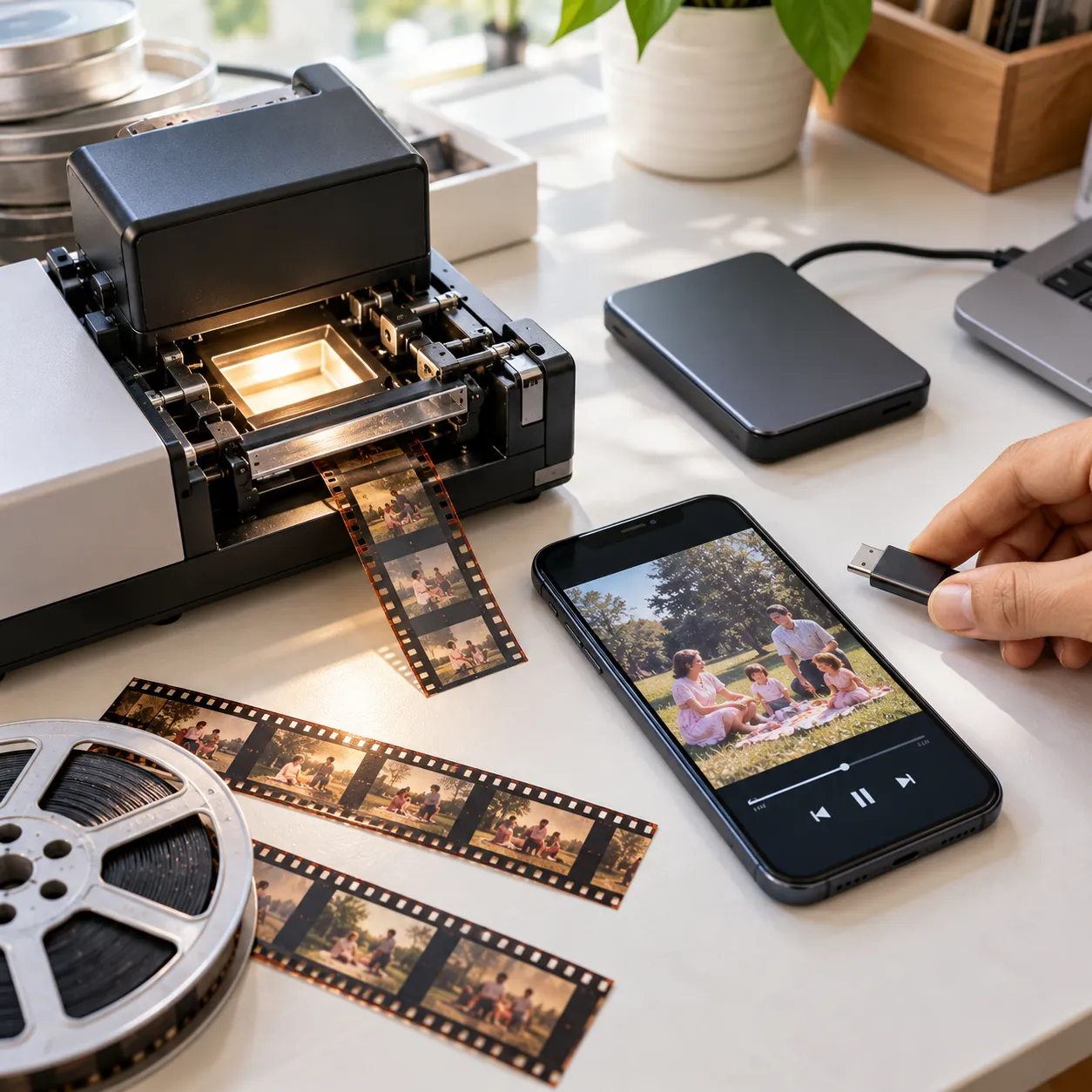
Just as an archival studio utilizes highly specialized 4k film scanning hardware to safely extract every microscopic detail from a fragile piece of 1950s celluloid without burning it, we must use equally specialized, low-tension magnetic hardware to extract the video signal from a degrading VHS tape without stripping its oxide layer.
Both mediums are actively dying. Both mediums require professional intervention to stop the clock on that physical decay. The ultimate goal is exactly the same: to pull the highest possible quality master file today, so that the original physical item never has to be subjected to the stress of a machine ever again.
Securing Your Digital Master Files for the Future
Once your tape is safely captured without damage, the final step in the preservation journey is choosing the right digital delivery method.
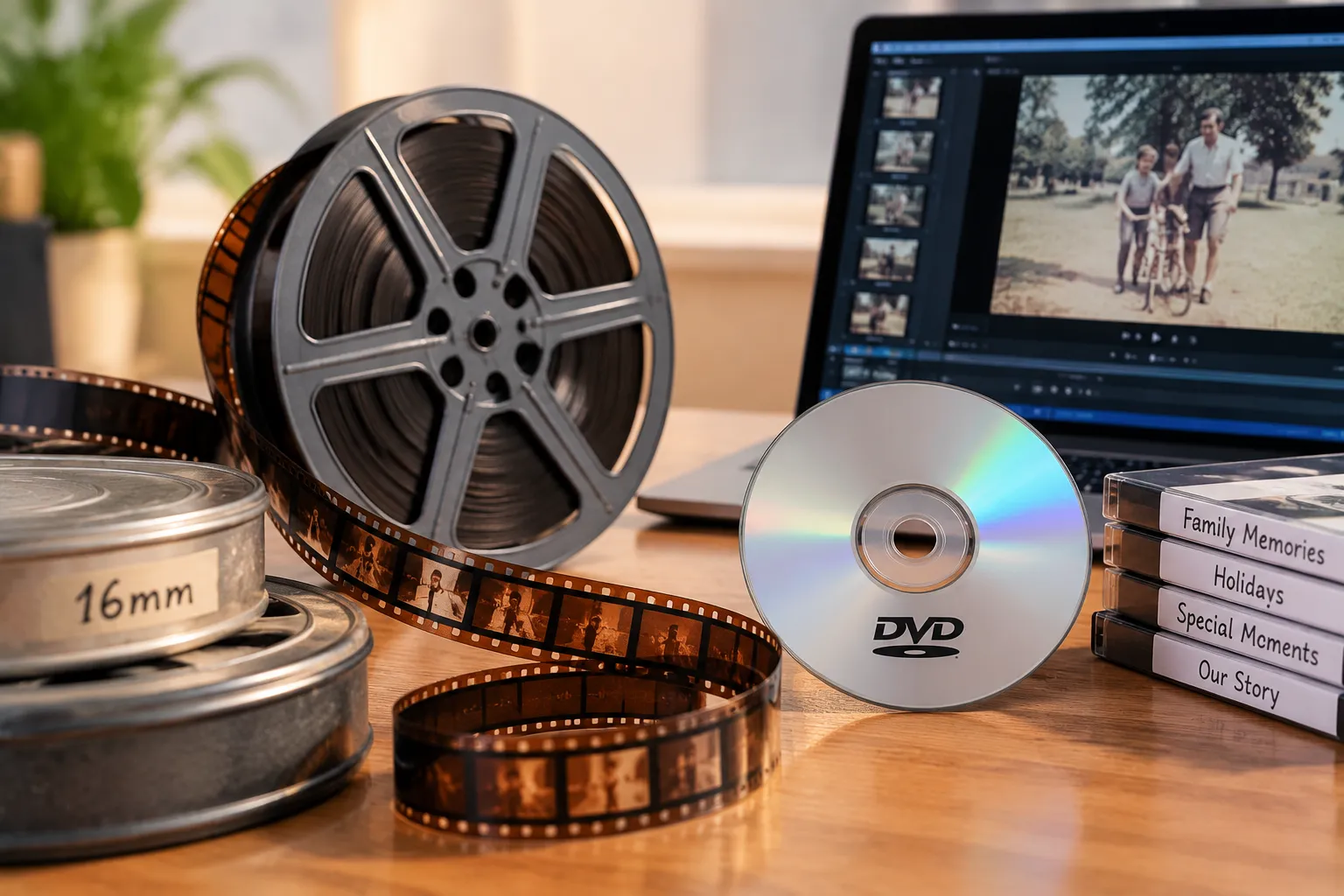
We strongly advise against putting your newly digitized memories onto DVDs. Optical discs are a dying technology that heavily compresses your video quality and can be rendered completely unplayable by a single deep scratch on the surface.
Instead, a truly safe and future-proof conversion ends with a high-bitrate MP4 digital file. These files are incredibly versatile. You can store them on a solid-state external hard drive, copy them to a USB thumb drive to plug directly into your smart TV, and upload them to a secure cloud server for instant sharing. By trusting an archival studio to handle the delicate mechanical capture, you ensure that your family's most precious moments are securely transitioned into the modern digital age, ready to be enjoyed by generations to come.























Sign in to leave a comment.