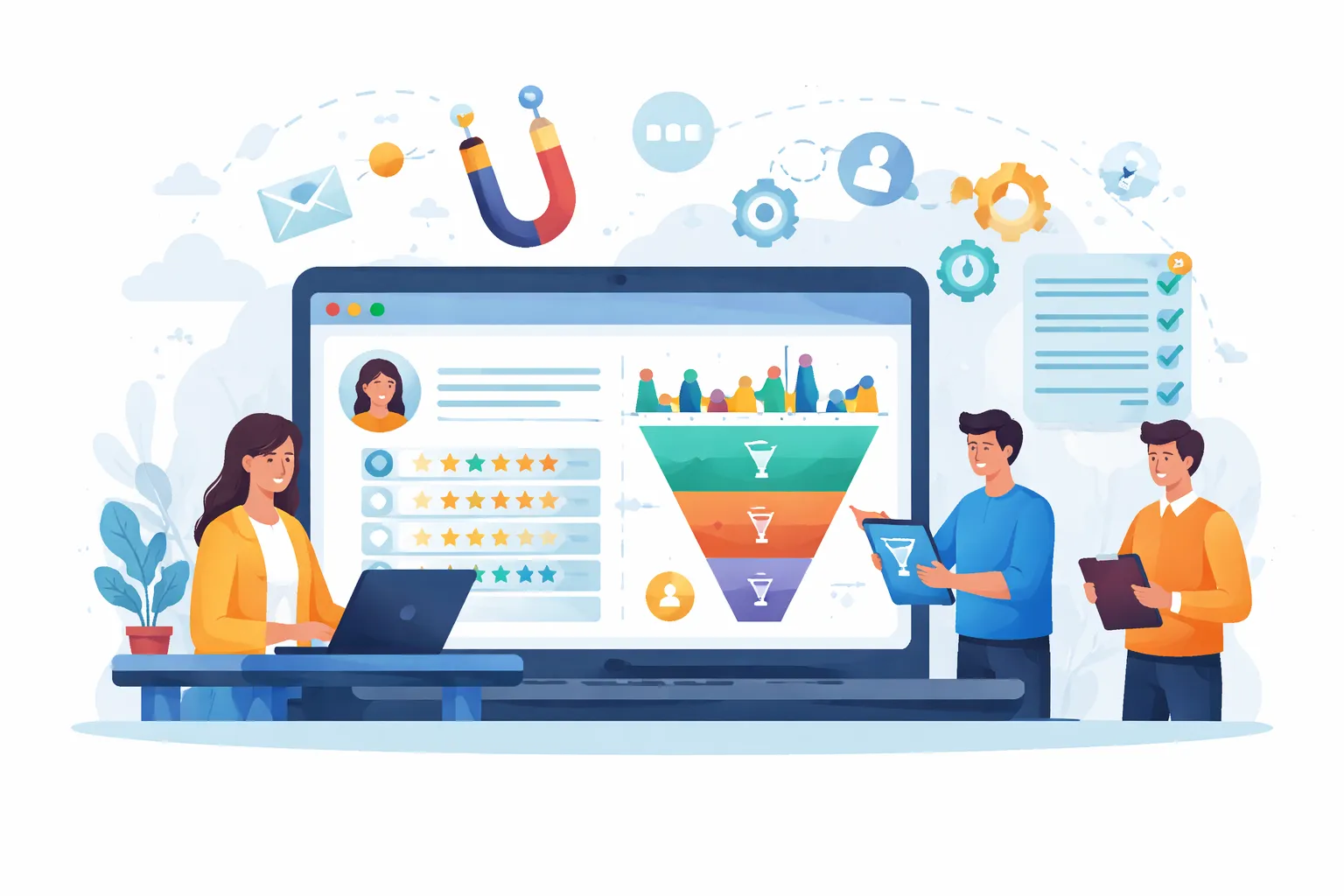

Key Takeaways
- A traditional CRM is built around the customer record as the primary data object — designed to store, document, and retrieve relationship history. A sales pipeline CRM is built around the deal as the primary data object — designed to manage and accelerate movement through a defined sales process.
- The fundamental difference is not a feature list — it is a design philosophy: traditional CRM answers "who is this customer and what happened?" while a sales pipeline CRM answers "where is this deal and what needs to happen next?"
- WhatsApp Business API integration is a defining capability of modern sales pipeline CRMs for markets where WhatsApp is the dominant customer communication channel — enabling lead capture, qualification, and pipeline progression through the channel customers actually respond to.
- AI-powered chatbots embedded in sales pipeline CRM workflows eliminate the lead response gap that causes most pipeline leakage — qualifying and routing inbound leads 24/7 without rep intervention, and surfacing them in the pipeline with full conversation context attached.
- Most modern platforms — Salesforce, HubSpot, Zoho — have converged to offer both capabilities, but their default design orientation reveals which use case they are genuinely optimized for, which is why configuration choices matter as much as platform selection.
- Choosing the wrong architecture — a traditional CRM for an active sales team or a pipeline-first tool for an enterprise account management function — creates adoption failures and data quality problems that compound over time.
Introduction: Why Most CRM Implementations Fail to Deliver Pipeline Visibility

Gartner estimates that CRM is the largest enterprise software market in the world, exceeding $69 billion annually. Yet research by the same firm consistently finds that CRM adoption rates average just 26% among sales reps — meaning most of the investment in the world's largest software category goes unrealized.
The reason is not price, implementation quality, or training. It is architectural misalignment. Organizations buy a CRM that is built to solve one problem and then attempt to use it to solve a different one.
Traditional CRM platforms were built to manage customer relationships — documenting interactions, organizing account history, and supporting service delivery. Sales pipeline CRMs were built to manage deal progression — moving opportunities through a defined process, forecasting revenue, and driving rep activity toward close.
Confusing these two design philosophies produces exactly the outcome most sales teams experience: a system full of contact records and logged activities that cannot reliably tell the sales manager which deals will close this quarter, which reps need coaching, or where the pipeline is breaking down.
This article draws the precise distinction between the two approaches, explains when each is appropriate, and identifies the modern capabilities — including WhatsApp Business API integration and AI-powered chatbot workflows — that are redefining what a sales pipeline CRM can do for revenue teams in 2026.
What Is a Traditional CRM?

A traditional CRM is a customer relationship management platform designed to store, organize, and retrieve information about customers and prospects — serving as the system of record for every interaction, transaction, and relationship detail across the full customer lifecycle.
The traditional CRM's primary data object is the contact or account record. Deals, cases, emails, and calls are secondary records associated with that contact. Everything the system does — logging, searching, reporting — is organized around understanding the history of a specific customer relationship rather than managing the forward progress of a specific commercial opportunity.
This design philosophy emerged from enterprise account management practices in the 1990s and early 2000s, where the primary CRM user was not a salesperson closing new deals but an account manager maintaining relationships with existing clients. The system needed to answer: Who is this customer? What did we discuss last quarter? What products do they have? What issues have they raised? The answers lived in contact records, activity logs, and case histories — and the CRM was built to store and surface them.
Traditional CRM strengths are genuine and important. For post-sale customer management, enterprise account hierarchies, service and case tracking, compliance documentation, and customer lifetime value analysis, traditional CRM architecture provides depth that pipeline-first tools lack. Platforms like the original Salesforce, Microsoft Dynamics CRM, and SAP CRM were built for this model — and they serve it well.
Where traditional CRM consistently underdelivers is in active sales execution. It records that a deal exists and stores contact details, but it does not natively manage the deal's progression through a defined sales process, surface which deals are stale or at risk, trigger follow-up actions based on pipeline events, or produce the stage-weighted forecasting that sales managers need to project quarterly revenue with confidence.
What Is a Sales Pipeline CRM?
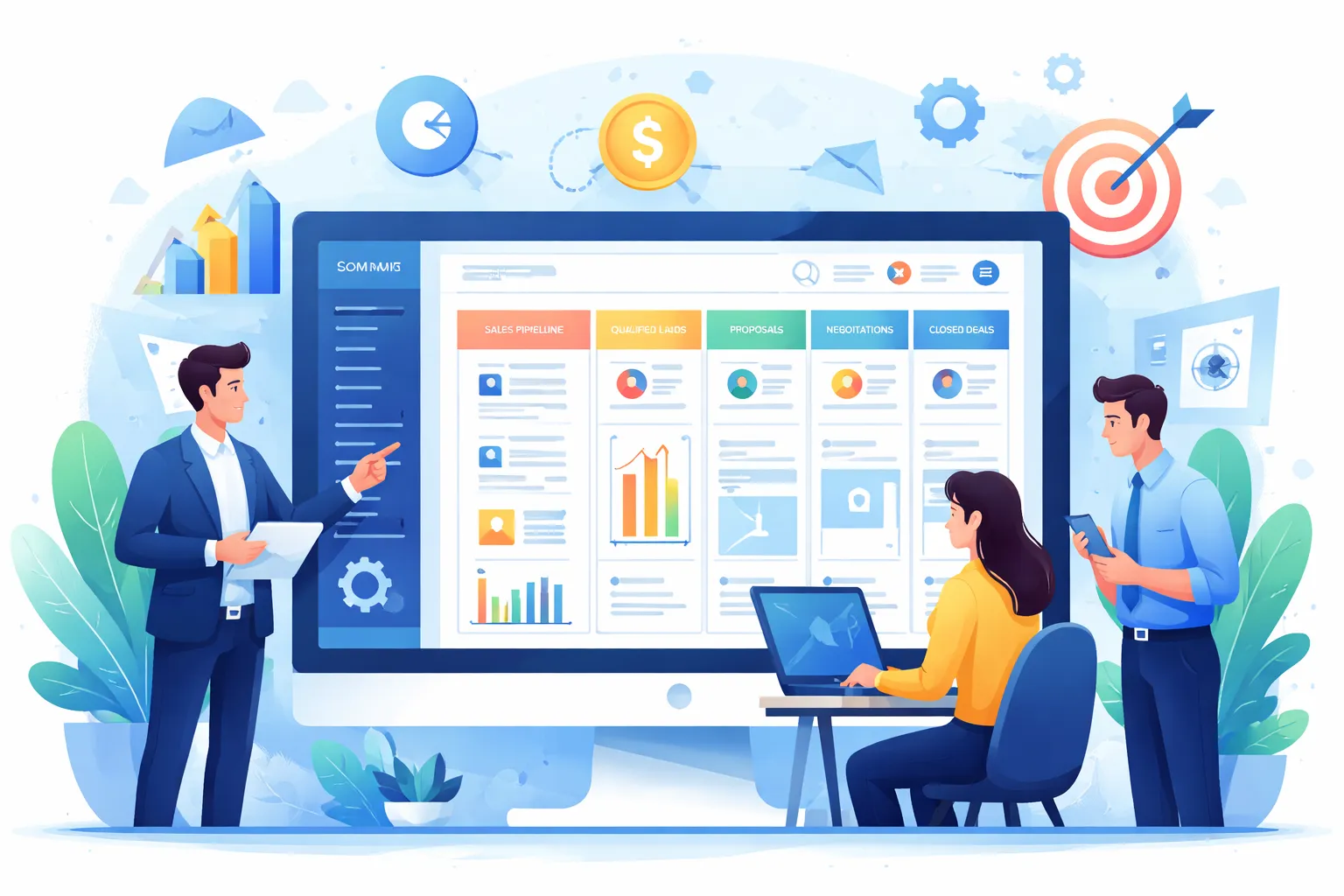
A sales pipeline CRM is a customer relationship management platform designed specifically to manage and optimize the movement of deals through a defined sales process — from initial qualification through to close. Its primary data object is the deal or opportunity, and every feature in the system is oriented toward answering one question: what needs to happen next to move this deal forward?
The visual pipeline — a Kanban-style board displaying every active deal as a card organized by sales stage — is the defining interface of a pipeline CRM. It gives sales reps and managers an immediate, accurate read on deal distribution, deal value at each stage, and deal age without navigating through contact records or running reports. This visibility is not cosmetic. Research by Pipedrive found that salespeople who actively manage their deals using a visual pipeline achieve 28% higher revenue growth than those who do not.
Sales pipeline CRM architecture is built for action, not documentation. Stage changes trigger automated tasks. Deals that exceed a defined age in a stage generate stale deal alerts. High-value opportunities receive escalation notifications. Post-meeting follow-up sequences activate when a meeting is logged. The system does not merely record what happened — it drives what should happen next.
For sales managers, the pipeline CRM delivers the forecasting capability that traditional CRM cannot provide natively: stage-weighted revenue projections based on historical win rates at each stage, deal velocity analysis that shows whether the pipeline is moving faster or slower than the previous period, and conversion rate reporting that identifies where in the sales process deals most commonly stall or drop out.
Core Differences: Sales Pipeline CRM vs Traditional CRM
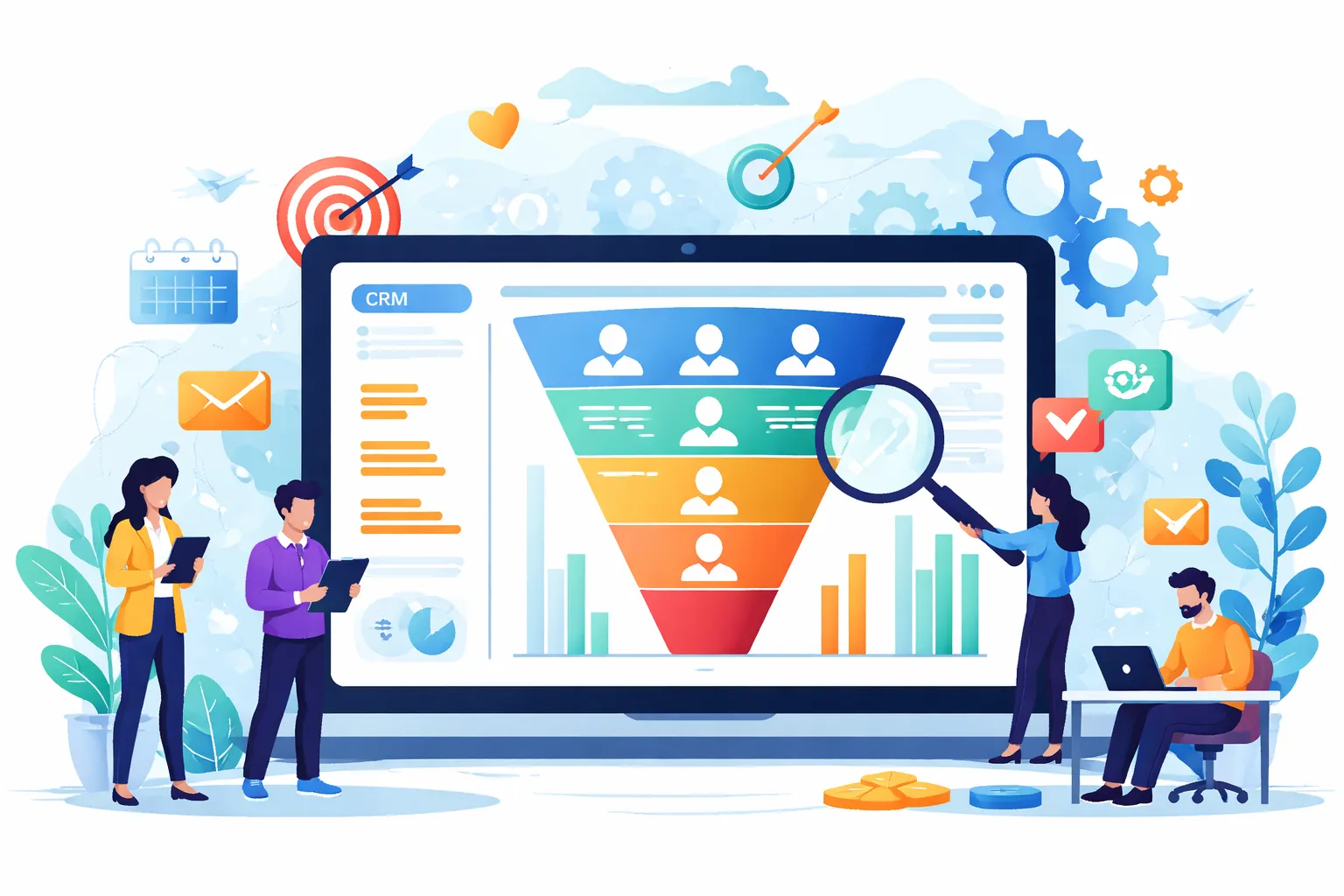
The distinction between these two architectures is most clearly understood through the dimensions that together define how each system shapes the daily experience of the sales team.
Primary Data Object and System Architecture
The primary data object determines how every other feature in the system is organized. In a traditional CRM, the contact or account record is the center. Deals are attached to contacts. Reports filter through contact and account data. The system's organizational logic is built around the customer.
In a sales pipeline CRM, the deal is the center. Contacts are associated records that provide context for the deal, but the system's primary workflow — the pipeline board, the forecasting module, the automation logic — is organized around opportunity progression. This architectural difference means that the same information — a contact with an open deal — is presented and acted upon differently depending on which system you are working in.
Workflow Orientation: Record-Keeping vs. Deal Progression
Traditional CRM is a system of record: it captures and stores what happened. Every call is logged, every email is tracked, every meeting is noted. The system is comprehensive for historical review and accurate for compliance documentation. But it does not tell the rep what to do next. It tells the manager what the rep did last.
Sales pipeline CRM is a system of action: it surfaces what should happen next. A deal that has been in the Proposal Sent stage for 14 days generates an at-risk alert. A contact who clicked a pricing page link twice within 48 hours receives a high-intent flag. A rep who has not logged activity on a high-value deal in seven days receives an escalation notification. The system is forward-looking by design.
Reporting Philosophy: Activity vs. Outcome
The reporting difference between these two CRM architectures is one of the most operationally significant and most frequently overlooked during platform selection. Traditional CRM reporting is activity-based: calls made, emails sent, meetings held, cases resolved. These metrics tell a manager how busy the team is. They do not reliably predict whether the team will hit its revenue target.
Sales pipeline CRM reporting is outcome-based: deals won, conversion rate by stage, average deal size, sales cycle length, pipeline velocity, and forecast accuracy. These metrics tell a manager not just how hard the team is working but whether the work is moving toward the commercial outcomes the business requires. For sales leaders accountable for quarterly revenue targets, outcome-based reporting is the only reporting model that produces actionable insights.
Forecasting Capability
A traditional CRM can produce a list of open deals and their declared close dates. Converting that list into a reliable revenue forecast requires manually weighting each deal by stage probability, filtering out stale or inactive opportunities, and assembling the result in a spreadsheet — a process that takes hours and produces accuracy that varies dramatically based on the quality of the underlying data.
A sales pipeline CRM produces stage-weighted forecasts natively, incorporating historical win rates at each stage, deal age signals, and rep-submitted commit levels into a structured forecast that updates in real time as pipeline data changes. Organizations that implement pipeline CRM consistently report that forecast accuracy improves within the first two to three quarters — not because the sales process changes but because the visibility into pipeline health enables earlier intervention on at-risk deals.
WhatsApp Business API Integration in Modern Sales Pipeline CRM

For sales teams operating in markets where WhatsApp is the dominant communication channel — India, Southeast Asia, Latin America, the Middle East, and increasingly across Europe — WhatsApp Business API integration has become a defining capability of a high-performing sales pipeline CRM rather than an optional add-on.
The WhatsApp Business API enables the sales pipeline CRM to receive and manage leads generated through WhatsApp — Click-to-WhatsApp ads, website chat widgets, and direct customer inquiries — with the same pipeline workflow applied to leads from any other source. A prospect who initiates a WhatsApp conversation is automatically created as a lead in the CRM, scored based on qualifying information captured in the conversation, assigned to the appropriate rep, and tracked through the pipeline from first contact to close.
The engagement advantage of WhatsApp over email as a lead nurture channel is substantial. WhatsApp messages achieve open rates of 95% to 98% compared to 20% to 25% for email. For sales teams struggling with email nurture sequence engagement, WhatsApp Business API integration within the sales pipeline CRM creates a fundamentally more effective follow-up channel that operates within the same pipeline tracking and reporting framework.
The critical capability to evaluate is bidirectionality: the WhatsApp conversation history should be visible in the CRM deal record alongside email interactions, call logs, and meeting notes — creating a unified interaction timeline that gives reps full context before every touchpoint, regardless of which channel the previous interaction occurred through. Platforms that treat WhatsApp as a separate communication tool outside the CRM create the same data fragmentation problem that CRM implementation is supposed to solve.
AI-Powered Chatbot Integration in Sales Pipeline CRM

An AI-powered chatbot embedded in the sales pipeline CRM workflow addresses one of the most persistent causes of pipeline leakage: the gap between when a lead arrives and when a rep is available to respond. Research by Harvard Business Review found that companies responding to leads within one hour are seven times more likely to qualify them than companies who wait longer — yet the average lead response time across businesses is 42 hours. For any sales team that generates inbound leads outside business hours, or that has insufficient rep capacity to respond immediately to every incoming contact, that gap represents systematic pipeline loss.
An AI-powered chatbot closes this gap by handling initial lead qualification in real time, 24 hours a day, across website, WhatsApp Business API, Facebook Messenger, and other digital channels simultaneously. The chatbot conducts a structured qualification conversation — capturing company size, use case, budget range, and purchase timeline — and uses the responses to score the lead and route it appropriately within the sales pipeline CRM. High-scoring leads receive an immediate rep notification and are placed at the top of the pipeline priority queue. Low-scoring leads enter a nurture sequence. Unqualifiable contacts are politely redirected.
The value delivered is not just speed — it is structured data. A lead that enters the pipeline through an AI chatbot arrives with qualification fields populated, conversation context attached, and a lead score already calculated. The rep's first call begins with more information than a rep using a traditional CRM system would have after multiple manual research steps. Research by Drift found that companies using AI chatbots for initial lead engagement generate 55% more qualified leads than those relying solely on form-based capture.
The sophistication threshold for AI chatbot integration in sales pipeline CRM has lowered dramatically. Platforms including HubSpot, Zoho, Freshsales, and Pipedrive through third-party integrations now offer no-code chatbot builders that deploy qualification flows without engineering resources — making AI-assisted lead intake accessible for SMBs and mid-market teams alongside enterprise organizations.
The Convergence of Traditional and Pipeline CRM

The categorical distinction between traditional CRM and sales pipeline CRM is less absolute in 2026 than it was five years ago. Enterprise platforms have evolved significantly: Salesforce has built deep pipeline management capability into Sales Cloud; HubSpot has expanded from a pipeline-first tool into a full CRM suite with post-sale service and customer success functionality; Zoho has built account management depth alongside its pipeline tools.
This convergence creates a subtler but more important selection challenge: rather than choosing between categorically different platforms, organizations must evaluate which design philosophy a converged platform defaults to — because the default orientation reveals what the platform is genuinely optimized for, regardless of its comprehensive feature list.
A platform that was built as a traditional CRM and added pipeline features will typically show its orientation in how its reports are structured (activity-first), how its mobile app is designed (record browsing rather than pipeline action), and how its automation logic is configured (notification triggers rather than deal progression triggers). A platform built as a pipeline CRM that added account management depth will show its orientation in how its default home screen is designed (pipeline board rather than contact list) and what metrics appear first in its dashboards (deal velocity and stage conversion rather than call volume and email count).
The practical implication is that platform evaluation should include testing the default configuration — not just the feature list — because the features available in both categories may be similar while the usability and adoption experience differs significantly based on which workflow the interface was designed around.
Real-World Use Case: How a B2B Services Firm Improved Forecast Accuracy From 51% to 84%

A 60-person B2B professional services company with a 15-person sales team had been operating on a traditional CRM for four years. Contact records were comprehensive. Call logs and email histories were detailed. But the sales director could not reliably forecast the quarter. Pipeline reviews required the director to manually call each rep and ask which deals were real — because the CRM showed every open deal as equally valid regardless of age, activity level, or stage history.
Forecast accuracy averaged 51%. The gap between the forecast and actual closed revenue was so variable that management could not make hiring or capacity decisions with confidence.
After migrating to a sales pipeline CRM with visual stage management, deal age alerts, AI-powered lead scoring, WhatsApp Business API integration for their primary inbound channel, and stage-weighted forecasting, the operational shift was measurable within one quarter. Reps adopted the platform because the pipeline board reflected how they actually thought about their deals — not as records to update but as opportunities to advance. Stale deal alerts surfaced opportunities that had been sitting untouched for weeks and prompted either re-engagement or disqualification, both of which improved pipeline data quality.
Within two quarters, forecast accuracy improved to 84%. The improvement came not from changing the sales process but from making the pipeline's actual state visible in real time — enabling the sales director to intervene on at-risk deals before the quarter end rather than discovering the shortfall after it.
Common Challenges and Best Practices

Avoiding the Configuration Trap in Converged Platforms Organizations that purchase a converged CRM platform frequently default to configuring the features familiar from their previous system — using the pipeline CRM primarily for contact storage, or using the traditional CRM primarily for deal management — and miss the capabilities that would actually solve their current problem. Before configuration begins, define the primary use case explicitly: is the system being configured for active deal management and forecasting, or for customer history and account management? That answer should drive every configuration decision.
Data Migration as a Pipeline Data Quality Opportunity Migrating from a traditional CRM to a sales pipeline CRM is an opportunity to clean and restructure deal data — not just transfer it. Deals that have been open for more than 12 months without meaningful activity should be reviewed and either disqualified or reclassified before migration. Stage definitions should be mapped carefully from old to new, with explicit exit criteria defined for each stage in the pipeline CRM. Migrating bad data into a new system replicates the data quality problem in a more visible format.
Rep Training on the Shift From Documentation to Action Sales reps who have used traditional CRM for years have developed documentation habits: updating records after the fact, logging activities when they remember to. A sales pipeline CRM works best when reps use it proactively — reviewing their pipeline board at the start of each day, advancing deals when stage milestones are met, and acting on AI prioritization signals. This behavioral shift requires explicit training and reinforcement, not just platform access.
Future Trends: Where Sales Pipeline CRM Is Heading

Generative AI for Deal Intelligence and Rep Coaching Generative AI embedded in sales pipeline CRM platforms is producing deal summaries, drafting follow-up emails from call transcript data, and generating coaching notes for managers reviewing rep pipeline activity. Salesforce Einstein Copilot and HubSpot's AI assistant are early deployments of this capability, with significant expansion expected through 2026 as model quality improves and integration depth increases.
Real-Time Intent Data in Pipeline Records Third-party intent data — signals indicating which companies are actively researching solutions in a specific category — is being embedded directly into pipeline CRM deal records. When an account in the pipeline shows elevated intent signals from a provider like Bombora or G2, the CRM surfaces that signal in the deal record and can trigger an automated outreach sequence or rep alert — enabling sales teams to act on buying signals in real time.
AI-Powered Pipeline Health Scoring Rather than relying on stage probability as the primary deal health indicator, next-generation sales pipeline CRMs are building AI-driven deal health scores that incorporate engagement signals, deal velocity compared to historical patterns, relationship depth across stakeholders, and competitive signals from call transcripts. This multidimensional scoring gives sales managers more accurate and actionable pipeline intelligence than stage-weighted probability alone.
FAQ
What is the main difference between a sales pipeline CRM and a traditional CRM?
A traditional CRM is built around the customer record — designed to store and retrieve relationship history across the full customer lifecycle. A sales pipeline CRM is built around the deal — designed to manage and optimize movement through a defined sales process. Traditional CRM answers what happened; pipeline CRM drives what should happen next. The distinction is architectural and shapes every feature, workflow, and reporting capability in each system.
Why do sales teams struggle with traditional CRM adoption?
Traditional CRM requires reps to manually log activities in a system designed for data completeness rather than sales action. It does not surface which deals need attention today, does not drive stage progression, and does not produce visual pipeline visibility that makes deal management intuitive. Reps experience it as administrative overhead rather than a selling tool — which is the root cause of the 26% average adoption rate that Gartner research consistently finds across CRM deployments.
How does WhatsApp Business API improve sales pipeline CRM performance?
WhatsApp Business API integration allows the sales pipeline CRM to capture, qualify, and track leads arriving through WhatsApp within the same pipeline workflow applied to web and email leads. With 95% to 98% open rates versus 20% to 25% for email, WhatsApp-based follow-up sequences within the pipeline CRM significantly outperform email nurture for markets where WhatsApp is the customer's preferred channel — without requiring a separate tool or manual data transfer.
What role does an AI-powered chatbot play in a sales pipeline CRM?
An AI-powered chatbot handles initial lead qualification in real time across website, WhatsApp, and other channels — capturing qualifying data, scoring the lead, and routing it into the pipeline with full conversation context attached. This eliminates the lead response gap that causes most pipeline leakage, ensures structured data for every lead entering the pipeline, and frees reps to focus on high-value conversations rather than initial triage and qualification.
When should a business choose a sales pipeline CRM over a traditional CRM?
Choose a sales pipeline CRM when the primary problem is deal visibility, forecast accuracy, and rep follow-up consistency — and when the sales team manages a defined, repeatable process with active deal progression. Choose a traditional CRM when the primary requirement is post-sale account management, customer service tracking, or compliance documentation across complex, long-term enterprise relationships. Many organizations need both, configured within a converged platform.
Can a business use both pipeline CRM and traditional CRM features simultaneously?
Yes — most scaling businesses eventually need both. Converged platforms including Salesforce Sales Cloud, HubSpot CRM, and Zoho CRM offer both pipeline management and account management within a single system. The key is configuring the system around the primary use case first — typically active deal management for sales teams — then adding account management depth without allowing the secondary function's interface defaults to obscure the pipeline visibility the sales team depends on.
The difference between a sales pipeline CRM and a traditional CRM is a design philosophy difference with direct revenue consequences. Choose the architecture that matches the problem you are trying to solve — and configure it around the workflows your team will use every day.



























Sign in to leave a comment.